
La versión en español está después de la versión en inglés.
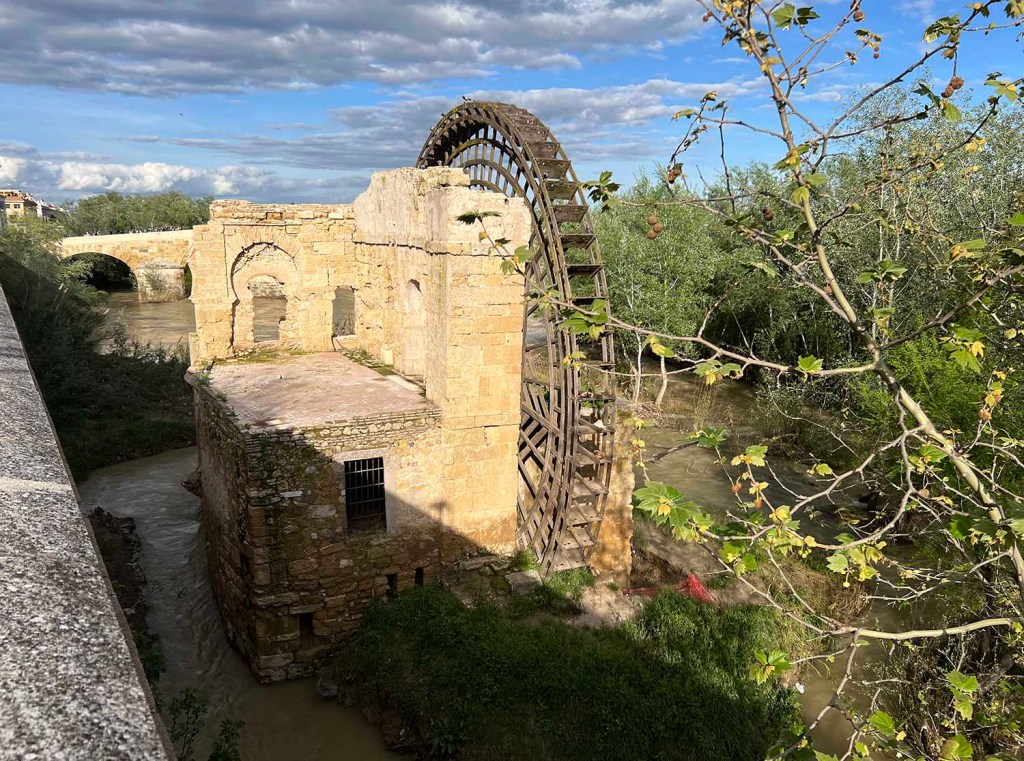
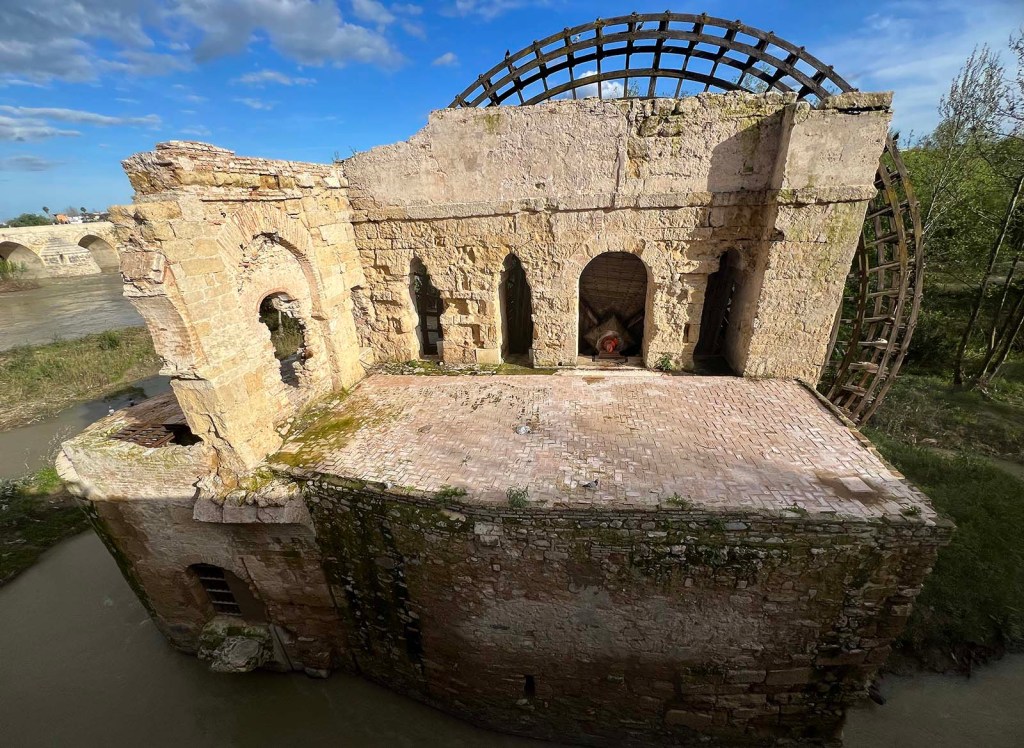
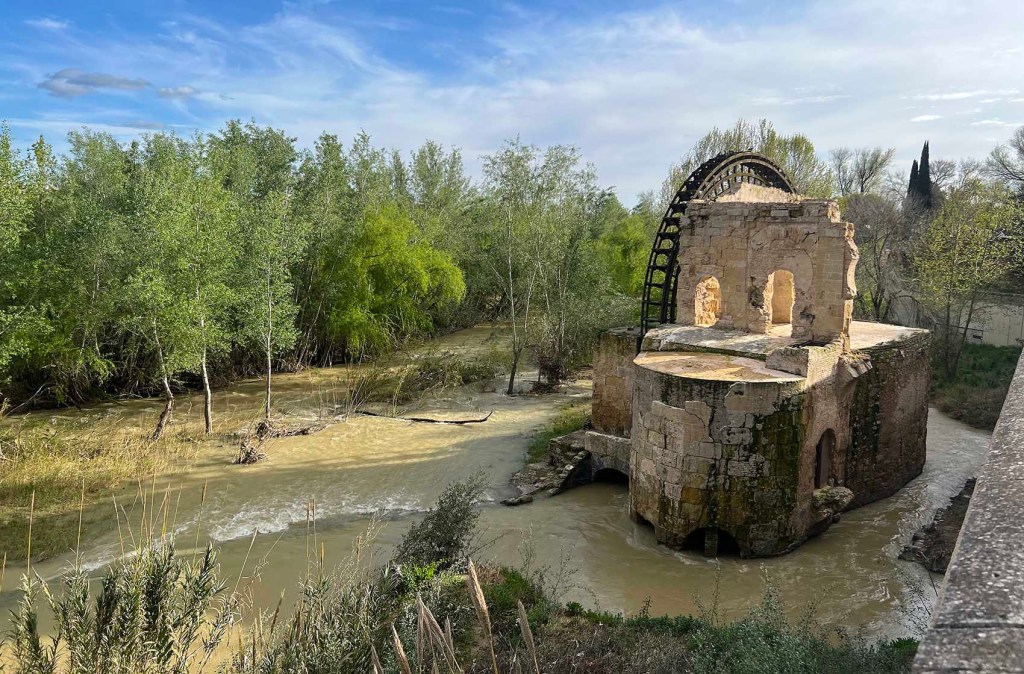
Although the water wheel featured in some of today’s photos on the river is no longer turning, it is thought to have been built between 1136 and 1137 to raise water from the river into an aqueduct that fed the nearby Alcázar (the royal palace pictured above) and other parts of the city. The wheel was reportedly dismantled in 1492 on the orders of Queen Isabella because she was ill and didn’t like the noise it made. In the 16th or 17th century it was converted to a flour mill that operated until the 1940s.
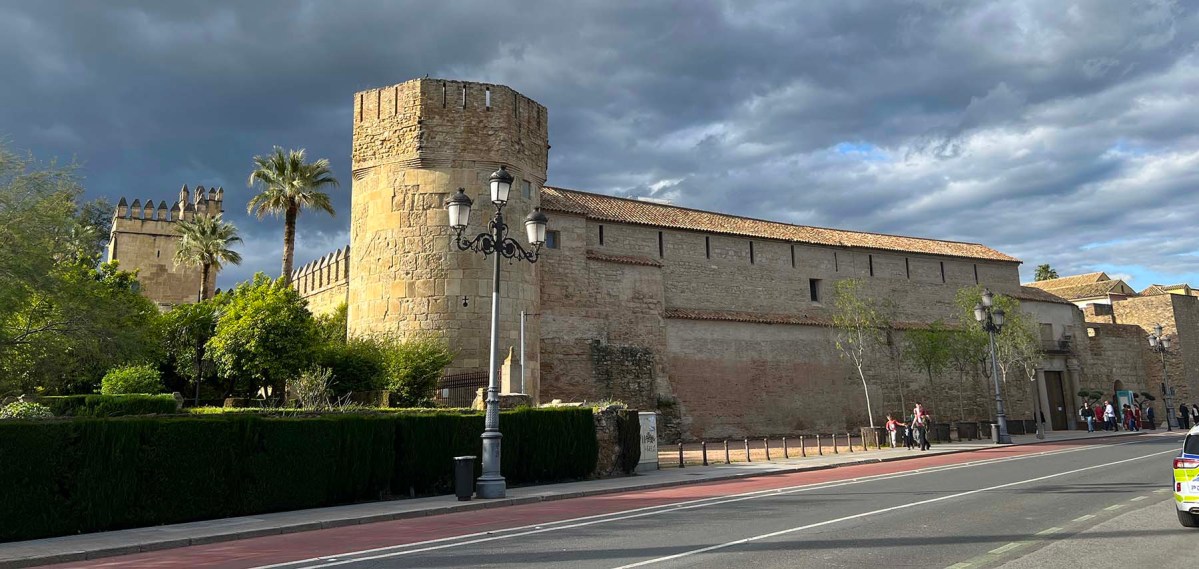
More of today’s history in a nutshell: The Alcázar was built in the 8th century by the Caliphate of Córdoba atop an original Visigothic fortress (6th century). In 1328, Alfonso XI began building the present structure. Isabella and Ferdinand, who ruled together from 1479 to 1504, used the Alcázar for one of the first permanent Inquisition tribunals. And, in 1486, Christopher Columbus had his first audience with the monarchs to solicit support for his plan to find a western sea route to Asia. The Alcázar served as a garrison for Napoleon Bonaparte’s troops in 1810. I’ll share many more details when I finally tour the inside of the Alcazar.
Merchi had to change her cleaning day this week, so we’re now enjoying coffee and second breakfast at La Popina. It’s another beautiful day and I hope to get out and enjoy it. There’s shopping for more art supplies and maybe a visit to the Archeological Museum. And it’s time to wash all the throws that protect the living room furniture from the cats. The little angels. Last week, San Geraldo cleaned the dining room rug. It looked like new. As he stood and admired his work, Moose joined him — and threw up a hairball.
Aunque la rueda hidráulica que aparece en algunas de las fotos actuales sobre el río ya no gira, se cree que se construyó entre 1136 y 1137 para elevar el agua del río a un acueducto que alimentaba el cercano Alcázar (el palacio real que se muestra arriba) y otras partes de la ciudad. Se dice que la rueda fue desmantelada en 1492 por orden de la reina Isabel porque estaba enferma y no le gustaba el ruido que hacía. En el siglo XVI o XVII se convirtió en un molino de harina que funcionó hasta la década de 1940.
Más de la historia en resumen: El Alcázar fue construido en el siglo VIII por el Califato de Córdoba sobre una fortaleza visigoda original (siglo VI). En 1328, Alfonso XI comenzó a construir la estructura actual. Isabel y Fernando, que gobernaron juntos de 1479 a 1504, usaron el Alcázar para uno de los primeros tribunales permanentes de la Inquisición. Y, en 1486, Cristóbal Colón tuvo su primera audiencia con los monarcas para solicitar apoyo para su plan de encontrar una ruta marítima occidental a Asia. El Alcázar sirvió como guarnición para las tropas de Napoleón Bonaparte en 1810. Compartiré muchos más detalles cuando finalmente recorra el interior del Alcázar.
Merchi tuvo que cambiar su día de limpieza esta semana, así que ahora estamos disfrutando de un café y un segundo desayuno en La Popina. Es otro día hermoso y espero poder salir y disfrutarlo. Hay que comprar más materiales de arte y quizás visitar el Museo Arqueológico. Y es hora de lavar todas las mantas que protegen los muebles de la sala de los gatos. Los angelitos. La semana pasada, San Geraldo limpió la alfombra del comedor. Estaba como nueva. Mientras estaba de pie admirando su trabajo, Moose se unió a él y vomitó una bola de pelo.

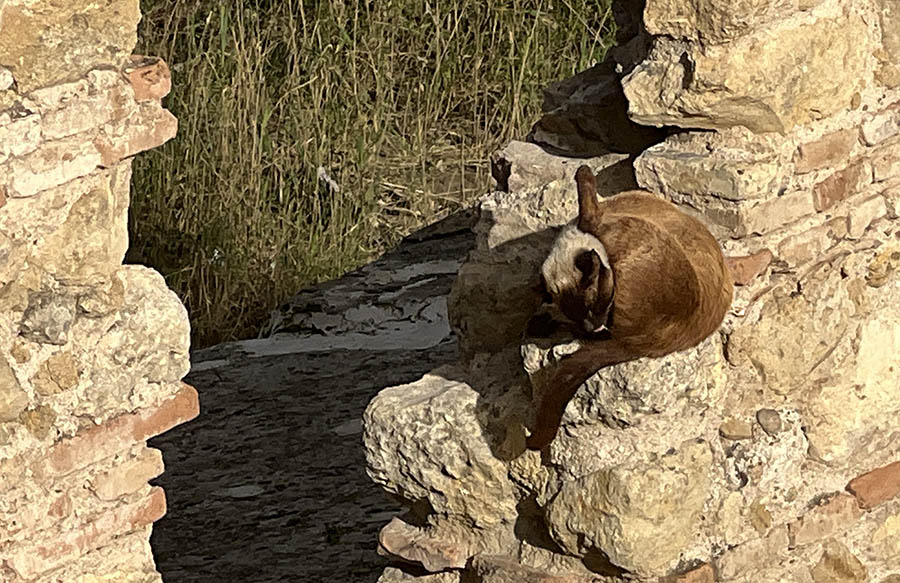
• Me fascinó el animal exótico sentado en la pared. Hice zoom una y otra vez, pensando que había visto algo importante.
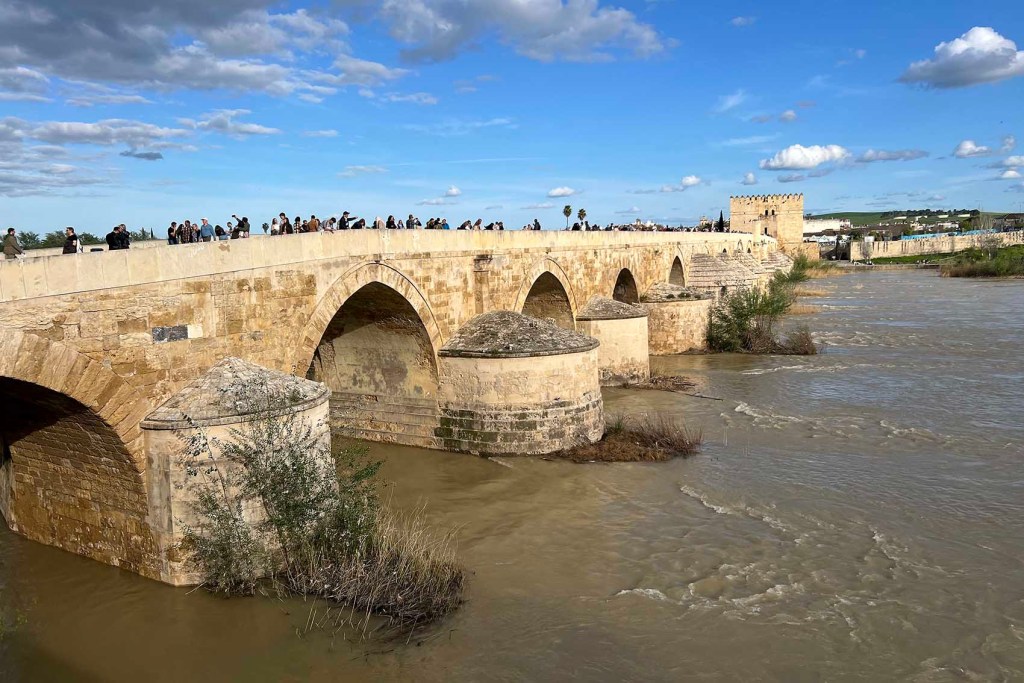
• El Puente Romano, construido originalmente en el siglo I y reconstruido varias veces desde entonces. Hasta mediados del siglo XX, fue el único puente que cruzaba el río.


Click the thumbnails to enlarge.
Haz clic en las miniaturas para ampliar.

I love the history lesson, Mitchell! Cordoba’s pivotal role in the Spanish Empire is of worldwide importance.
Needless to say, dear old Oscar had something to say on the matter: “America had often been discovered before Columbus, but it had always been hushed up.” Jx
PS I imagine SG “thanked” Moose profusely.
Jon:
I love the things Oscar had to say about America!
The Columbus thing reminds me of eventually when Spain and Portugal decided to split the world to turn Catholic (and to steal the native wealth). Spain at the end of the imperialism got virtually everything and Portugal was 💩 out of luck in comparison despite Brazil 🇧🇷
-Adam
NEKORANDOM.COM
Ah yes, the Alcázar. We took the train there one day, in the rain, took a taxi up the hill to it, only to find it was closed, locked tight as a chastity belt during the crusades. We had a nice cake and coffee in the train station before a long train ride back. I understand there is a phenomenal library in the palace. I’d love to have photos of it.
David:
That must have been so frustrating. But it would have been mostly downhill from the train station, and not much of a decline. Did you visit the alcázar in Málaga? THAT is a hill! When I get to the alcázar here, I promise to get photos of the library.
Adam:
So many ugly times throughout history thanks to Spain and Portugal. And so much art, culture, and science.
Oh Moose! Keeping everyone humble, as usual.
Debra:
It would have made a perfect comic strip.
Those people in the early days surely knew how to build for the ages. I wonder what it felt like for the early explorers to come from that sort of architecture to the pyramids in Central America. These are the things that fill me with wonder to think about.
Fantastic photos. Thank you.
M.Moon
Ms. Moon:
I wonder about what the explorers (pillagers) thought, too. And I wonder if they only had gold dust in their eyes.
Likely. I have read that the Europeans were surprised at how these primitive creatures managed their water and sewage in such a way that their homes and streets were far cleaner than the ones in the old Mother Country.
I sometimes wish I had the power to stop a business because the noise irked me.
Oh cats, a clean rug is always just waiting for a hairball!
Bob:
SG, Moose, the clean rug, and the hairball. Such a statement. As for Isabella, that was exactly my thought.
So moose shows yet again who’s in charge around here. The history of Cordoba is so long, I keep being surprised about visigoths and other long ago people. When I was a student at the University of Aix, I went exploring Roman aqueducts and other structures, amazingly still operative. Coliseums where the sound was terrific, easily heard speakers on the ground below. It’s a great experience to be there, continuing the life.
That was me, Boud.
Boud:
And they just now understand why Roman concrete was so much stronger than modern concrete. Astounding. There are portions of a Roman aqueduct still standing in the city of Seville that was still in use in 1912.
I love ALL the photos today! Thank you for not including a music video reflecting your title. I prefer Tina without Ike and can’t abide CCR. (though I’m afraid the tune is running through my head anyway)
Kelly:
I’m not a huge fan of CCR either. There’s just something about their sound. I thought of including the video, but knew everyone would have it playing in their heads without any more help from me. I’ve been singing it since yesterday.
Love the pictures of the castle and the “exotic creature” licking its butt. So funny about Moose and the hairball. (I’m sure SG didn’t appreciate it at the time.)
Steve:
Poor SG. But he did laugh when he told me about it. I took a dozen photos of the exotic creature until I realized what it was.
Incredible history in your city! So much to learn and see.
Jim:
Never-ending surprises for me. Just incredible.
I looooove the photos and the history… and the chestnut brown cat! When I was little, we had a neighborhood cat that was a stunning, glistening dark brown all over…. No lighter areas. Our family always called the cat Chestnut. I assumed that color brown was common for cats, but I’ve never seen another cat that color.
J Chabot:
I’ve rarely seen a cat that color. My cousin has two brown Siamese. They’re gorgeous… and hilarious. Like Dudo and Moose on steroids.
The older I get, the more in love with Spain I become
finlaygray:
Me, too! The older YOU get, the more in love with Spain I become.
Your history briefs are a pleasure to read, Scoot, and your photographs are the cherry on top!
Poor SG… to have his hard work rewarded with a hairball from Moose! Perhaps Moose should not get any treats for awhile?
Tundra Bunny:
You can be the one who tells Moose that. And then you can listen to him for hours on end.
“The wheel was reportedly dismantled in 1492 on the orders of Queen Isabella because she was ill and didn’t like the noise it made.”
She’s a queen. She couldn’t afford earmuffs?
Kirk:
Why do something so simple when she could just make the world go away?
it must be marvelous to live in a place with so much history.
Urspo:
It’s truly incredible.