
La versión en español está después de la versión en inglés.
I take pills daily for my kidneys. In general, they’re prescribed for people with transplants to keep them from rejecting their new organs. I don’t have new organs. Still, I shouldn’t miss a dose. I take them the moment I wake up because I can’t have breakfast for at least an hour after.
Well, when I was about to go to bed last night, I took out my box of pills and found it empty. I had meant to toss the old box in recycling yesterday but I instead tossed the new one. Amazingly, I didn’t panic, but I immediately processed what I had to do first thing this morning. The pills are seriously controlled, so unlike most meds here in Spain, I couldn’t buy a box without a prescription.
I thought I’d have to go to the health center and ask them to call my nephrologist to approve another box. First though I decided to walk next door to the pharmacy on the off chance I could buy a box. It turns out my refill is due Friday. So, she very kindly let me buy a box today as long as I promised to return Friday so she could remove the bar code and process it as usual, at which time she’ll give me a full refund. What a relief. I took the pills later than usual and finished breakfast at 10:45. Not too bad.
While I waited, I tried to do some online work with our new bank after San Geraldo had had no success. Neither did I. Is it us or is it the app? I need to go to the bank anyway, because my debit card arrived with no numbers front or back, no hologram on the back, nor even my name. Fortunately, the front hologram works. But I don’t know if I’m in the mood to go to the bank today. Right now, let’s just return for one more look at the Church of San Lorenzo. My focus today is on what I found a bit unusual.
Tomo pastillas a diario para mis riñones. Generalmente, se recetan a personas que han recibido un trasplante para evitar que su organismo rechace los nuevos órganos. Yo no tengo órganos nuevos; aun así, no debo saltarme ninguna dosis. Las tomo nada más despertarme, ya que no puedo desayunar hasta que haya pasado al menos una hora.
Pues bien, anoche, justo cuando me iba a acostar, saqué mi caja de pastillas y vi que estaba vacía. Resulta que ayer, al intentar tirar la caja vieja al contenedor de reciclaje, tiré por error la nueva. Sorprendentemente, no entré en pánico; simplemente, enseguida supe lo que tenía que hacer a primera hora de esta mañana. Como son medicamentos bajo un control muy estricto, a diferencia de la mayoría de los fármacos aquí en España, no podía comprar una caja sin receta.
Pensé que tendría que ir al centro de salud y pedirles que llamaran a mi nefrólogo para que autorizara otra caja. Aun así, decidí pasarme primero por la farmacia de al lado, por si acaso podía comprar una. Resulta que mi próxima dispensación no toca hasta el viernes. La farmacéutica, muy amablemente, me permitió llevarme una caja hoy, con la condición de que vuelva el viernes para que ella pueda retirar el código de barras y tramitarlo como de costumbre; en ese momento, me hará un reembolso completo. ¡Qué alivio! Tomé las pastillas más tarde de lo habitual y terminé de desayunar a las 10:45. No ha estado mal.
Mientras esperaba, intenté realizar algunas gestiones online con nuestro nuevo banco, después de que San Geraldo no lograra hacerlo. Yo tampoco tuve éxito. ¿Seremos nosotros o será la aplicación? De todos modos, tengo que ir al banco, porque mi tarjeta de débito llegó sin números —ni por delante ni por detrás—, sin el holograma en el reverso y ni siquiera con mi nombre. Por suerte, el holograma de la parte frontal sí funciona. Pero no sé si hoy tengo ganas de ir al banco. Por ahora, volvamos a echar un vistazo a la iglesia de San Lorenzo. Hoy me voy a centrar en algunos detalles que me han parecido un tanto inusuales.

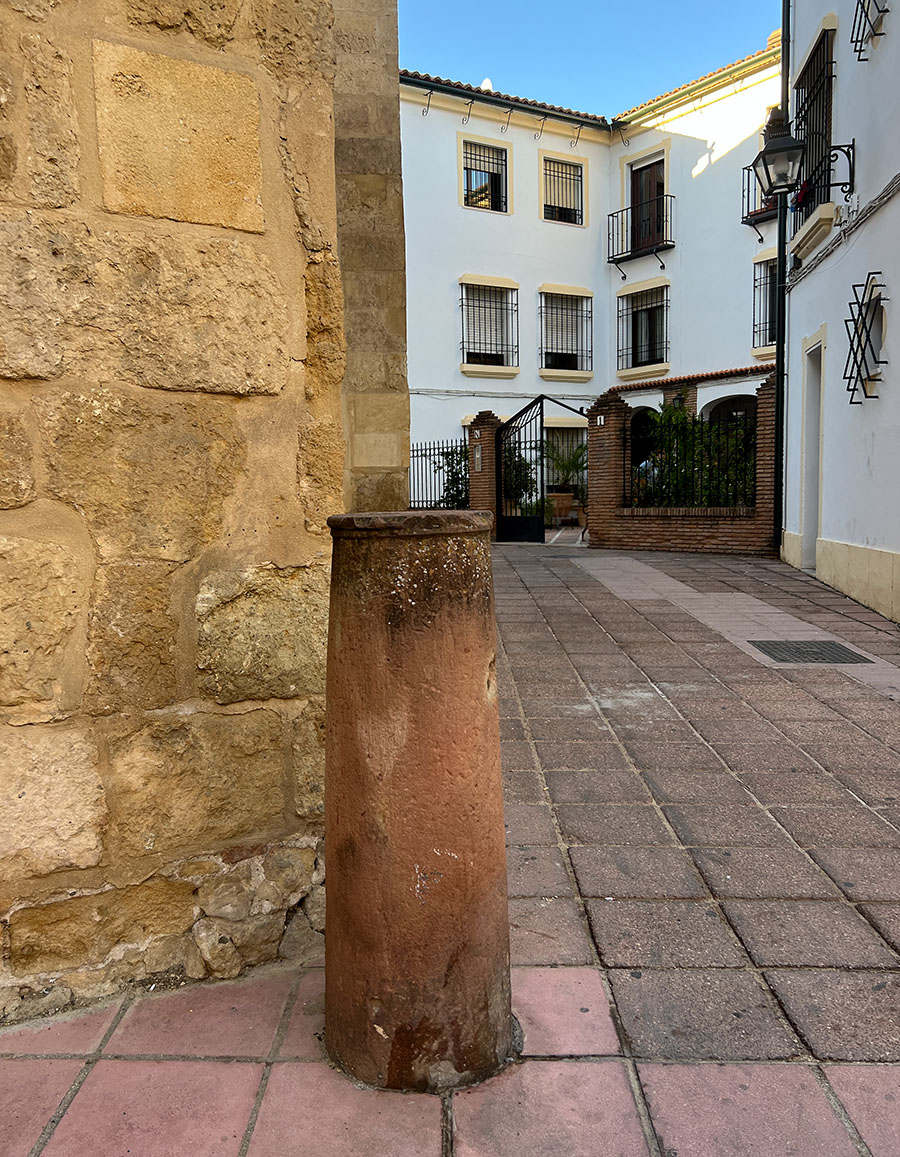
• El arcángel Rafael, santo patrón de Córdoba. Él también se va de pesca. (Haz clic aquí.)
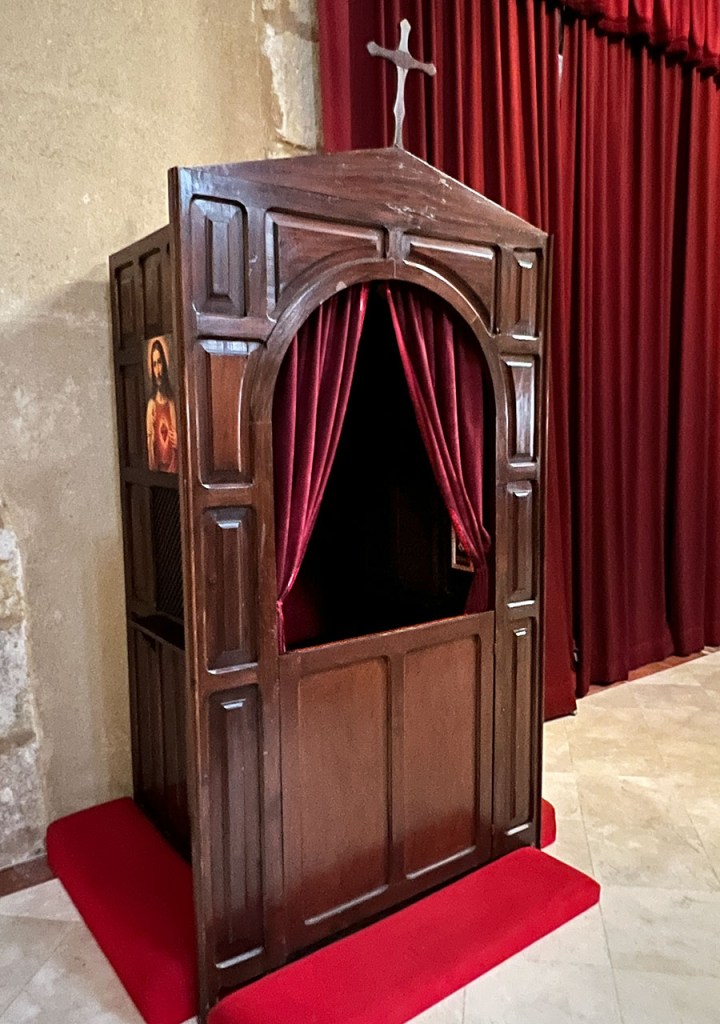
• I confess. Privacy for the priest if he wants it, but none for the kneeling sinners. Doesn’t that defeat the purpose?
• Confieso. Privacidad para el sacerdote, si así lo desea, pero ninguna para los pecadores arrodillados. ¿No anula eso el propósito?
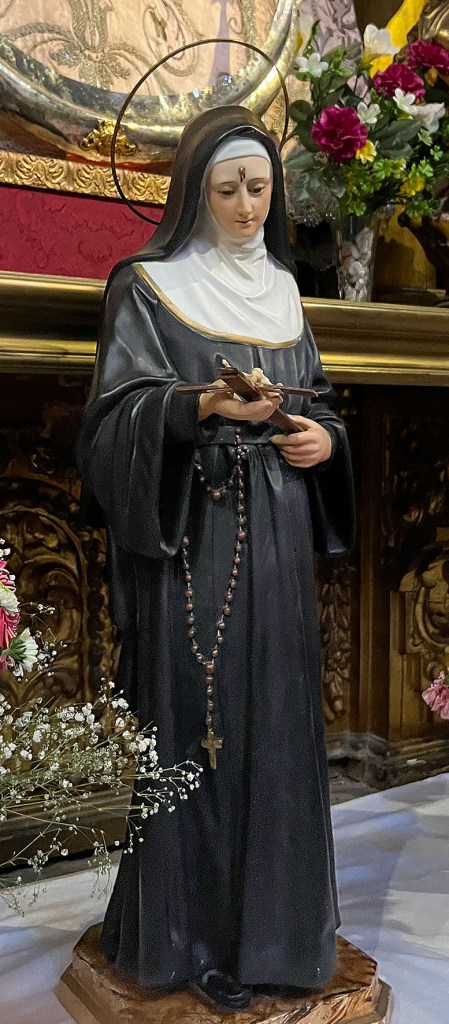
• I was so annoyed. I thought she was on her smart phone.
• Estaba muy molesto. Pensé que ella estaba usando su smart phone.
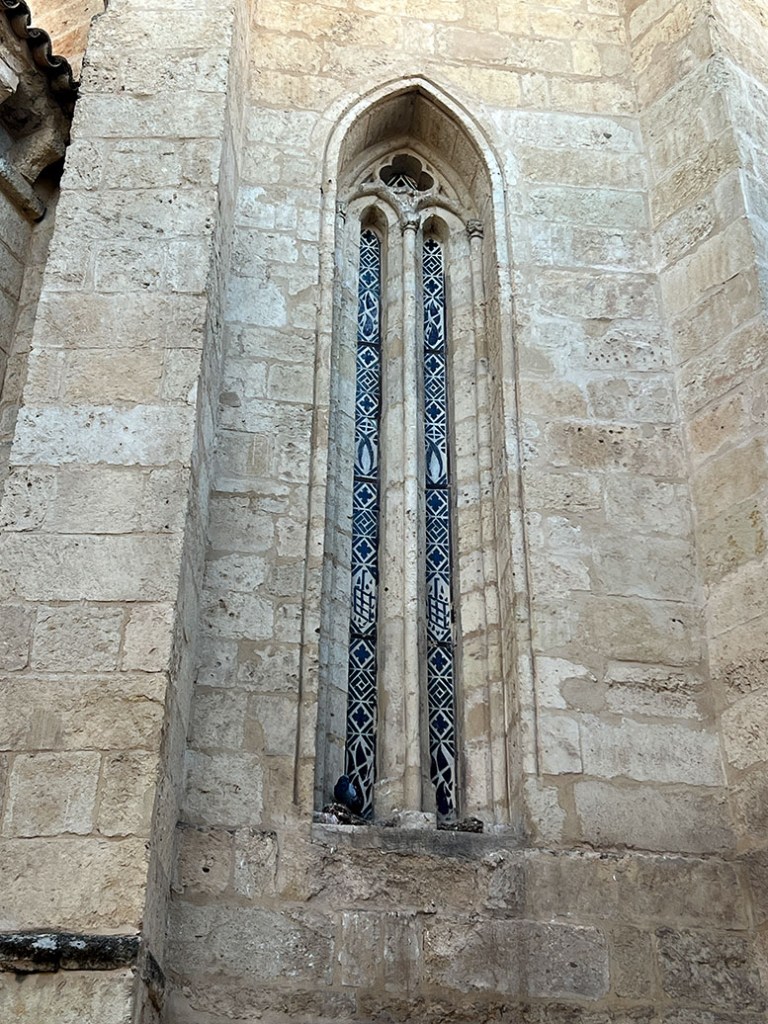
• Una de las estrechas ventanas de vidrieras, vista desde el exterior.
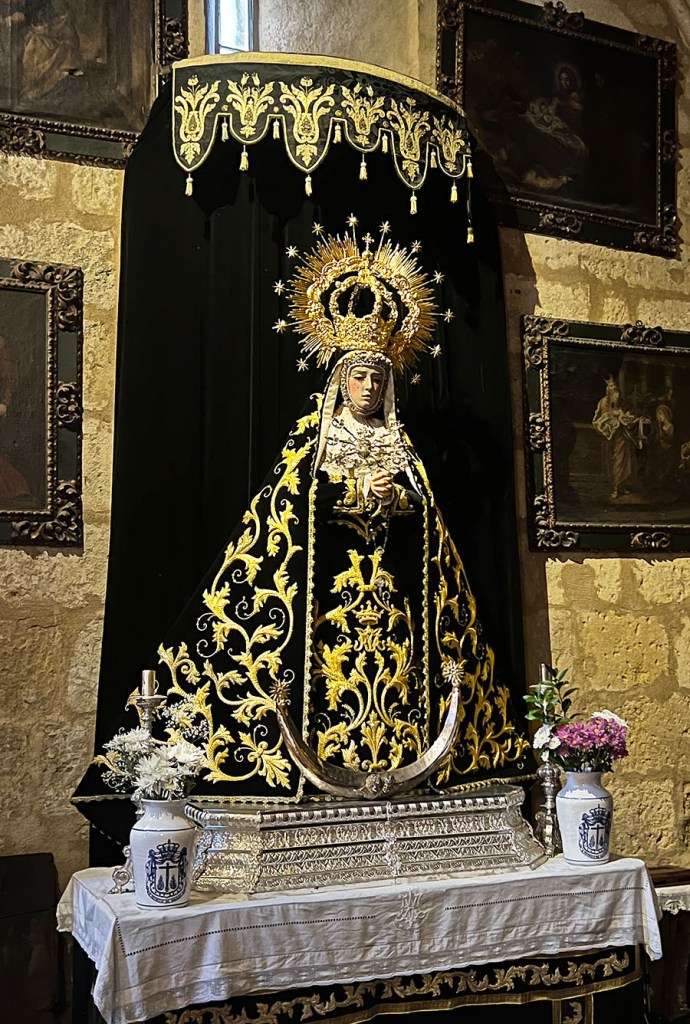
• Nuestra Señora Madre de Dios en sus Tristezas. Siglo XVII. Me recordó a Giggling Gertie, de la atracción «Magic Carpet Funhouse» de Coney Island. No tengo ni idea de por qué.

• Giggling Gertie (Gertie, la risueña). Seguía riéndose dentro de su cabina de cristal cuando nos mudamos a Brooklyn en 1964, y siempre quise llevármela a casa. Se jubiló en 1980 (se fabricó más de una unidad). Este todavía se ríe y se balancea, y puede ser tuyo por solo 23 500 dólares estadounidenses.