La versión en español está después de la versión en inglés.
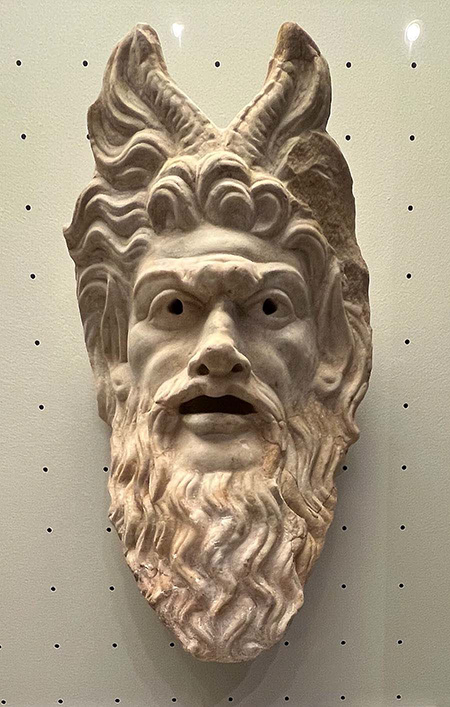
The above image is a 1st-century Roman stone theater mask. My immediate thought was, “Stone? How did the actor wear that thing?” So, I read a bit more. The stone face, in this case of the God Pan, would have been used as a mold. The artist then used something lightweight, like linen, leather, or cork to form the actual mask. This particular stone “mask” was found on Angel de Saavedra Street here in Córdoba, just 1-minute away from the site of the museum. I’m sure it was part of the theater complex at that time.
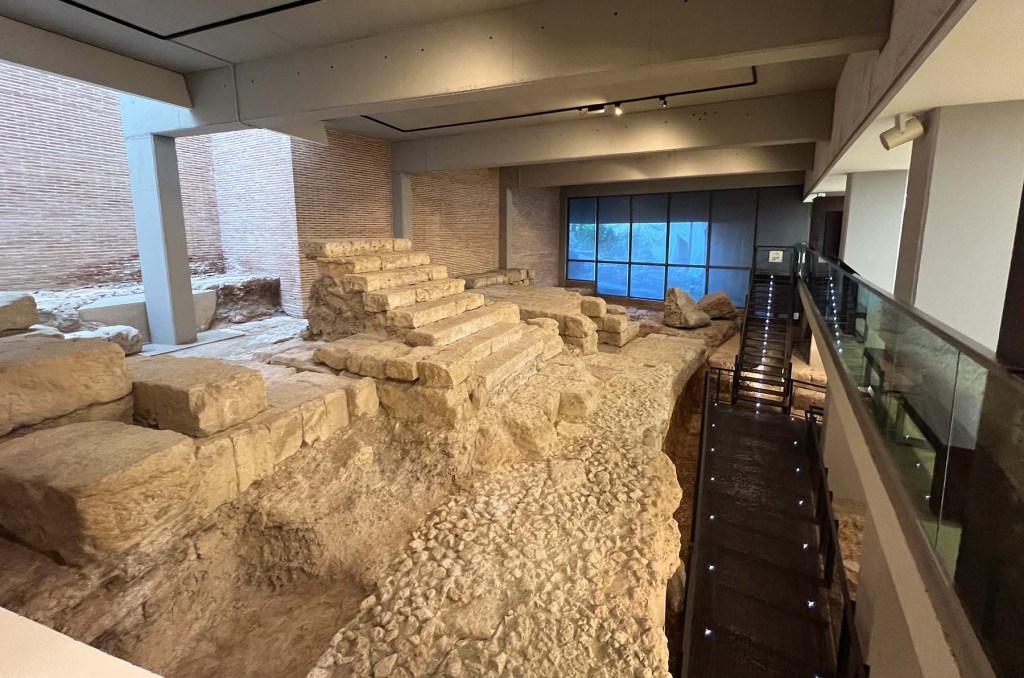
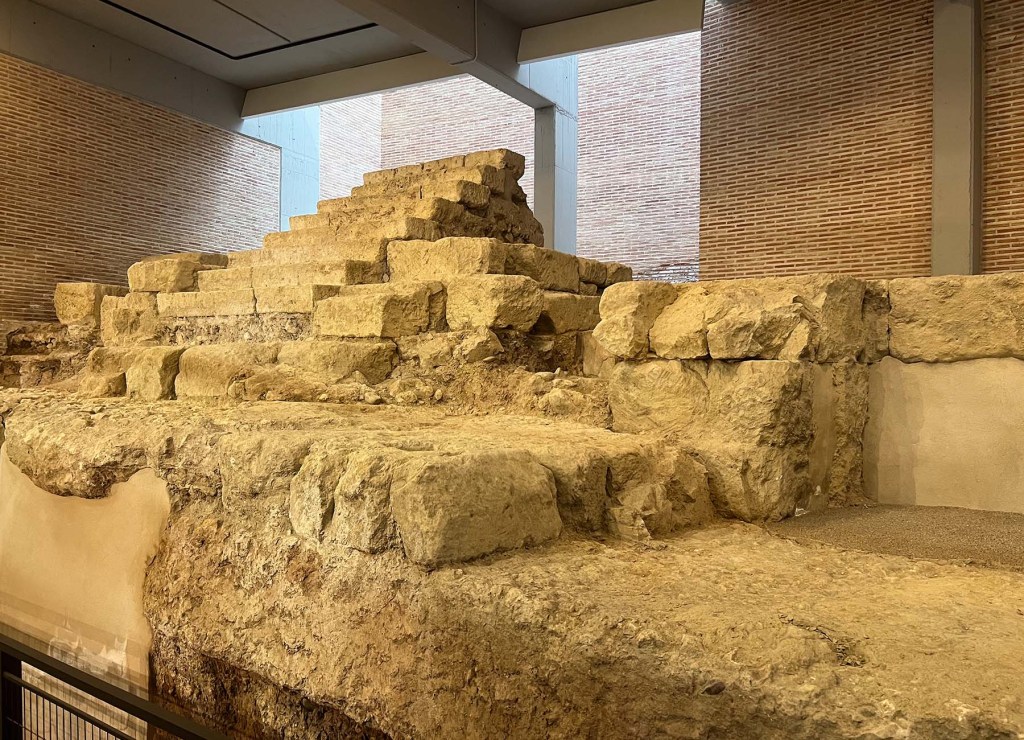
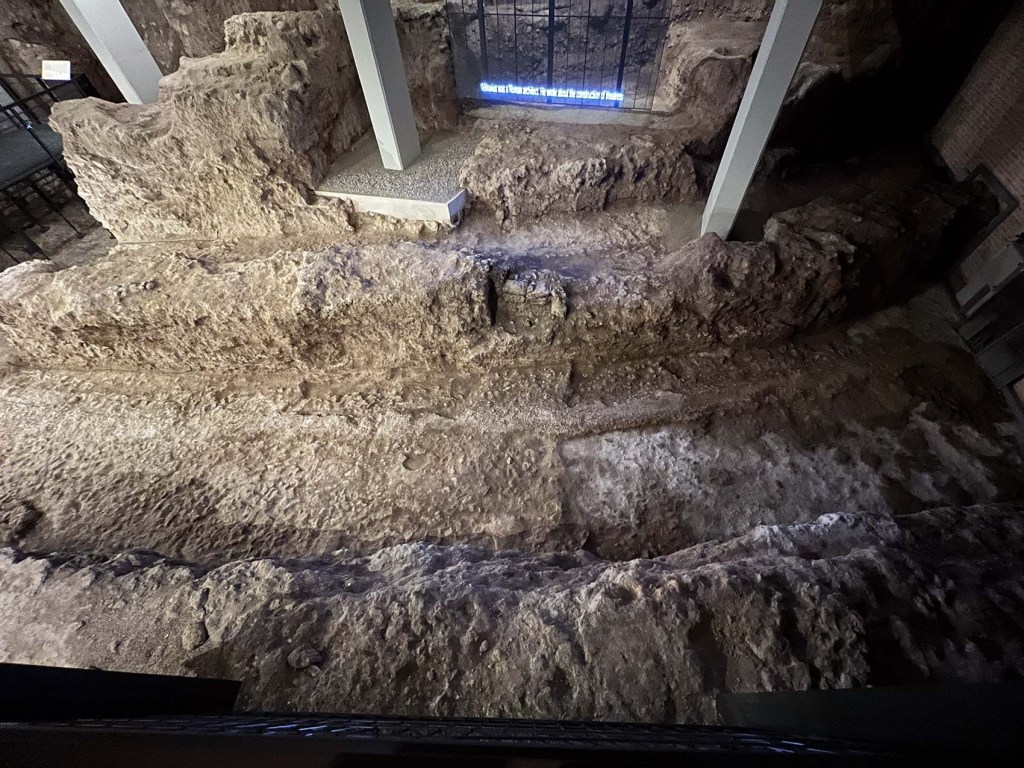
The relics displayed in the museum were found all over the city. I found it exciting when the name of a street, or even a specific address, was provided. The first photo below of a Corinthian capital from before the year 50 AD was found about a half kilometer (3/10 of a mile) north of where we live. The rest of today’s photos are views of the Roman amphitheater in the underground levels of the new museum.
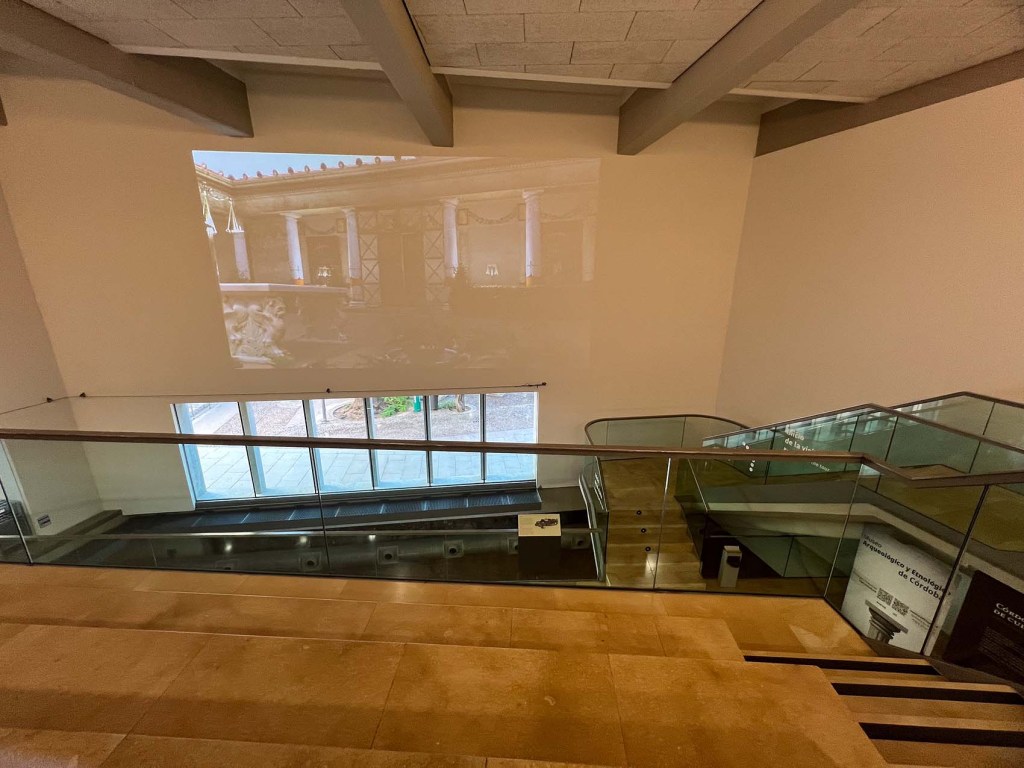
The final photo: There was some seating upstairs that mimicked the amphitheater seating where you could watch a video of the history of the area. It was a bit off-putting, but I did it. At least there’s a glass barrier at the bottom to catch you if you fall. I didn’t make use of it. This time.
La imagen de arriba es una máscara teatral romana de piedra del siglo I. Mi primer pensamiento fue: “¿Piedra? ¿Cómo se la ponía el actor?” Así que leí un poco más. El rostro de piedra, en este caso del dios Pan, se habría usado como molde. El artista luego utilizó algo ligero, como lino, cuero o corcho, para formar la máscara. Esta máscara de piedra en particular se encontró en la calle Ángel de Saavedra, aquí en Córdoba, a solo un minuto del museo. Estoy seguro de que formaba parte del complejo teatral en aquella época.
Las reliquias expuestas en el museo se encontraron por toda la ciudad. Me emocionó mucho cuando se mencionaba el nombre de una calle, o incluso una dirección específica. La primera foto de abajo, de un capitel corintio anterior al año 50 d.C., se encontró a aproximadamente medio kilómetro al norte de donde vivimos. El resto de las fotos de hoy son vistas del anfiteatro romano en los niveles subterráneos del nuevo museo.
La foto final: Había asientos arriba que imitaban los de un anfiteatro donde se podía ver un video sobre la historia de la zona. Fue un poco desagradable, pero lo hice. Al menos hay una barrera de vidrio abajo para protegerte si te caes. No hice uso de ello. Esta vez.


Click the thumbnails to enlarge.
Haz clic en las miniaturas para ampliar.