La versión en español está después de la versión en inglés
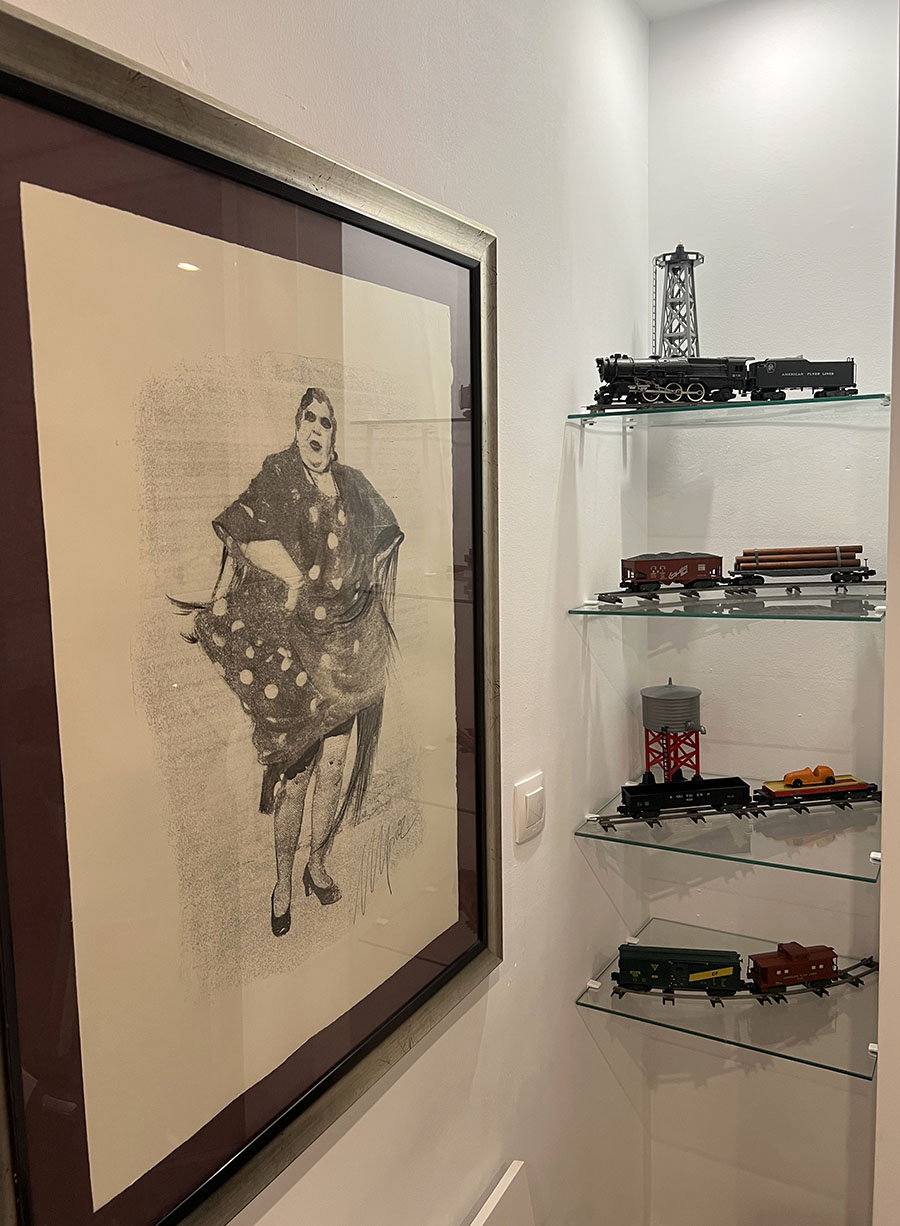
When we moved in, there were glass shelves on the floor in an alcove. As it turned out, they were custom cut for the not exactly square space and there’s a recessed light in the ceiling above. We thought they would be interesting to reinstall in that alcove and then San Geraldo had the idea to display his 70-year-old American Flyer train set on the shelves. Hanging four differently sized glass shelves with 16 clips in a small alcove and making sure they were level did not thrill us, however, so we took our sweet time getting to the task. The set had been sitting in a closet for the past 13+ years. It could wait another week.
We had planned to get started (for the umpteenth time) Thursday but I went out for a walk while SG had a siesta. We have an appointment Tuesday to change the address on our identity cards and I wanted to scout the location (12 minutes away) before we go together. I then thought I’d stop by El Corte Inglés, which was not along the way, to see the washing machine I had found online. Then I decided to wander aimlessly through the old city. And, before I knew it, I was in the heart of the old Jewish Quarter. I walked on and ended up exiting through, Puerta de Almodóvar, one of only three existing city gates of the nine built by Abd Al-Rahman I in the 14th century. And finally I had to retrace my steps and get home.
My short walk turned into about four miles on cobbles, tiles, and little stones. It was quite a workout (I seriously need to stretch) and neither SG nor I were in the mood to attempt to hang the glass shelves. But we did get to them Friday and we are delighted. I’ve shared a quick pic above and will finally share photos of the apartment once the sofas are covered (between today and Monday, we hope) and, especially, after the comfy chair arrives (whenever that may be).
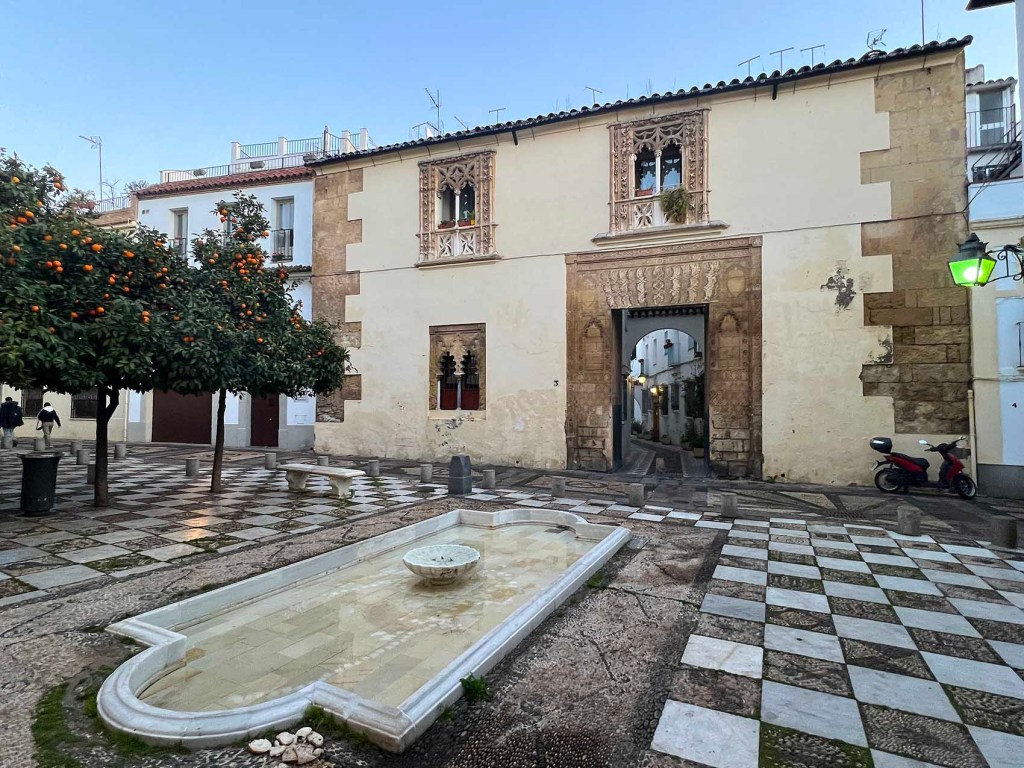
Here are photos from a bit of my walk. The building with the fountain in front looked like an old synagogue to me. It turns out the facade is all that remains of the early 15th-century private palace of the Ceas family. Ceas was given the land after joining Fernando III (SG’s 22-greats) on the reconquest campaign. In the 1970s, the interior was demolished and converted into apartments (quite common at the time) with a central lane. The architecture is a mix of gothic and mudejar (which is partly gothic and partly Islamic in style).
Cuando nos mudamos, había estantes de vidrio en el suelo en un nicho. Resultó que estaban hechos a medida para el espacio que no es exactamente cuadrado y hay una luz empotrada en el techo de arriba. Pensamos que sería interesante volver a instalarlos en ese nicho y luego a San Geraldo se le ocurrió la idea de exhibir su juego de trenes American Flyer de 70 años en los estantes. Sin embargo, colgar cuatro estantes de vidrio de diferentes tamaños con 16 clips en un pequeño nicho y asegurarnos de que estuvieran nivelados no nos emocionó, así que nos tomamos nuestro tiempo para hacerlo. El juego de trenes había estado guardado en un armario durante los últimos 13 años. Podía esperar una semana más.
Habíamos planeado salir (por enésima vez) el jueves, pero salí a dar un paseo mientras SG dormía la siesta. El martes tenemos una cita para cambiar la dirección en nuestros documentos de identidad y quería ver el lugar (a 12 minutos) antes de ir juntos. Entonces pensé en pasarme por El Corte Inglés, que no estaba en el camino, para ver la lavadora que había encontrado en Internet. Luego decidí pasear sin rumbo por el casco antiguo. Y, antes de darme cuenta, estaba en el corazón del antiguo barrio judío. Seguí andando y acabé saliendo por la Puerta de Almodóvar, una de las tres únicas puertas de la ciudad que aún existen de las nueve que mandó construir Abd Al-Rahman I en el siglo XIV. Y finalmente tuve que volver sobre mis pasos y llegar a casa.
Mi corto paseo se convirtió en unos seis kilómetros sobre adoquines, baldosas y pequeñas piedras. Fue un buen entrenamiento (necesito estirarme de verdad) y ni SG ni yo estábamos de humor para intentar colgar las estanterías de cristal. Pero llegamos el viernes y estamos encantados. He compartido una foto rápida arriba y finalmente compartiré fotos del apartamento una vez que los sofás estén cubiertos (entre hoy y el lunes, esperamos) y, especialmente, después de que llegue el sillón cómodo (cuando sea que eso sea).
Aquí hay fotos de un poco de mi paseo. El edificio con la fuente en frente me pareció una antigua sinagoga. Resulta que la fachada es todo lo que queda del palacio privado de principios del siglo XV de la familia Ceas. Ceas recibió el terreno después de unirse a Fernando III (los 22 tatarabuelos del SG) en la campaña de reconquista. En la década de 1970, el interior fue demolido y convertido en apartamentos (bastante común en la época) con un callejón central. La arquitectura es una mezcla de gótico y mudéjar (que es en parte gótico y en parte islámico en estilo).
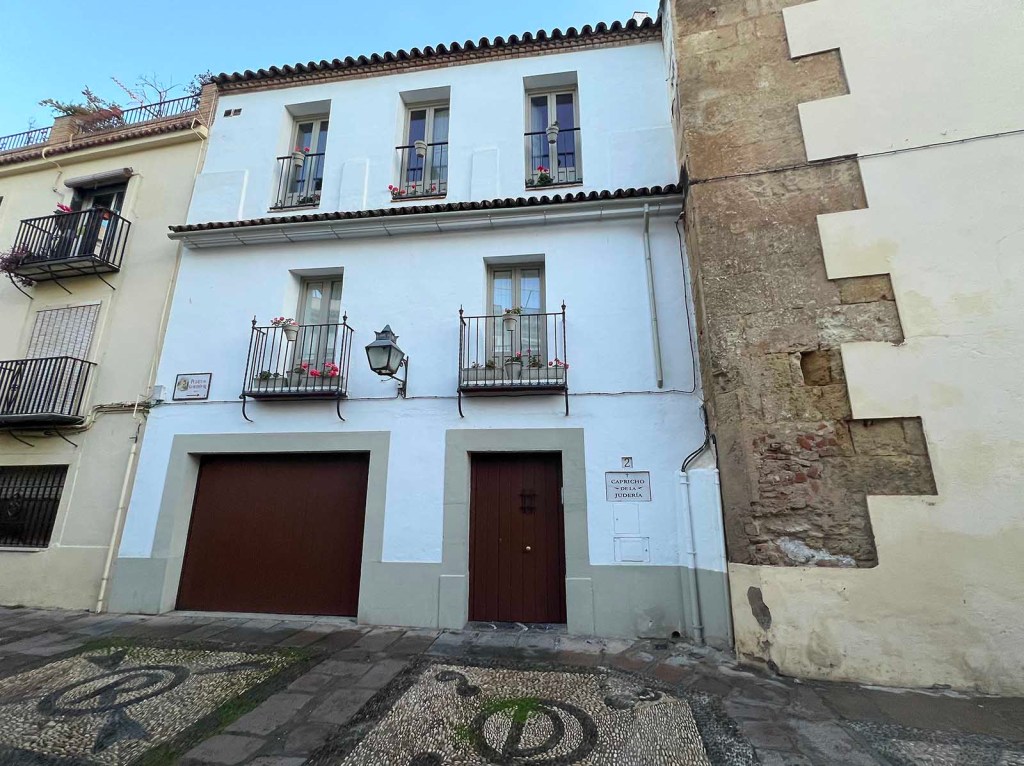
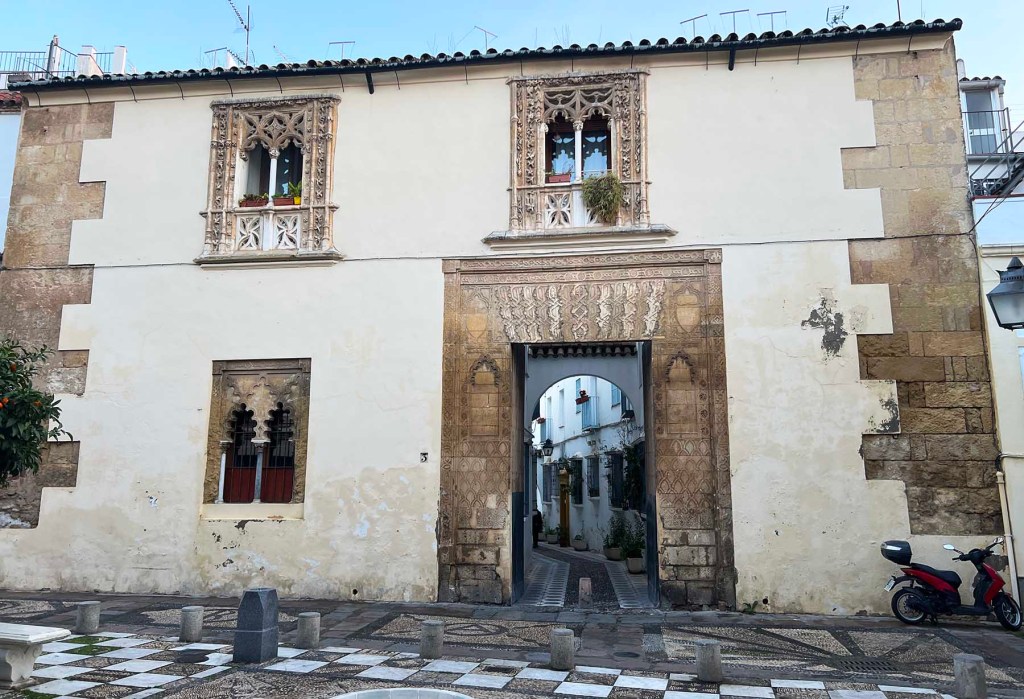
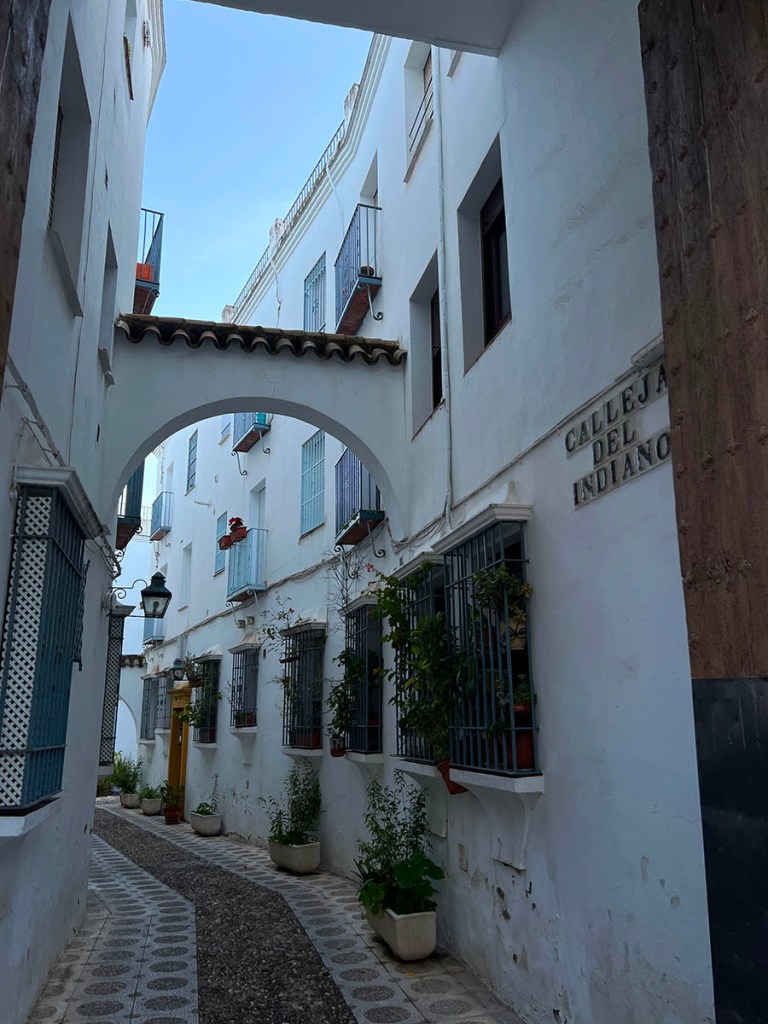
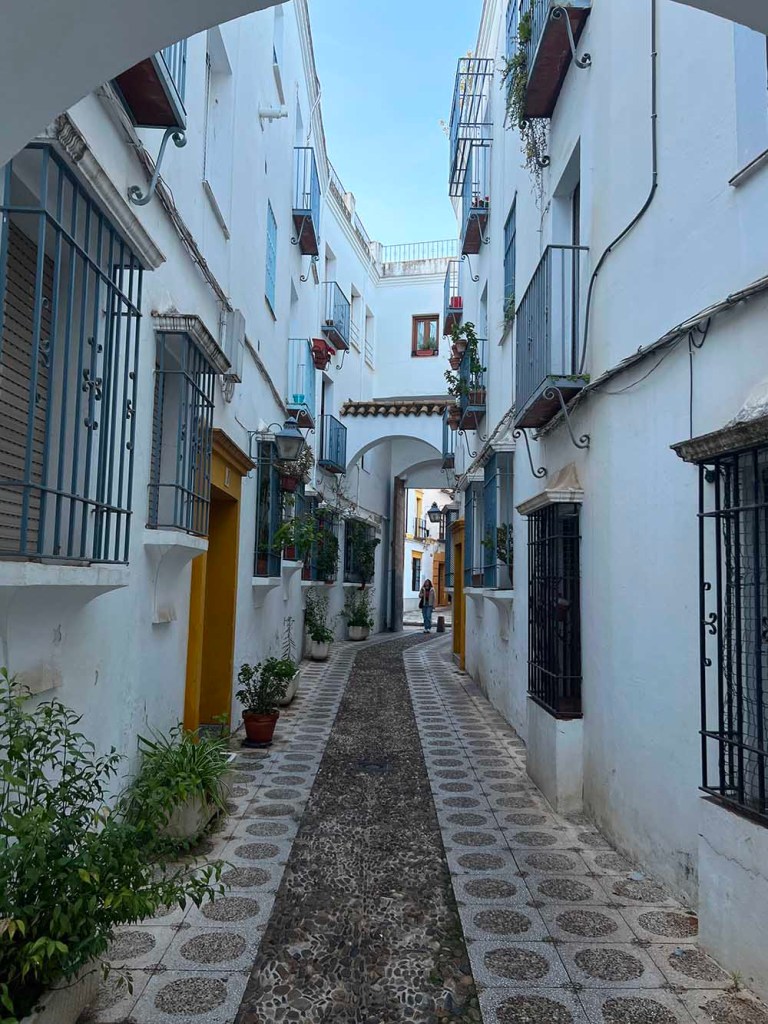
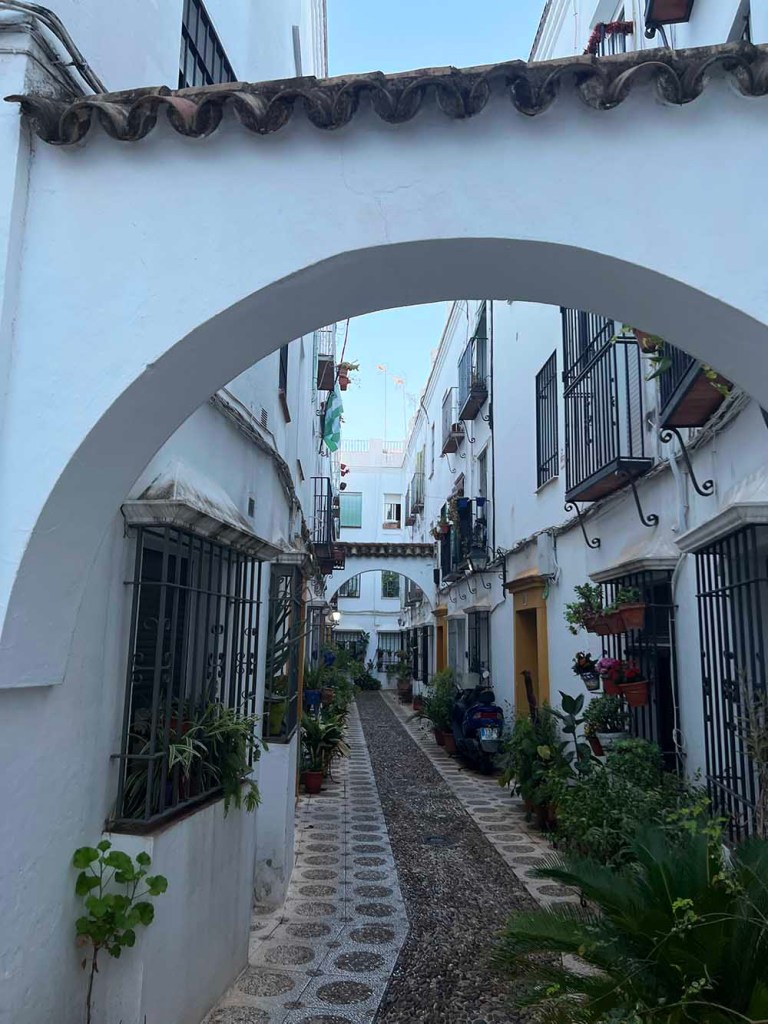
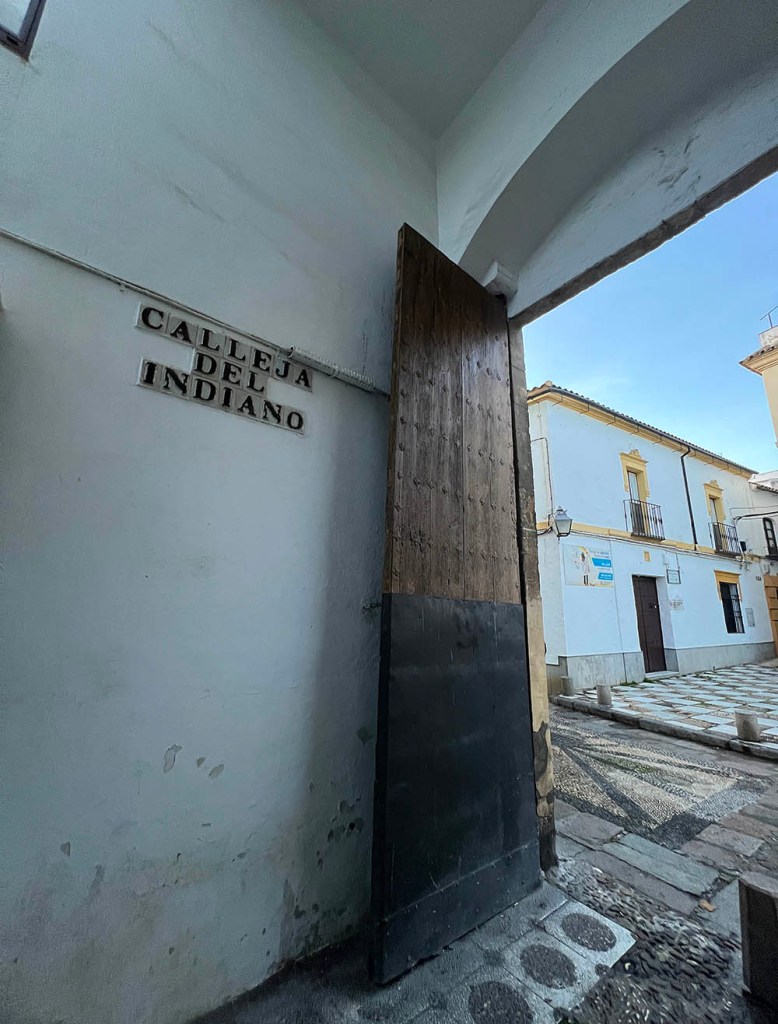
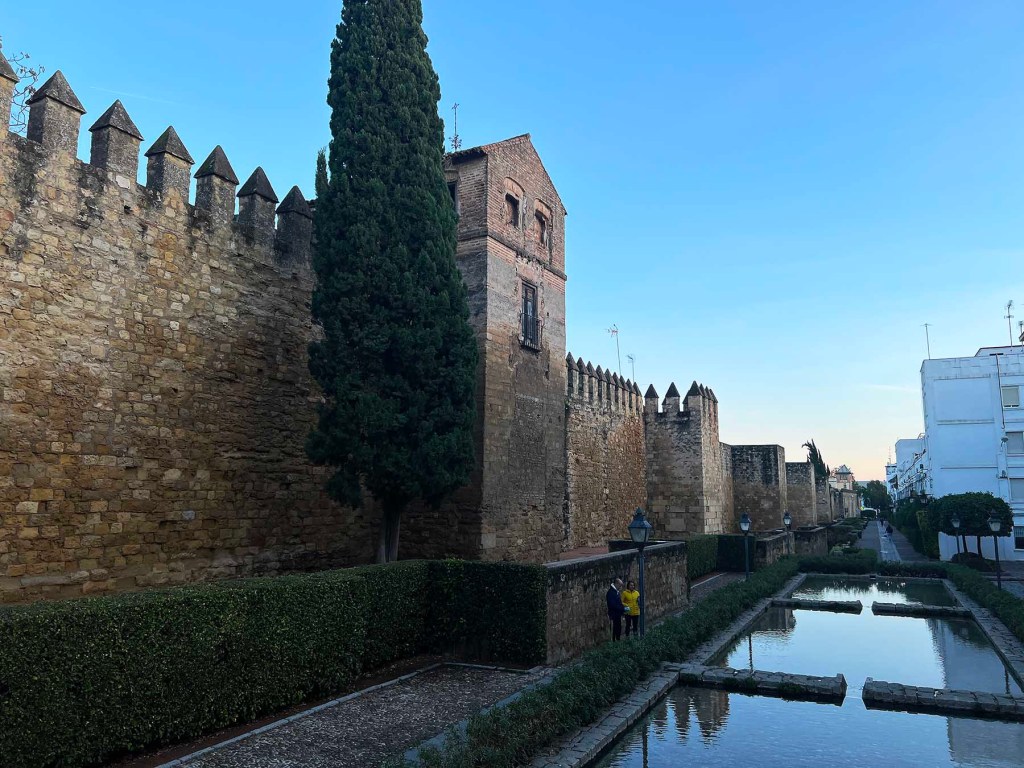
• Cerca de la Puerta de Almodóvar.


Click the thumbnails to enlarge.
Haz clic en las miniaturas para ampliar.

Boud.
What an amazing place. It’s like living in the middle of an artwork. The tiling, the pavers, the building detail. I’m glad you moved there, mainly because of the virtual walking tours you give us. And the way you research what you’re seeing. Thank you.
I think the train set is finally home!
Boud:
Thanks so much. I debate how much history to share, but some of the images seem to beg for their stories. Being able to share here makes my walks even more exciting for me.
What a walk on those ancient streets; I love all the architecture, too, of course. And the new train “station” alcove, though who is that woman dancing there?
Bob:
That’s a copy of a work by photographer Ruven Afanador. It was done by a local artist in Sevilla. We bought it right after we arrived there at a weekly art sale outside the Museum of Fine Arts.
How nice that SG’s train set is seeing the light of day again!
Debra:
It’s making us both smile.
Isn’t it amazing to look at the facade of a building thinking it might just be one house, but then looking through that open portal to see an entire community of homes lined up on either side of the lovely walkway? Wonderful architecture.
And I love the indoor choo-choo placement, too. Reminder of my old Lionel train set.
Knitwit1950:
It’s so common here to be surprised by stunning gardens or courtyards when you get a glimpse beyond the front door.
The shelves and train look fabulous; what a brilliant idea! My oldest brother (who died last year) has/had our old train set, as old as SG’s, but it lies in boxes somewhere in his stacked high and wide basement–ancient electric transformer controls and all.
wickedhamster:
We learned, after our nephews had grown and left home, that they had had SG’s train set all those years. His sister asked if he wanted it and of course he said yes. It has been on display at times, but has mostly sat in the boxes. So, it’s wonderful to see it so well displayed. Makes us both smile. We still have the transformer and other electrical controls for many of the pieces. The caboose lit up. The tower had a spinning spot light.
What a neat alcove. I love those narrow pedestrian streets – I could live like that.
David:
I love the look and feel of the old streets and neighborhoods. Most of the house we pass have garden courtyards beyond those front doors.
Holy bejeebers, what a place! No wonder you are inspired to keep on walking!
Thanks for the new word (calleja).
I LOVE the corner display area!
Judy C:
Then there’s callejón, which means alley. We are already enjoying the display. More to be done.
absolutely beautiful.
larrymuffin:
Thanks! We’re very happy.
You know, Fuengirola was nice, but it seemed much newer overall. It must be so amazing to now live in a place with so much history. Good on you for walking so far, and the glass shelves look great! Who’s in the drawing? She looks a bit like Divine.
Steve:
When we moved to Fuengirola, we did comment on how much less charming it was than Sevilla or Córdoba. It was beautiful to be right on the sea, but the city itself lacked the historic charm. Honestly, although it was a good life there, it never felt very Spanish.
Almost forgot to mention, the illustration is a copy of a photo by Ruven Afanador by a local Sevillana artist. We bought it right after we moved there.
Walking onto those streets must be like a trip back in time.
Kirk:
Oh, it is. Just incredible.
Cordoba is revealing all its beauty spots to your camera, Scoot! Your descriptions are very helpful for those of us who are living vicariously through your travels.
The alcove shelves are a perfect display method for SG’s vintage train set or any treasured items that need to be safely displayed. Makes me wish I had an alcove or two, LOL!
Tundra Bunny:
Thanks! I never know how far to go with the history, but some photos shouldn’t be shared without some background. SG has been very creative again lately with using spaces here. I love the alcove now.
Yep….I like this town much better then where you were…that’s says a lot from me, who loves to seas so. Not to mention you have me wanting to move to Spain now. I absolutely loved the pictures each with my morning coffee.
And I remember the picture of the dancing fat lady so well.
Mistress Borghese:
Yeah, Fuengirola was a beautiful location and a good life, but Córdoba is what we truly love. This is truly Spain.
I don’t know what’s the best part of this post… the beautiful scenes from your walk or SG’s trains. What a perfect way to display them! My dad had a fantastic train set, but unfortunately it was sold 50 years ago.
Kelly:
I have a sad (for me) story about my childhood train sets that I’ll share some time. So glad we have SG’s.
I wonder how many miles you will walk before your new city becomes familiar. It is truly like living in the middle of an artwork as Boud said. And so many styles and influences. You can never grow tired of it.
Good job of installing those shelves. They display the train quite nicely.
Moonsigh
Ms. Moonsigh:
Parts of the city and how they connect to each other are already becoming familiar but there’s so much I haven’t covered yet. What a place!
Your place is giving my Next-Door Neighbor, with her beautifully appointed museum style decor, a run for her money.
Shirley:
That’s my goal!
LOVE X 3 !!!! …….the American Flyer set……the Old City…..the Jewish quarter.
You guys have chosen well.
Jim:
I am in love with Córdoba. I look forward to the spring, when things have settled down for us and we can relax and enjoy it.
That does look like a synagogue or maybe even a cathedral.
Job well done on the glass shelves, very classy.
Anonymous:
I do have to explore the Jewish Quarter. SG has some inspired ideas. I was going to display other of our stuff, which would have been nice, but the train set is so much fun.
All that gorgeousness – and Ruven Afanador‘s flamenco lady, too! How you spoil us. Jx
PS love the display of the train set.
Jon:
A great day here. I love Ruven Afanador’s work. And we liked the drawing producing by the artist in Sevilla. The photo is so powerful.
I love the train display! Simply gorgeous.
Walt the Fourth:
It’s so fun to have on display.
The photos from your walk are great and I love the glass shelves with the train set. But how did you get that drawing of me that’s hanging on the wall? It’s a little embarrassing. I’ve changed quite a bit since I entered my 60s.
Love,
Janie
janiejunebug:
That image has gotten around. I love your attitude!
Makes me wonder the Jewish ghetto has probably a cuisine all its own developed through centuries of mix of cultures. Like the Jews of Rome with 2500 of history they have their own cuisine so very different from any I experienced before.
larrymuffin:
I think there are some specialties in the restaurants but not any I’ve been to.
four miles? Good for you!
Urspo:
Thanks. That was a lot of meandering in and out of little streets.