La versión en español está después de la versión en inglés.
The phrase “dead as a doornail” (“dead as a nail” in Spanish) has been used for centuries, dating back to the 1300s. The poet, William Langdon wrote the narrative poem “Piers Plowman” in the 1370s and included the phrase. The poem even includes the first reference to the tale of Robin Hood. William Shakespeare used the idiom in the 1500s in “Henry IV.” And of course Charles Dickens wrote in the 1800s: “Old Marley was dead as a doornail.”
Doornails are long nails or spikes hammered through wood to increase the strength of a door. The protruding ends are then “dead-headed,” by hammering and bending them into the surface of the wood. It wasn’t likely they could ever be removed. Hence, as dead as a doornail. When buildings were demolished, valuable nails were removed for reuse. But not doornails. It would be nearly impossible.
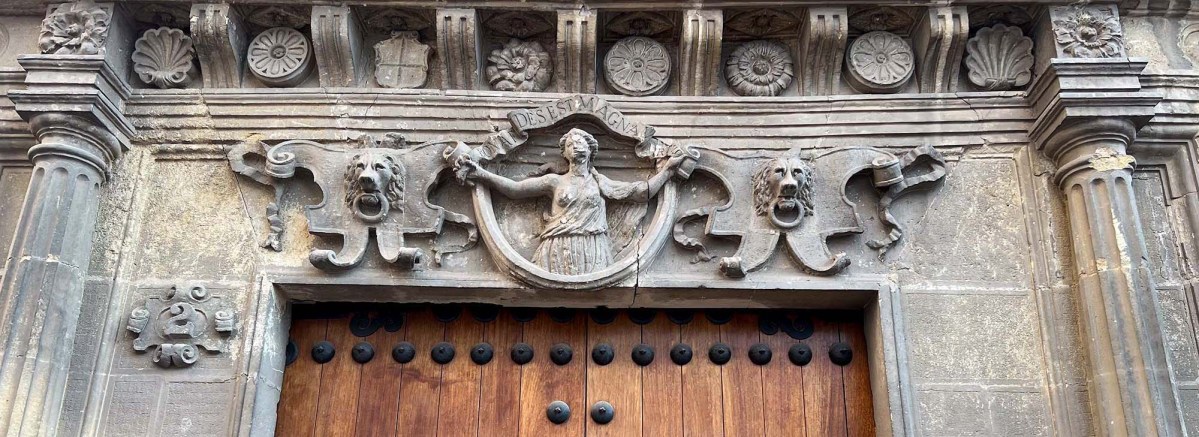
I wandered the streets for just over an hour last night looking for old doors with doornails. I took over 200 photos (of other interesting things, too). Then I went out this afternoon and took another 76 photos, many of them doornails. So here’s our first round of doornails and their deadness. I also took photos of the complete doors, but that would be a bit much in one day. And there were a lot of nice knockers and other things of interest. So plenty more to come.
La frase “muerto como un clavo” se ha usado durante siglos, desde el siglo XIV. El poeta William Langdon escribió el poema narrativo “Piers Plowman” en la década de 1370 e incluyó la frase. El poema incluso incluye la primera referencia al cuento de Robin Hood. William Shakespeare usó la expresión en el siglo XVI en “Enrique IV”. Y, por supuesto, Charles Dickens escribió en el siglo XIX: “El viejo Marley estaba muerto como un clavo”.
Los clavos para puertas son clavos largos que se clavan en la madera para aumentar la resistencia de una puerta. Los extremos salientes se “descabezan” martilleándolos y doblándolos contra la superficie de la madera. Era improbable que pudieran quitarse. Por lo tanto, estaban tan muertos como un clavo de puerta. Cuando se demolían edificios, se extraían clavos valiosos para reutilizarlos. Pero no los clavos de puerta. Sería casi imposible.
Anoche deambulé por las calles durante poco más de una hora buscando puertas antiguas con clavos. Tomé más de 200 fotos (de otras cosas interesantes también). Luego salí esta tarde y tomé otras 76 fotos, muchas de ellas de clavos. Así que aquí está nuestra primera ronda de clavos y su aspecto deslucido. También tomé fotos de las puertas completas, pero sería demasiado para un solo día. Y había un montón de aldabas bonitas y otras cosas interesantes. Así que habrá mucho más.
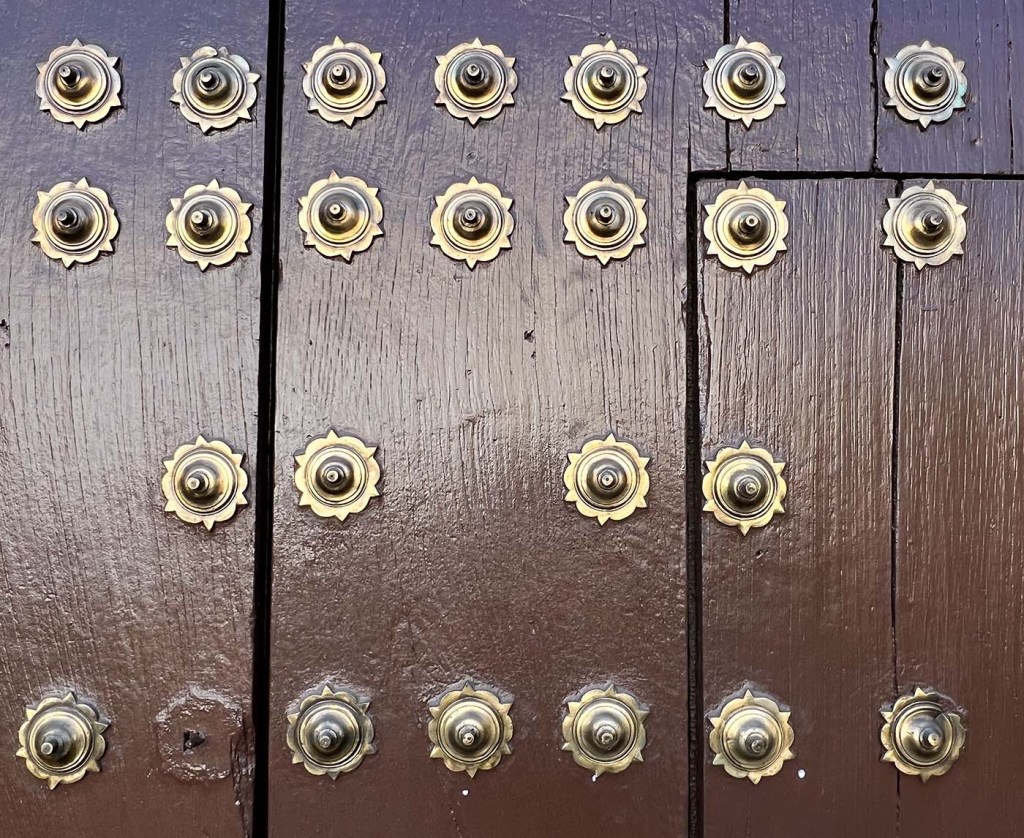
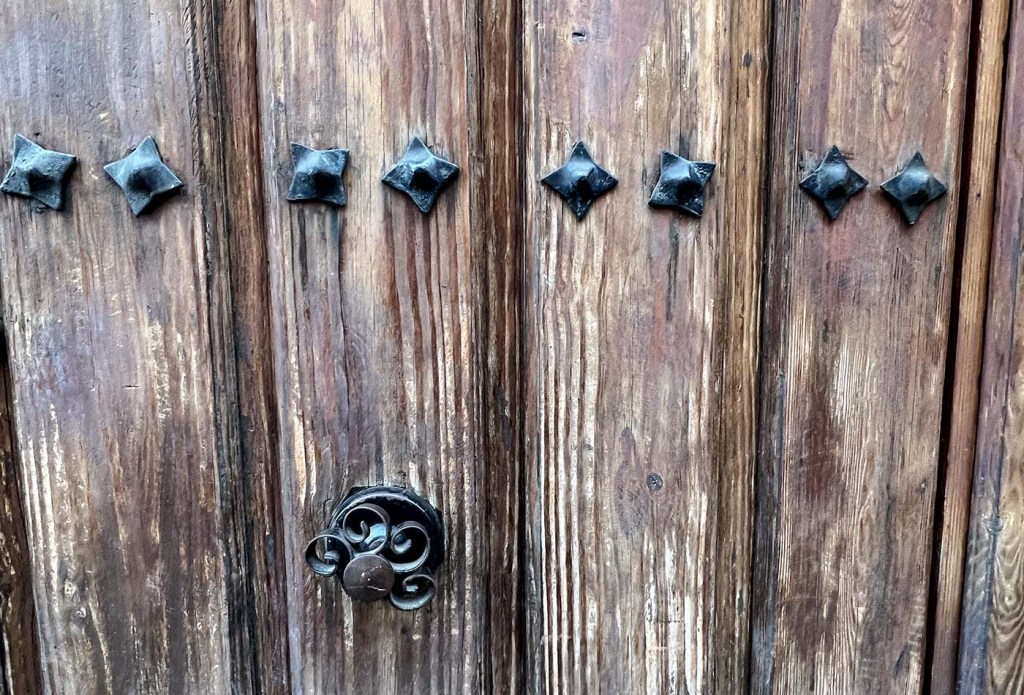
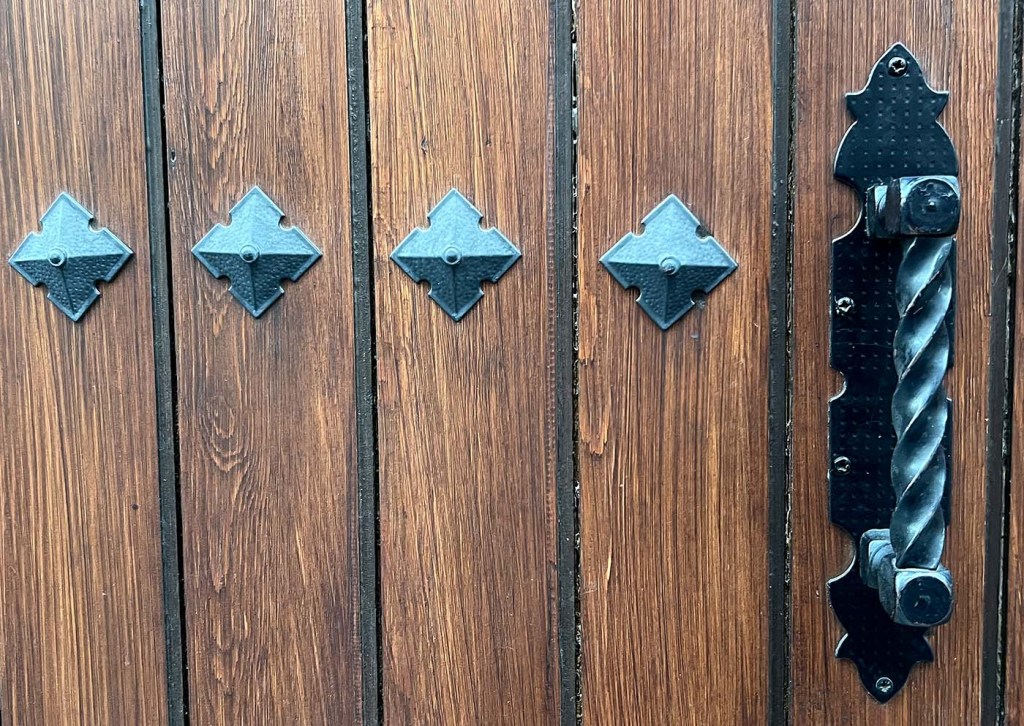
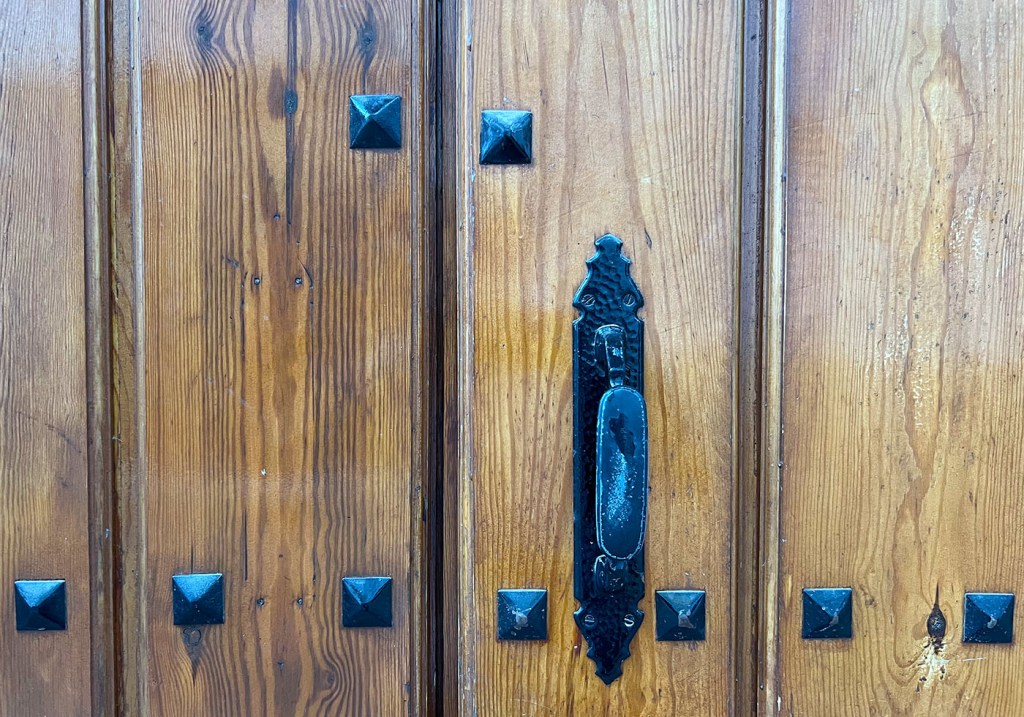
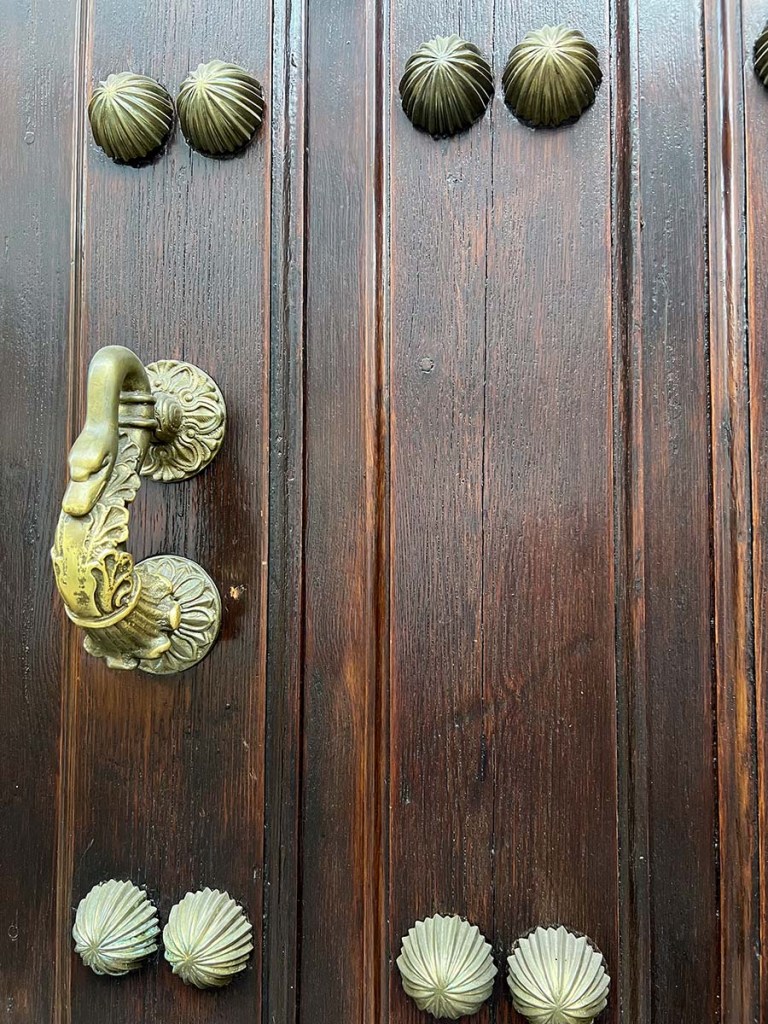
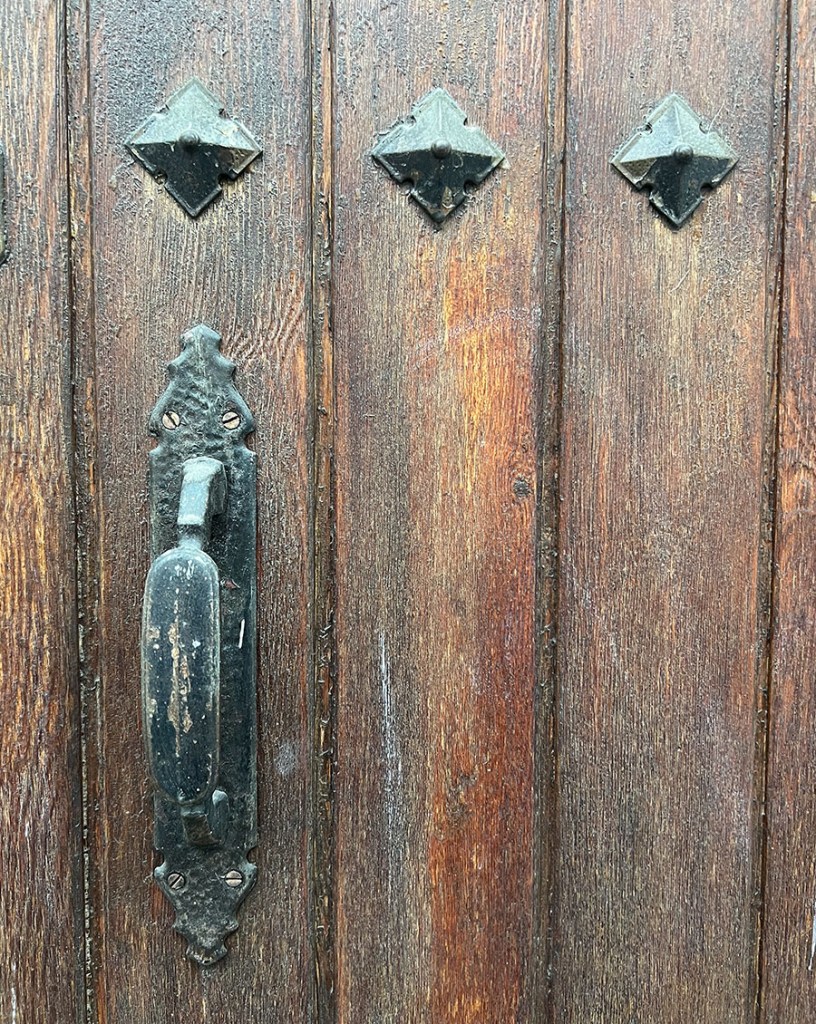
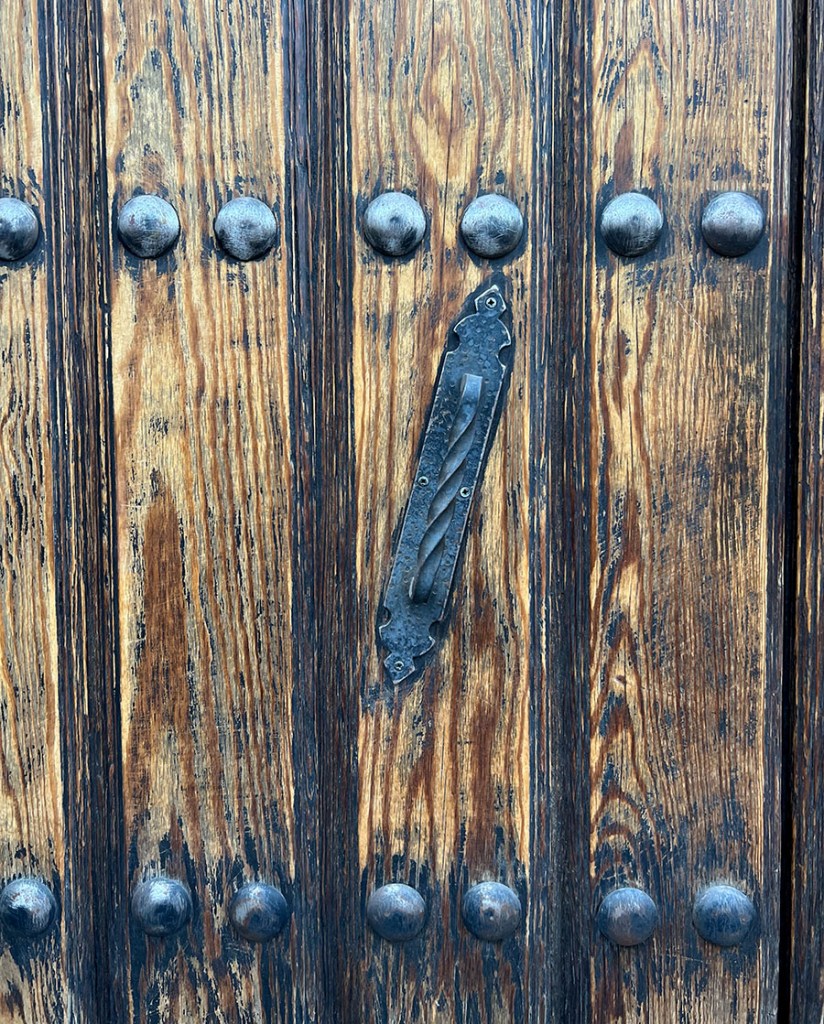
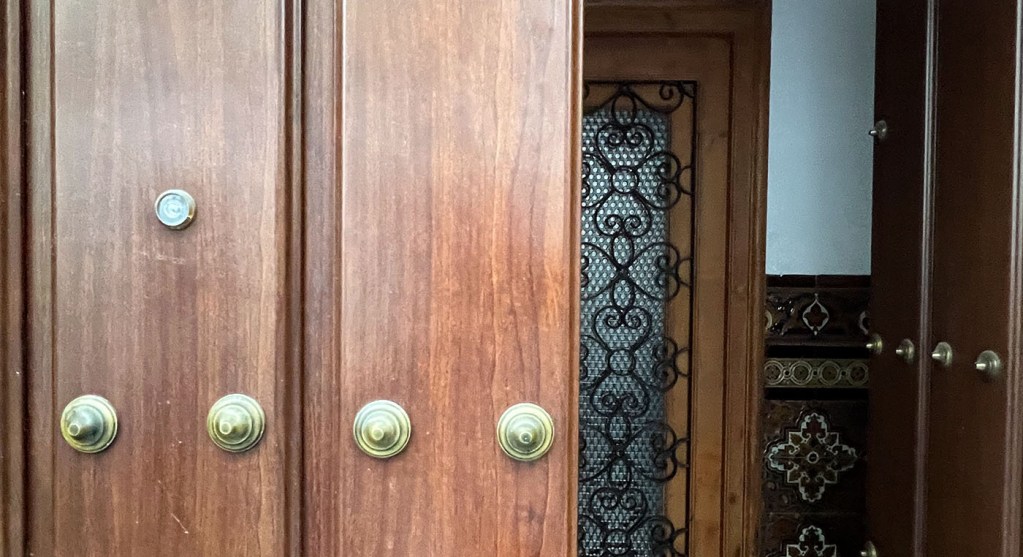
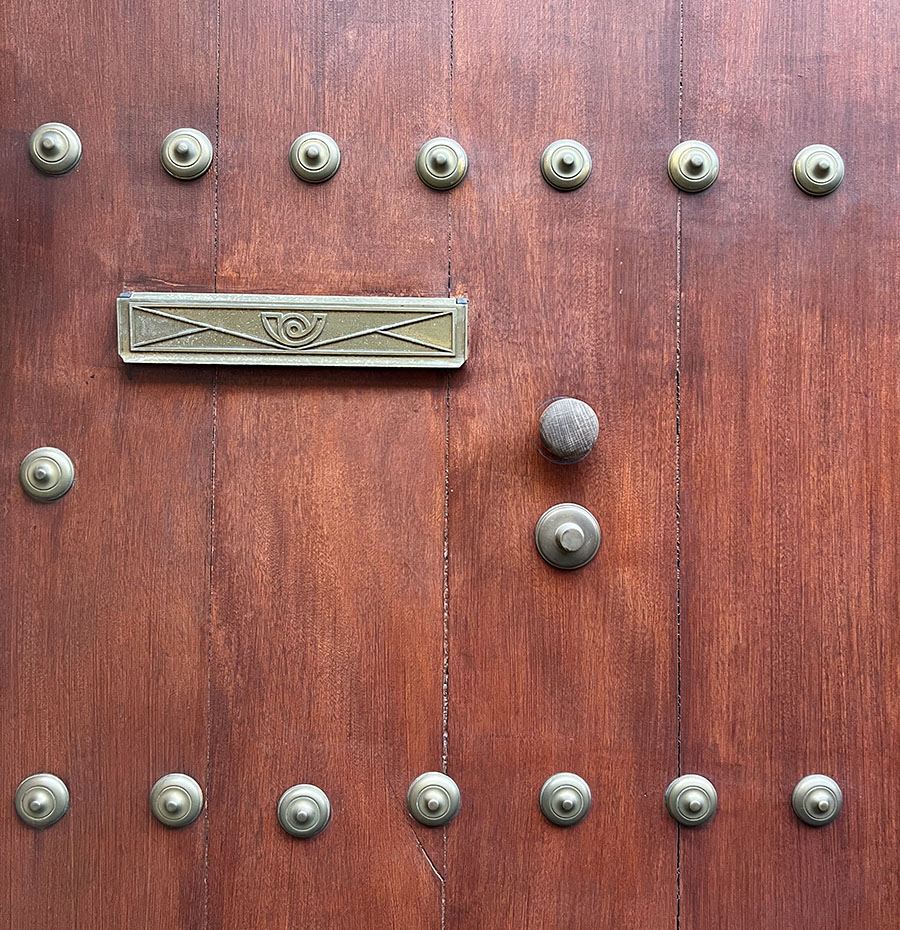
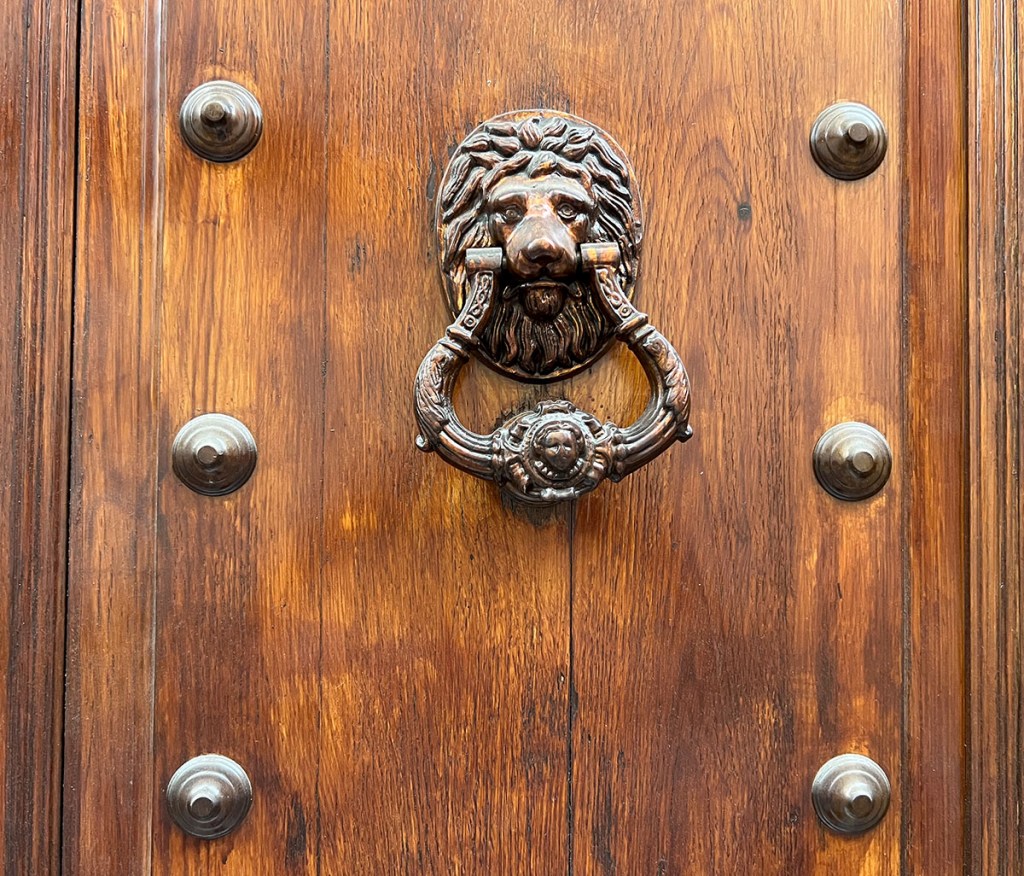
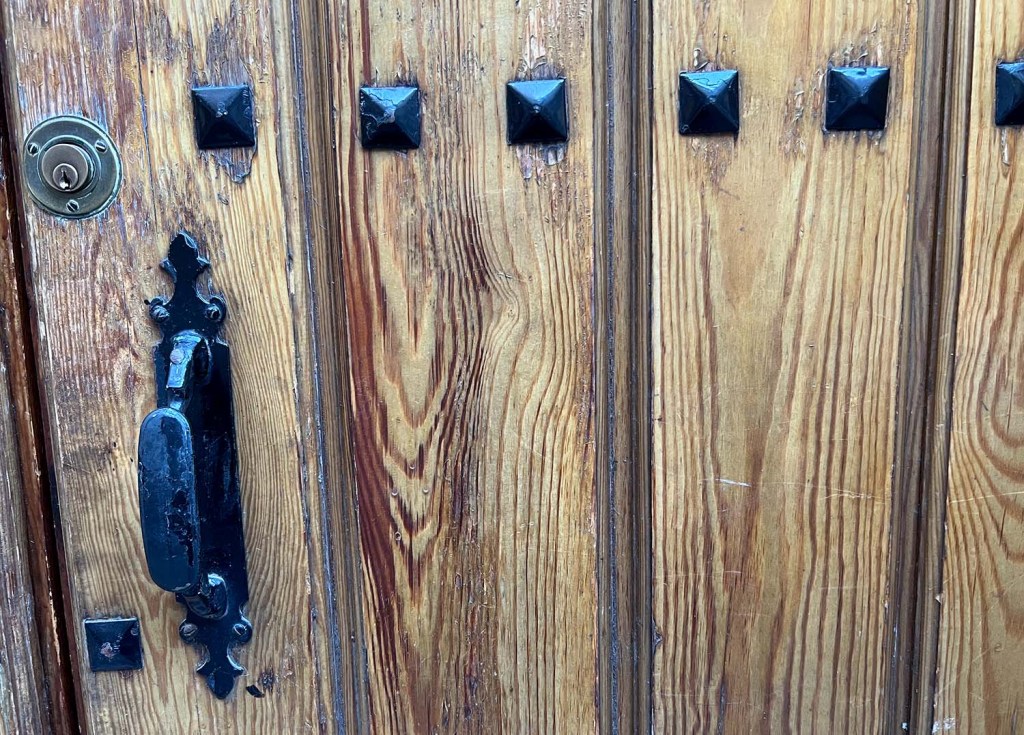
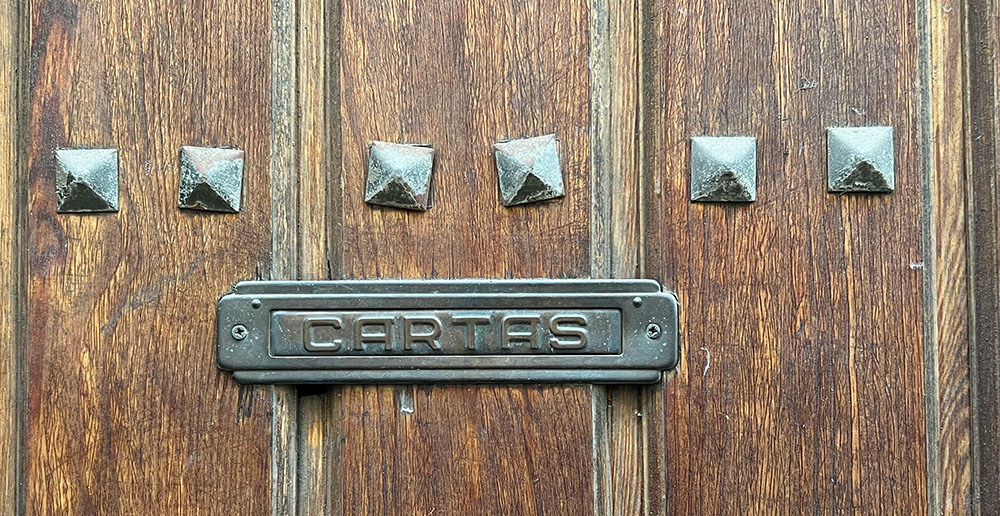
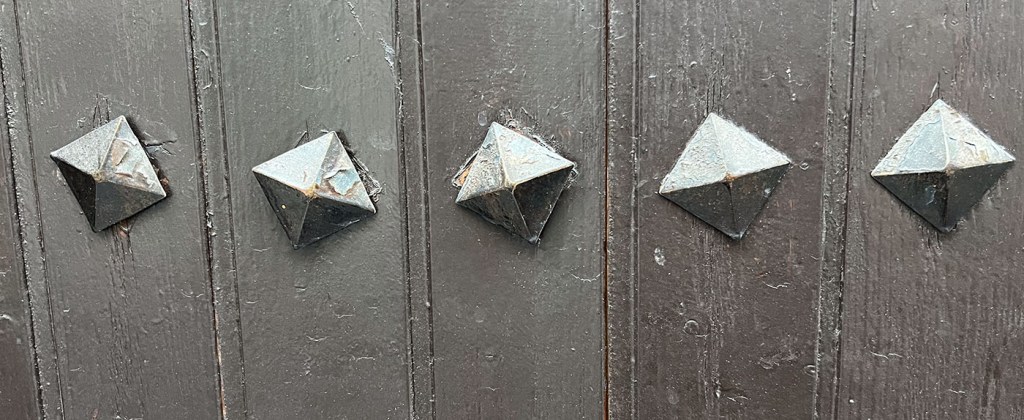

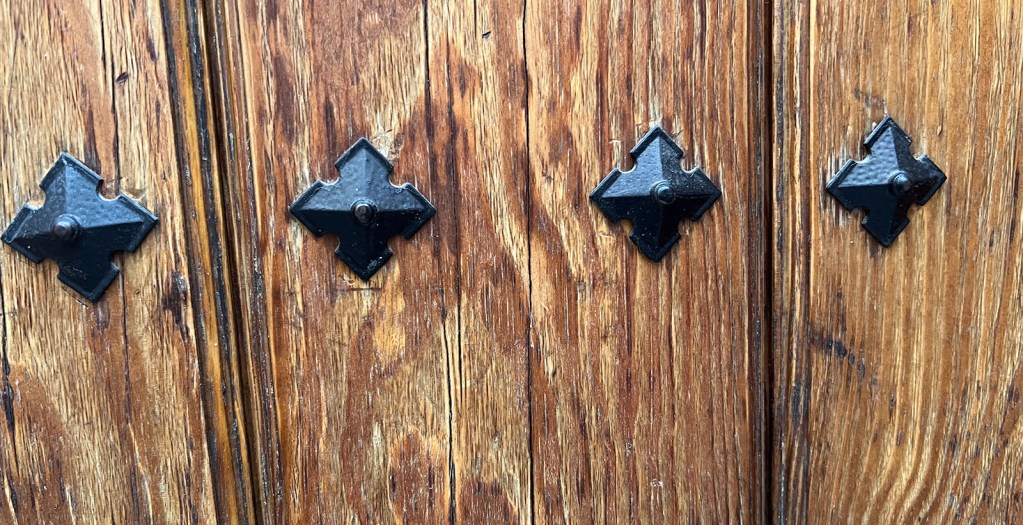
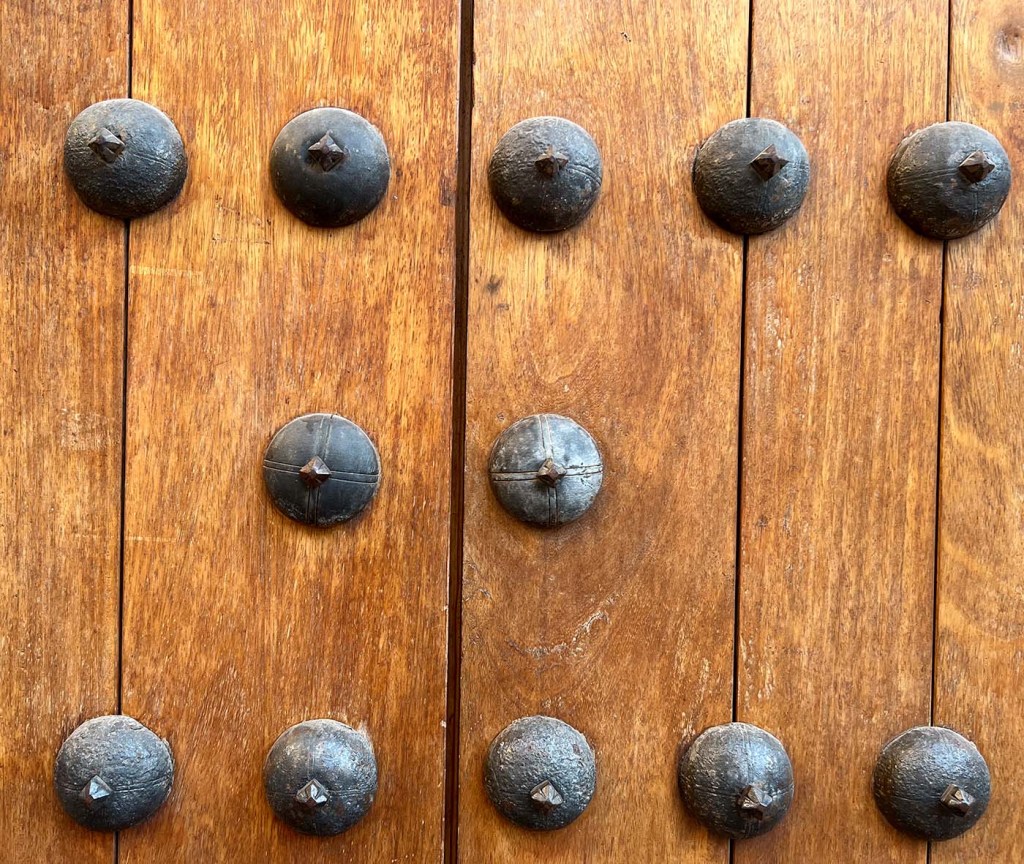
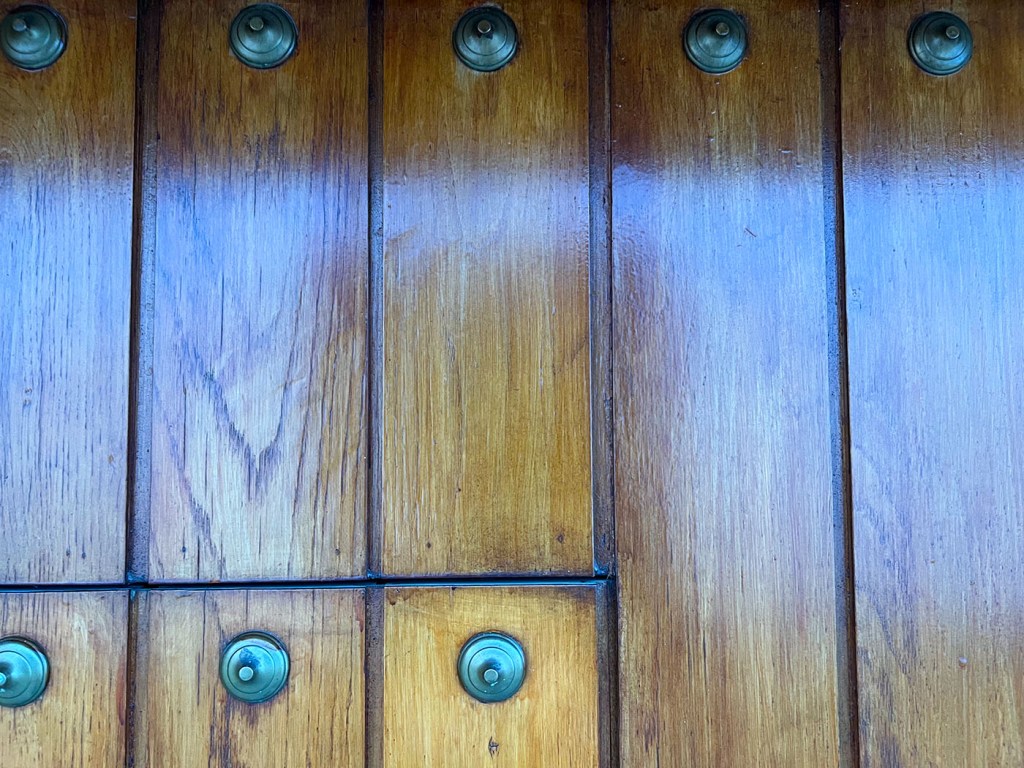

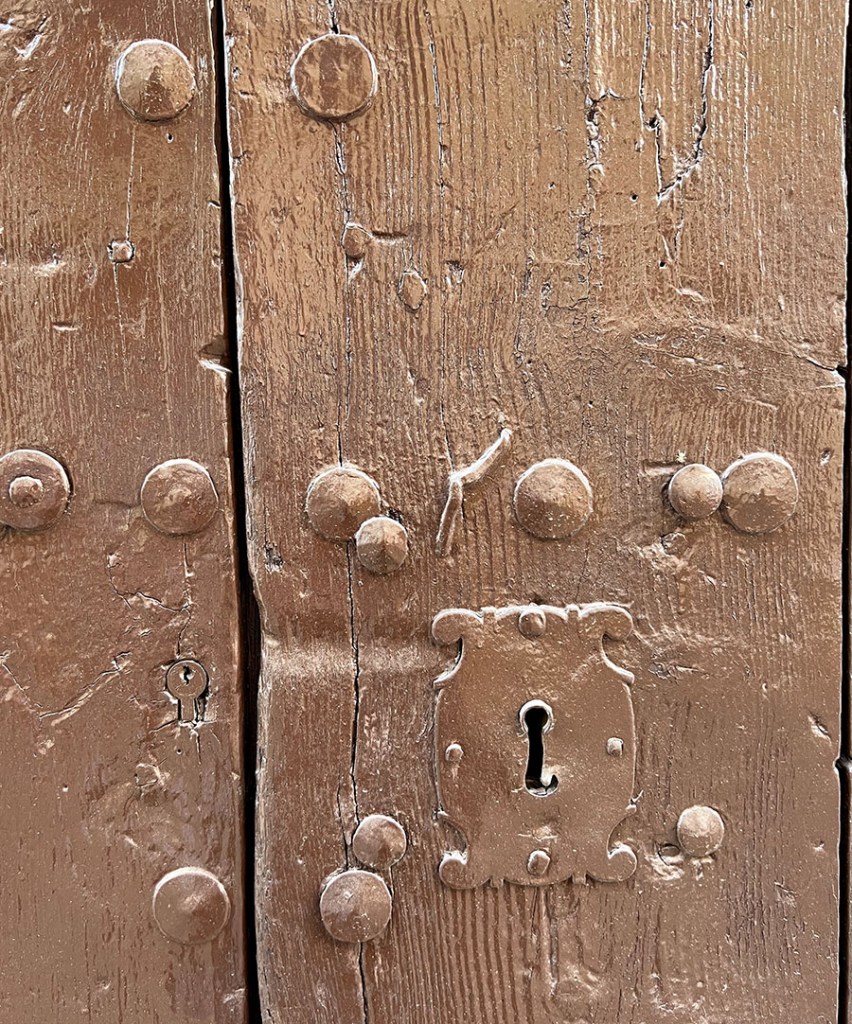
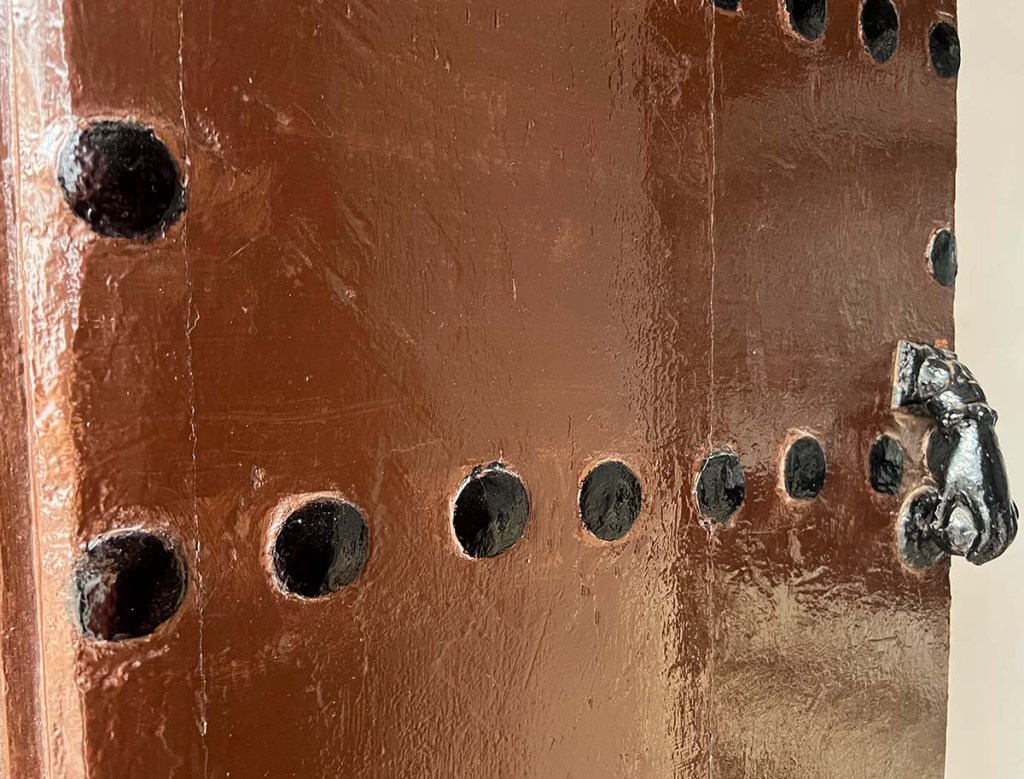
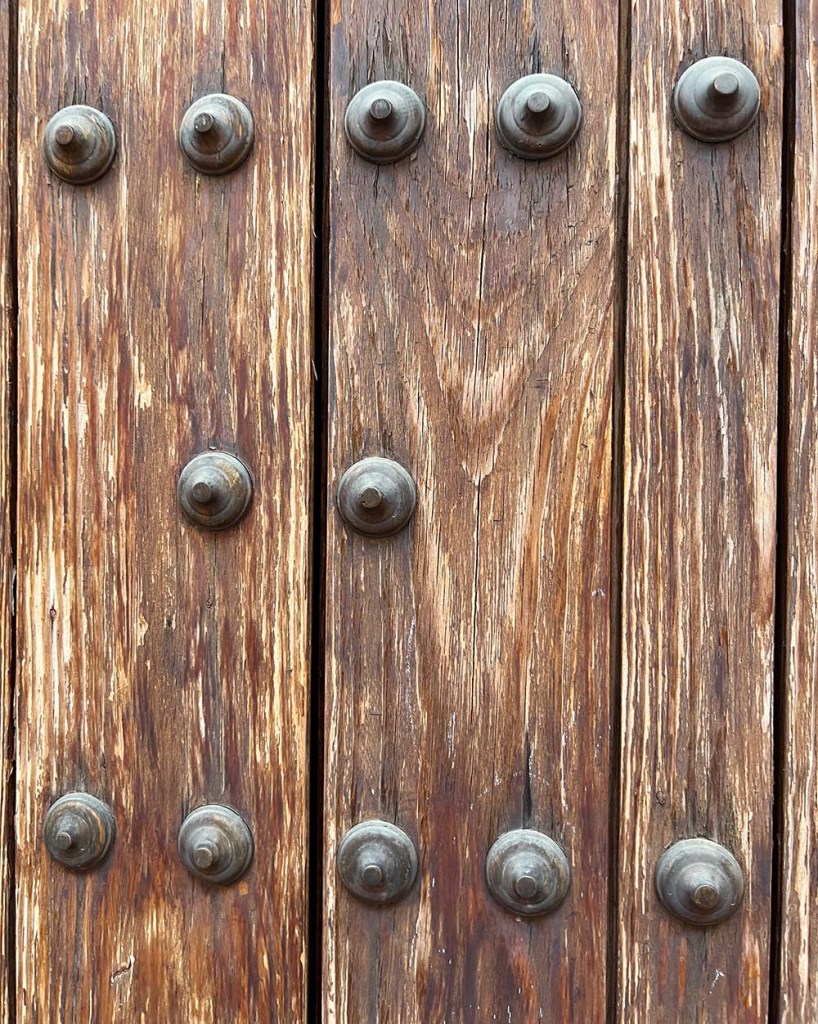
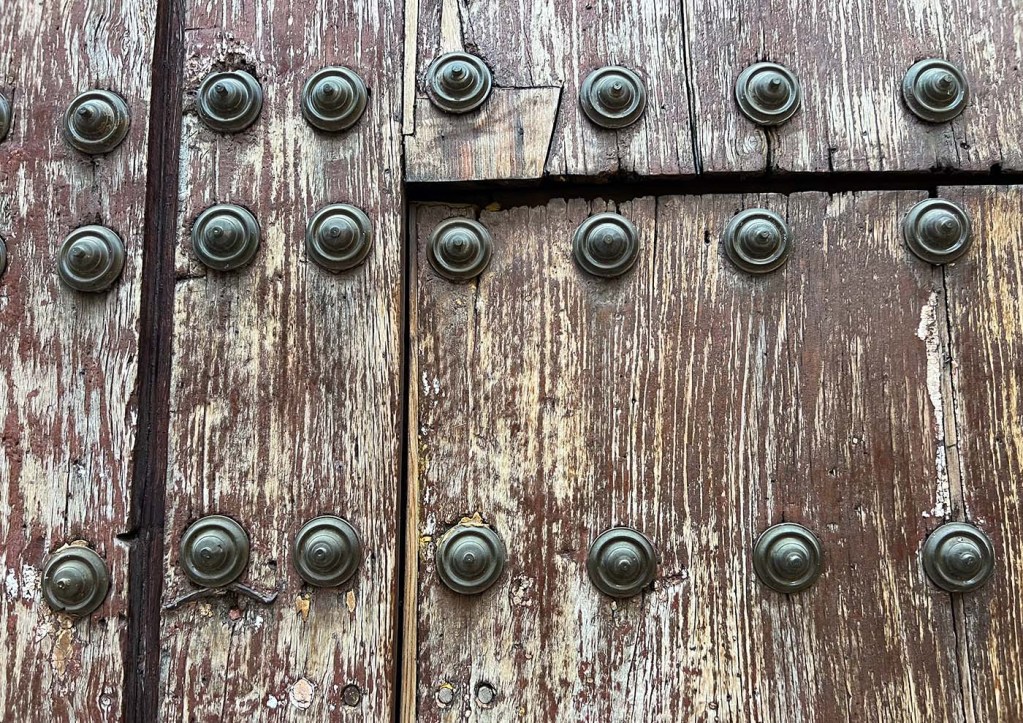
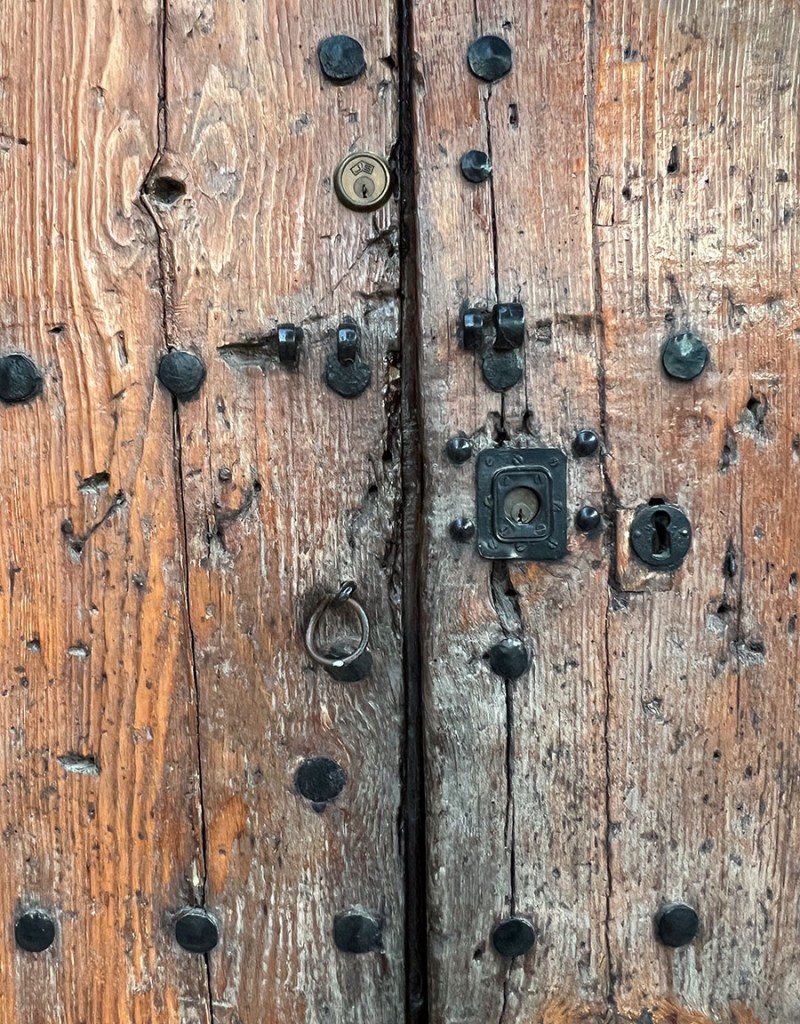
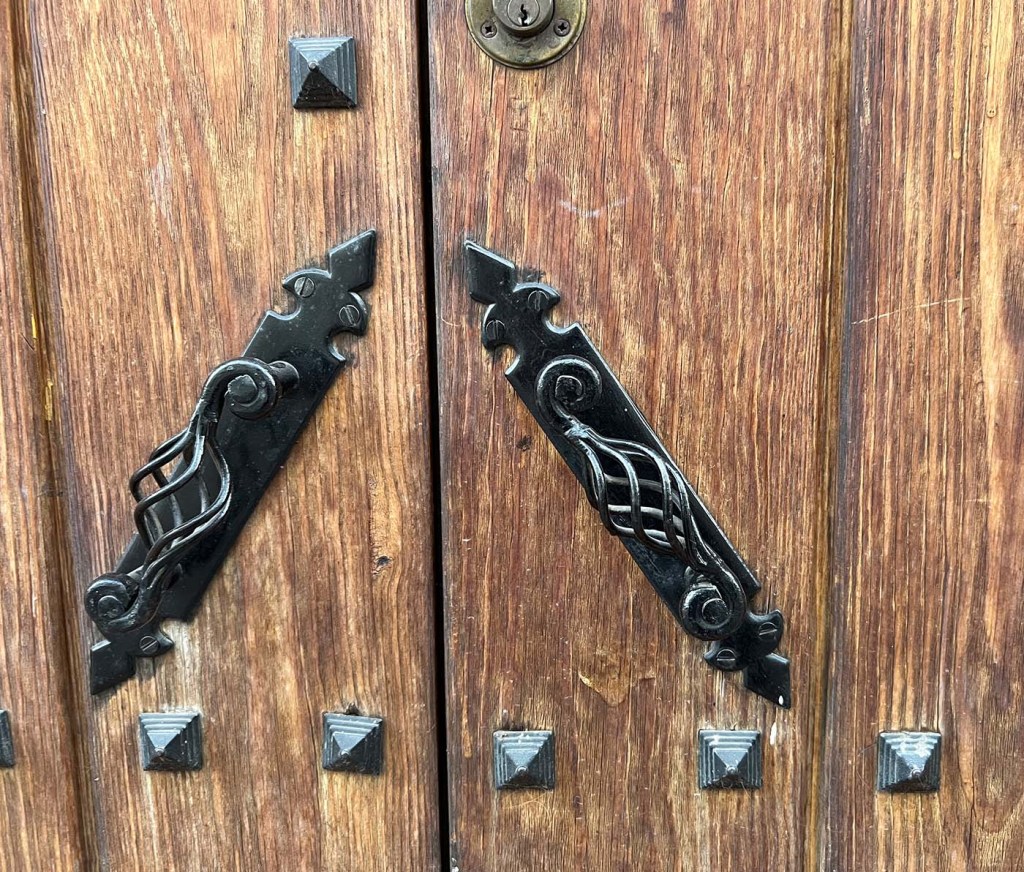
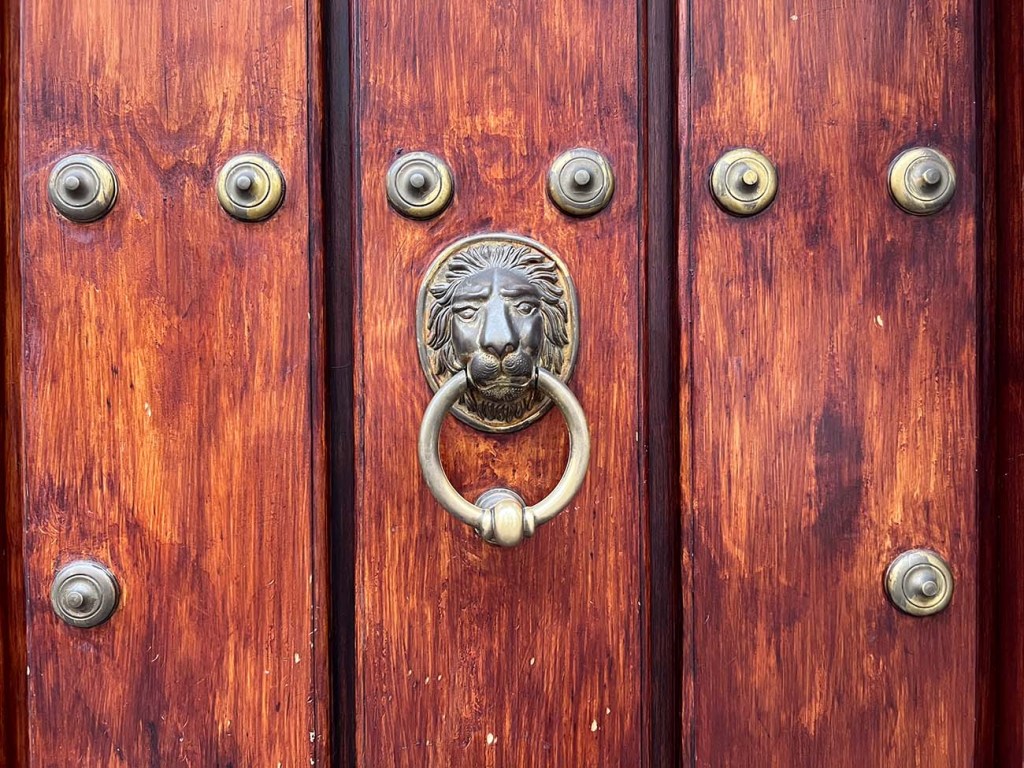
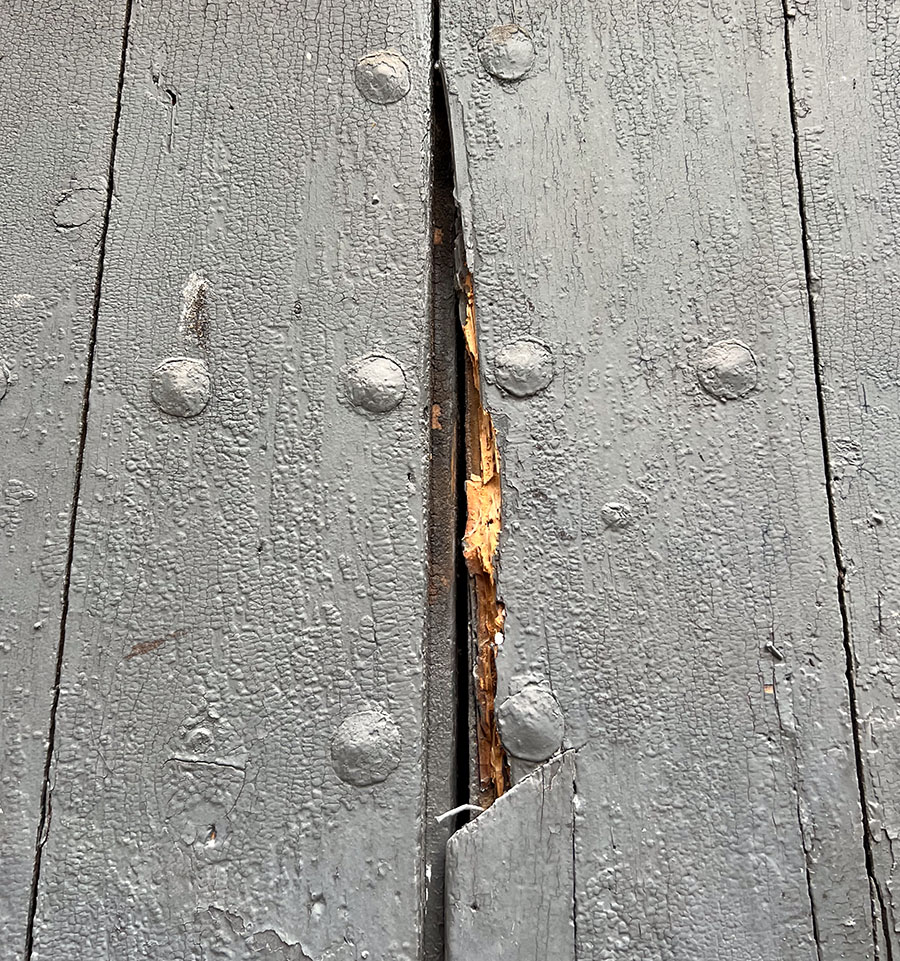
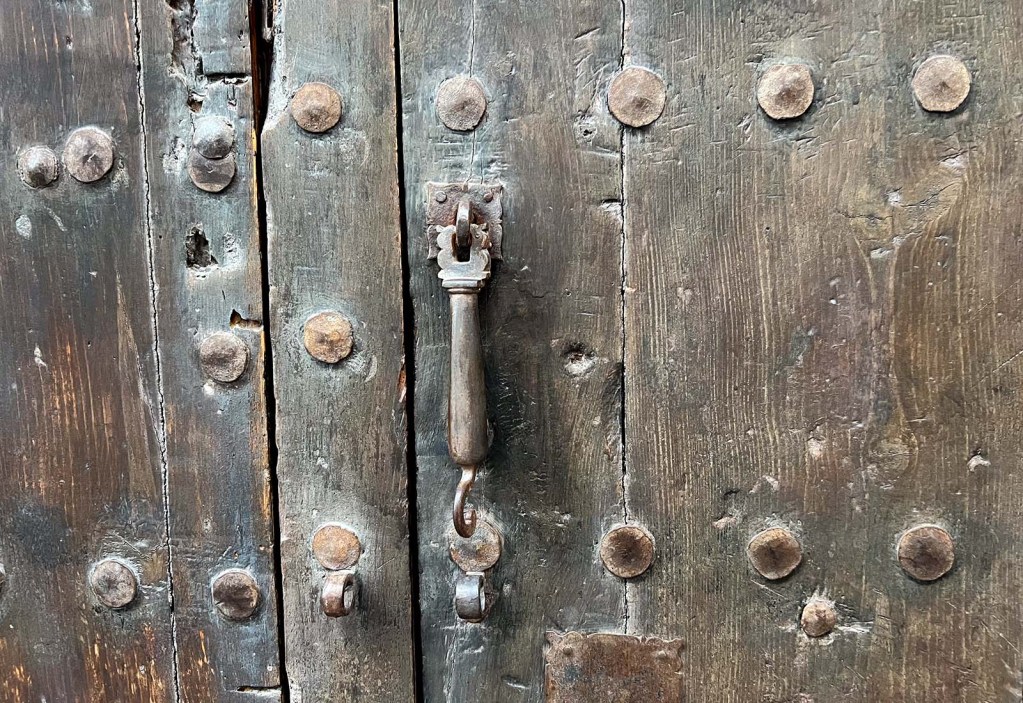
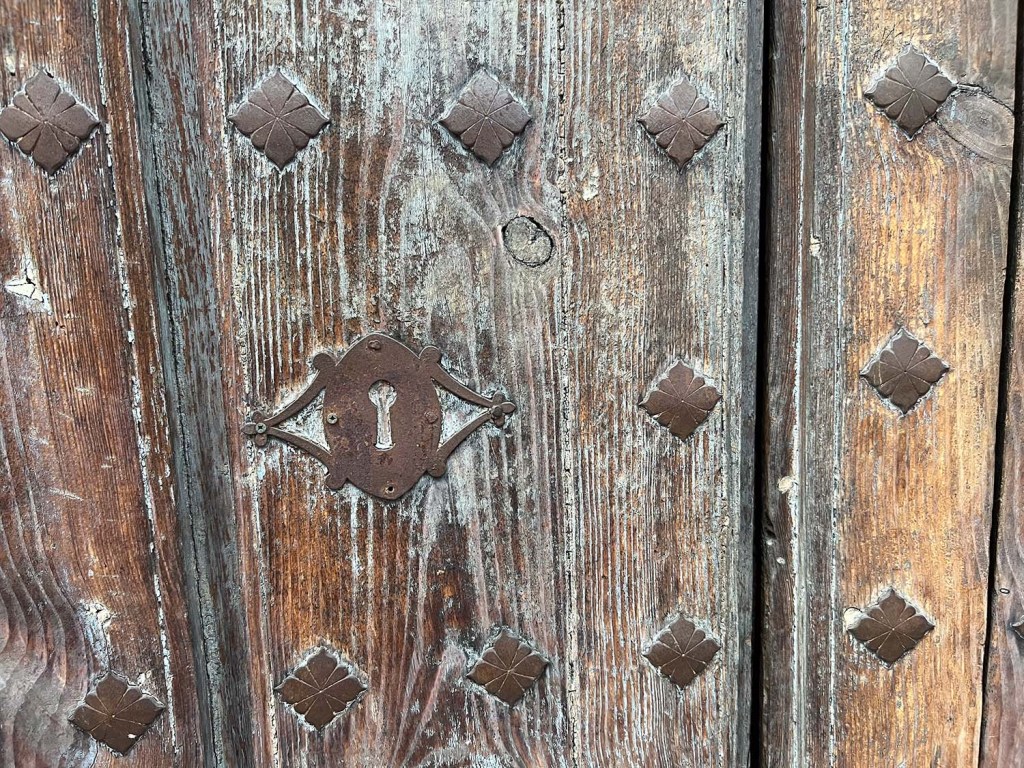
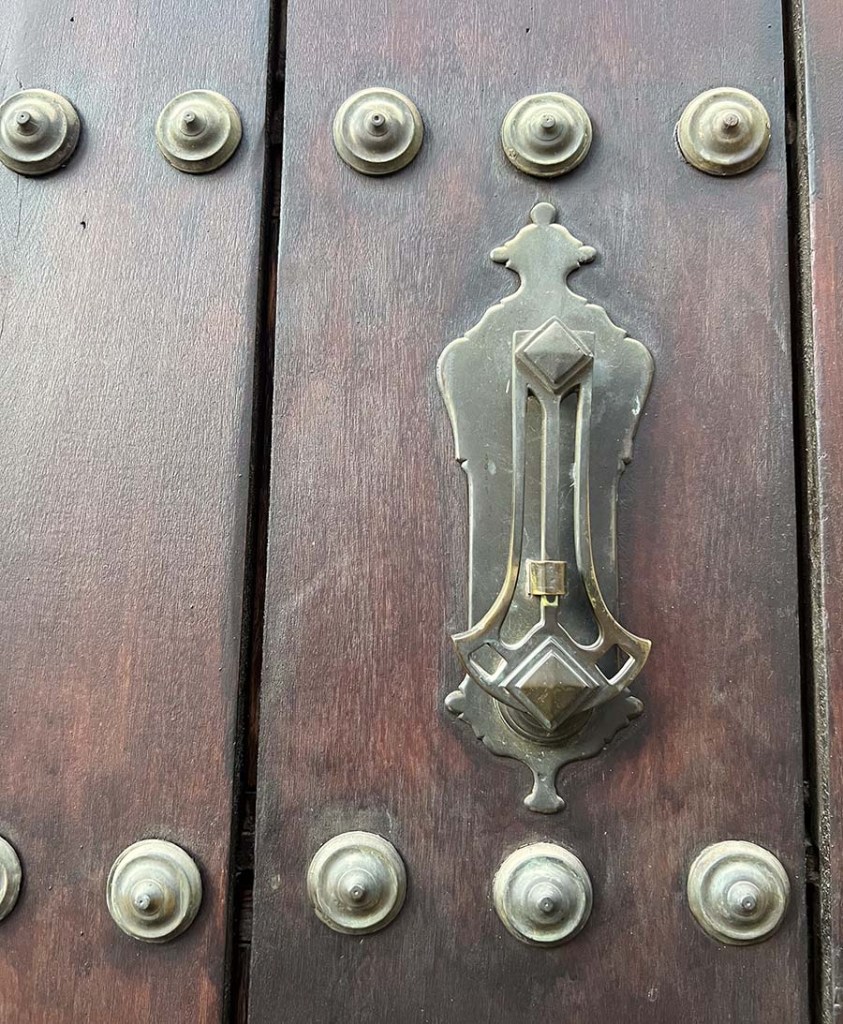
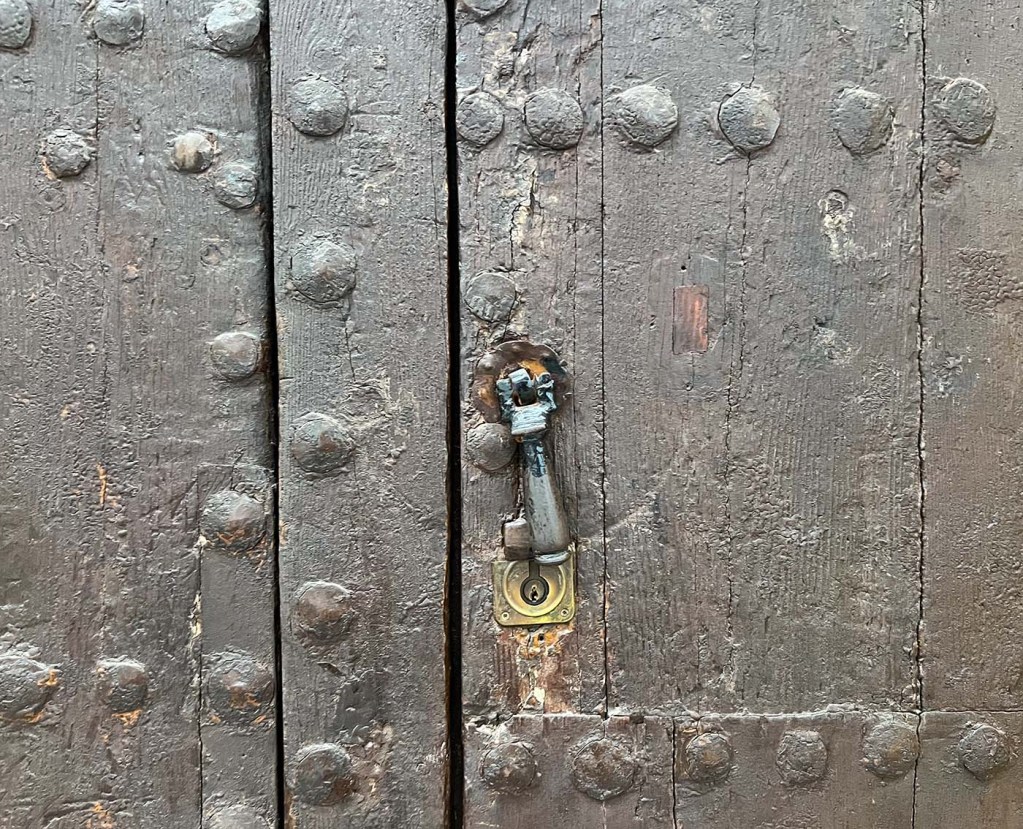
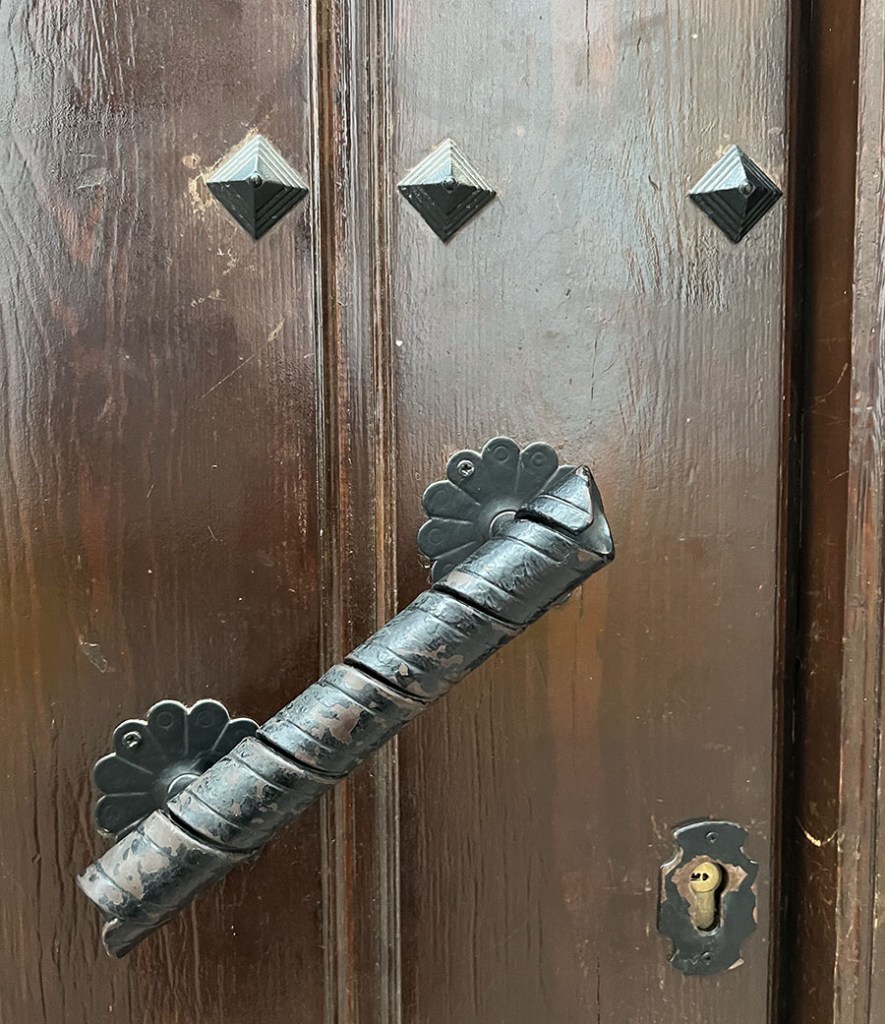
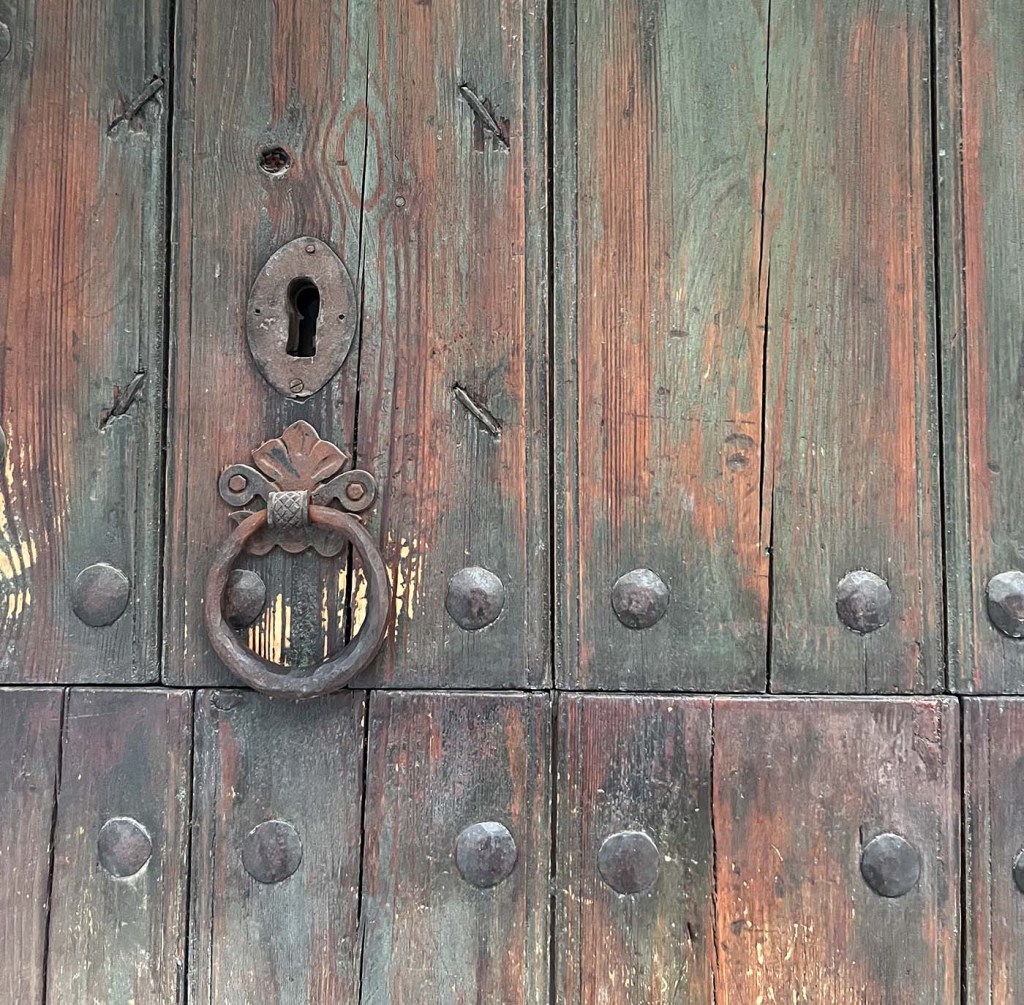
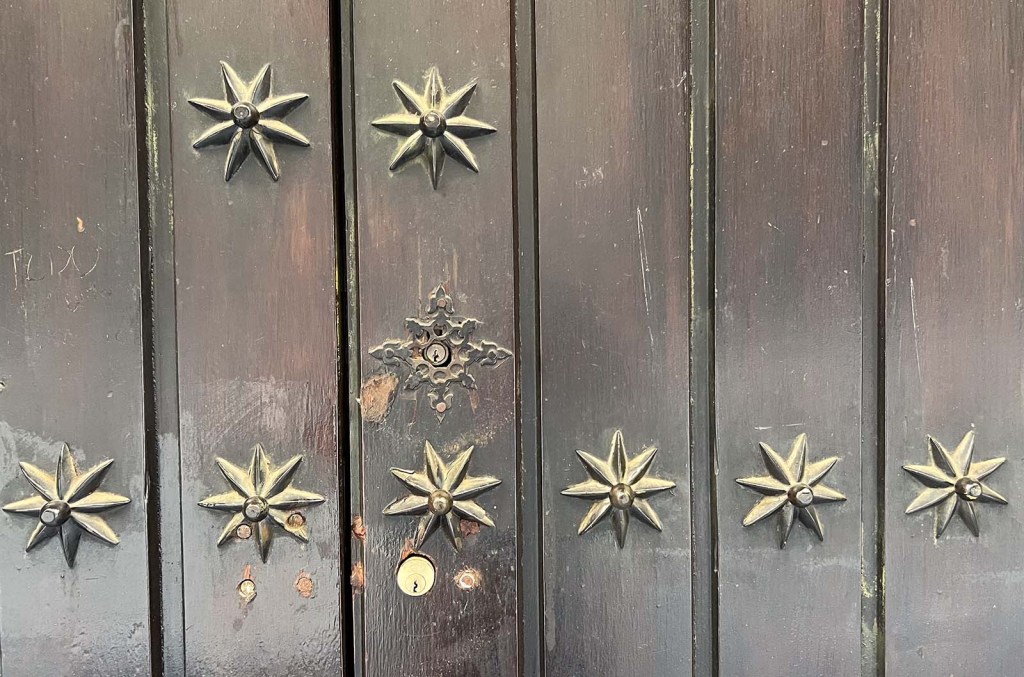
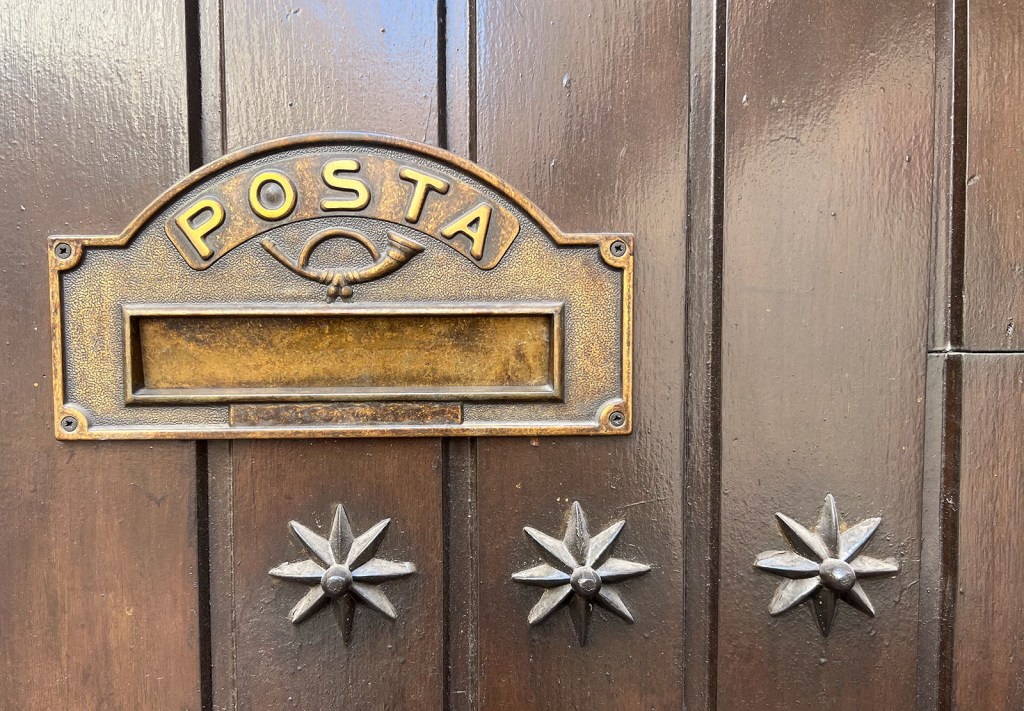
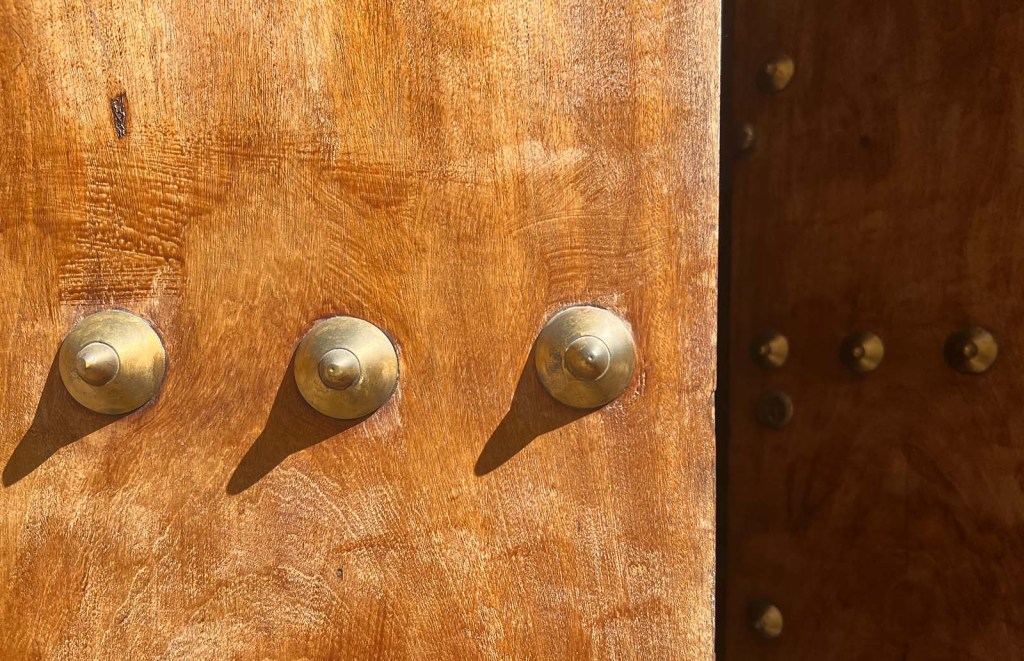
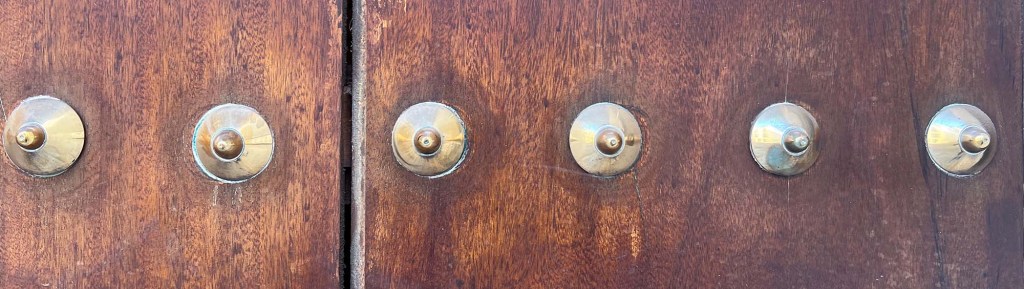
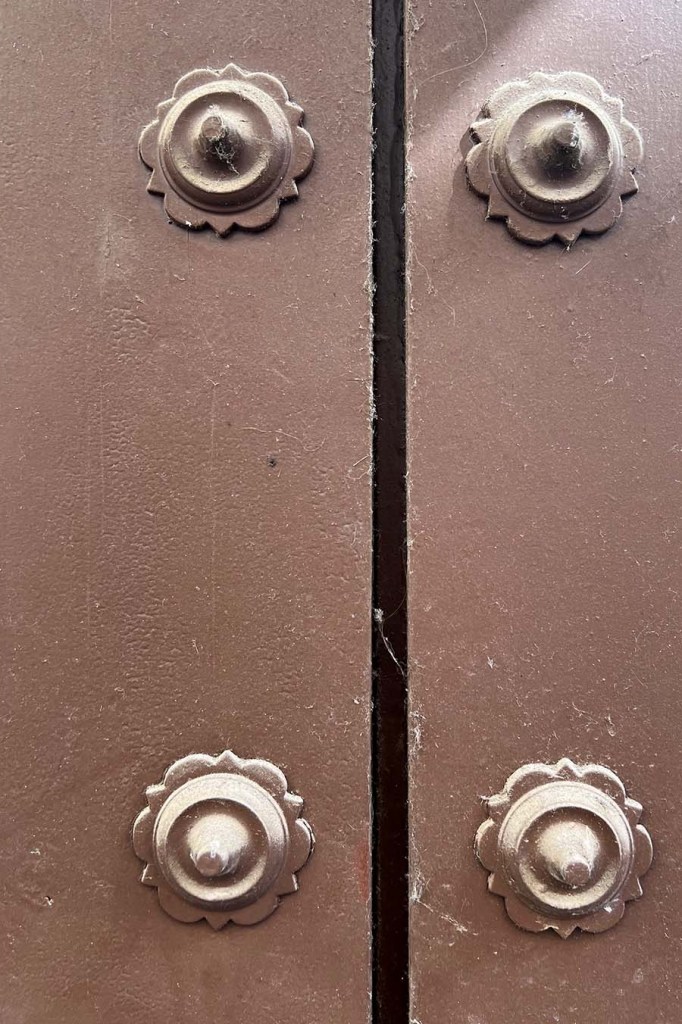
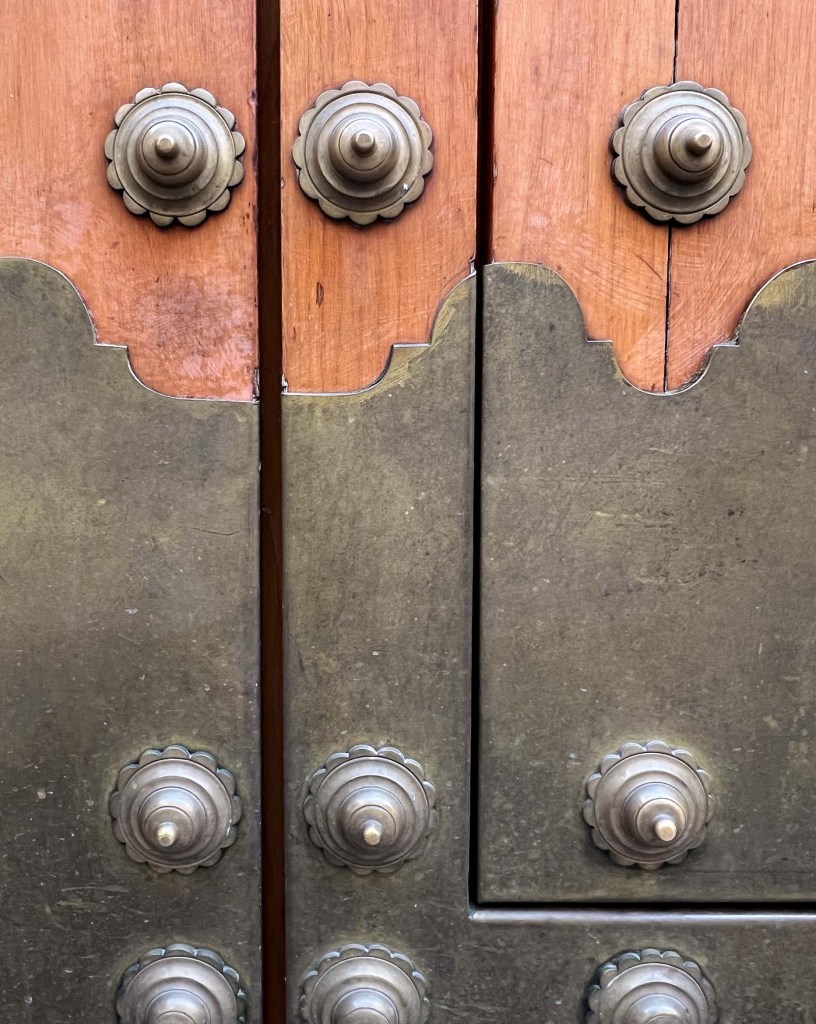
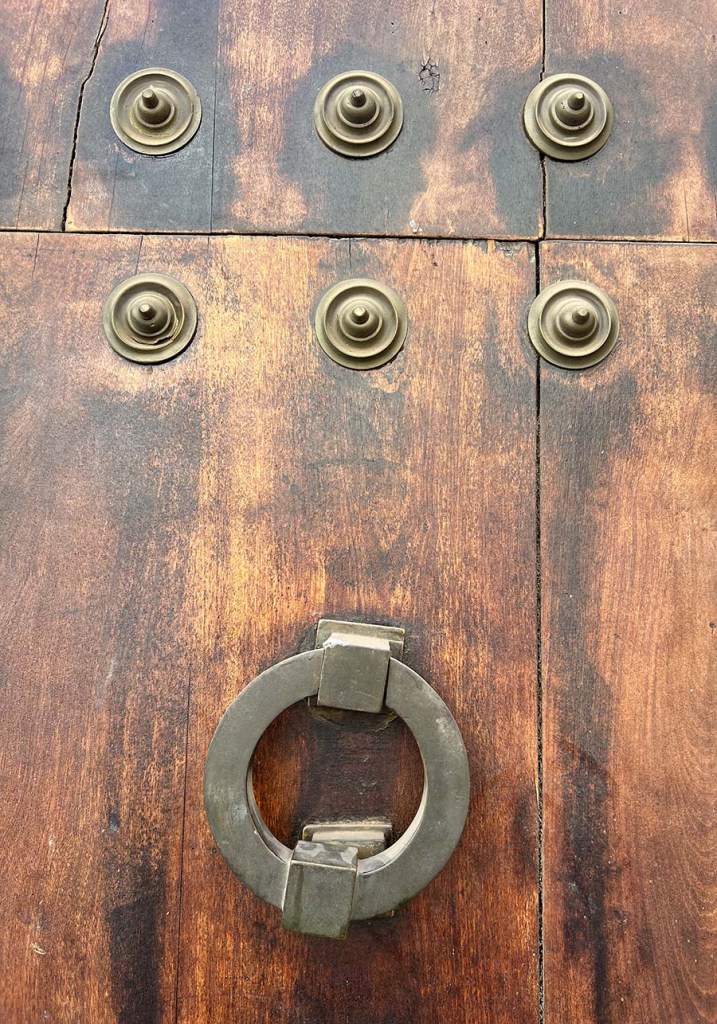
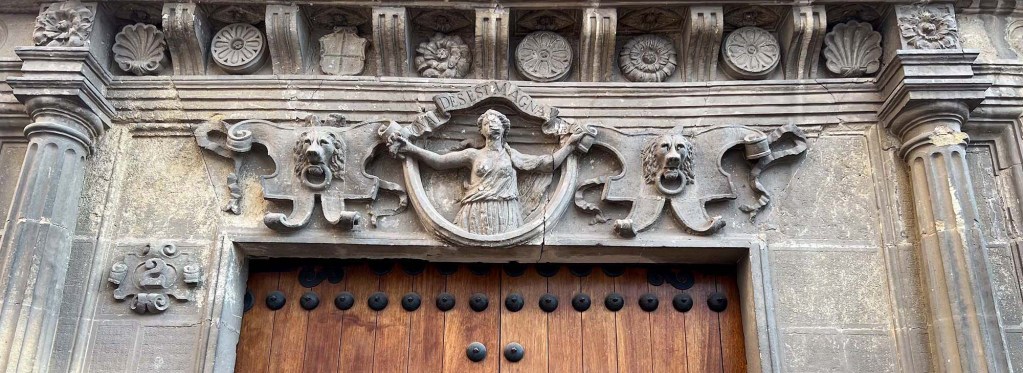
Tap the doornails to enlarge.
Toque los clavos para agrandarlos.

I was surprised they could hammer them in without smashing the decorative part flat but I see most have a regular ‘nail head’ in the center. I don’t see how they make a door stronger though. A heavy ax aimed between door nails would do the trick.
Ellen:
I suppose even a wielder of a heavy ax would have to work a little harder.
Interesting indeed! Makes a lot of sense and I thought they were just decorative.
Oh, you would make a great teacher too.
Jim,
I taught briefly and I even trained staff at times in my career. But doornails are a lot more fun.
I’ve heard the phrase “dead as a doornail” my entire life and never once thought about where it came from. So thank you!
Some of those doornails look to be a bit deader than some of the others.
Ms. Moon
Ms. Moon:
I never once wondered why the phrase meant what it did. Life is full of surprises. I’d love to see the other side of the wood but there’s another “door” covering the dead-headed nails.
I never knew there could be such a variety of door nails. It’s quite interesting (and attractive).
Kelly:
I’m amazed by the variety. I never gave them any thought. Now I can’t stop looking.
The door knockers with the lions’ heads look like the one from my favorite “A Christmas Carol” movie that starred George C. Scott as Scrooge. When he goes to open his front door and the lion’s head turns into Marley’s….brrr!
TexasTrailerParkTrash:
Same for me. That moment has never stopped being magical for me. I need to watch that movie again. My favorite, too.
What a fabulous new hobby, Mitchell! I love the infinite variety of these nail heads – rustic, decorative, old and new – and I look forward to a future post all about knobs and knockers [oo-er, missus!], too… Jx
Jon,
I feel like my eyes have been opened to something fascinating. And what a great city for this revelation. Knobs and knockers to come (so to speak).
I’ve always wondered about the origin of “dead as a door nail” too, so thanks for enlightening us, Scoot! I imagine the patterns made by the door nails adds to the strength of the whole structure in addition to the intimidation factor on would-be raiders.
Tundra Bunny:
I had never given it any thought. I love these kinds of explorations. N
Oh my gosh, I LOVE these! Thank you so much for this beautiful collection! I love those mail slots, too 🙂
Judy C:
I could probably do another collection of just mail slots!
You learn something new eveyday….I never knew any of this! But again…love the doors!
Mistress Borghese;
All new to me, as well.
OMG, what an impressive collection! Thanks a lot, Mitch!
Anonymous was Jan from Perth.
Jan from Perth:
So much fun. I could be discovering forever in Córdoba alone.
Wow! Thanks for exploring this topic so thoroughly! I always wondered where that phrase came from. Be careful about photographing nice knockers. You could get arrested.
(That’s actually a Neil Simon joke, and rather dated, admittedly.)
Steven:
Me arrested for obsessing about knockers. Now THAT would be a blog post! I really enjoyed learning about this myself.
What Great Knockers! There is a YouTube clip for that line. It is amazing the artistry that went into details that are mostly overlooked for decades or longer.
David:
The first time I did a post on knockers in Sevilla, I used a video clip from YouTube of that scene from Young Frankenstein. Unfortunately, the video clip was deleted, so I simply removed it from my post. And, yes, it IS amazing. I never even thought about the doornails until this week. Now I’m fascinated.
“And there were a lot of nice knockers… Thank you, Doctor.” Fabulous photos!!!
Wickedhamster:
And more nice knockers to come.
I wondered if all was well because I thought you hadn’t posted yesterday. Turns out I evidently hadnt seen the latest chapter on doors and their nails. I love how the nails are really a small artform. Boud
Boud:
My usual intent is to only skip Sundays, but I’ve been a bit haphazard lately. The doornails now fascinate me.
I went immediately to Dickens and the infamous first line of the A Christmas Carol
Urspo:
That’s always where I go, too.