La versión en español está después de la versión en inglés.
We returned from lunch at La Bandera a little while ago where I enjoyed a mollete (translates to muffin, but would be a type of roll in English) with salmon and cream cheese. It was delicious, although it’s not so delicious now when I burp it, and smell it on my breath and fingers (which I’ve washed three times). But that’s how salmon works.
I phoned the dentist yesterday after completing my blog post and got an appointment almost immediately. She gave me time to shower and shave knowing I only had a 3-minute walk. I knew I would like her because San Geraldo does and and he hates dentists. She remembered him well. I go back Thursday for my cleaning and to be cast for new nighttime retainers. No more wire. I will sing the praises of this dentist, Angie Ortega Bellido, and the dental hygienist, Sandra. The best experience I have ever had. I wish you all lived in Córdoba so you could visit them. SG usually takes two to four visits to have his teeth cleaned. Angie is the first dentist to clean his entire mouth in one fell swoop. (Did you know one fell swoop originated with Shakespeare’s Macbeth, when Macduff says his family was killed in one fell swoop like the attack of a predatory bird?) Anyway, Angie is fluent in English, too, having studied and lived in the United States for 13 years.
It rained on my walks over and back. Well, it spit. It wasn’t even enough to call it a drizzle. But I did feel at least three drops on my face.
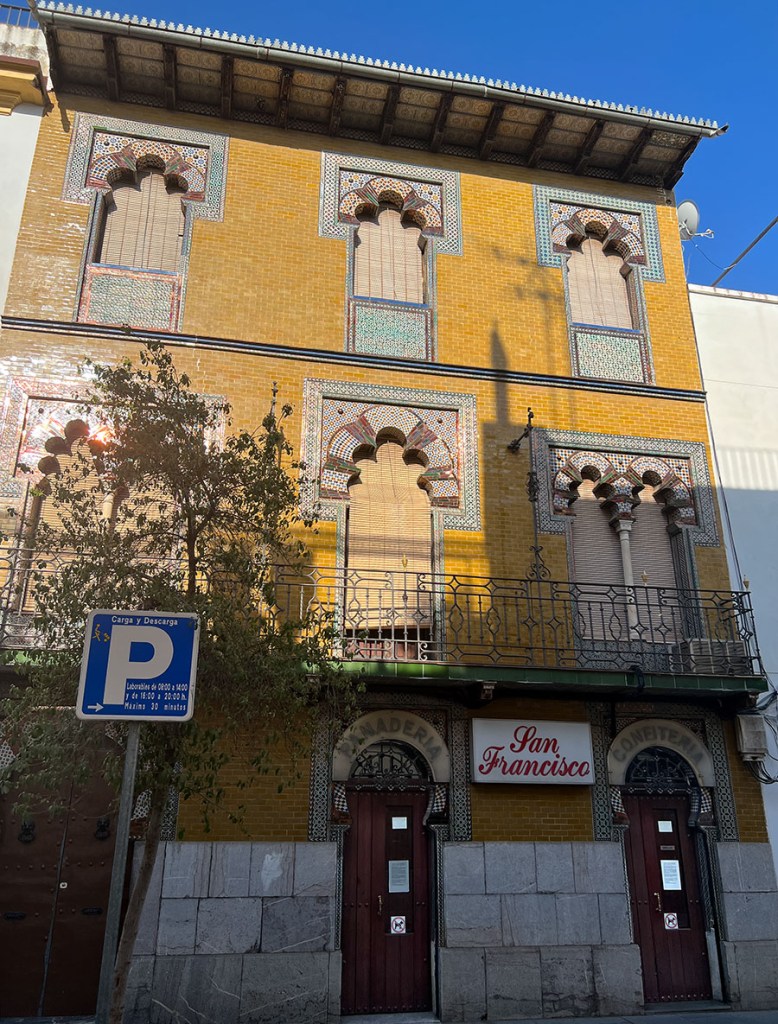
I found a house I want. It’s of course another fixer-upper and I have no idea what condition it’s in inside, but the exterior is a detailed, Moorish-designed dream (at least to me). There was a bakery/pastry shop at ground level and the signs remain. I could always put San Geraldo to work down there (to pay for the renovations). Check it out below.
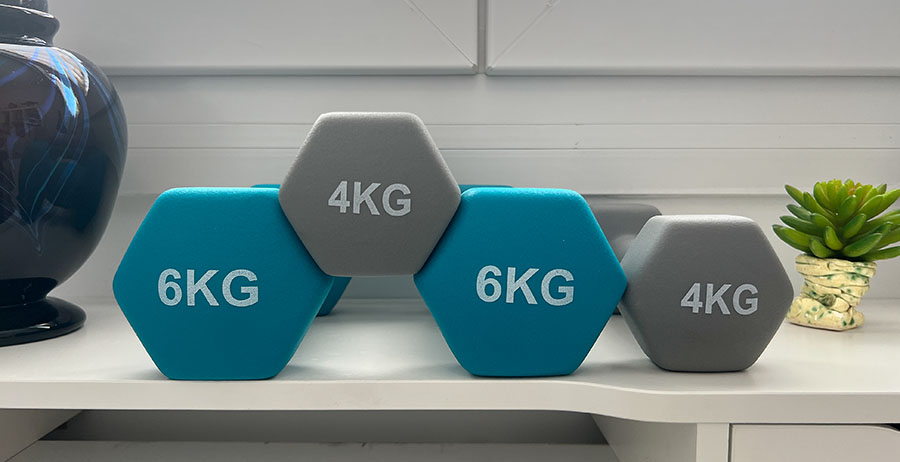
I recently bought a pair of dumbbells for my home workouts. I thought I could get by with just one pair, and I would make do without heavier weights. However, at 6.5 kilos/14.33 pounds each, the one pair are just a bit too heavy for some of the exercises I like to do. So I ordered another pair and they arrived yesterday. These are 4 kilos (8.8 pounds) each and I think they’ll do for everything else. I will try them out today, after the salmon settles.
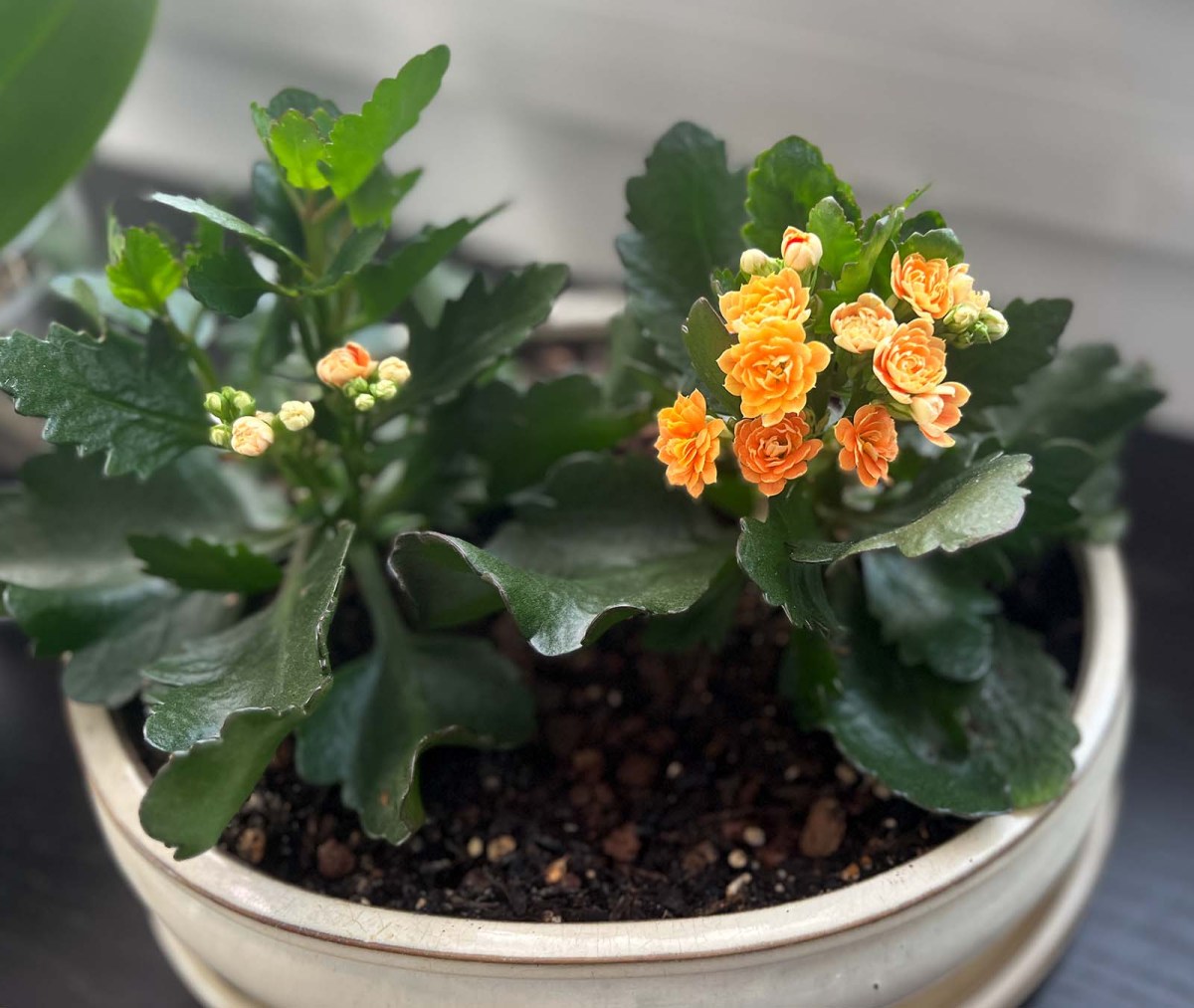
The kalanchoe (rhymes with “talent show,” remember?) is in full bloom again!
Hace poco regresamos de almorzar en La Bandera, donde disfruté de un mollete con salmón y queso crema. Estaba delicioso, aunque ya no lo parece tanto cuando repito el sabor o percibo el olor en mi aliento y en los dedos (que ya me he lavado tres veces). Pero así es el salmón.
Ayer llamé a la dentista después de terminar mi entrada del blog y conseguí cita casi de inmediato. Ella me dio tiempo para ducharme y afeitarme, sabiendo que solo tenía que caminar tres minutos. Sabía que me caería bien porque a San Geraldo le gusta, y eso que él odia a los dentistas. Ella lo recordaba muy bien. Volveré el jueves para la limpieza y para que me tomen las medidas de unos nuevos retenedores nocturnos. Se acabó el alambre. No me cansaré de elogiar a esta dentista, Angie Ortega Bellido, y a la higienista dental, Sandra. Ha sido la mejor experiencia que he tenido nunca. Ojalá vivieran todos en Córdoba para poder visitarlas. SG suele necesitar entre dos y cuatro visitas para que le limpien los dientes; Angie es la primera dentista que le limpia toda la boca de una sola vez. En fin, Angie también habla inglés con fluidez, ya que vivió y estudió en Estados Unidos durante 13 años.
Llovió durante mis trayectos de ida y vuelta. Bueno, más bien chispeó; ni siquiera llegó a ser una llovizna. Pero sí sentí al menos tres gotas en la cara.
Encontré una casa que me encanta. Por supuesto, es otra de esas casas que necesitan reformas y no tengo idea de cómo está por dentro, pero el exterior es un sueño de diseño morisco lleno de detalles (al menos para mí). Había una panadería o pastelería en la planta baja y los letreros aún se conservan. Siempre podría poner a San Geraldo a trabajar ahí abajo (para pagar las reformas). Mírenla más abajo.
Hace poco compré un par de mancuernas para mis ejercicios en casa. Pensé que podría arreglármelas con un solo par y prescindir de pesos mayores. Sin embargo, con sus 6,5 kilos (14,33 libras), ese par resulta un poco demasiado pesado para algunos de los ejercicios que me gusta hacer. Así que pedí otro par, que llegó ayer. Este es de 4 kilos (8,8 libras) y creo que servirá para todo lo demás. Los probaré hoy, una vez que haya hecho la digestión del salmón.
¡El kalanchoe está de nuevo en plena floración!


• Muchas terrazas tienen adornos ornamentados en la parte inferior. He estado recopilando fotos por la ciudad.
• Intenté crear un mosaico. Necesito comprar más mancuernas.


Click the thumbnails to enlarge.
Haz clic en las miniaturas para ampliar.