
La versión en español está después de la versión en inglés.
Once you cross the Roman Bridge and leave the city, there’s another river walk that begins with a backdrop of a big metal wall (not intended to keep foreigners out, just to mask a vacant lot that’s slightly below street level). The wall is adorned, as it says, with Birds of the Riverbank of Córdoba. I’ve only seen a few of these birds here, like the mallards in the top photo, and I’ve never seen a few of these birds anywhere. I guess I’ll have to explore more of the riverbank.
Our video chat with Matt and Lindy was as uplifting as always. We are so lucky to have them in our lives, and to feel so loved by them, and of course to feel so much love for them. Nick and Alyson should be landing in Málaga about now. We hope the trains are running between Málaga and here so we can see them.
Groceries have been delivered. Laundry is drying. I’m showered. And I had enough stubble to start shaving it into a beard shape again. It’s supposed to reach 23C/73.4F today. I’ll be enjoying the sunshine this afternoon, wandering around the city, doing some shopping for odds and ends, maybe even a pair of shoes, and plate stands for the new kitchen cabinet.
Una vez que cruzas el Puente Romano y sales de la ciudad, hay otro paseo fluvial que comienza con un gran muro metálico de fondo (no para impedir la entrada de extranjeros, sino para disimular un solar ligeramente por debajo del nivel de la calle). El muro está adornado, como dice, con Aves de la Ribera de Córdoba. Solo he visto unas pocas de estas aves por aquí, como los ánades reales de la foto superior, y nunca las había visto en ningún otro sitio. Supongo que tendré que explorar más la ribera.
Nuestra videollamada con Matt y Lindy fue tan inspiradora como siempre. Tenemos muchísima suerte de tenerlos en nuestras vidas, de sentirnos tan queridos por ellos y, por supuesto, de sentir tanto cariño por ellos. Nick y Alyson deberían estar aterrizando en Málaga a estas horas. Esperamos que los trenes funcionen entre Málaga y aquí para poder verlos.
Se han entregado los comestibles. La ropa se está secando. Me he duchado. Y ya tenía suficiente restrajo como para empezar a afeitarme de nuevo en forma de barba. Se supone que hoy llegará a 23 °C/73,4 °F, disfrutaré del sol esta tarde, pasearé por la ciudad, haré algunas compras, tal vez incluso un par de zapatos y soportes para platos para el nuevo gabinete de la cocina.
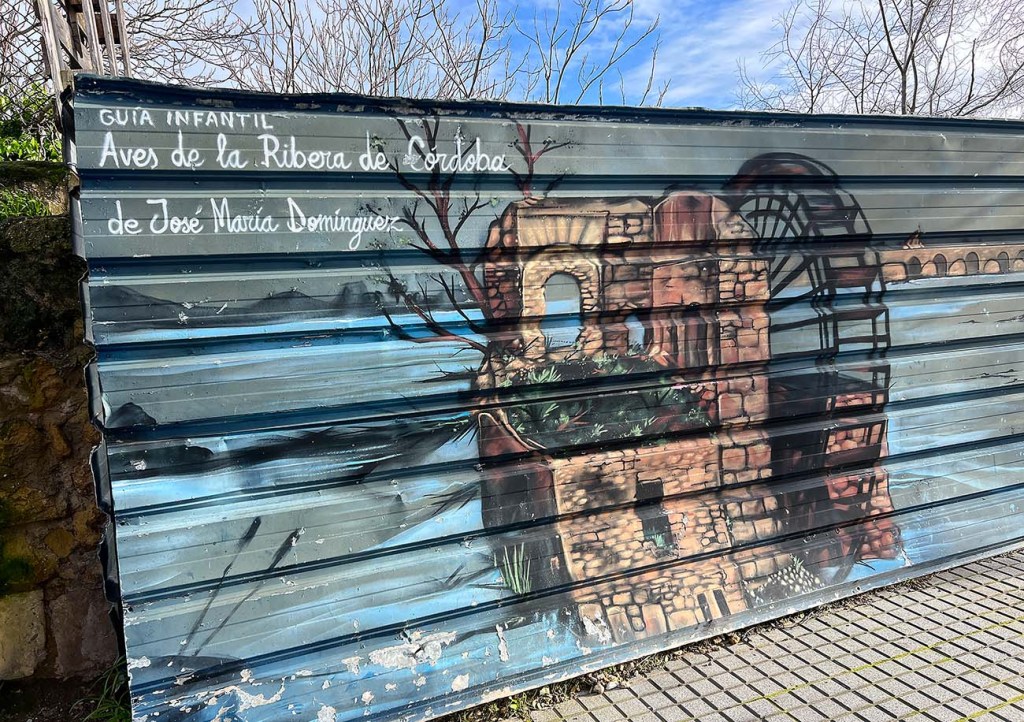

• Garza Real.
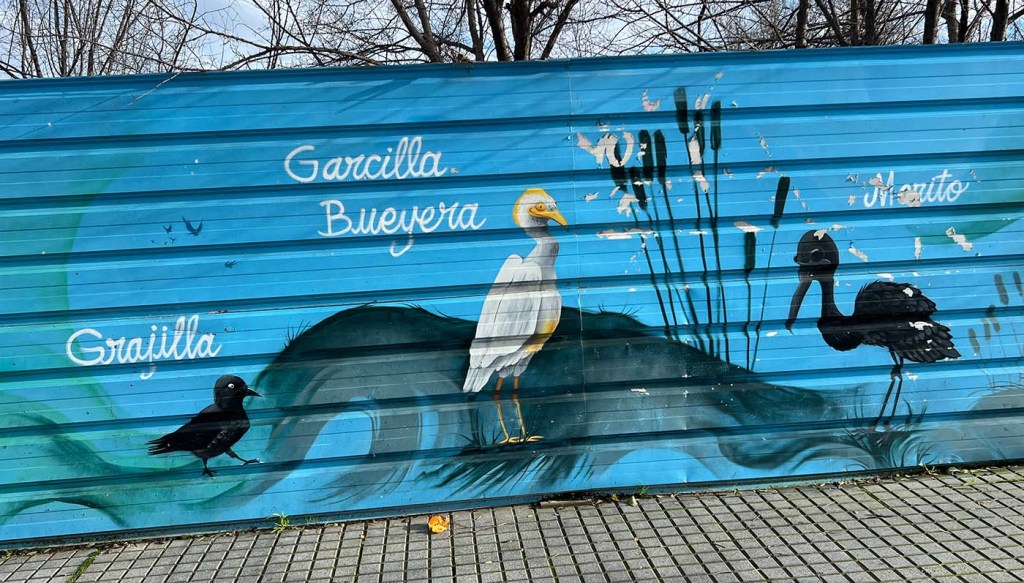
• Grajilla, Garcilla Bueyera, Morito.

• Pechiazul, Martin Pescador.

• Cormoran Grande, Martinete, Moscón.
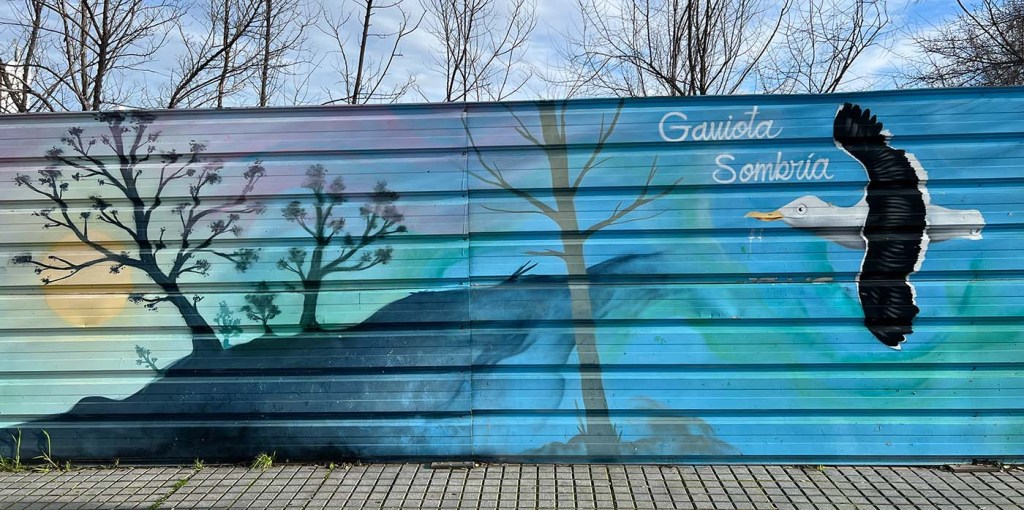
• Gaviota Sombría.
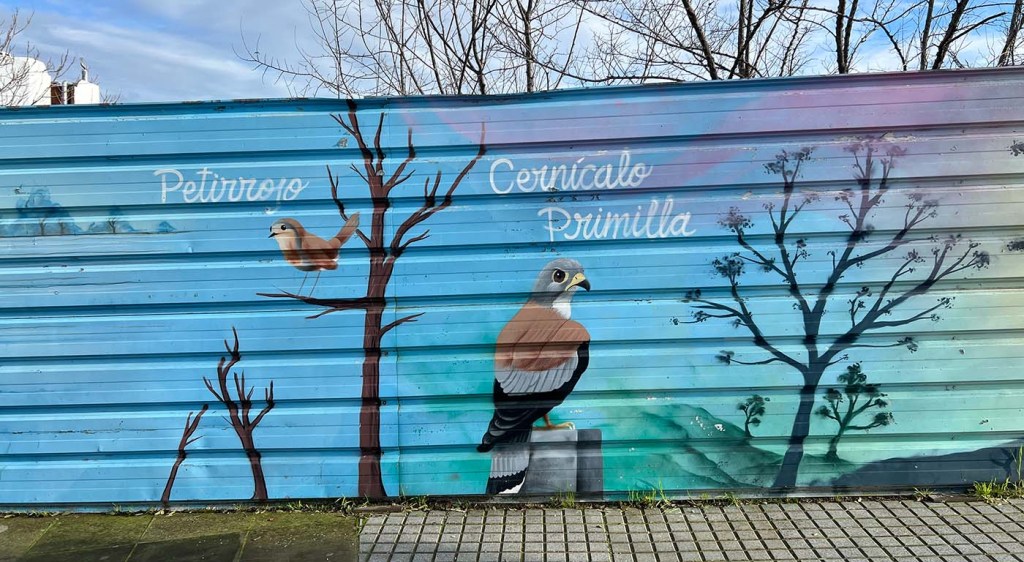
• Pettirojo, Cernícalo Primilla.

• Gallineta Común, Ánade Real.
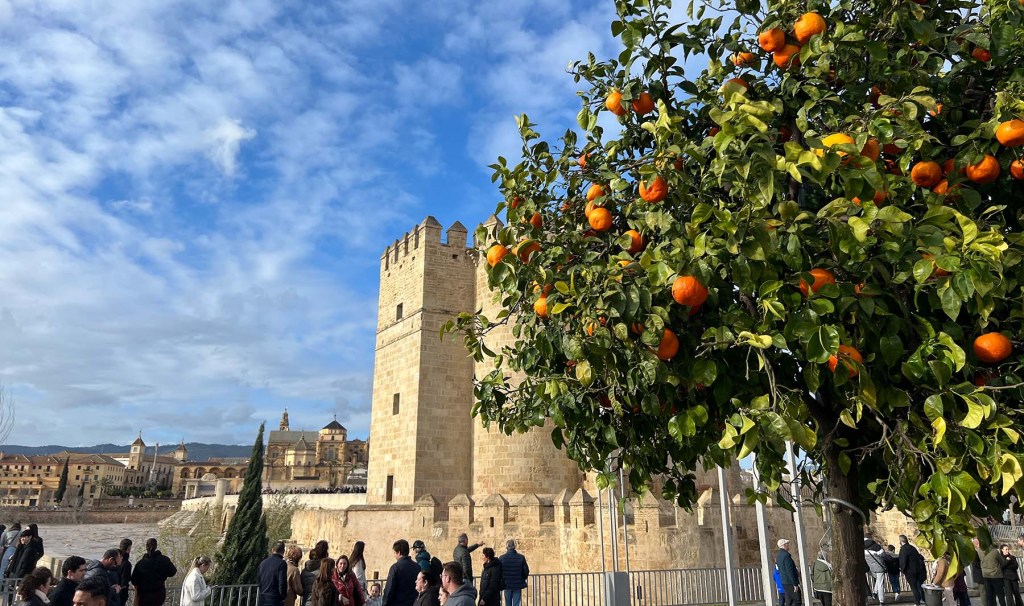
• La vista de la ciudad al otro lado del río desde los pájaros pintados.


Click the thumbnails to enlarge.
Haz clic en las miniaturas para ampliar.

Ah….spring finally arrives by the looks of it there.
That is an abundant number of bird species for that area.
Happy ‘birding’!
Jim:
The photos were taken during a temporary break in the torrential rains. But spring HAS arrived now.
Nice mural. Those painted birds have a helluva view!
Debra She Who Seeks:
Like living in Hoboken and seeing the NYC skyline.
Certainly a nicer view than a plain metal wall. On this side of the pond we have cattle egrets, cormorants, mallards, night herons, kingfishers. Probably others but those are the ones I’ve personally seen.
ellen abbott:
We do have many of the same birds here, plus others that were/are new to us.
Thanks for identifying the birds. I’d the there a lot with binoculars. Boud
Boud:
If we had a car, we could be doing birding jaunts. Ah well. We’ll have to walk the river in the city.
So, Spanish question for you: are aves more water birds and birds of prey, and pajaros more… tree birds?
Judy C:
I do love your Spanish questions. Ave is a more generic term for all birds, large and small, flighted and flightless. Pájaro refers to birds that fly, usually smaller birds. To make things confusing, although an eagle is a pájaro, you would specifically refer to it as an eagle (águila) and less often as a pájaro. AND I’ve heard Spanish people disagree, just as many do on viejo amigo (old friend) and amigo viejo (friend who is old). One well-educated woman corrected me on “viejo amigo” and told me I meant “amigo de muchos años.” Just like Americans, people don’t know the rules.
I love the bird murals and always find it interesting to see the differences between the European and N. American birds of the same name. (like Robins) I’ll have to tell my 6-yr-old grandson (who can identify more birds by sight and sound than most adults!) about your “tit”. I have some hilarious stories about tits involving him.
Kelly:
Well, I’m not 6 and I still am embarrassed when I say “tit.” I’d love to hear your story.
His mother insists on anatomical terms, so he only knows a “tit” as a bird. He’s had an Audubon page-a-day calendar for two years and has often seen tit varieties. I don’t guess tits are a topic of conversation in first grade, as far as the other meaning. Not long ago he told someone (maybe his teacher?) that “his Meme loves tits and so did he”. 😂 I do love a cute tufted titmouse! And yes, I’ve seen some other nice tits, too.
Kelly,
Just wait until he learns the truth! That was a story the first grade teacher will savor.
What a delightful walk! The bird murals along the river path are absolutely gorgeous and such a creative way to celebrate the local wildlife. It’s rare to see public art that feels so thoughtfully connected to the natural enviroment around it. The contrast of the colorful birds against the metal wall makes the whole thing feel more dynamic. This is the kind of hidden gem on a travel route that you remember long after the trip is over!
That Grey Heron has the most scary eyes! Of all the birds, I’m surprised you don’t see them (and moorhens) more often – they’re very common on most waterways here. Jx
Jon:
I need to walk along the river away from the Roman Bridge. All I’ve indentified there are gray herons and some odds and ends. I’m sure I’d do better in the bushes.
When the Spaniards got to Florida, they must have recognized so many of the birds here. We have almost every one of the birds on the murals. Perhaps this is one of the reasons they figured their god had ordained them to “discover” and take ownership of La Florida.
Then…they met the alligators.
Ms. Moon
Ms. Moon:
Yes, we do have a lot of the same birds here. Plus some new to us birds. No hummingbirds.
Sounds like all is well is the land of Cordoba after your torrential rains!!
Bob:
The weather right now is perfect. And the waters are receding. Train schedules are still a mess and villages are now in clean-up mode, with some homes lost.
Enjoy a nice walk anytime you can.
David:
Absolutely. You do the same.
I didn’t think to poke around behind the Calahorra to find the bird wall! I think I know most of those birds, but it’s hard to tell for sure with Spanish names. I never really thought about how the Spanish might call a heron or an egret something else entirely, but why wouldn’t they?
Those darn trains.
Steve,
I just wrote a reply and it didn’t appear. I won’t be as clever this time. If you walked around behind the Calahorra, you’d see the mural. That was the first time I’d seen it.
That first sign is almost like you’re looking at it through water.
Kirk
I’ve never painted a mural. It can’t be easy.