

La versión en español está después de la versión en inglés.
Today is an exciting day. I’m having my hair and beard cut by a professional barber. I still haven’t found the charger for my shaver and my hair is at the point of no return. The hair around the sides and back of my head is still very thick. My measly machine couldn’t get through it at this point. This trim will have to last through the rest of the month.
I’m taking the train down to Málaga Sunday night for my flight to NYC Monday morning. I had made my travel plans months ago based on taking a 20-minute taxi ride from Fuengirola to Málaga. Although the trip from Córdoba is only an hour, the first train of the morning doesn’t leave enough time at the airport before my flight. So, I’m staying in a hotel right in the Málaga train station. I can then hop on the commuter train in the morning for the 11-minute ride to the airport.
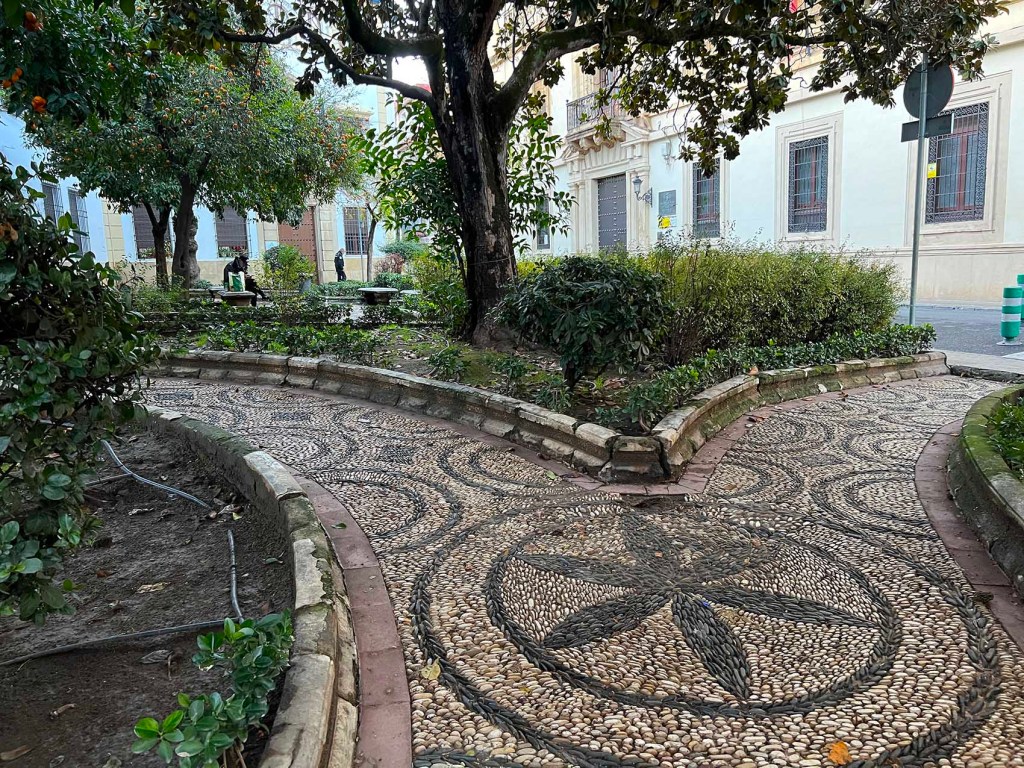
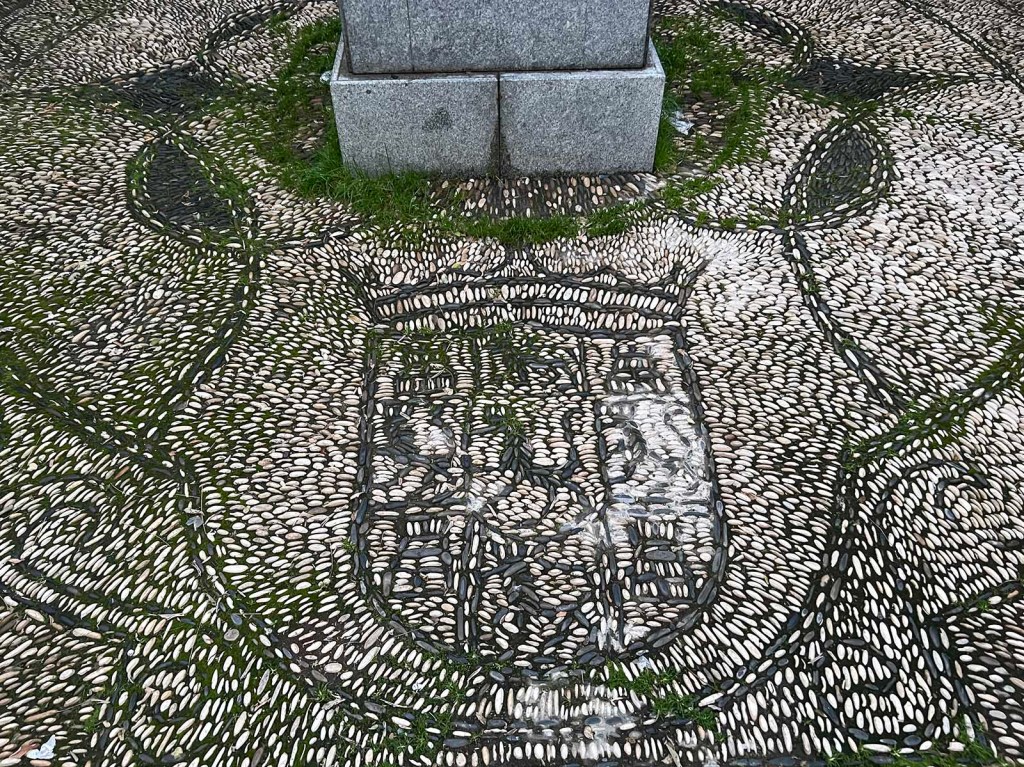
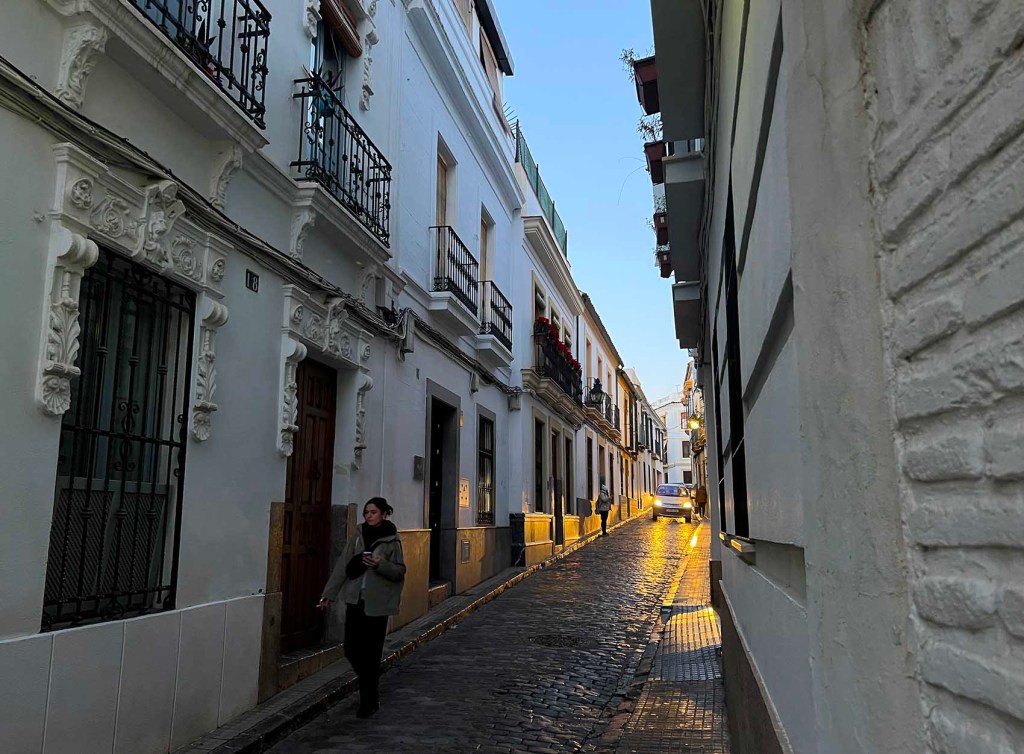
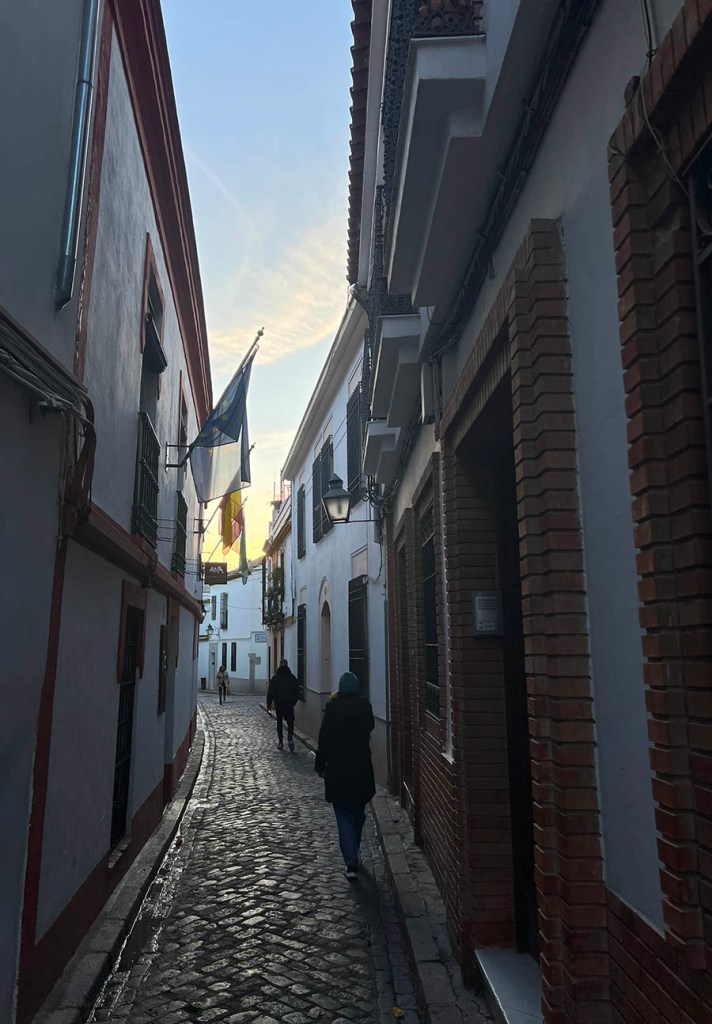
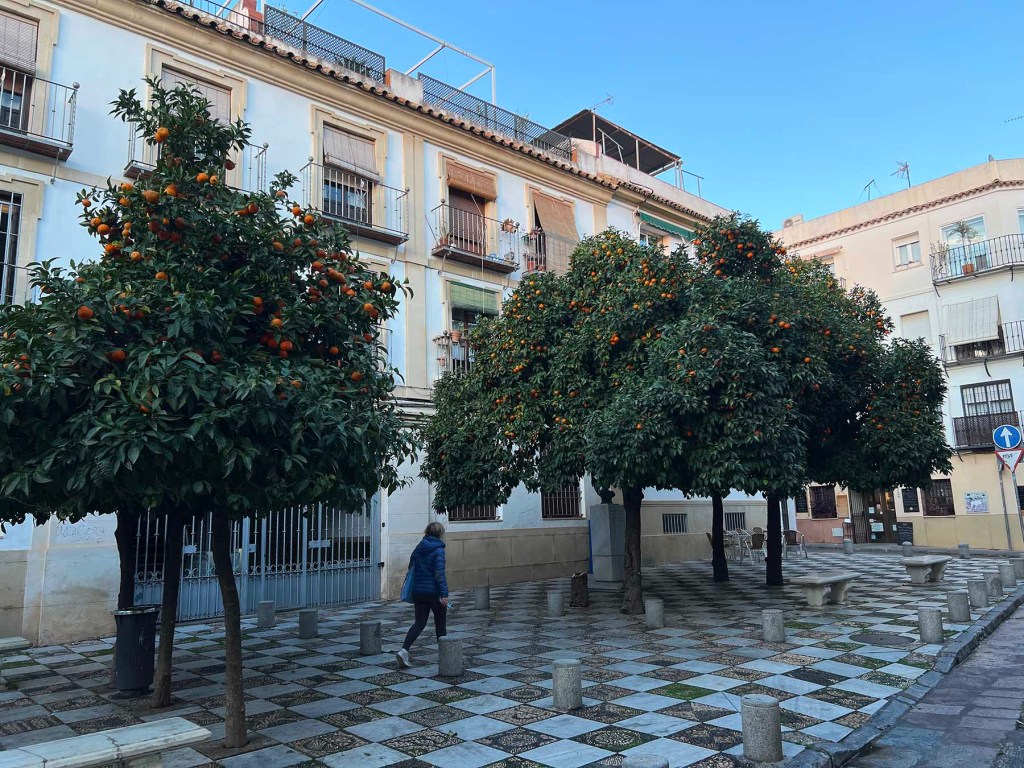
In walks around town, I’m always amazed by the beautiful stone mosaics in the pavement. These are still maintained the old-fashioned way, tiny stones hand-placed one at a time. Then there are the cobblestones in many of the streets, lanes, and alleys. Added to that are the various paving stones used in plazas and pavements throughout. The city is one big mosaic.
Oh, how could I forget? I returned to my private nephrologist Friday. My most recent lab work showed significant improvement. He just about jumped out of his seat when he saw the numbers. We made real progress. Here’s hoping it continues. San Geraldo went with me to the appointment and he agreed the doctor is hot. Wednesday, however, I have my first appointment with my new public health nephrologist who is also a colleague at the private medical centre. So, he’ll cover me from both sides which makes it much easier.
Seville had more than 40,000 orange trees planted throughout the city. They were harvested every year in early spring. It used to be entertaining to see tourists pluck an orange and then try to eat it. And then spit it out in shock. They’re not “eating oranges.” They’re bitter (Sevillan) oranges known for making marmalade. Into the Middle Ages, the fruits and flowers were used mainly in medicine, essential oils, and fragrances. I don’t know how many orange trees Córdoba has but they’re everywhere. They’re now heavy with their orange bounty. I assume they too will be harvested. Stay tuned.
Hoy es un día emocionante. Un barbero profesional me va a cortar el pelo y la barba. Todavía no he encontrado el cargador para mi afeitadora y mi pelo está en un punto de no retorno. El pelo de los lados y la parte posterior de mi cabeza todavía es muy grueso. Mi miserable máquina no podría cortarlo en este momento. Este corte tendrá que durar el resto del mes.
El domingo por la noche tomaré el tren a Málaga para tomar mi vuelo a Nueva York el lunes por la mañana. Había hecho mis planes de viaje en base a un viaje en taxi de 20 minutos desde Fuengirola a Málaga. Aunque el viaje desde Córdoba es de solo una hora, el primer tren de la mañana no deja suficiente tiempo en el aeropuerto antes de mi vuelo. Así que me alojaré en un hotel justo en la estación de tren de Málaga. Luego podré subirme al tren de cercanías por la mañana para el viaje de 11 minutos hasta el aeropuerto.
En los paseos por la ciudad, siempre me sorprenden los hermosos mosaicos de piedra en el pavimento. EspañolEstas zonas se mantienen como antes, con pequeñas piedras colocadas a mano una a una. Además, hay adoquines en muchas de las calles, callejones y callejones. A eso hay que sumar los diversos adoquines que se utilizan en las plazas y aceras de toda la ciudad. La ciudad es un gran mosaico.
¿Cómo podría olvidarlo? El viernes volví a ver a mi nefrólogo privado. Los últimos análisis de laboratorio mostraron una mejora significativa. Casi saltó de su asiento cuando vio los números. Hemos hecho un progreso real. Esperemos que continúe. San Geraldo me acompañó a la cita y estuvo de acuerdo en que el médico es atractivo. La semana que viene, sin embargo, tengo mi primera cita con mi nuevo nefrólogo de salud pública, que también es colega en el centro médico privado. Así que me cubrirá desde ambos lados, lo que lo hace mucho más fácil.
Sevilla tenía más de 40.000 naranjos plantados por toda la ciudad. Se cosechaban todos los años a principios de primavera. Solía ser entretenido ver a los turistas arrancar una naranja y luego intentar comérsela. Y luego escupirla en estado de shock. No son naranjas para comer. Son naranjas amargas conocidas por hacer mermelada. Hasta la Edad Media, los frutos y las flores se usaban principalmente en medicina, aceites esenciales, y fragancias. No sé cuántos naranjos tiene Córdoba, pero están por todas partes. Ahora están repletos de su generosidad de naranjas. Supongo que también se cosecharán. Estén atentos.


Click the thumbnails to enlarge.
Haz clic en las miniaturas para ampliar.