La versión en español está después de la versión en inglés.
It hasn’t been the greatest few days what with my digestion issues (yesterday was fine), my hurting hip (much better again today), and the dizzies (gone), but there were still some incredible bright spots in those dreary days. San Geraldo for one.
Thursday I chatted with Judy C who brightens any day. It doesn’t matter how I’m feeling, Judy is a joy and an exceptional human being. And SG got to meet her this time, which made us all happy.
Friday was another chat with old friends that made the world feel like a better place, even if it’s not. I’ve shared a story about Blair and Marie before (click here). Blair and I worked together at a magazine publishing house in Boston before SG and I moved to California (the first time). Blair was a gifted art director and I was the typography department (the entire department). We immediately became fast friends and meeting Marie soon thereafter was love at first sight. We four were often together and they were difficult to leave behind when we headed west.
San Geraldo and I were only together 6 months when I first starting working with Blair. She and Marie were together a year I think. Strangers always knew we were two pairs of love birds; they just always assumed we were paired differently. One evening, we were walking along the waterfront in Weymouth after dinner upstairs at Blair and Marie’s condo when some passing strangers trilled “Hello young lovers whoever you are.”
We stayed close and in touch for more than 10 years and then, well, things happen. Our regular contact lessened until we finally lost touch for years. We would try to reconnect and somehow just never made it work. Contact was sporadic since the late ’90s. And then Blair wrote a couple of years ago. At long last, we had a video chat yesterday and it was magical. It didn’t hurt that they are both still beautiful and instantly recognizable even after all these years. I was a bit worried that I should warn them in advance about my bald head and gray beard. Of course I didn’t need to be so shallow.
We did have other old friends of the same vintage and, when we saw them on video after about 15 years, one immediately said, “Oh my god. We’ve gotten so old.” Time had changed more than just that. It was not a magical reconnection. Nothing like the reconnection with Blair and Marie. It was as if no time had passed — except for all that has passed! We still have so many stories to share with each other.
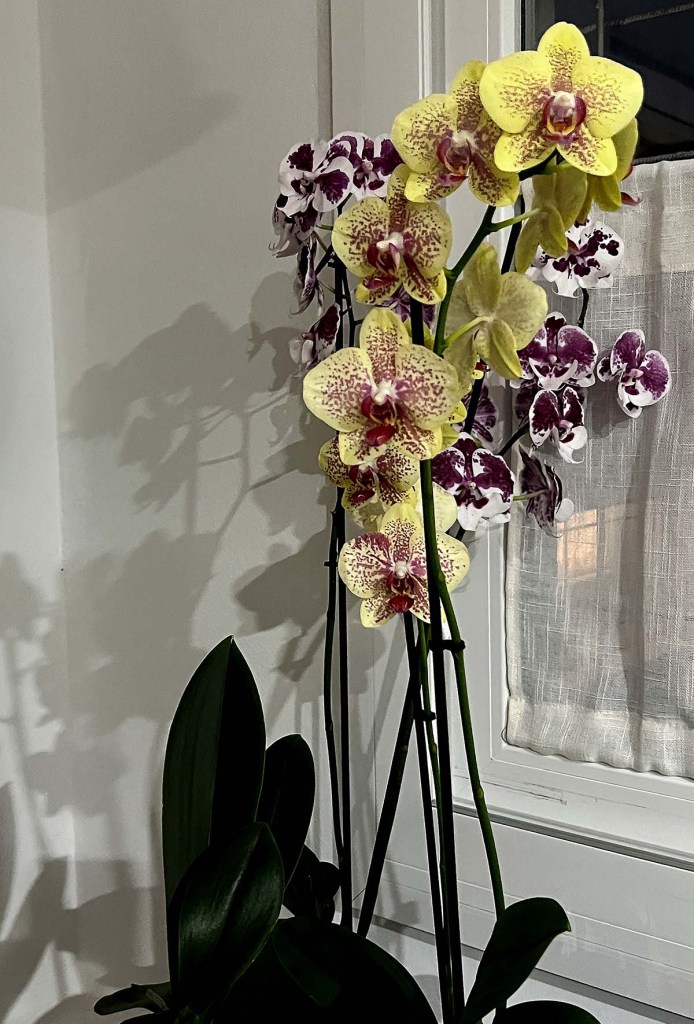
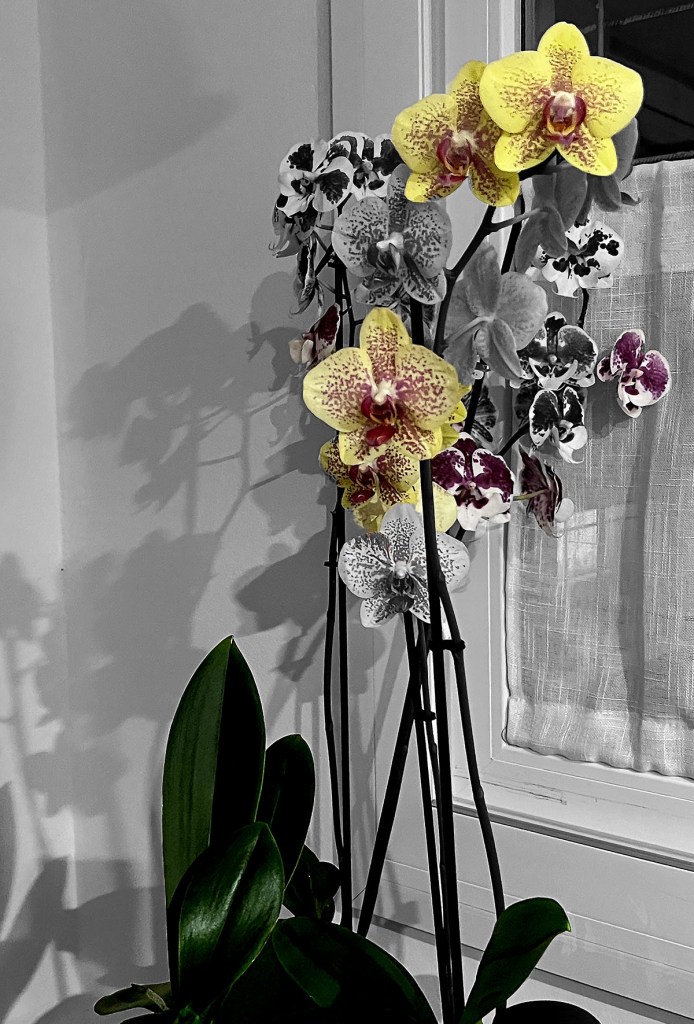
Today’s photos are completely unrelated, which is often how I do things. This is what it looks like inside my brain (on a good day). And now I have to go up to the roof to retrieve the laundry I forgot overnight.
No han sido los mejores días, dadas mis molestias digestivas (ayer estuve bien), el dolor de cadera (hoy ya mucho mejor), y los mareos (que ya desaparecieron), pero aun así hubo momentos maravillosos. San Geraldo, por ejemplo.
El jueves charlé con Judy C, alguien que alegra cualquier día. No importa cómo me sienta yo; Judy es un encanto y un ser humano excepcional. Además, esta vez SG pudo conocerla, lo cual nos alegró a todos.
El viernes hubo otra charla con viejos amigos que hizo que el mundo pareciera un lugar mejor, aunque no lo sea. Ya he contado antes una historia sobre Blair y Marie (haz clic aquí). Blair y yo trabajamos juntos en una editorial de revistas en Boston antes de que SG y yo nos mudáramos a California (la primera vez). Blair era una directora de arte con gran talento y yo me encargaba del departamento de tipografía (todo el departamento). Nos hicimos amigos íntimos enseguida, y conocer a Marie poco después fue amor a primera vista. Los cuatro pasábamos mucho tiempo juntos y fue difícil dejarlas atrás cuando nos fuimos al oeste.
San Geraldo y yo llevábamos solo seis meses juntos cuando empecé a trabajar con Blair; creo que ella y Marie llevaban un año. Los desconocidos siempre notaban que éramos dos parejas de enamorados, aunque solían suponer que las parejas estaban formadas de otra manera. Una noche, paseábamos por el paseo marítimo de Weymouth después de cenar en el apartamento de Blair y Marie, cuando unos desconocidos que pasaban por allí nos gritaron: «¡Hola, jóvenes enamorados, sean quienes sean!»
Seguimos muy unidos y en contacto durante más de diez años y luego… bueno, cosas que pasan. El contacto frecuente fue disminuyendo hasta que finalmente perdimos la relación durante años. Intentábamos retomar el contacto, pero por una razón u otra nunca lo conseguíamos. La comunicación fue esporádica desde finales de los años 90. Hasta que Blair escribió hace un par de años. Por fin, ayer tuvimos una videollamada y fue algo mágico. Ayudó mucho el hecho de que ambas siguen siendo guapas y reconocibles al instante, incluso después de tantos años. Me preocupaba un poco si debía avisarles de antemano de que ahora estoy calvo y llevo barba canosa. Claro que no hacía falta ser tan superficial.
Teníamos otros viejos amigos de la misma época y, al verlos en un video después de unos 15 años, uno de ellos dijo de inmediato: «Dios mío. ¡Qué viejos nos hemos puesto!». El tiempo había cambiado algo más que eso. No fue un reencuentro mágico; nada que ver con el reencuentro con Blair y Marie. ¡Fue como si no hubiera pasado el tiempo… a pesar de todo lo que ha pasado! Todavía tenemos muchas historias que compartir.
Las fotos de hoy no tienen ninguna relación entre sí; así es como suelo hacer las cosas a menudo. Así es como se ve el interior de mi cabeza (en un buen día). Y ahora tengo que subir a la azotea a recoger la ropa que olvidé allí anoche.

• San Geraldo planting the latest arrivals.
• San Geraldo plantando las últimas adquisiciones.

• Me encanta la fruta fresca. Las peras enormes son deliciosas.
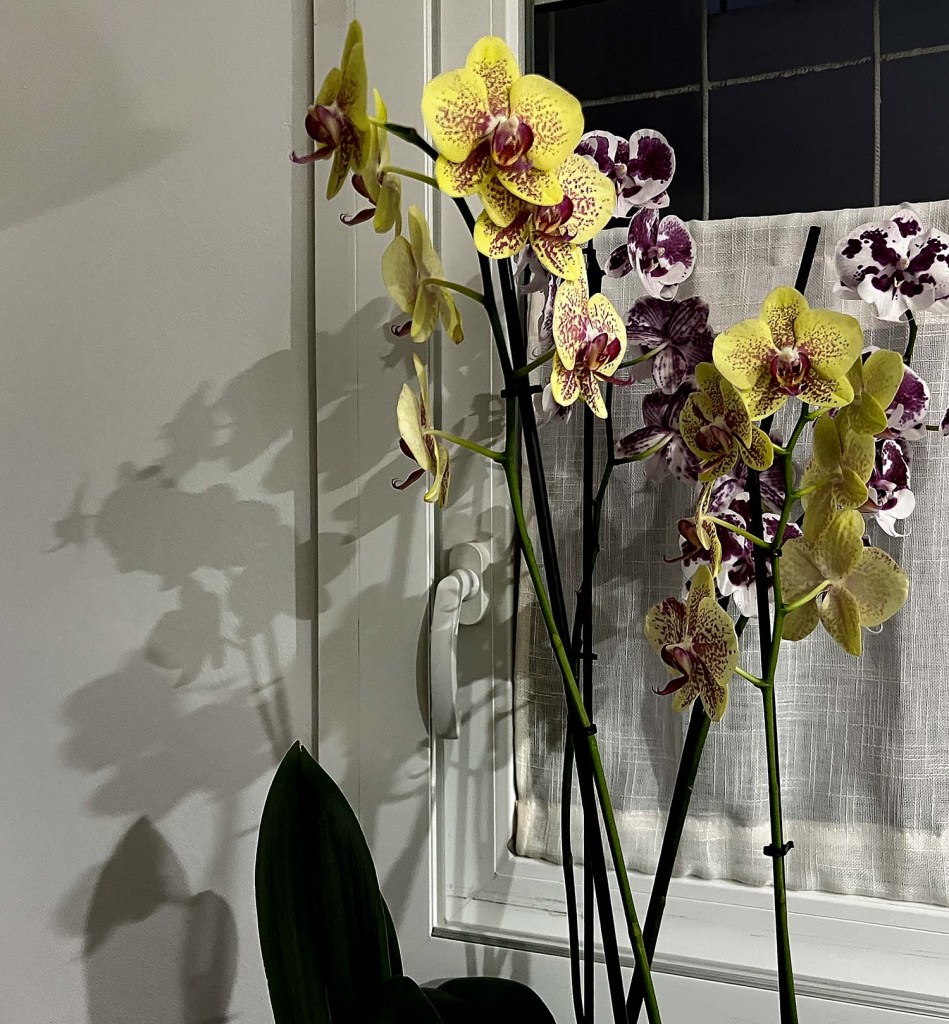
• Sombras de orquideas.