La versión en español está después de la versión en inglés.
When I met my cousins (maternal side of the family) in Chinatown, I arrived a bit early so I could walk around the neighborhood. My paternal grandparents lived nearby when they first arrived in New York from Belarus, separately and unknown to each other, in 1912. I have the addresses, but the buildings are long gone.
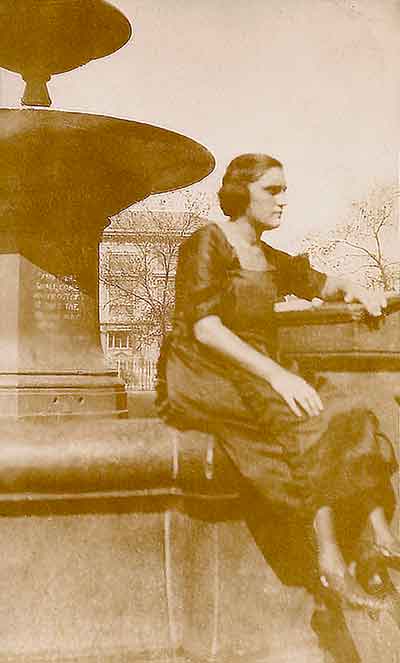
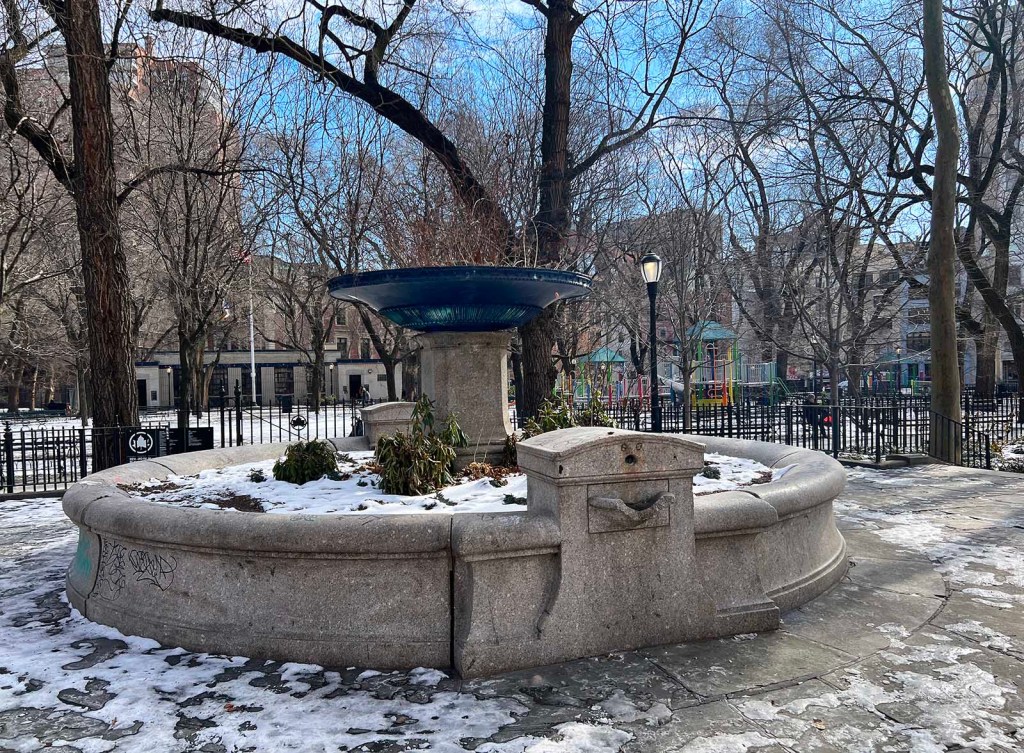
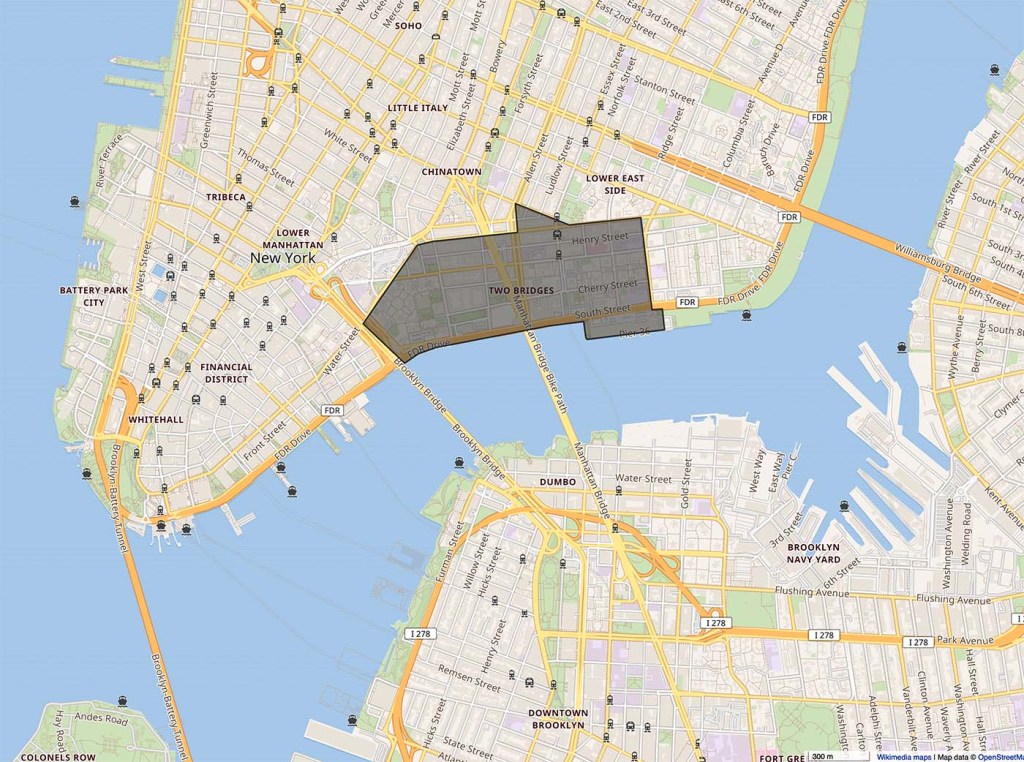
I do, however, have a photo taken around 1922 of my paternal grandmother sitting on a fountain in Seward Park and I had the chance to walk down Division Street, where my grandfather lived, to Seward Park and see the fountain (although it’s now a planter). Division Street is in a neighborhood known as Two Bridges (refers to Brooklyn Bridge and Manhattan Bridge) which borders Chinatown and the Lower East Side. I think my grandparents lived together briefly in that apartment after their marriage. I know they were living in Brooklyn by 1925 and already had a 1-year-old son, my uncle.
My grandmother lived in Two Bridges, with her brother, when she first arrived in New York. I shared the photo of my grandmother about five years ago. You can click here for that post and more information.
Seward Park contained the first permanent, municipally built playground in the country. The park was dedicated in 1902 and the playground in 1903. It was a bit magical to imagine my grandparents there and walking the same streets. Cousin Allan offered to walk back over and take a picture of me sitting on the fountain but I said it wasn’t necessary. I regret that decision. Maybe next time.
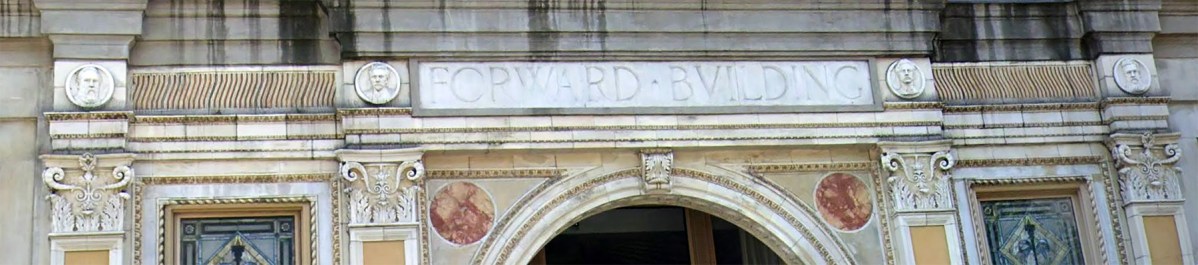
When I came up from the subway station at East Broadway, I saw an elegant building and took a picture. When I looked closely at the picture I saw the building was called the Forward. That’s the name of a socialist-leaning Jewish newspaper that my maternal grandfather used to read (religiously). He called it by its Jewish name, Vorwarts, I did some research and it turns out the building was the official home of the newspaper. Built in 1912 (the year my paternal grandparents arrived), the building shocked some of the newspaper’s loyal socialist readers with its uppity elegance. One critic, Henry Margoshes, wrote “The socialist movement in New York will be buried under this 10-story capitalist building.”
The building, which overlooks Seward Park, was the first “skyscraper” on the Lower East Side. It now contains 29 luxury condominiums. Tatum O’Neal, Spike Jonze and America Ferrera were all tenants in the 2010s. The street doesn’t look very luxurious but a 2-bedroom apartment just sold for $2.5 million and another just rented for $9,500/month. Apparently, I couldn’t afford to live there, even though, as you can see above, the faces of socialist heroes Karl Marx, Friedrich Engels, Karl Liebknecht, and Ferdinand Lassalle still adorn the facade.
Cuando me encontré con mis primos (el lado materno de la familia) en Chinatown, llegué un poco antes para poder caminar por el vecindario. Mis abuelos paternos vivían cerca cuando llegaron por primera vez a Nueva York desde Bielorrusia, por separado y sin saberse nada, en 1912. Tengo las direcciones, pero los edificios ya no existen.
Sin embargo, tengo una foto tomada alrededor de 1922 de mi abuela paterna sentada en una fuente en parque Seward y tuve la oportunidad de caminar por Division Street (Calle División), donde vivía mi abuelo, y ver la fuente (aunque ahora es una jardinera). Division Street está en un vecindario conocido como Two Bridges [Dos Puentes] (se refiere al puente de Brooklyn y al puente de Manhattan) que limita con Chinatown y el Lower East Side. Creo que mis abuelos vivieron juntos brevemente en ese apartamento después de su matrimonio. Sé que vivían en Brooklyn en 1925 y ya tenían un hijo de 1 año, mi tío.
Mi abuela vivía en Two Bridges, con su hermano, cuando llegó por primera vez a Nueva York. Compartí la foto de mi abuela hace unos cinco años. Puede hacer clic aquí para ver esa post y más información.
Parque Seward contenía el primer patio de juegos permanente construido por el municipio en el país. El parque se inauguró en 1902 y el patio de juegos en 1903. Fue un poco mágico imaginar a mis abuelos allí y caminando por las mismas calles. Mi primo Allan se ofreció a caminar de regreso y tomarme una foto sentada en la fuente, pero le dije que no era necesario. Lamento esa decisión. Quizás la próxima vez.
Cuando subí de la estación de metro de East Broadway, vi un edificio elegante y saqué una foto. Cuando miré la foto con atención, vi que el edificio se llamaba Forward (significa Delantero). Ese es el nombre de un periódico judío de tendencia socialista que mi abuelo materno solía leer (religiosamente). Lo llamaba por su nombre judío, Vorwarts. Investigué un poco y resultó que el edificio era la sede oficial del periódico. Construido en 1912 (el año en que llegaron mis abuelos), el edificio sorprendió a algunos de los lectores socialistas leales del periódico con su elegancia arrogante. Un crítico, Henry Margoshes, escribió: “El movimiento socialista en Nueva York quedará enterrado bajo este edificio capitalista de 10 pisos”.
El edificio fue el primer “rascacielos” del Lower East Side. Ahora contiene 29 condominios de lujo. Tatum O’Neal, Spike Jonze, y America Ferrera fueron inquilinos en la década de 2010. La calle no parece muy lujosa, pero un apartamento de dos habitaciones se acaba de vender por 2,5 millones de dólares y otro se acaba de alquilar por 9.500 dólares al mes. Aparentemente, no podría permitirme vivir allí, aunque, como se puede ver arriba, los rostros de los héroes socialistas Karl Marx, Friedrich Engels, Karl Liebknecht y Ferdinand Lassalle todavía adornan la fachada.
• El edificio Forward al fondo, a la derecha.
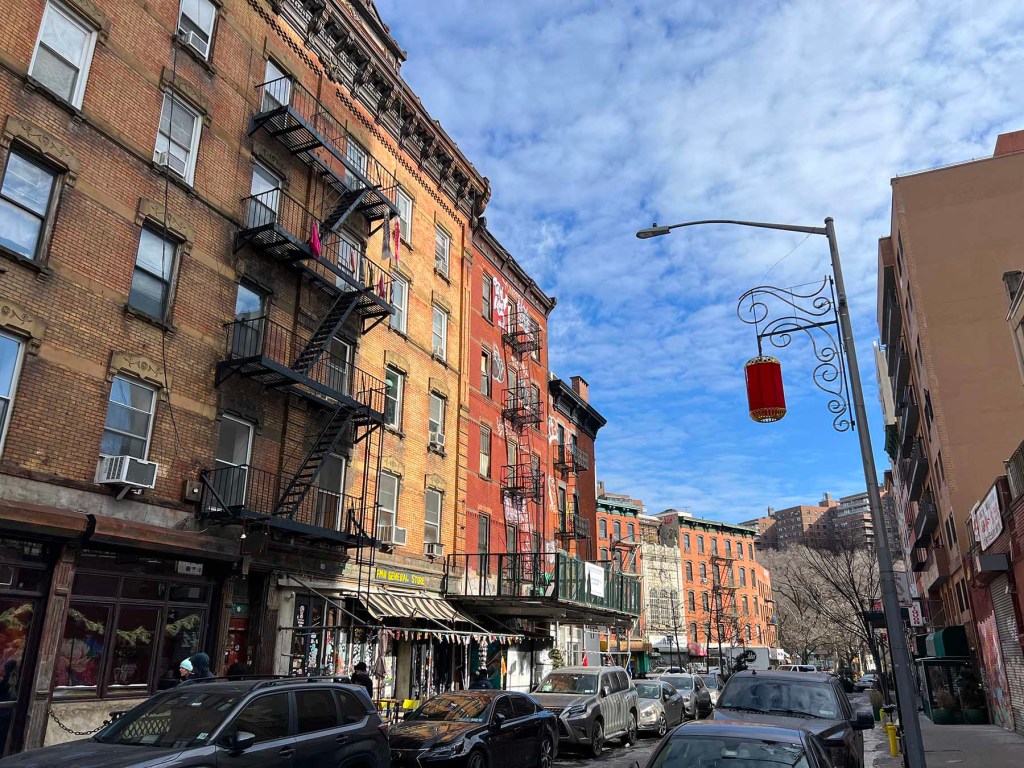
• Calle División.
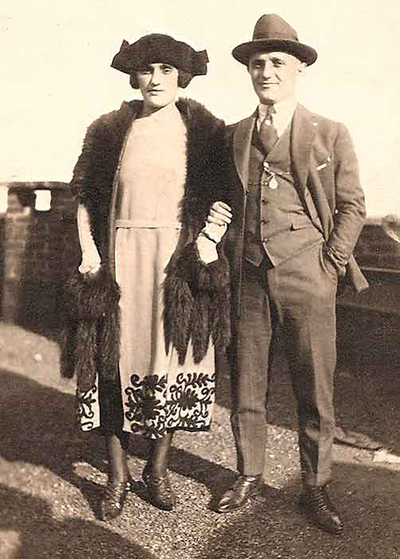
• Mis abuelos, a principios de la década de 1920, en una azotea (posiblemente en Calle División).
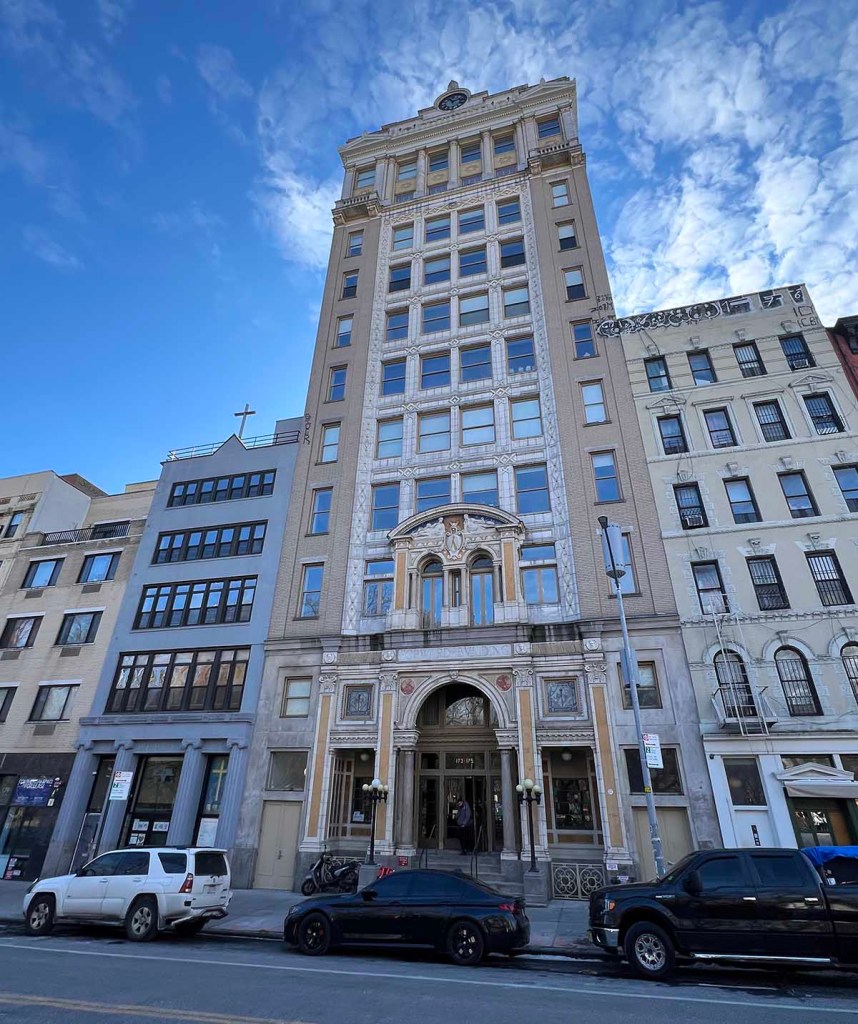
• Edificio Forward.
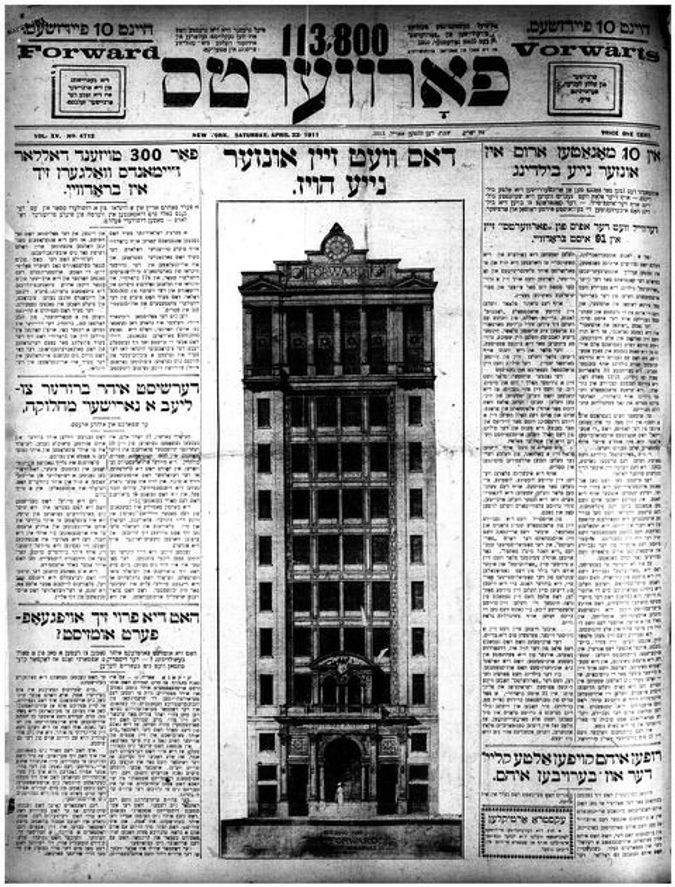
• Primera plana del periódico The Forward, abril de 1912. Presentación del nuevo edificio.


Click the thumbnails to enlarge.
Haz clic en las miniaturas para ampliar.

Great photos and history of the area; I’d never heard of Two Bridges before.
Thanks for that!
Bob:
I didn’t know much of anything about Two Bridges. We called all that area the Lower East Side.
It is great that you were able to touch the past. Lost to time, are the addresses my grandmother lived at around that same time. Her father was an immigrant worker, recruited to dig tunnels under the rivers, a job locals either couldn’t or wouldn’t do. I have her birth certificate and hope to go see where she was born in May.
David Godfrey:
SG found all this info in census records and other legal documents. Before that, I knew none of this.
Oh, I just love this historic info– I’m happy to think of you enjoying walking around there on your visit, thinking about that connection to your grandparents….and… what a building!
Judy C:
It really was fun. I have other addresses around the city. Some buildings and houses still exist. I’ll have to do my own Trip to Bountiful one year.
How satisfying to retrace your relatives’ steps on that trip. You know a lot about them. I noticed many references to the Jewish Daily Forward, as it was referred to, in my reading. Interesting to see it had quite a posh home. I’d always assumed a quite humble office space. Boud
Boud:
I have a lot of this historic information about my relatives thanks to SG’s research. He found census records and more.
Interesting history of that area. Your grandparents were brave individuals like so many more who emigrated to North America at that time.
yes, next time get that photo at the fountain.
Did you know your grandparents well? If you did, what kind of people were they? So interesting to be able to walk the streets they walked. I love the photos and the history. Thanks, Scoot.
Love,
Janie
Very cool!
wickedhamster:
It makes a visit so much more memorable and I learn more about the city. I owe it all to SG’s research.
Thanks for that map — I don’t know New York as a city, and it helps me picture it better.
Debra:
Glad you enjoyed that. I realized most people would have no idea what I was describing and then I found that great map. I considered including the complete version with the rest of the city visible.
Family history, heritage, culture are personal treasures. I know, they keep one grounded and give perspective in an uncertain world.
Frank D:
These connections just make the city more interesting to me. I learn so much each time.
I enjoyed reading your post about the history of the area, and of your grandparents as well. When I taught, I used to do an Ellis Island reenactment that took place in the early 1900s. New York is truly a unique city, a melting pot.
Michael:
I have never been to Ellis Island and so many members of my family came through that way.
I went to Ellis Island in 2010. It was an amazing place to visit. Just imagining all of the immigrants who passed through those gates.
But how great did the fountain still there! The last house.. well I should say one of the houses that my grandparents lived in, my paternal grandparents, in Brooklyn is still there. When I cleaned out the living room desk once I found an old electric billing statement with a whopping $6.25 charge, and their address. I can’t remember the name of the area but I Googled it and the house is indeed still there. I believe it was a lamb’s Gap or Lamb’s Ridge or something.
Mistress Borghese:
I remember you sharing an address in Brooklyn some time back and I found it on Google Maps and realized it was the same street where a friend of mine lived in the ’70s. I don’t know about the Lamb’s Gap or Ridge part. I love finding those old bills!
I wish the fountain was still a fountain.
The older I get, the more I wish I knew about my grandparents, both maternal and paternal. I knew my maternal ones quite well and have even seen the house they lived in when they were raising their children. But I know only the vaguest of stories about my paternal grandparents. They were rich. He was a drunk. They got divorced. He married his secretary.
Perhaps I should start looking for more information, ancestry-wise.
Moon Sigh
Ms. Moonsigh:
I read that there was a drive to restore the fountain. That would be nice. Still, I bet it looks a lot different in spring when the plants are green and lush. I’m grateful to SG for his genealogical research. Thanks to him, I have these addresses.
What an interesting post! I love that you can “experience” your own history this way and have the photos (both old and new) to prove it!
Kelly:
It makes a visit more memorable and I learn so much as a result of having a personal connection and a story.
I like the look of The Forward. My problem isn’t luxury buildings, only that they’re wasted on luxurious people. I say, let the proletariat in!
Kirk:
I agree!
I thoroughly enjoyed this post, Scoot! Seeing how historical places and buildings connect to the present is always interesting, especially if it’s in our family trees.
Tundra Bunny:
For me, it makes history more real and memorable.
Fascinating story and photos of NYC.
Laurent:
It makes the visit very interesting for me.
I discovered that the newspaper Vorwarts still exist in Germany with a distribution of 360,000 readers as part of the Social Democrat Party (SPD) of Chancellor Scholtz.
Laurent:
And, as I understand it, the newspaper was and is not a specifically Jewish newspaper in other places.
You’ve just inspired me to take a little Google Maps tour of that area myself, to refresh my memory. I used to walk around the Lower East Side a lot when I lived in NYC, taking pictures of street art, and I know I was on Division Street and in and around Seward Park. I don’t remember the Forward Building but I do remember the newspaper, which is still around (or was when I lived there). A fascinating blend of family history and local NYC scenery!
Steve:
The newspaper does still exist in New York, but apparently only in digital form. I never spent much time at all on the Lower East Side when I lived there. Chinatown and Little Italy, yes.
That division street photo makes me yearn for the city
finlaygray:
That’s interesting. I love the look, but it’s not something I yearn for when I think of NYC.
Oh, I LOVE the facade!
I love old buildings with history. And I can just imagine your grandpa sitting down to read the newspaper.
It’s all so quaint now…
Love the pics!!
XOXO
Sixpence:
I wish I had a photo of my grandfather with the newspaper. He almost always had it in his lap and he would mention something he read whenever I visited.
Very cool building, and very cool neighborhood. 🙂
Walt the Fourth:
Except for the cold (and being exhausted), I could have spent the entire day there, and more.
Forverts, not Hogwarts! Greatly!
(Greatly is what Spellcheck does to “Gevalt!”)
Erik:
Oy greatly!
Erik:
Do you remember the old man reading Vorwarts?
what a great photo of gran !
Urspo:
Isn’t it though? My grandfather was never without his camera in those days.