La versión en español está después de la versión en inglés.
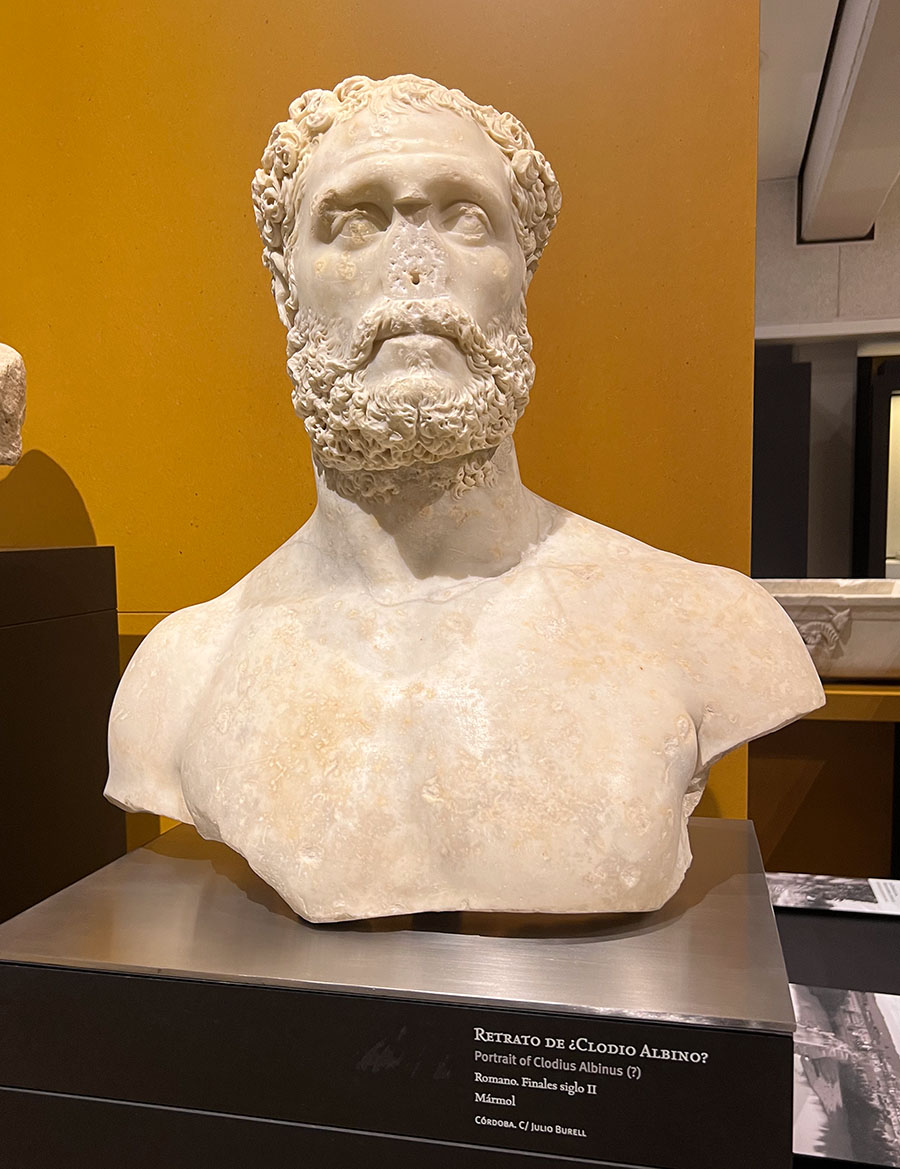
During one of my art history classes (which now falls under the category of ancient history), a fellow student asked, “Why did they make them all without arms, legs, and noses?” Although there were snickers all around the lecture hall, the professor, surprisingly kindly, explained that most works were in fact “full bodied” and were either purposely or accidentally damaged over the centuries.
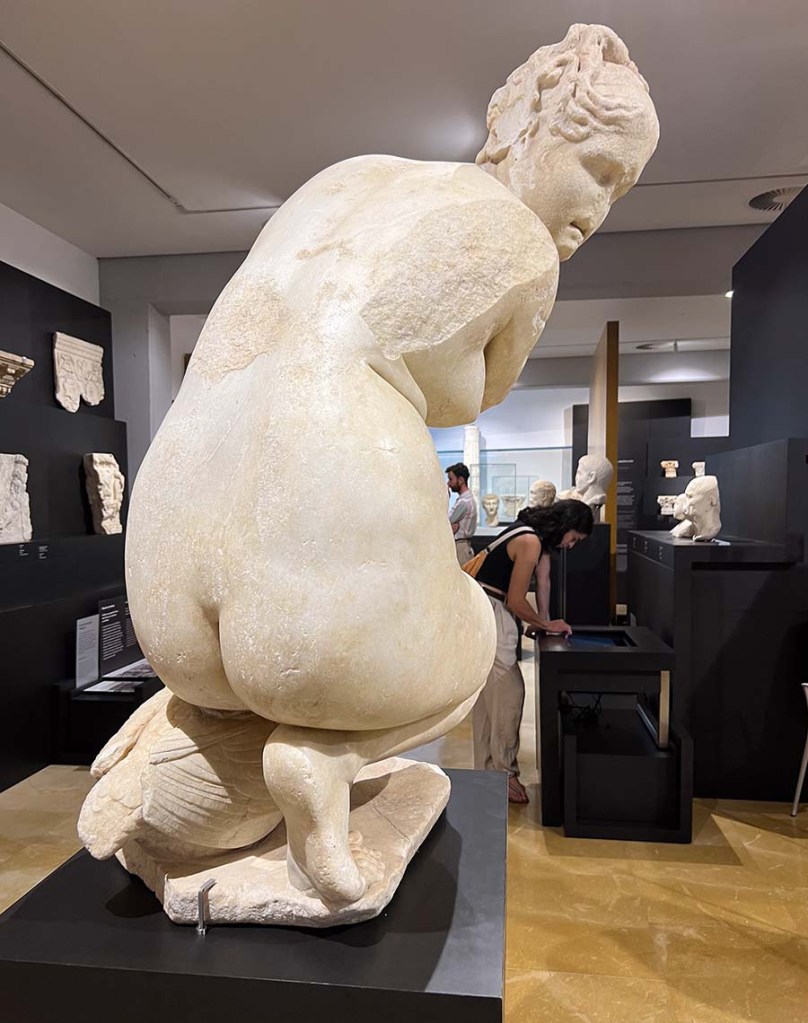
I’m here to prove that some of “them” did indeed have arms and legs, and even noses. Many of the works on display in the archaeology museum have been partially restored or reassembled. Others somehow survived intact.
The first bit of Cockney rhyming slang I ever learned (not that I know much) was, “Nice legs, shame about the boat race” which meant “shame about the face.” It was 1979, a song by The Monks, and it’s an ugly sentiment. So, the end of the song is still satisfying.
Durante una de mis clases de historia del arte (que ahora entiendo como historia antigua), un compañero preguntó: “¿Por qué las hicieron todas sin brazos, piernas ni narices?” Aunque hubo risas por todos lados en la sala de conferencias, el profesor, sorprendentemente amablemente, explicó que la mayoría de las obras eran, de hecho, “de cuerpo entero” y fueron dañadas intencional o accidentalmente a lo largo de los siglos.
Estoy aquí para demostrar que algunas de “ellas” sí tenían brazos, piernas, e incluso narices. Muchas de las obras expuestas en el museo de arqueología han sido parcialmente restauradas o reensambladas. Otras, de alguna manera, sobrevivieron intactas.
La primera rima cockney que aprendí (aunque no sé mucho) fue: “Buenas piernas, lástima la regata”, que significaba “Buenas piernas, lástima la cara”. Era 1979, una canción de The Monks, y era un sentimiento desagradable. Así que el final de la canción sigue siendo satisfactorio. Ella rechaza sus avances y dice: “Buenas piernas, lástima tu cara.”

• Bonitas piernas…
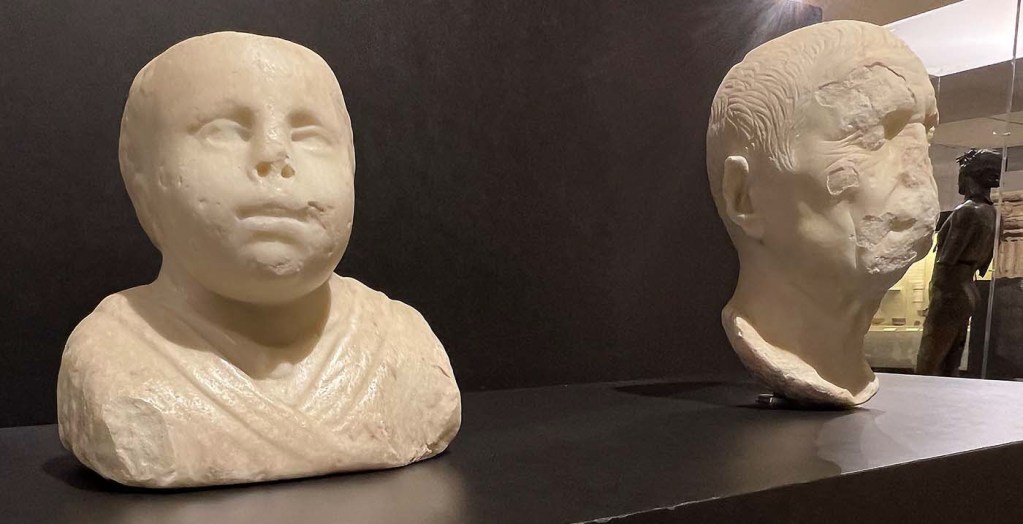
• Lástima la cara.
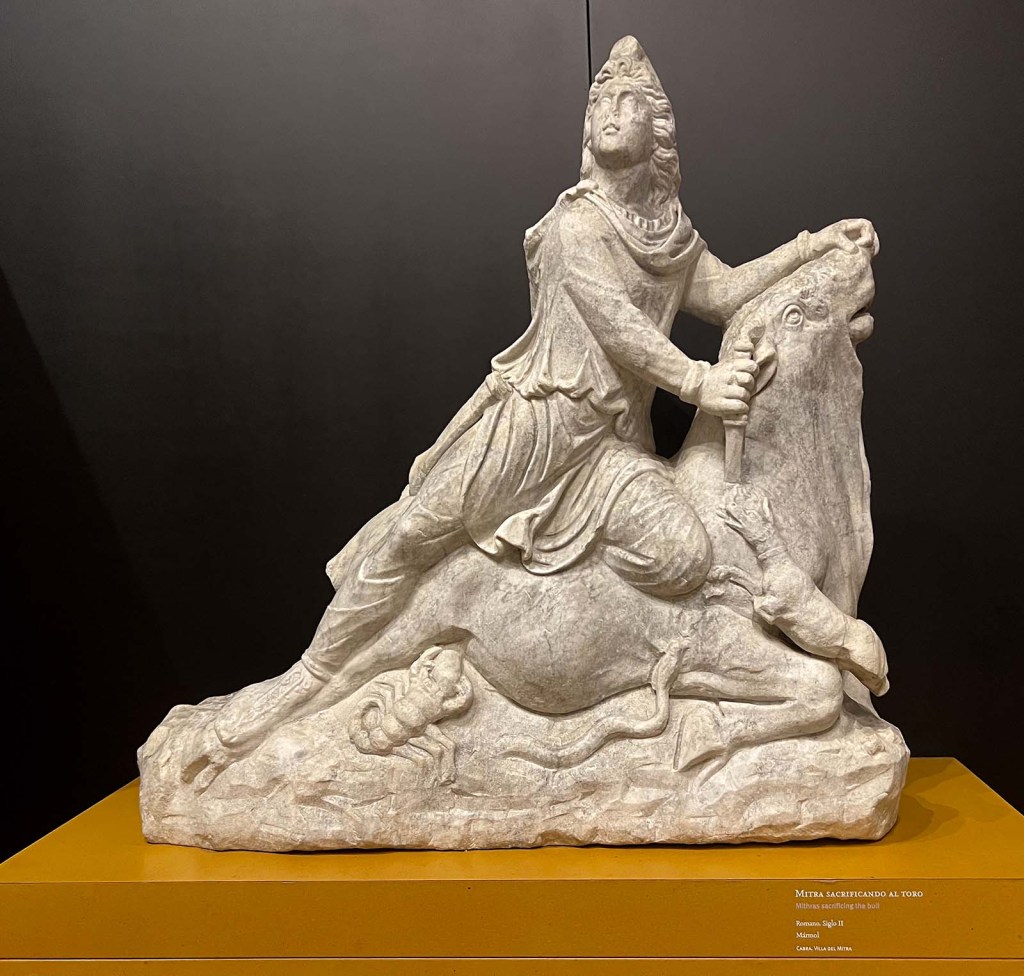
• Mitra sacrificando al torro. Siglo II. Villa de Mitra. Aproximadamente una hora en coche al sureste.
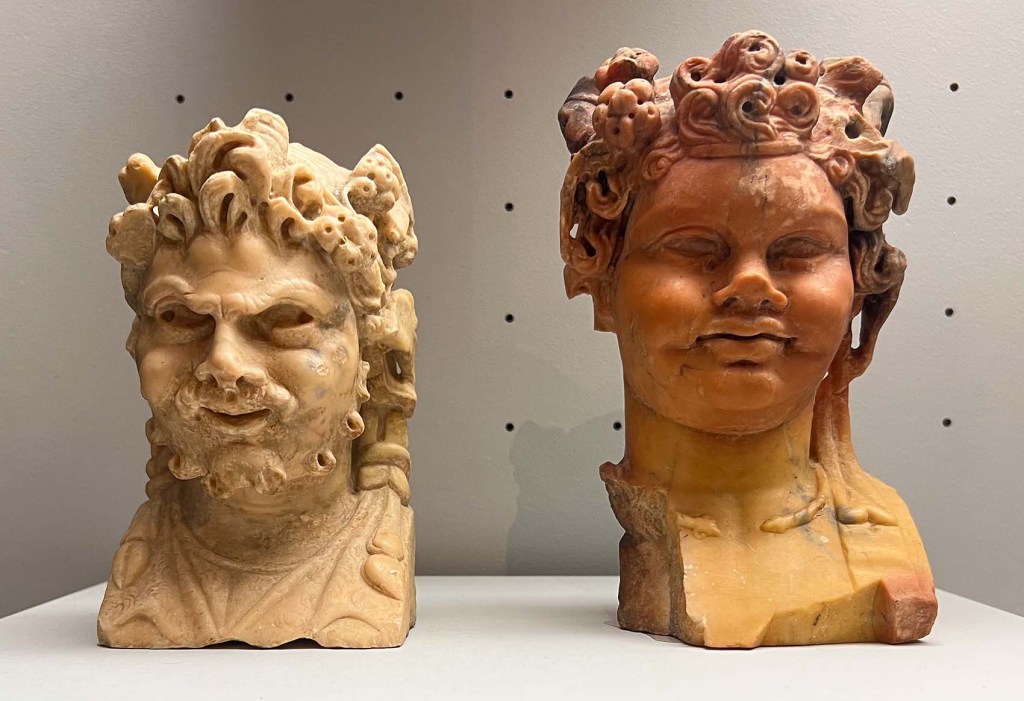
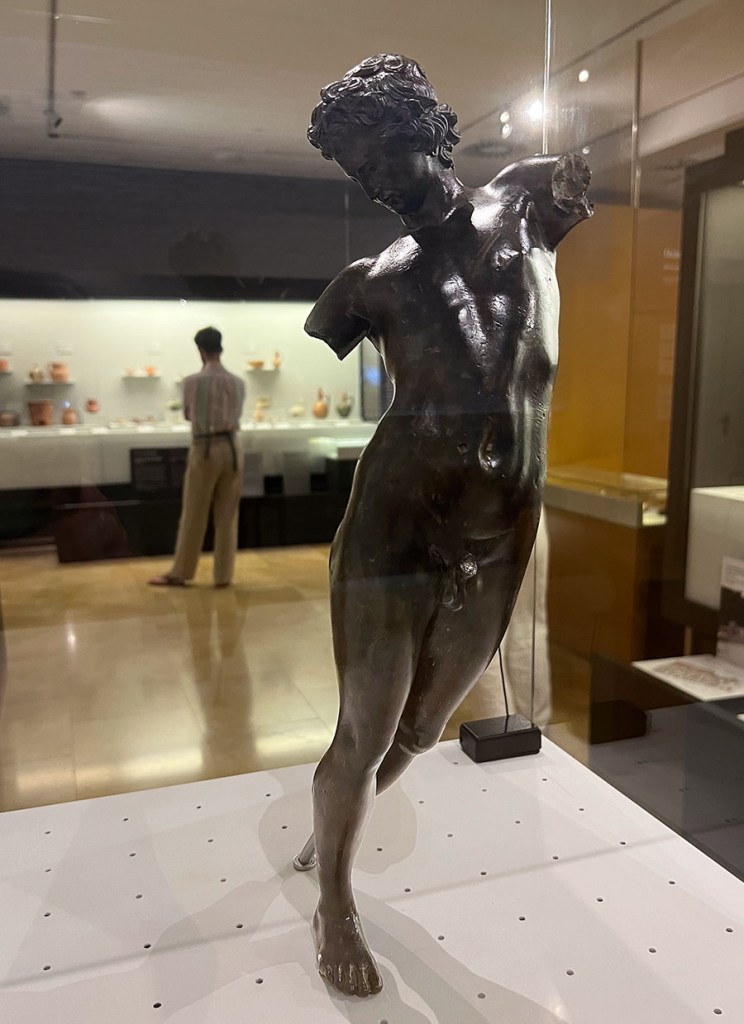
• Baco como adulto y como joven. Fue capaz de conservar su nariz.
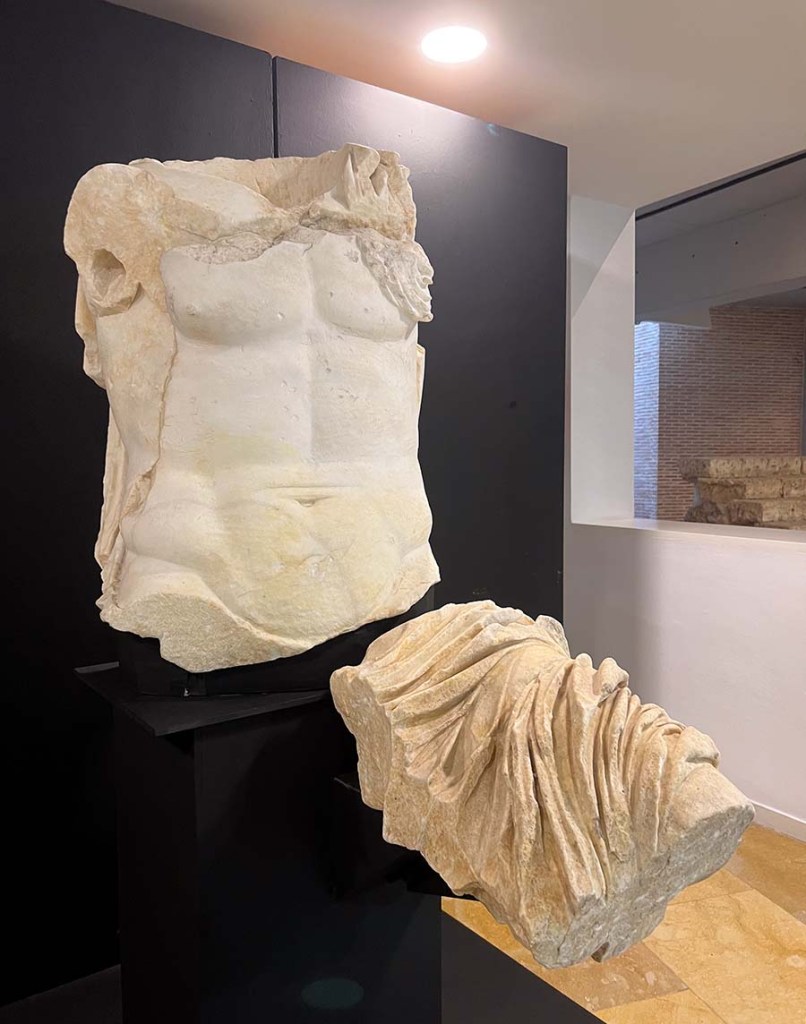
• Alguien pagó un ojo de la cara para estar aquí. (En inglés dicen pagó un brazo y una pierna.)
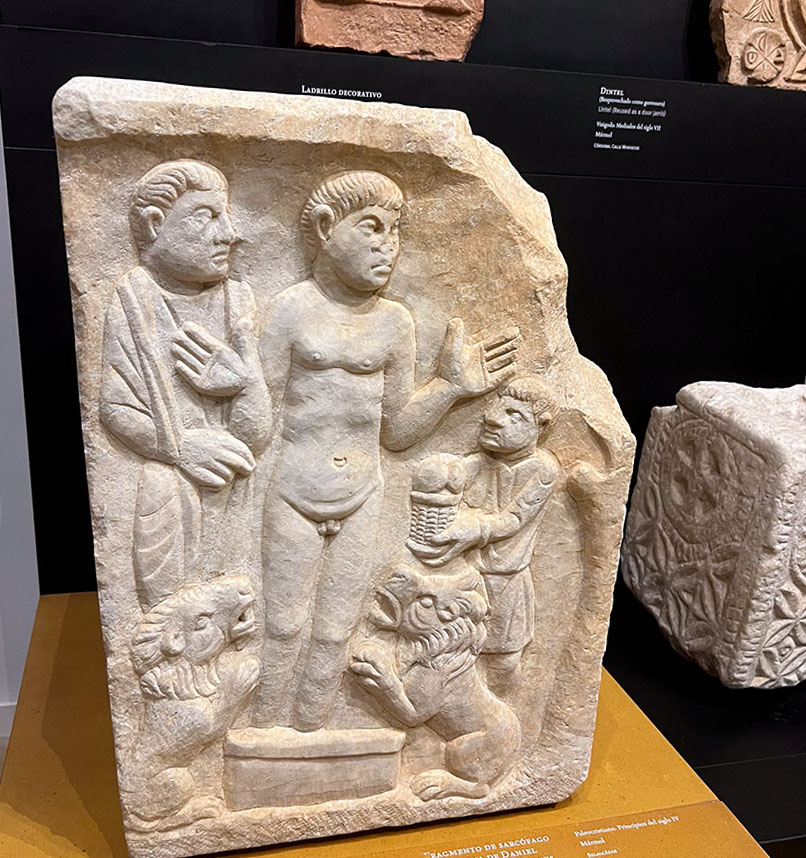
• Fragmento de sarcófago con escena de Daniel en el foso de los leones. Siglo IV.

• Logró sujetar su nariz, pero no mucho más, desde el siglo III.
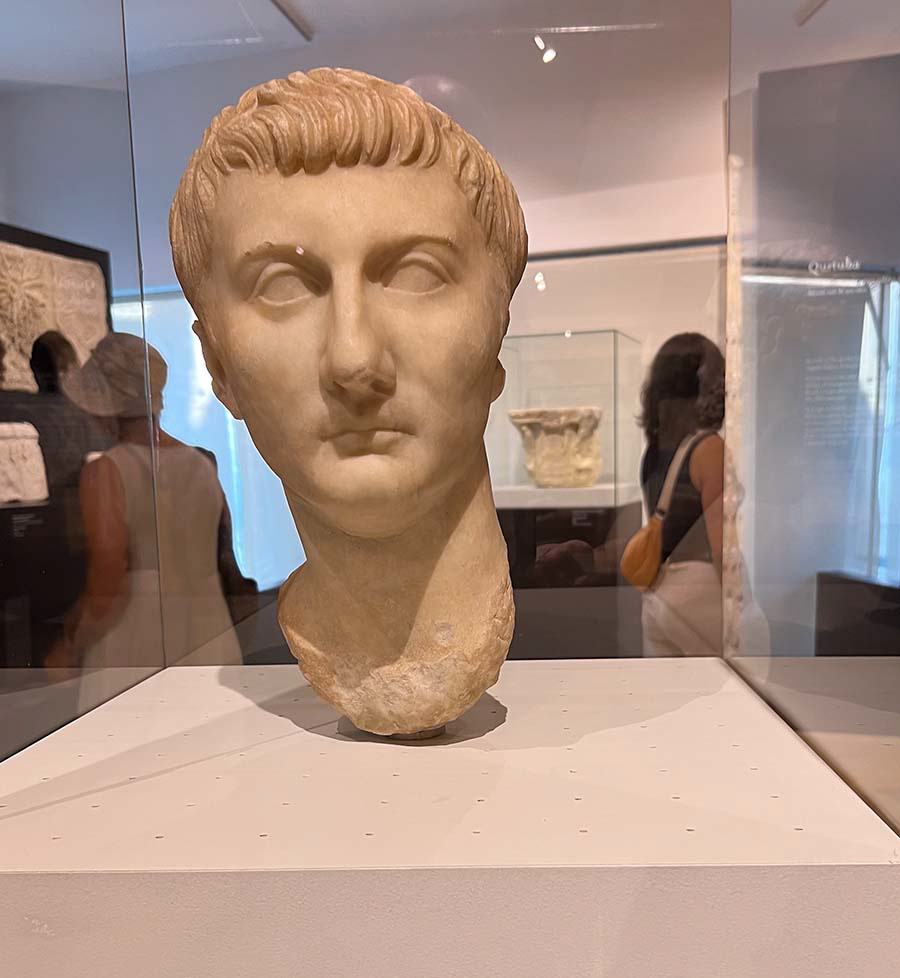
• Retrato de Druso (el Joven), hijo del emperador romano Tiberio. Siglo I. Hallado en Puente Genil, a aproximadamente una hora en coche al norte. Druso comía almendras amargas como profiláctico contra la embriaguez. He oído que no beber demasiado funciona incluso mejor.
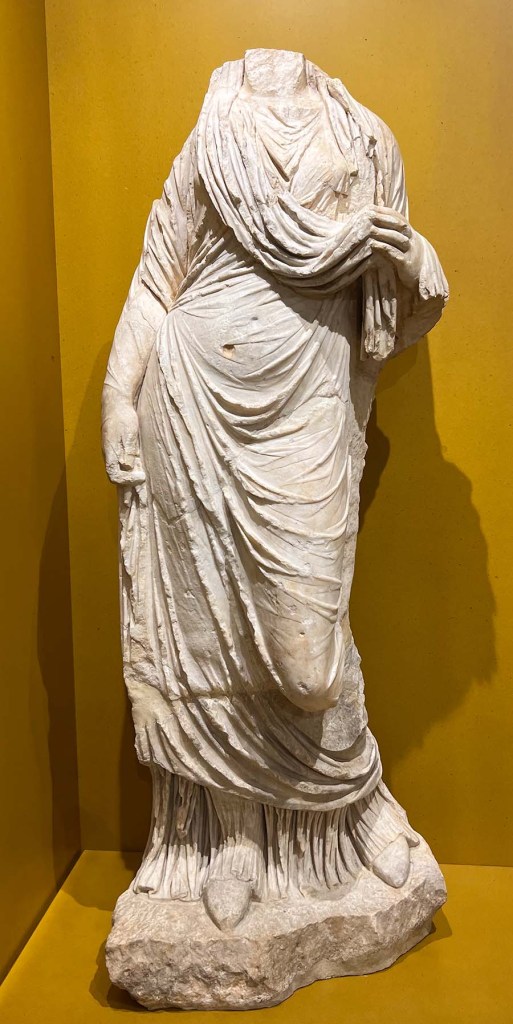
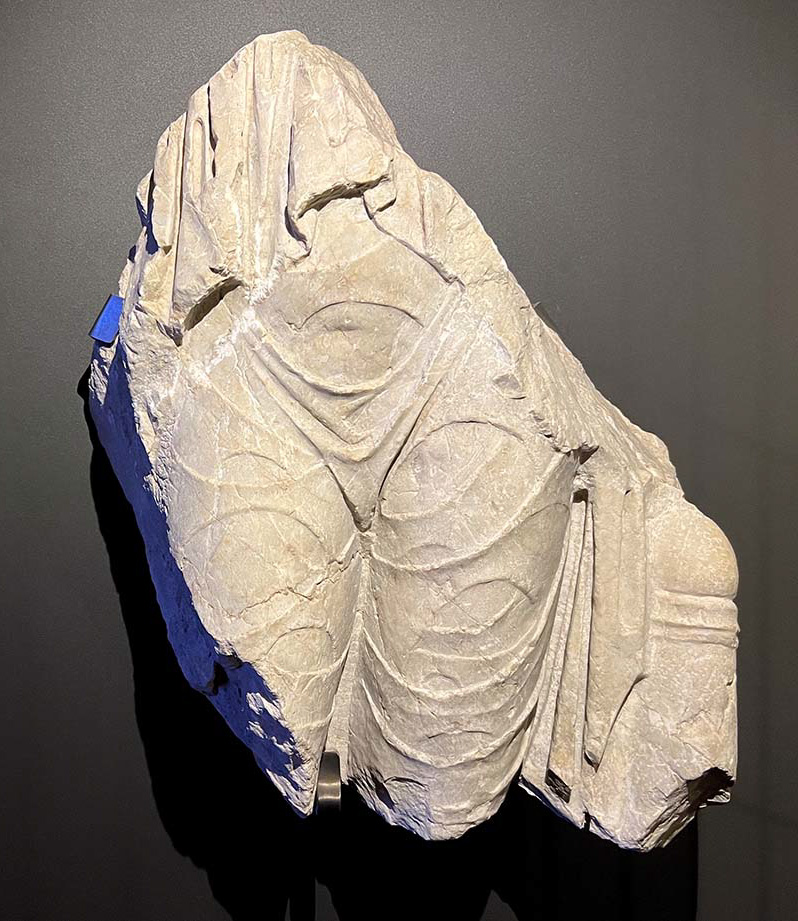
• La diosa Niké, sin muchos “swoosh”. Finales del siglo I/principios del II. Encontrada en una calle que suelo recorrer.

There was a great cartoon in Punch of the Romans landing in Britain. The ships have arrived, the crews disembark and start building ruins. Boud
Boud:
I remember that!
I suddenly feel like a Caesar salad. I probably look like one, too.
Walt the Fourth,
Julius wouldn’t have liked that salad.
The one of the Fragment of a sarcophagus depicting Trump in the lion’s den of the White House was quite something. They even captured his proportions and flabbiness. The poor thing.
Jokes aside I guess many of these artists and sculptors didn’t use Latina and South American as models. Mores the pity……..
Mistress Borghese:
Do you suppose Romans weren’t as hot as the gladiator pix make them out to be? Although, I’m thinking about many of the other Roman sculptures and how they turned me on when I was young.
BUT …. what if the models actually looked like the statues? What if they had no arms or legs OR HEADS!!!!!
Bob:
And thus the fall of the Roman Empire!
The Romans often made the heads interchangeable, when the political leader changed, just change the head. There were some overzealous nuns with hammers who removed the masculine anatomy from statutes, no one has been able to find where the missing parts went. (leading to many smirks and off color jokes.)
David:
The Getty Museum had an incredible exhibit of just those kinds of changes in classical sculptures over the years. It was fascinating. I don’t know about nuns but I do know the Catholic Church officially did remove genitals from statutes and often then placed fig leaves.
LOVE the song! Yes, the end is quite satisfying. I love the concept of Cockney rhyming slang but I am not clever enough to do it. Or get it.
Great comments on all your statues here. The statue of Mithras makes it look as if he asking someone else if he is doing this right. “I should pinch the nostrils like this?”
Ms. Moon
Ms. Moon:
Yes, there’s Mithras saying, “I just stabbed him in the neck. Do I really need to squeeze his nostrils? They’re drippy!”
I was just about to make a remark re missing masculine anatomy, but David beat me to it. I don’t quite get the religious symbolism of the kid selling donuts to Daniel, but Midrash never was my strong suit…
wickedhamster:
I couldn’t figure out what that kid was selling to Mithras! But they called them globi.
I know a fair bit of Cockney slang but ‘face = boat race’ is a new one on me.
Raybeard:
I only know that one from the song.
Who needs a face anyway!? Funny what body parts survive over time…..so random it appears. And to think some of these are all around you waiting to be found……..no pressure though!
Jim:
I do have to go in search of the rest of that table.
I think I read one time that knocking the nose off statues of the previous Pharaoh was a thing in Egypt to disgrace the former ruler. Maybe it was a thing in that whole region. One thing about the ancients, they were not prudish about nudity. I notice Mithras has a dog, a cobra, and a scorpion at his feet. I wonder what the symbolism about that is.
ellen abbott:
The things I learn thanks to YOUR inquiring mind. Here are all the answers: https://www.dailyartmagazine.com/mithras-slaying-the-bull/
Thanks for the link. Here’s another tidbit about the snake. The snake was a symbol of wisdom in the goddess religion which is one reason it was included in the Eden story as an evil seducer tricking Eve, who symbolized the goddess, into eating the apple and getting mankind thrown out of the Garden and into the world of hard life, an attempt to discredit goddess worship. Early Judaism battled with paganism and goddess worship for the hearts of the people who were not so eager to give in to the vengeful male god.
Thanks for today’s theme:) Keep it coming!
Judy C:
But wait, there’s more!
Ha! I love the juxtaposition of some fascinating ancient artefacts and a “one-hit-wonder” pseudo-Punk band that everyone else had completely forgotten about – bravo! Jx
PS Where I was brought up, Caerleon in Wales was historically a Roman fortress encampment, and Mithras was widely associated with the legion based there – to the point that there was a “Mithras Way” just down the road from my childhood house.
Jon:
You grew up surrounded by ancient history.
I’m so glad you provided the link about Mithras. I was wondering, too.
I always assumed many of those noses got knocked off since they were probably aquiline Roman noses. (which would explain Bacchus’ pug nose staying intact)
Kelly:
I laughed when I saw Bacchus’ little noses still intact.
She’s got no nose but a decent booty 😂
Adam
NEKORANDOM.COM
Adam:
Maybe not as catchy for a song.
I wonder what future peoples (assuming there are any) in a post-apocalyptic world will make of the fragmented remains of our culture? Which reminds me of the classic novel “A Canticle for Leibowitz” by Walter M. Miller Jr. — that future world’s gospel was some scrap of irrelevant writing found in what the reader would recognize as a construction worker’s lunch box but future people thought was a holy relic.
Debra:
I’ve never read A Canticle for Leibowitz. I should. It is fascinating to wonder what any species coming across the remnants of our civilization will put together.
OK, I get the missing arms and legs, but what about the missing eyeballs? There’s some proto-Little Orphan Annies there.
Kirk:
Ha! All the statues should have had color contact lenses.