
La versión en español está después de la versión en inglés.
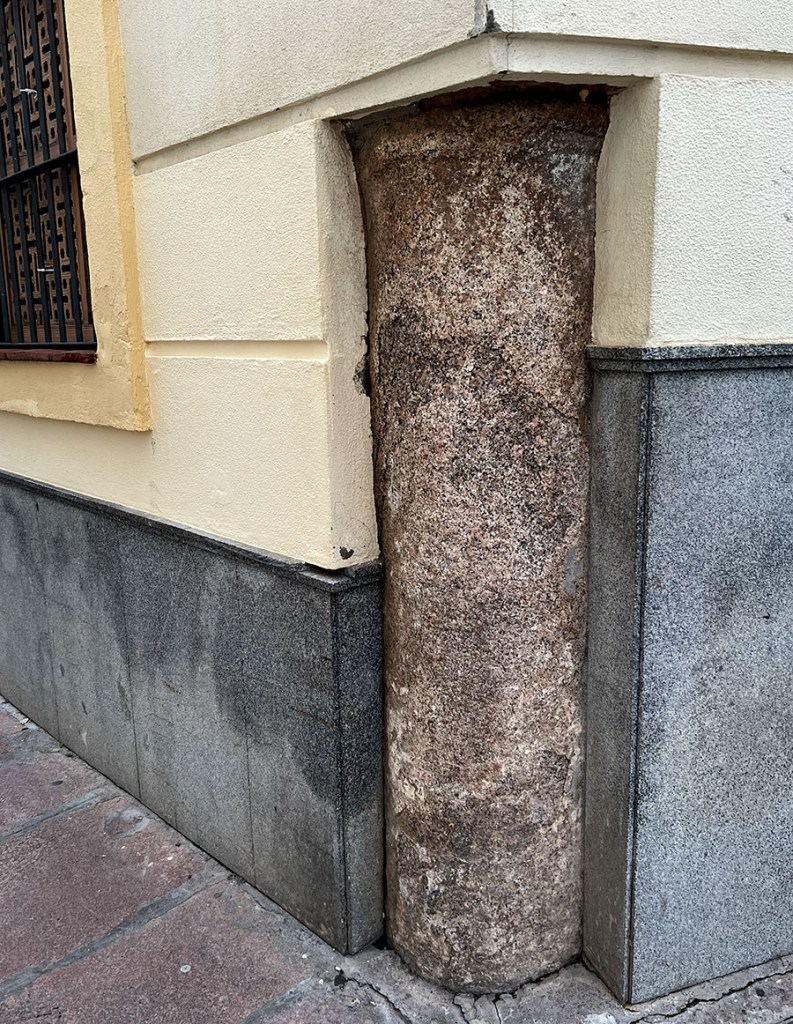
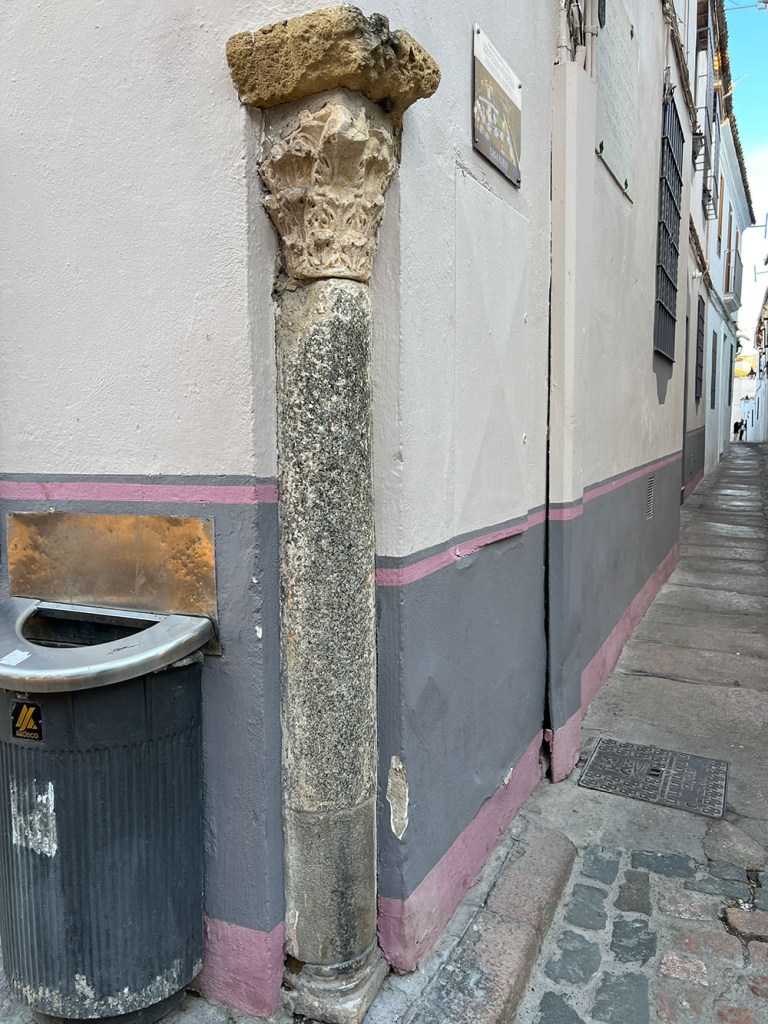
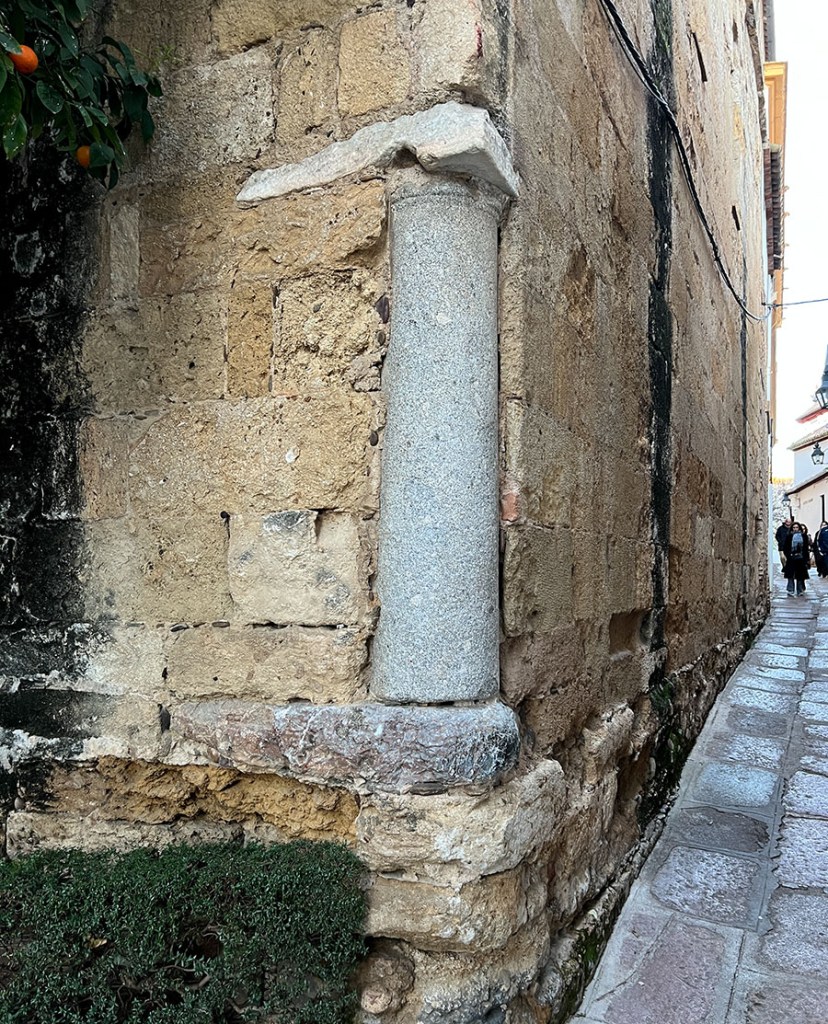
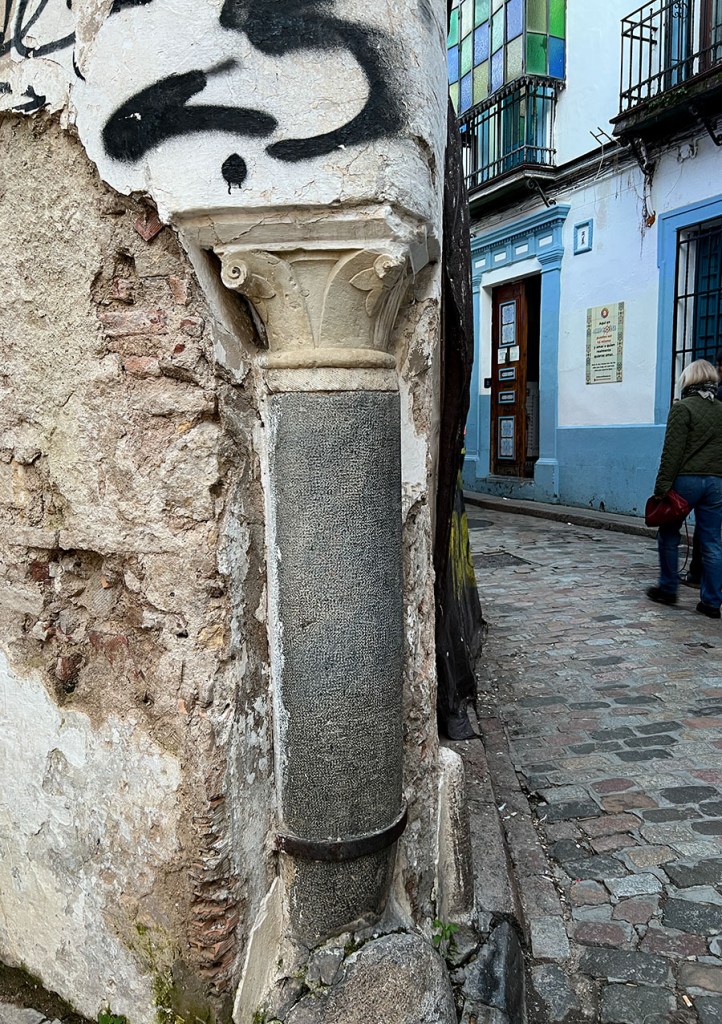
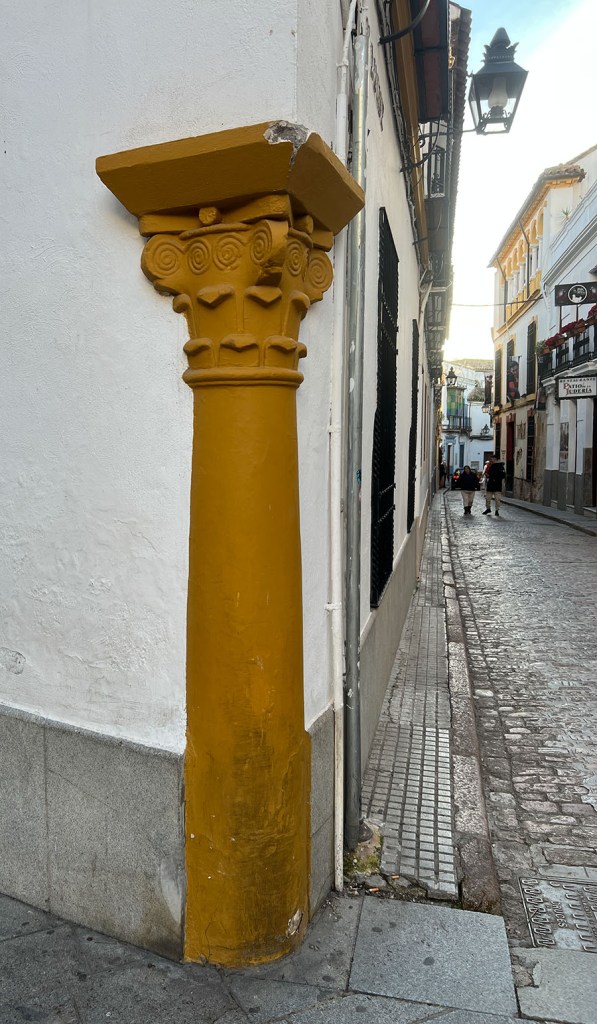
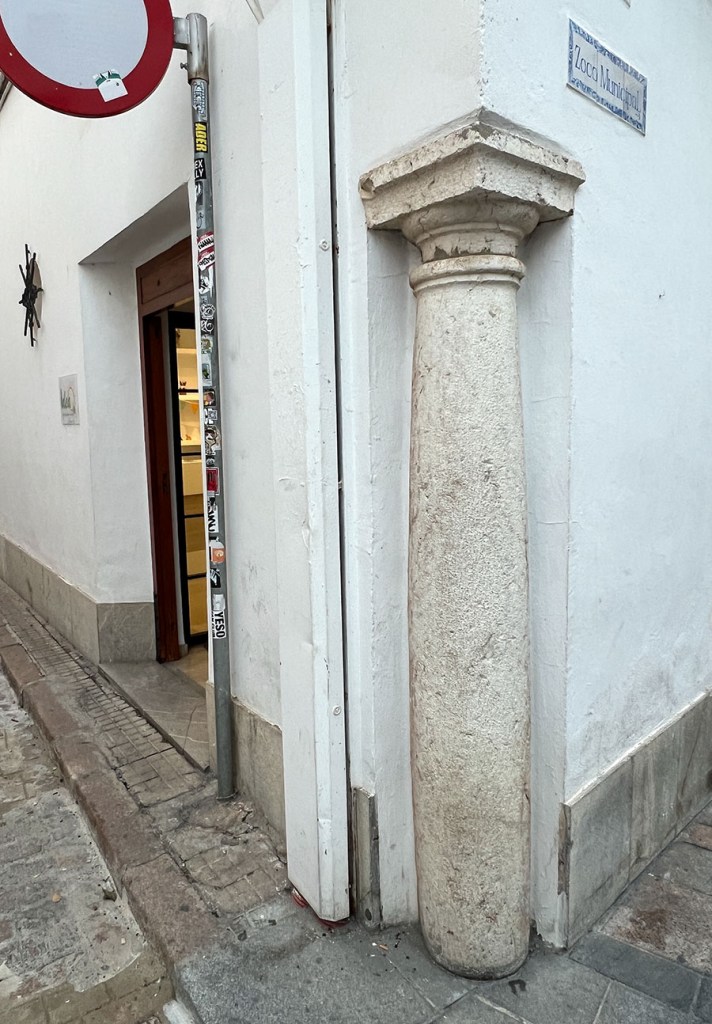
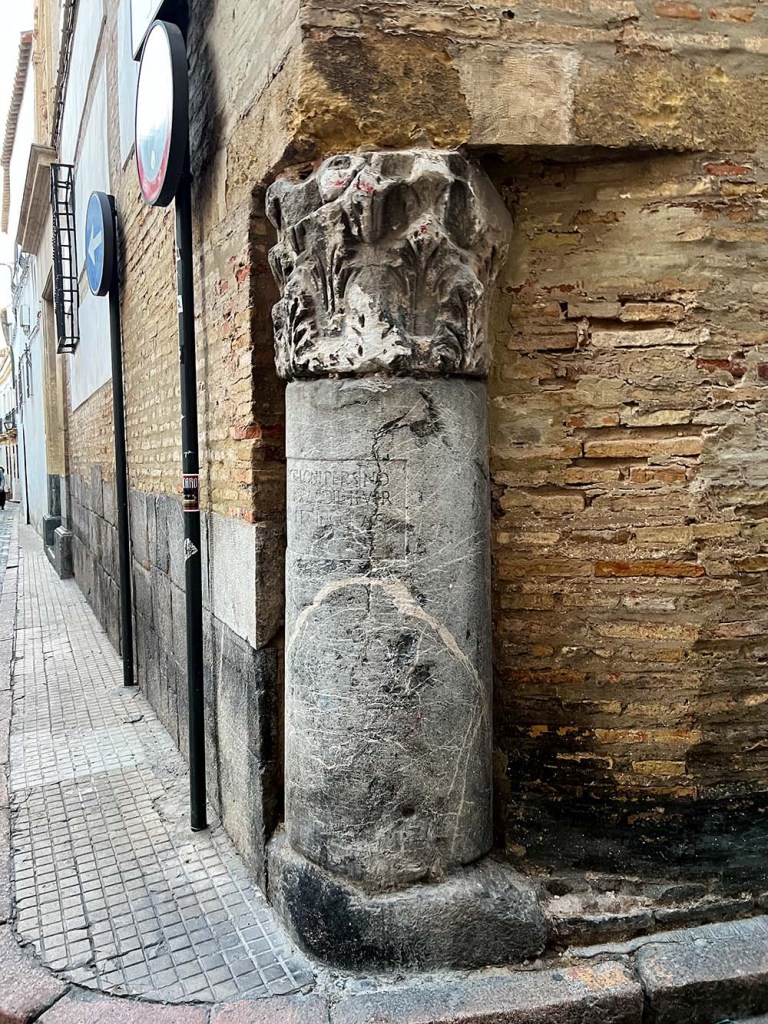
I often come across buildings with ancient columns tucked into their corners. In this day and age, it’s a practical move. The strong stone columns withstand the bumps and grinds of cars more capably than the stucco walls. Often the columns are found during excavations for the new structures or they’re from nearby. The columns serve as ornamentation and as a reminder of the history and grandeur of these cities, a symbol of power.
In Seville, I also often came across buildings with millstones built into the exterior walls. I learned then that the usually granite millstones were specifically intended to protect the plaster and brick walls from old carts and their large wheels. Our current street was once populated with mills. There’s a mill stone monument, of sorts, across the street, but I haven’t yet come across any mill stones in walls in Córdoba.
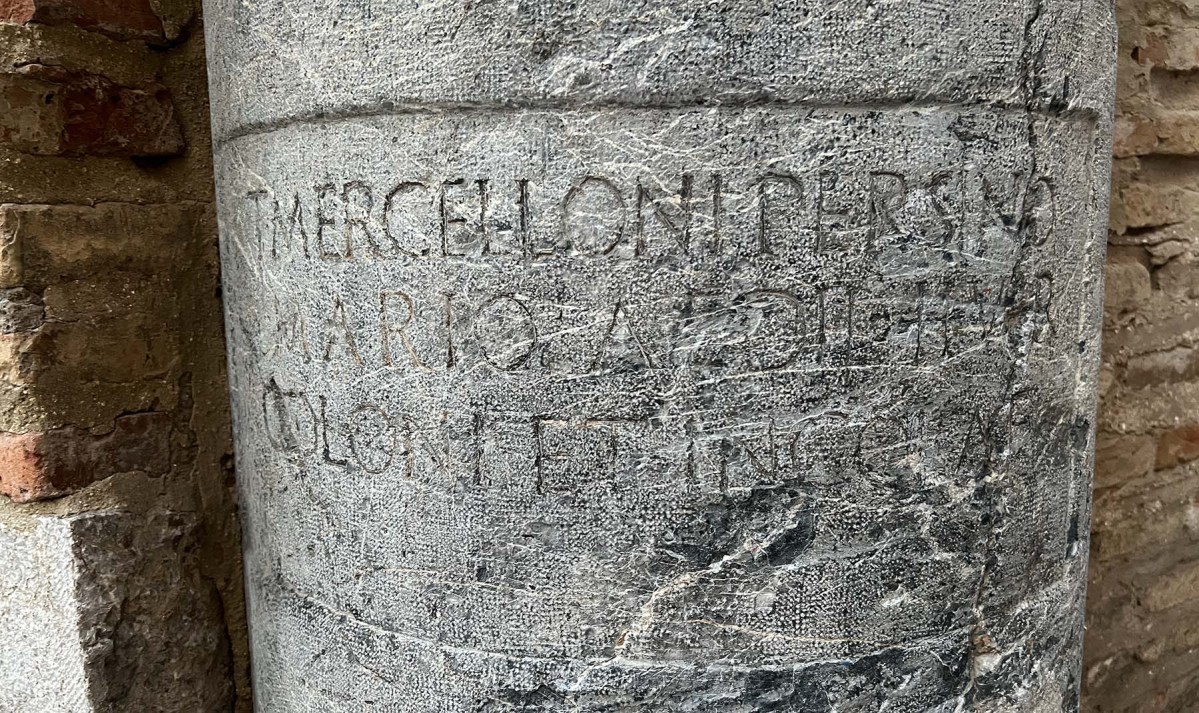
By they way, I have no idea what is etched in Latin into the column above, except that the second line begins with the name “Mario” and the third with the words “colonists and” (as far as I can tell). I think it may be from Super Mario’s ancestral home (although I thought that was in Japan).
It’s currently gray and drizzly and will apparently remain mostly gray and drizzly at least through the 9th of February. I’m so over it. I’m going out for a walk this afternoon.
A menudo me encuentro con edificios con columnas antiguas en las esquinas. Hoy en día, es una medida práctica. Las robustas columnas de piedra resisten los golpes y el roce de los coches mejor que las paredes de estuco. A menudo, las columnas se encuentran durante excavaciones para las nuevas estructuras o proceden de lugares cercanos. Sirven como ornamentación y como recordatorio de la historia y la grandeza de estas ciudades, un símbolo de poder.
En Sevilla, también me encontré a menudo con edificios con piedras de molino empotradas en los muros exteriores. Entonces supe que las piedras de molino, generalmente de granito, estaban destinadas específicamente a proteger las paredes de yeso y ladrillo de los carros viejos y sus grandes ruedas. Nuestra calle actual estuvo poblada de molinos. Hay una especie de monumento con una piedra de molino al otro lado de la calle, pero todavía no he encontrado piedras de molino en los muros de Córdoba.
Por cierto, no tengo ni idea de qué está grabado en latín en la columna de arriba, excepto que la segunda línea comienza con el nombre “Mario” y la tercera con las palabras “colonos y” (que yo sepa). Creo que podría ser del hogar ancestral de Super Mario (aunque creía que estaba en Japón).
Ahora mismo está gris y lluvioso, y al parecer seguirá así al menos hasta el 9 de febrero. Ya me harté. Voy a dar un paseo esta tarde.
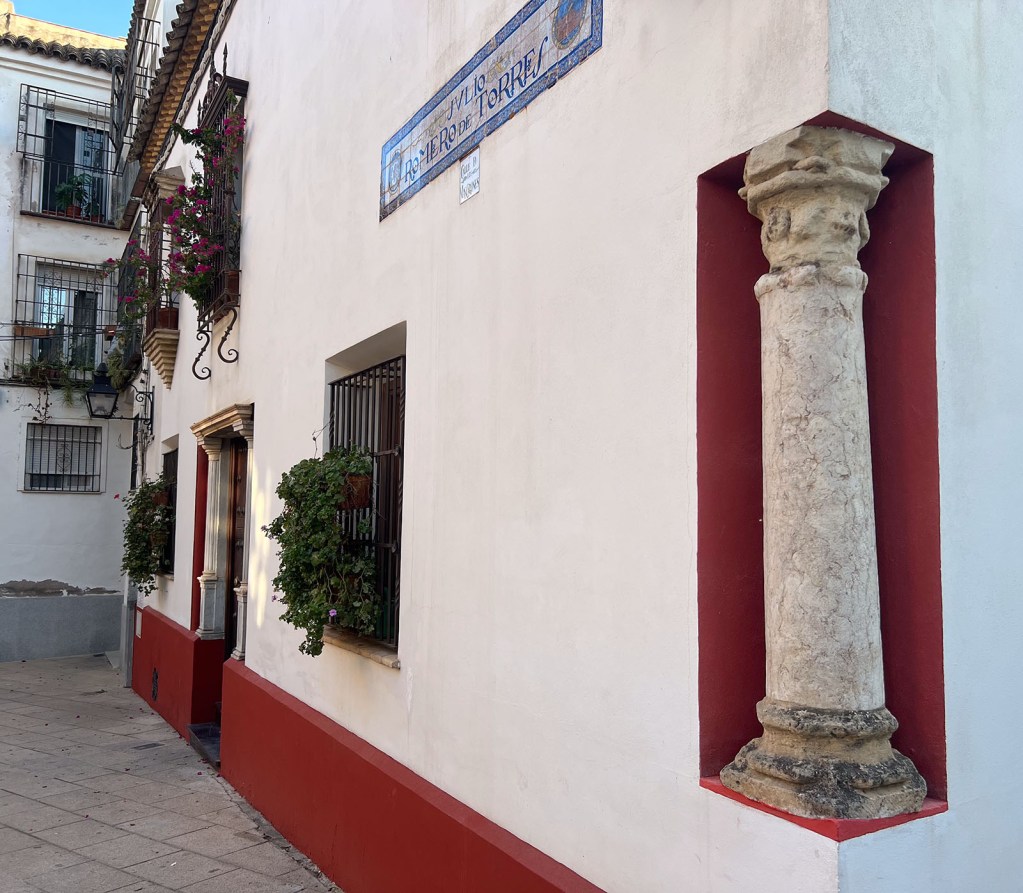
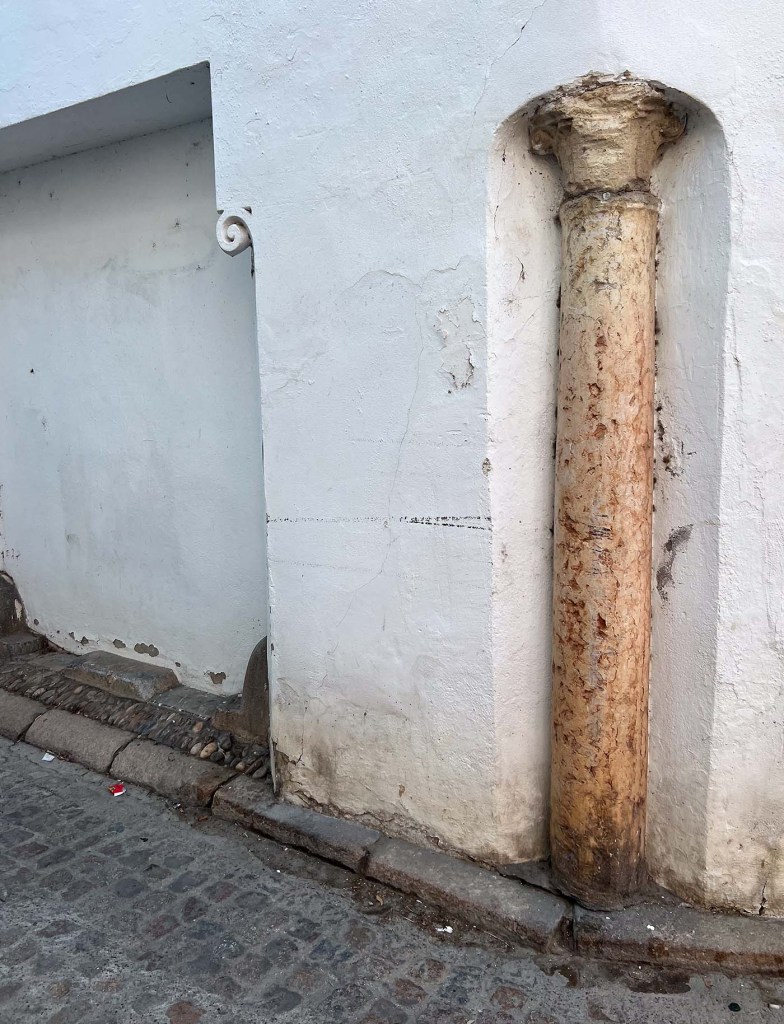

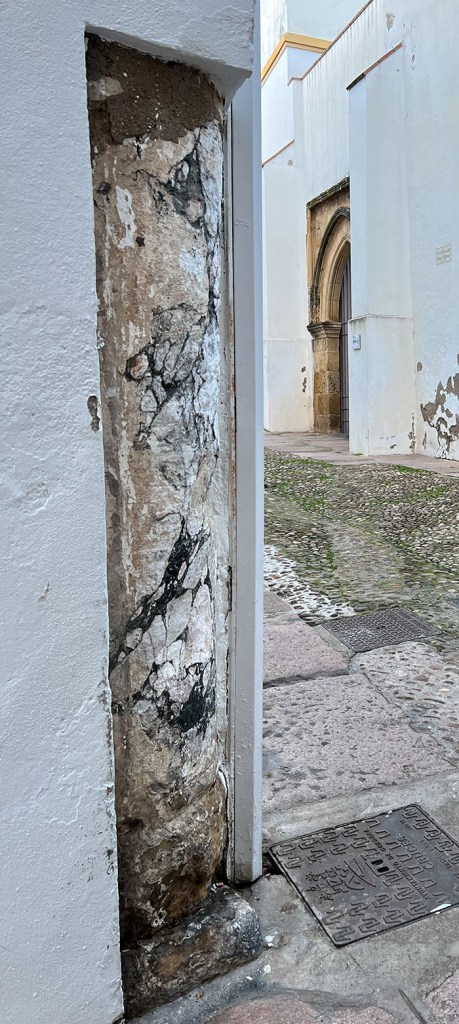
Click the thumbnails to enlarge.
Haz clic en las miniaturas para ampliar.
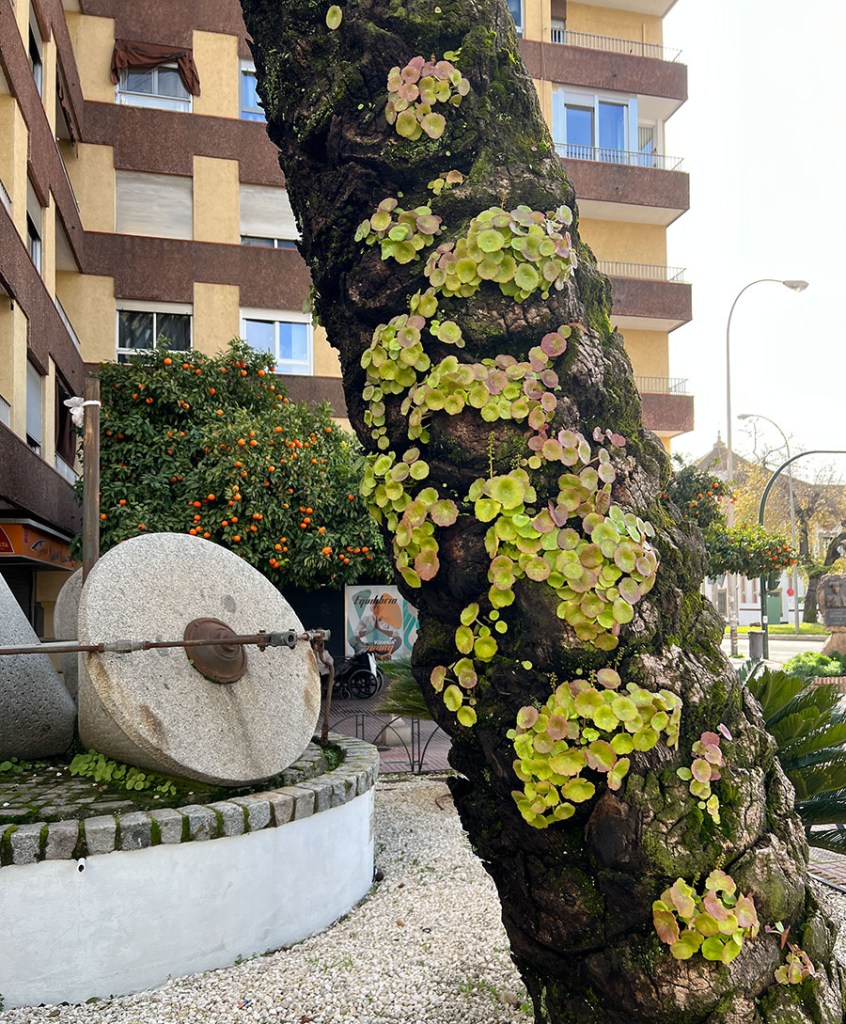
• Piedras de molino al otro lado de la calle. Creo que es Umbilicus rupestris (centella americana) creciendo en el tronco y en la base de las piedras de molino. Prospera en ambientes frescos y húmedos. (¿Necesito decir más?)

Maybe one of your faithful readers, can crack the Latin. There are so many layers of history in those streets.
David:
See TexasTrailerParkTrash’s comment. She found it!
LOVE that Pennywort!……wondering if it will survive here / will research. Tks
Keep that great sense of humour of yours / Super Mario’s home. It will get you, and the rest of us, through this long and dark winter.
Jim:
I didn’t know what the growth was. When I looked it up, I read that pennywort can grow in Nova Scotia but it’s very rare. You and Ron are rare, too, so it’s a perfect plant for you!
Oh, I love the stone columns! And he pennywort too.
ellen abbott:
I’ll monitor the pennywort. I notice it’s got flower stems.
Stone columns might be a good anti tricycling toddler feature, too. save a lot of dented living room walls.
We have pennywort all over, climbing over the ground cover. I like it a lot. Not so much the weather that supports it, maybe. Boud
Boud:
I love the idea of the columns “implanted” inside the house, too.
That’s a palm trunk? It must be an ancient palm.
Now I want a corner column house. I wonder where I could find a column. Perhaps they have some leftover from the destruction of the East Wing they’re not using.
I did indeed love your Super Mario’s ancestral home comment.
If I were there, I would buy you some cheerful flowers and bring them over. Since I’m not, perhaps you should buy some to see if they help.
Ms. Moon
Ms. Moon:
It IS a big old palm. Probably only about 45 years old, from when our street went in. You’re right about the cheerful flowers. They always help.
All those photos are fascinating! I love to see the Past still supporting the Present (and the Future).
Debra:
So, do I. And may there be a future!
Here ya go:
https://www.artencordoba.com/blog/cordoba/tito-mercelloni-persino-un-cordobes-olvidado-de-hace-2000-anos/
TexasTrailerParkTrash:
You’re amazing. How did you find this? I’ll add this info to today’s blog post. Thank you!
You’re welcome! I used the Google lens image search. Several images came up and I clicked on the one that looked like your photo. Also saw that it had Cordoba in the description. The website was in Spanish (which I could kind of understand) but used the translate option to read it in English.
TexasTrailerParkTrash:
I hadn’t even tried to find it. I should have. But your link prompted me to do some more sleuthing. Will share that today.
That’s a clever bit of recycling, indeed! Over here, Roman ruins were pillaged to build churches and monastic buildings. In Caerleon, where I grew up, many later buildings – including the Priory – were built on, or of, stone from the amphitheatre, the barracks and other remnants of old Isca Silurum. Jx
PS I, too, adore that pennywort!
Jon:
The pillaging was common here, too. So many “newer” buildings were created from the materials taking from older buildings. And so many churches, as you know, built on mosque and synagogue foundations.
I learn so many things here! The columns are fascinating AND beautiful. As for the navelwort… I think I’d prefer to have lint in mine.
Kelly:
The navelwort is about to bloom. Wouldn’t that be nicer than lint?
My daughter took a lot of Latin in high school and college. One of her extra-curricular activities in college was a Latin reading group, which she described as a bunch of nerds sitting around reading poetry in Latin. They probably got drunk or smoked weed afterward.
Love,
Janie
janiejunebug:
They would HAVE to get drunk or smoke weed!
I thought the first bit said Tremerchion , which is a vallage close by
finlaygray:
See TexasTrailerParkTrash’s comment. She actually found the translation. I don’t think it mentioned Tremerchion. But wouldn’t that be cool?
Wow those columns are very ancient, some go back to Roman times and probably taken from old temples. The marble ones look very weathered.
larrymuffin:
They probably all go back to Roman times.
Those Romans must have been doing something right to make their infrastructure last 2000 years.
Kirk:
In recent years they figured out why Roman concrete is so much stronger than modern concrete. Amazing.
Very cool!
Rade:
It’s a very cool city.