La versión en español está después de la versión en inglés.
It’s not easy to decide what to share with you from my time inside Córdoba’s Archaeology museum. You’ve all seen relics in museums, I’m sure. What’s especially exciting for me is, unlike most of the ancient relics I’ve seen elsewhere, everything I saw Wednesday was found right here in the city. Some historic items were found just a few minutes from our apartment.
The name Córdoba comes from qart ṭūbah, the name during the Punic Wars between the Roman and Carthaginian Empires. It meant “good town.” The Romans called it Corduba. Under Muslim rule it was known as Qurṭubah. And then came the Spanish-speaking Christians. If you’re interested and don’t feel like doing a lot of reading, here’s a rundown of the documented history (and prehistory) of what is now known as Córdoba:
- Neanderthal. 42,000 to 35,000 BC.
- Pre-Urban. Settlements existed by the 8th century BC.
- Phoenician and Carthaginian. 575 to 205 BC.
- Roman. Corduba was established in 169 BC.
- Visigoth. After the fall of the Roman Empire, the Visigoths conquered the city in 572 AD.
- Moors. In 711 AD, the city was conquered and became Qurṭubah, the capital of the Umahhad Emirate, considered its golden age.
- Christian Reconquest. Christian forces conquered Córdoba in 1236. They were led by San Geraldo’s 22-greats grandfather, Ferdinand III.
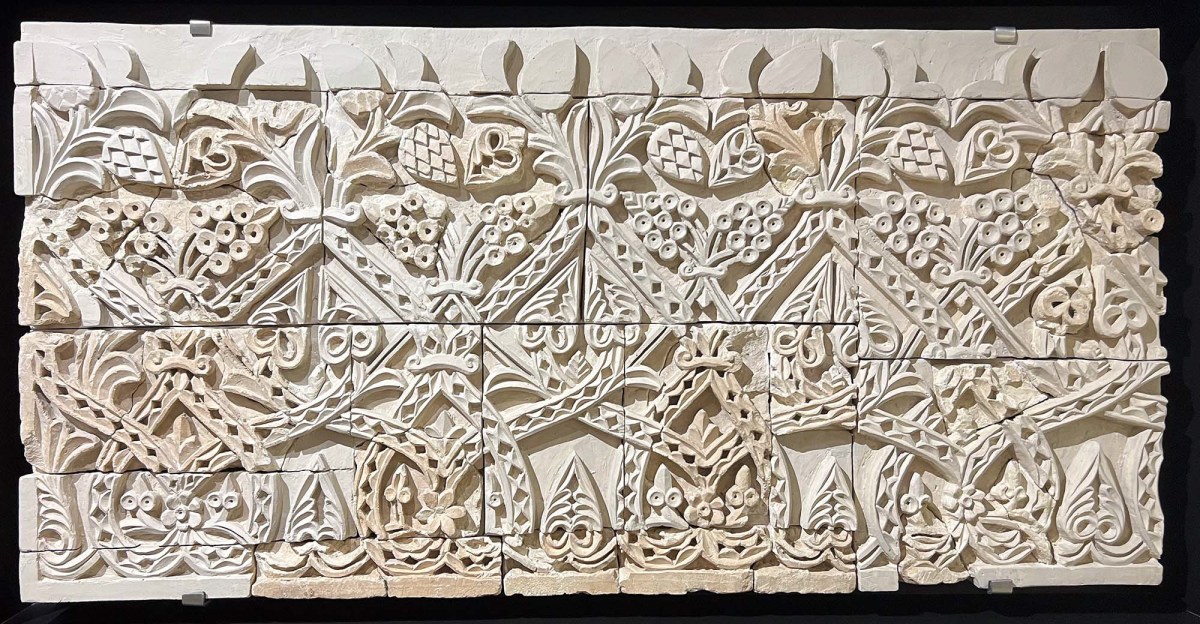
Note: The image at top dates from the late 10th century.
No es fácil decidir qué compartir con ustedes de mi visita al Museo Arqueológico de Córdoba. Seguro que todos han visto reliquias en museos. Lo que me emociona especialmente es que, a diferencia de la mayoría de las reliquias antiguas que he visto en otros lugares, todo lo que vi el miércoles se encontró aquí mismo, en la ciudad. Algunos objetos históricos se encontraron a solo unos minutos de nuestro apartamento.
El nombre Córdoba proviene de qart ṭūbah, el nombre que se le dio durante las Guerras Púnicas entre los imperios romano y cartaginés. Significaba “buena ciudad”. Los romanos la llamaban Corduba. Bajo el dominio musulmán se conocía como Qurṭubah. Y luego llegaron los cristianos hispanohablantes. Si te interesa y no te apetece leer mucho, aquí tienes un resumen de la historia documentada (y prehistoria) de lo que hoy se conoce como Córdoba:
- Neandertal. 42.000 a 35.000 a.C.
- Preurbano. Ya existían asentamientos a lo largo del río Guadalquivir hacia el siglo VIII a. C.
- Fenicio y Cartaginés. 575 a 205 a.C.
- Romano. Corduba se fundó en el 169 a.C.
- Visigodo. Tras la caída del Imperio romano, los visigodos conquistaron la ciudad en el 572 d.C.
- Moros. En el 711 d.C., la ciudad fue conquistada y se convirtió en Qurṭubah, la capital del Emirato Omeya, su época dorada.
- Reconquista cristiana. Las fuerzas cristianas conquistaron Córdoba en 1236. Estaban lideradas por el tatarabuelo de San Geraldo, Fernando III.
Nota: La imagen de la parte superior data de finales del siglo X.
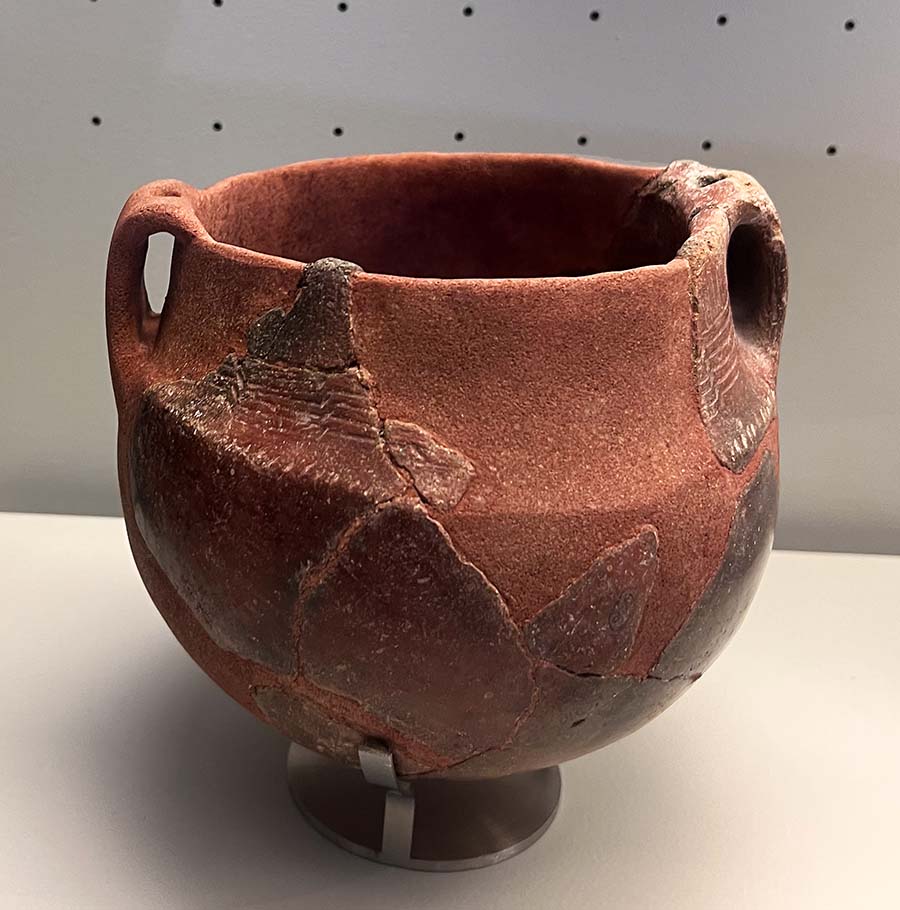
• Fragmentos reensamblados, de 8 mil años de antigüedad, neolíticos.
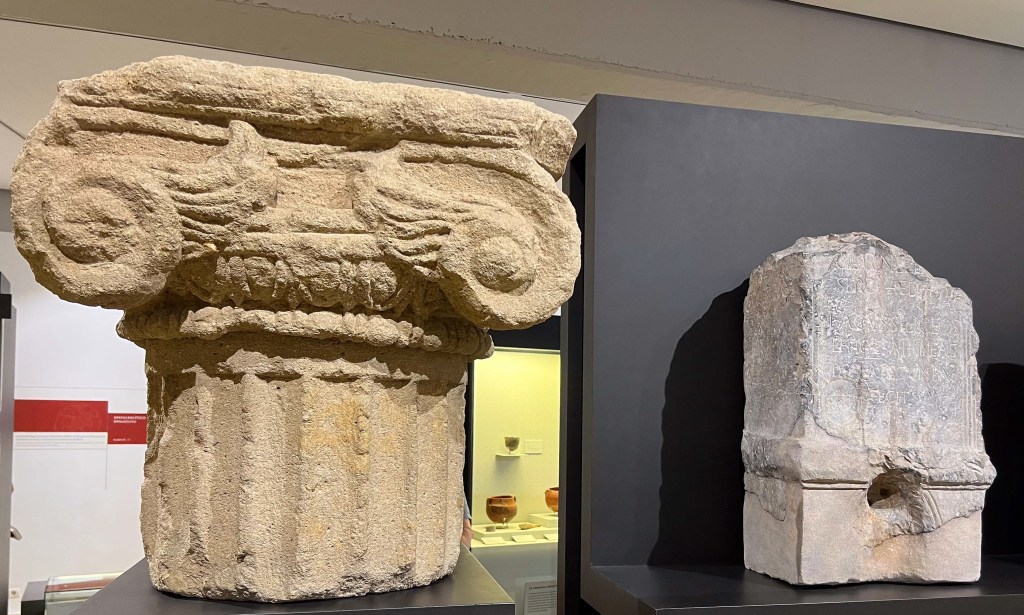
• Capitel jónico. siglo I. Calcarenita.
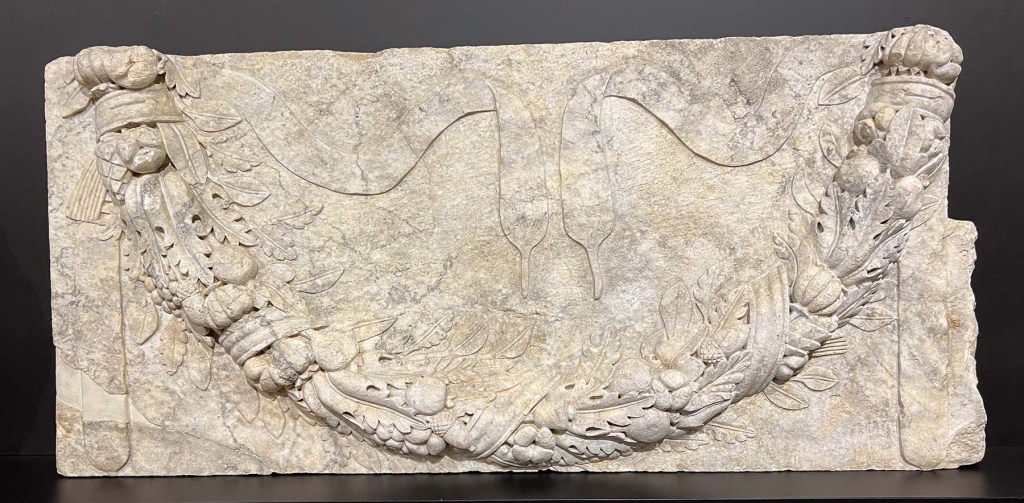
• Relieve decorativo con festón. siglo I. Calle Abderramán III, a 5 minutos a pie de casa.
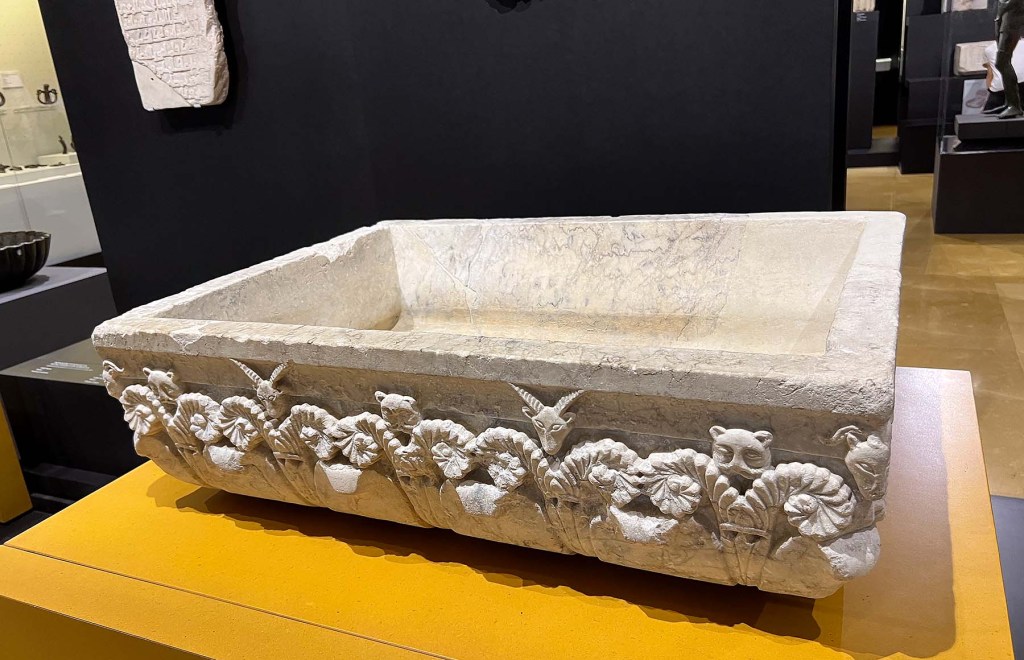
• Siglo X.
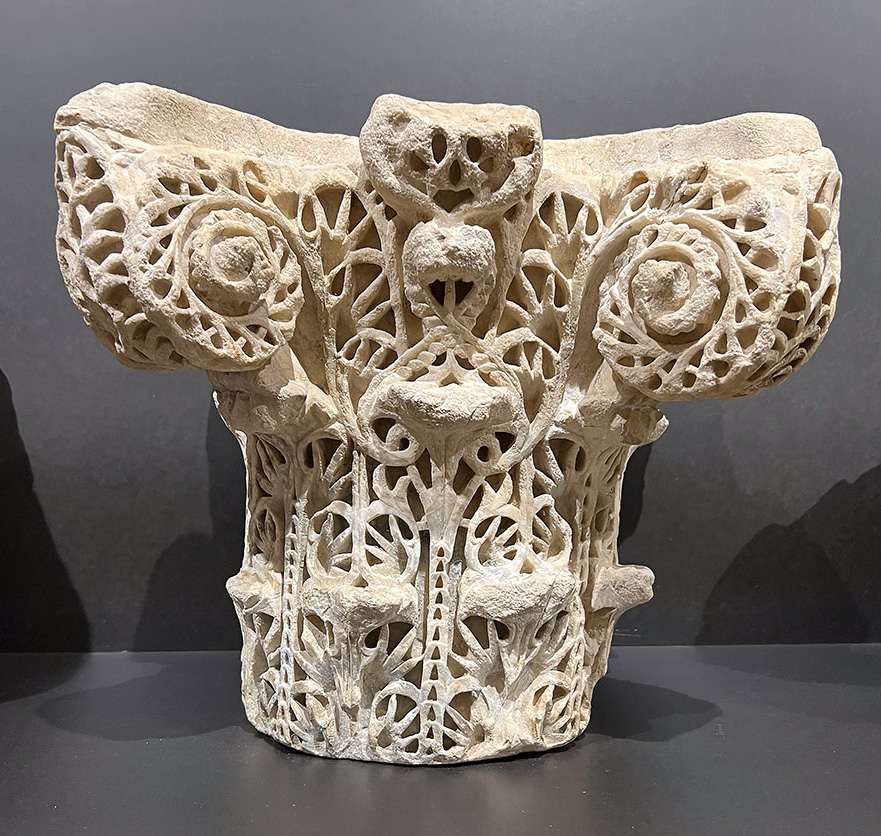
• Capitel corintio. Siglo X. Cementerio de Nuestra Señora de la Salud.
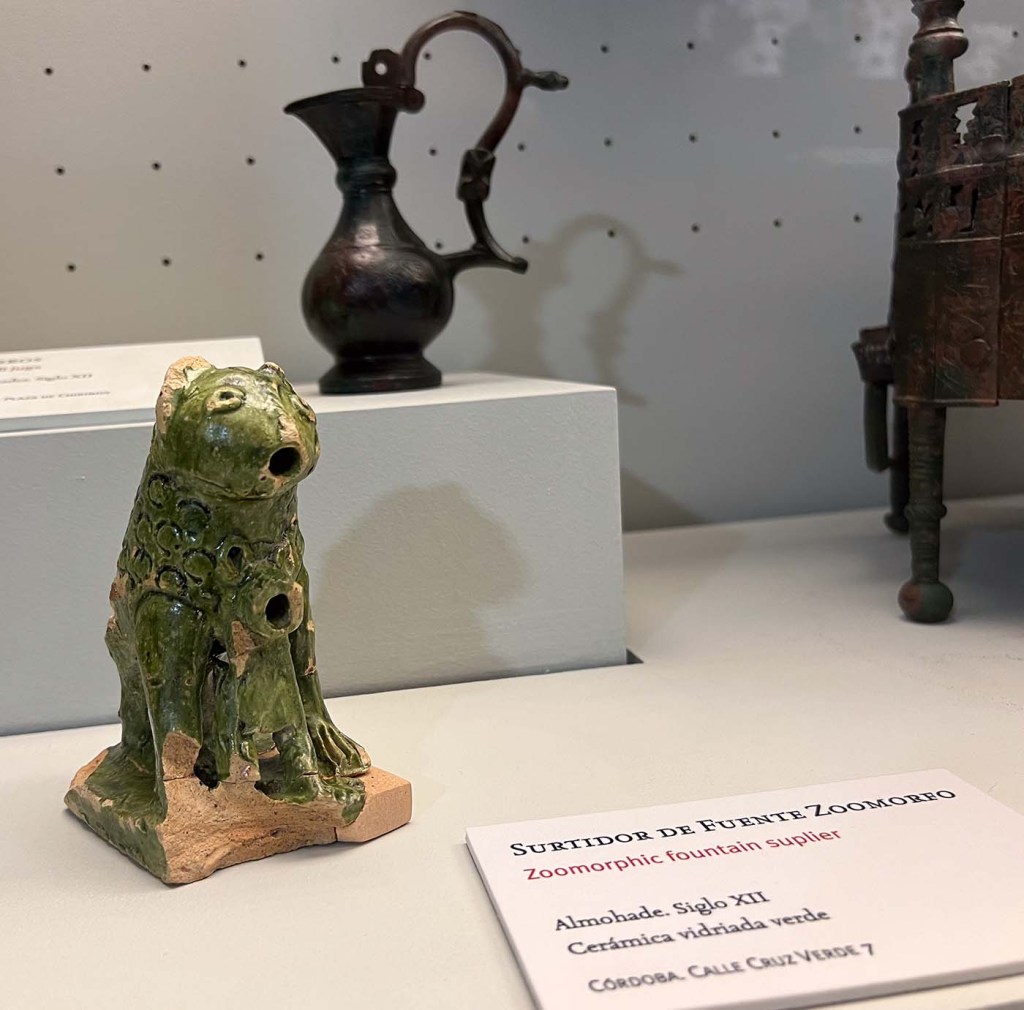
• Surtidor de fuente zoomorfo. Alomahade. Siglo XII. Cerámica vidriada verde.
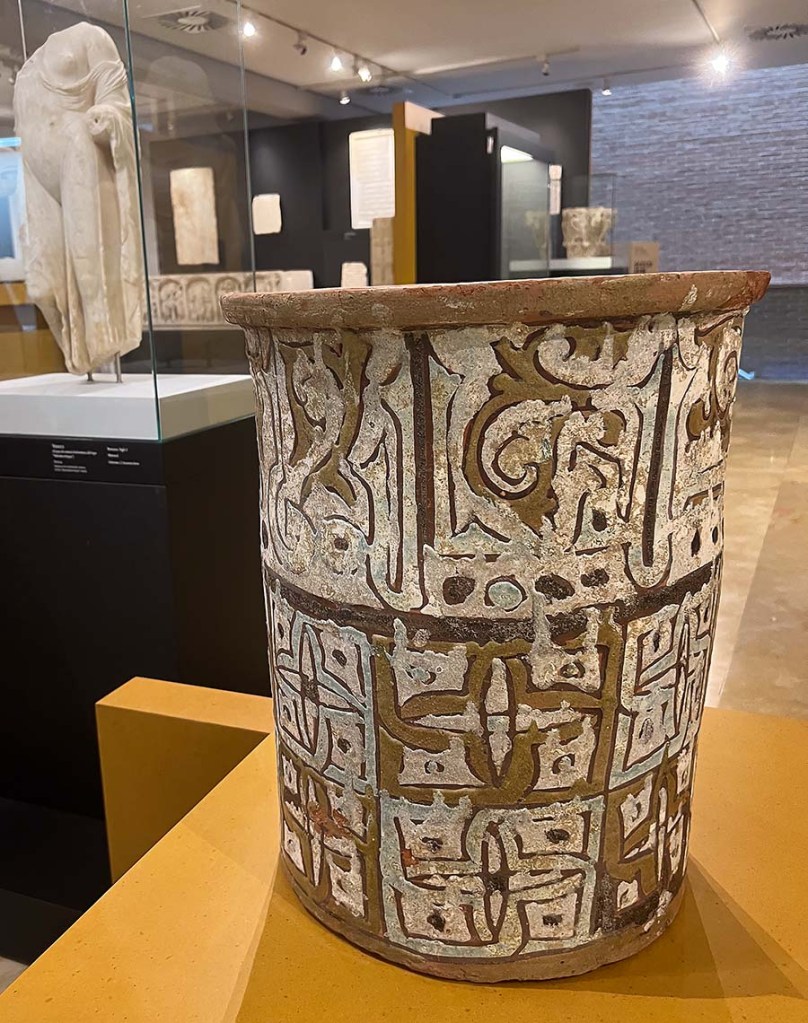
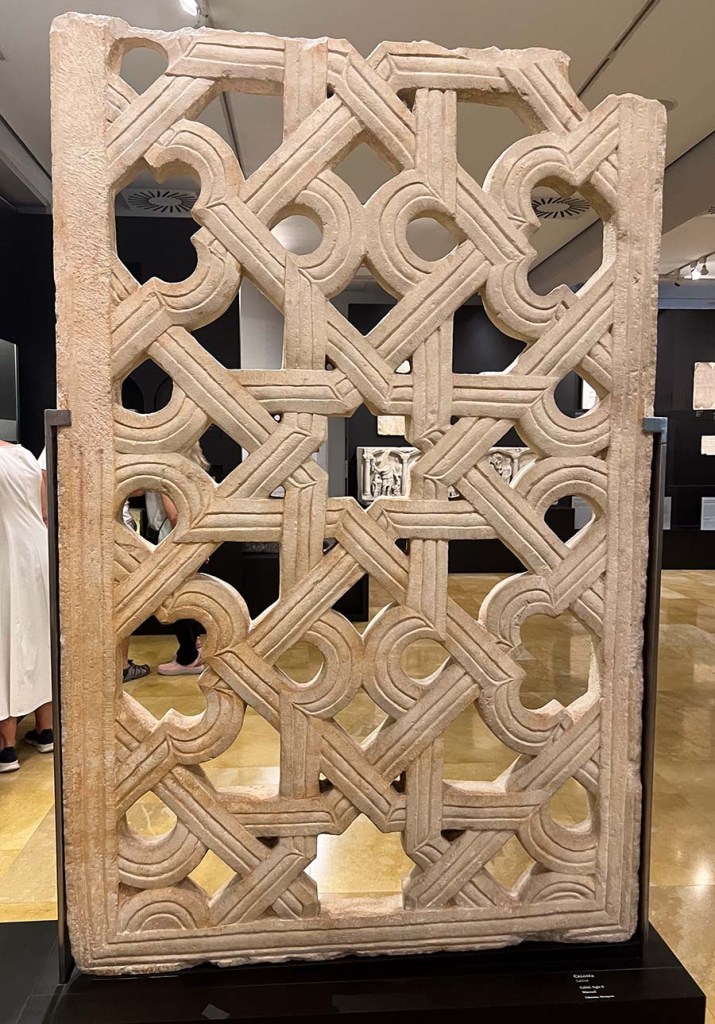
• Procedente de la mezquita, siglo VIII.

That’s a great series of insights into the history and artisan work of the city by any name. I’d like more! Boud
Boud:
You’ll get more, in dribs and drabs. I love sharing historic info to put things in context but don’t want to sound like Wikipedia.
Such great pieces and a miracle they still exist.
Also, does this make Sg Spanish royalty?????
Bob:
As far as I’M concerned, SG is Spanish royalty. People here do love to learn about his connection. On a visit here once from Fuengirola, our taxi driver from the train station was giving us a free tour as we headed to the mezquita. He constantly went on about Fernando III, so I told him SG was his 22-greats grandson. He was SO excited. He actually kissed SG’s ring when we left the cab and said he couldn’t wait to get back and tell the other drivers.
I just watched a horror movie the other night…called the Relic. It was pretty good. It was from years ago but still holds up.Take place in a museum…..
Mistress Borghese:
I’ve never heard of it. Maybe worth a look?
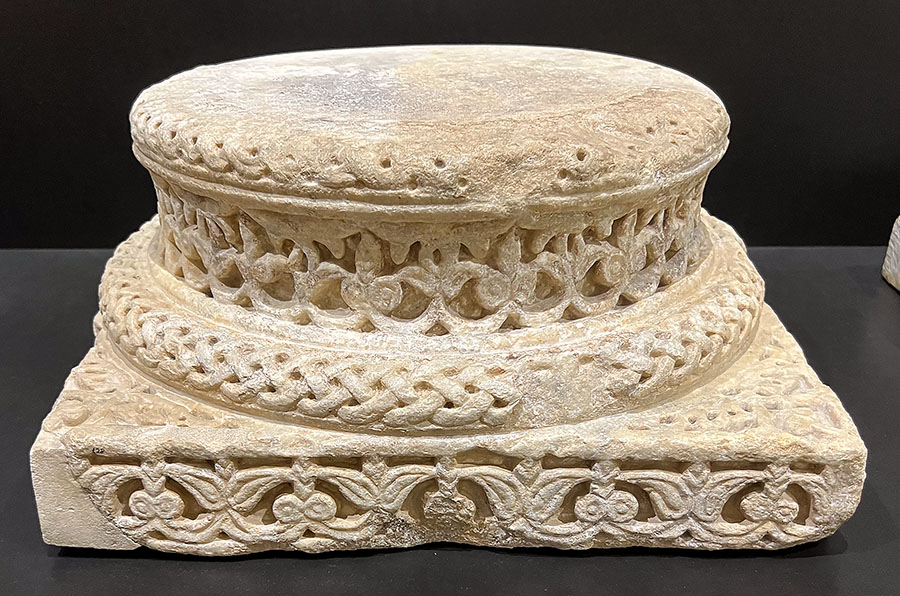
Some marvellous specimens there – I love the intricate piercing-work on the C10th column, and that bath/trough with the positively demonic goats! The Islamic screen in the final photo wouldn’t look out of place in more modern buildings.
It is, however, the Neolithic bowl that is the most remarkable – such a well-crafted item for an epoch where animals and crops had only recently started being farmed, and man had yet to develop a written language. It’s 3000 years older than the start of the Egyptian empire or the building of Stonehenge..! Mind-boggling. Jx
Jon:
Yes! I fell in love with those goats. Moorish designs can be so strongly decorative and contemporary looking. I was amazed by the Neolithic bowl. There were others.
Oooh, share all the archaeological finds you want, Scoot — I enjoy your posts about them! And I can picture Dudo & Moose curled up on the Corinthian Capital, LOL!
Tundra Bunny:
Lots more to come from the museum. And I’m always stumbling on something on my walks. Yeah, Dudo and Moose would curl up on the capital or they’d be afraid of it.
I’m so glad to learn the history of your city’s name! What an impressively ancient history it has. Those museum pieces are exquisite, but my fave is the green froggy duo (?) which probably was part of a fountain at one time (?).
Debra:
I don’t know what those animals are, but yes they did come from a fountain. 12th century. They’re only labeled as zoomorphic. The label even includes the exact street address where it was found.
I’ve always preferred Doric and Ionic to Corinthian. The latter is a little too “busy” for my taste.
Kelly:
I love the ornate and intricate of Corinthian, but I probably wouldn’t have it in my palace.
It always amazes me that these relics can survive so intact…….maybe it reflects the level of skill and craftsmanship of those time periods.
Jim:
I’m amazed too. If they were lucky they got buried and forgotten. But experts do an awful lot of piecing together and restoration of many pieces. Like that neolithic bowl.
When I saw that neolithic pot, it hit me hard how very long humans have been making things with clay and firing them. Specifically pots. And then the green frog? Unless I am mistaken (and I well could be) that is a glazed and fired piece of pottery.
The art created by the people so very, very long ago is absolutely humbling. We, who are “modern” have very little to brag about in so many realms. Such beautiful items here.
I think Cordoba has had almost as many metaphorical flags raised over it as Florida has.
Ms. Moon
Mary Moon:
Isn’t that amazing? Ceramics have been done for 10s of thousands of years and I still don’t know how to do it. Yes, the thing that looks like a frog is a mother and young animal from a fountain of the 10th century. I don’t know what kind of animal. All it says is zoomorphic. And, yes, it’s ceramic!
Ah well. I’ve been taking pottery for two years and I still don’t know how to do it either.
I mean…. Whaaaaaaaattttt??? Amazing to see these things… “eight thousand years old”…. That’s right… whaaaatttt??? Ha! Fantastic choices to show us, Mitchell. It’s just so hard to wrap my head around all of this… people were walking around, living, creating… and here we are, now. They couldn’t have conceived of us, and I can’t imagine them.
Judy C:
It is overwhelming and wonderful to imagine people walking along some of the same paths we’re walking now.
Wow!
David:
Thanks!
These are wonderful!
Rade:
Thanks!
Truly fascinating! 😘
wickedhamster:
I think you’d love the place.
Fascinating stuff, especially the neolithic pottery. Hard to conceive of a man-made object eight thousand years old!
Steve:
I was stunned when I saw the date on that pot. There are sites one can visit around here.
I think we have lost so much with all the modern techniques of producing decorative architecture. Nowadays those things would probably be cast from a mold instead of artisans sculpting.
ellen abbott:
Artisans could at least be hired now to create the master that would then be cast. But, even that doesn’t happen.