La versión en español está después de la versión en inglés.
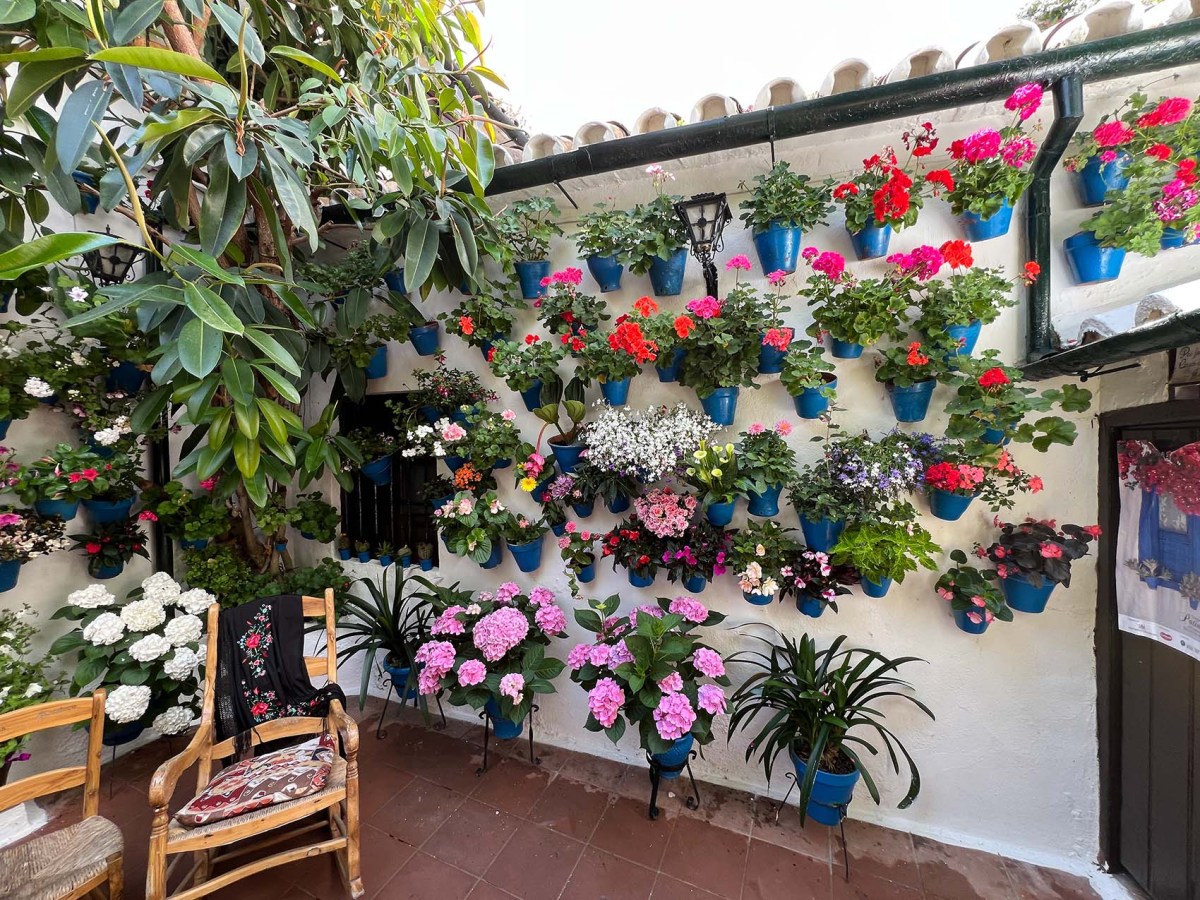
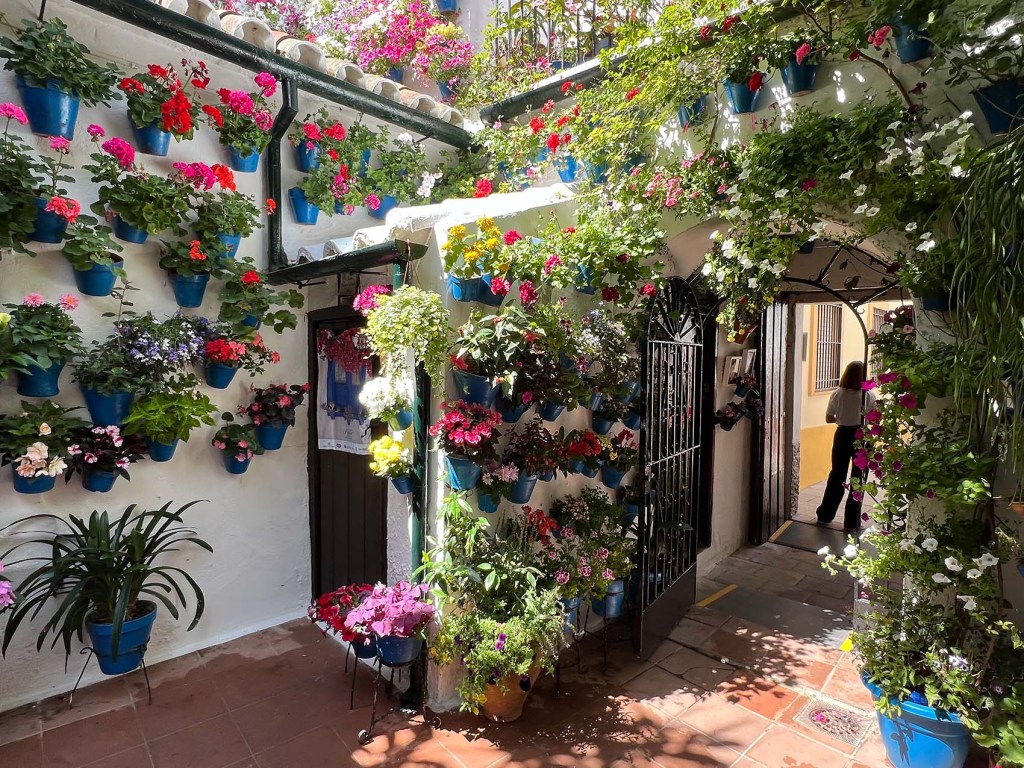
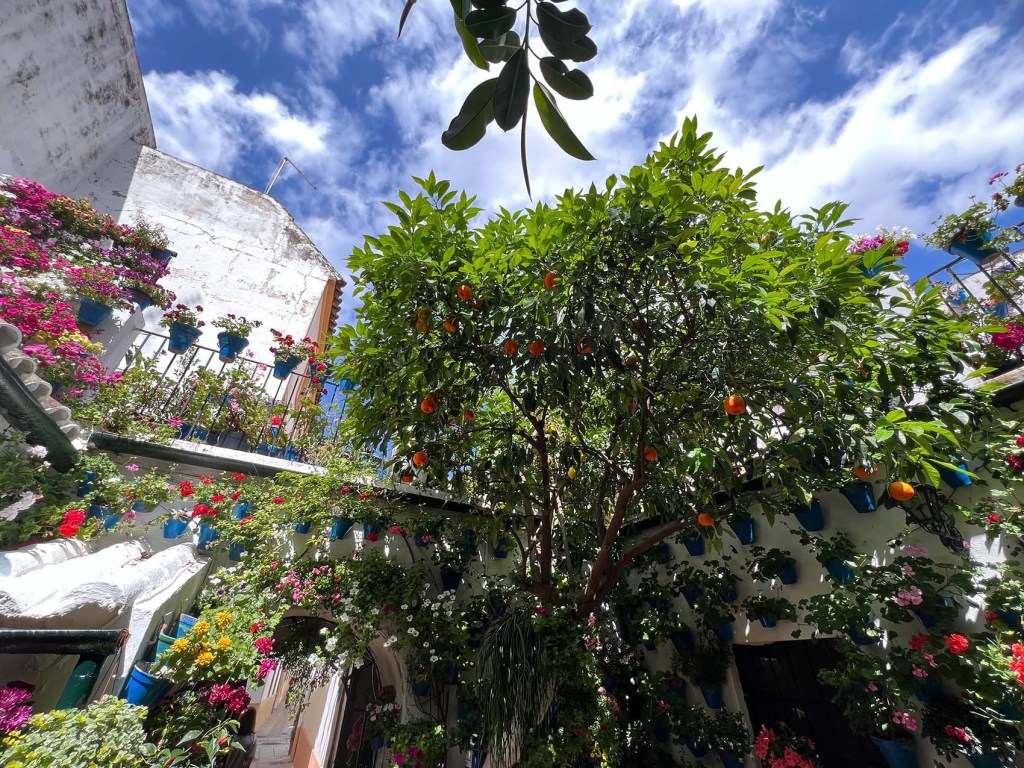
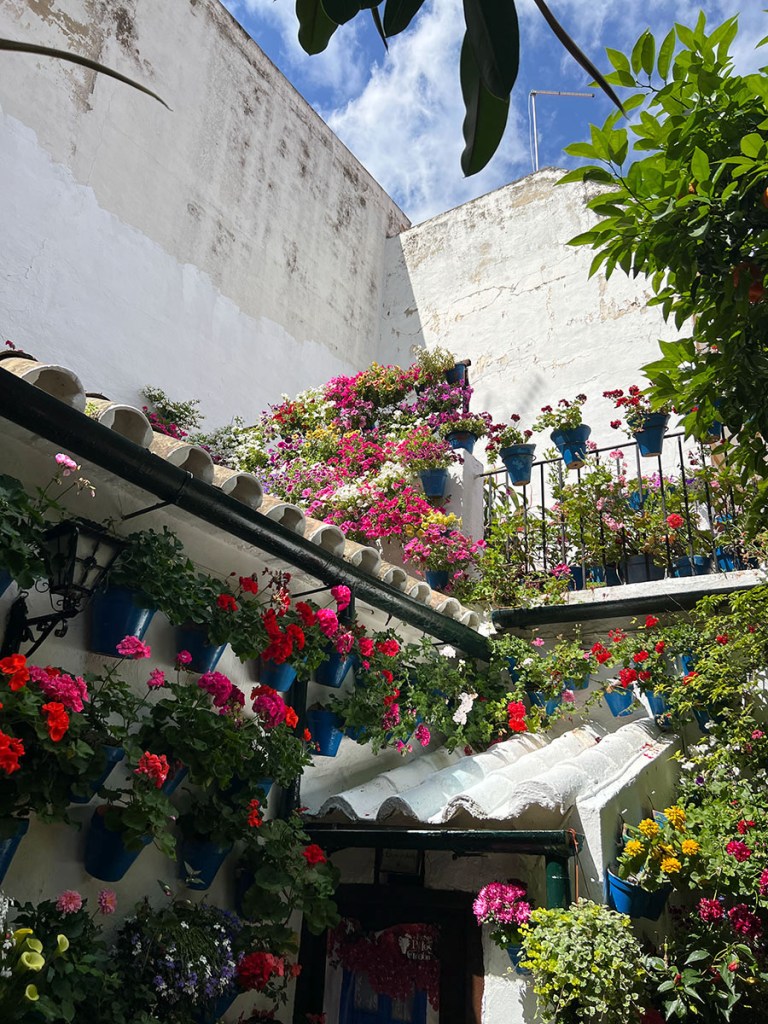
Yesterday before noon, I walked about 30 minutes in hopes of seeing one particular Patio of May. There are eight patios on display in the Santiago neighborhood (the southeastern-most barrio of the city center) and I had chosen a well-known historic home. Once I reached the neighborhood the streets grew crowded. There were large groups led by guides at every turn.
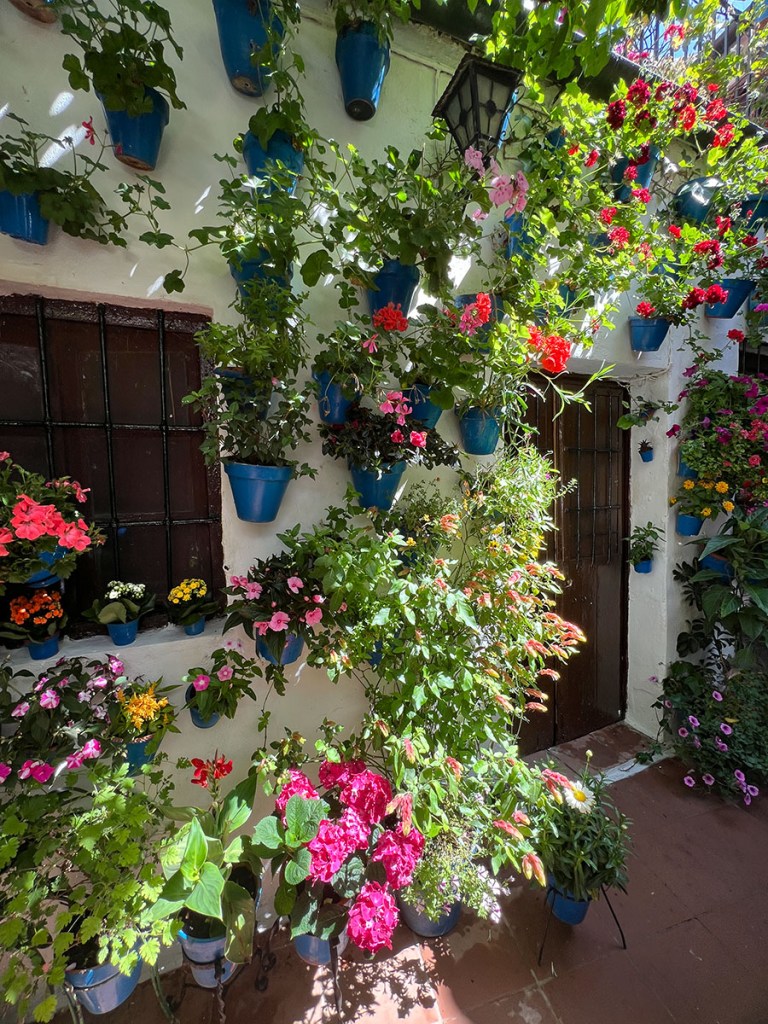
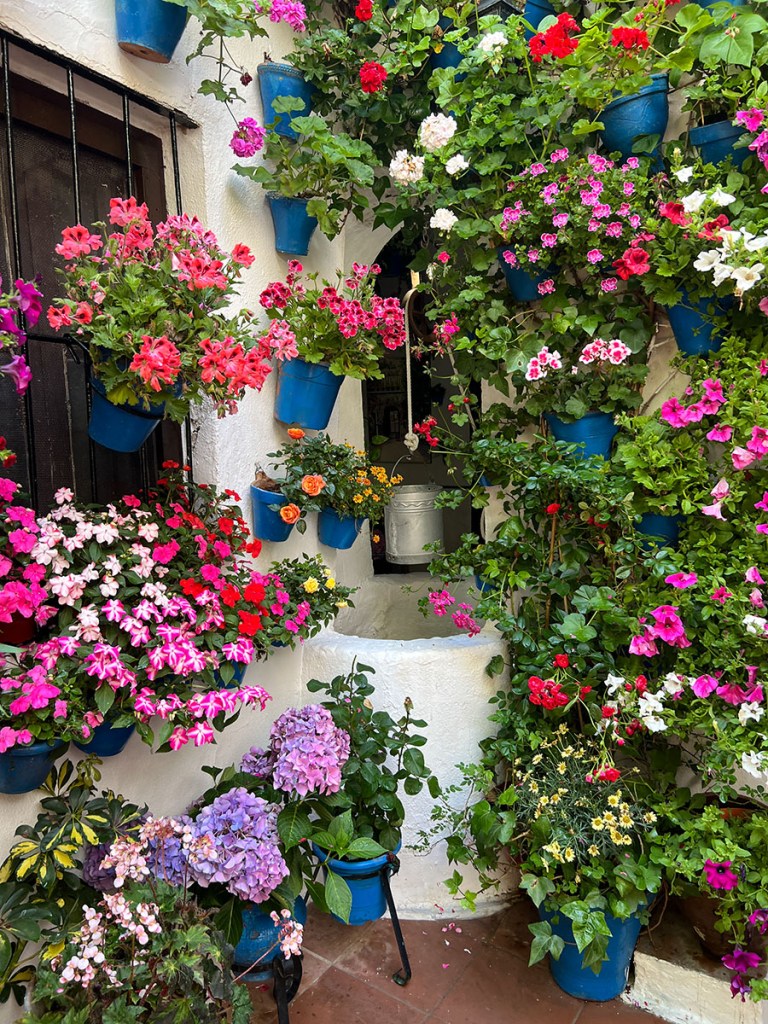
I selected 9 Calle Tinte because of its vintage and its reputation. After seeing the crowds I assumed I would have a long wait to get inside and wouldn’t have much room to move. I turned into the long, narrow alleyway that is Calle Tinte (it really is a callejon or a calleja) to find no one but the young woman personning the door. I told her I was surprised there was no wait. She said so was she. The patio quickly filled with mostly very pleasant people. It was splendid.
The house was built in 1680 and is owned by Ana Muñoz. It’s currently home to the Maribel Montero Spanish Dance School run by her niece. When I left, the entire alley was filled with people waiting to get in. What perfect timing.
There’s more to come. Another beautiful patio and the story of how I was kicked out of church.
Ayer, antes del mediodía, caminé unos 30 minutos con la esperanza de ver un Patio de Mayo en particular. Hay ocho patios expuestos en el barrio de Santiago (el barrio más al sureste en el centro de la ciudad) y yo había elegido una conocida casa histórica. Al llegar al barrio, las calles se llenaron de gente. Había grandes grupos con guías turísticos por todas partes.
Elegí el número 9 de Calle Tinte por su antigüedad y su reputación. Al ver la cantidad de gente, supuse que tendría que esperar mucho para entrar y que no tendría mucho espacio para moverme. Entré en la callejuela larga y estrecha de la calle Tinte y solo encontré a la joven que atendía la puerta. Le comenté que me sorprendía que no hubiera cola. Ella me dijo que a ella también. El patio se llenó rápidamente de gente, en su mayoría muy agradable. Fue espléndido.
La casa fue construida en 1680 y pertenece a Ana Muñoz. Actualmente alberga la Escuela de Danza Española Maribel Montero, dirigida por su sobrina. Cuando me fui, el callejón estaba lleno de gente esperando para entrar. Tuve mucha suerte con el momento.
Aún hay más por venir. Otro hermoso patio y la historia de cómo me echaron de una iglesia.
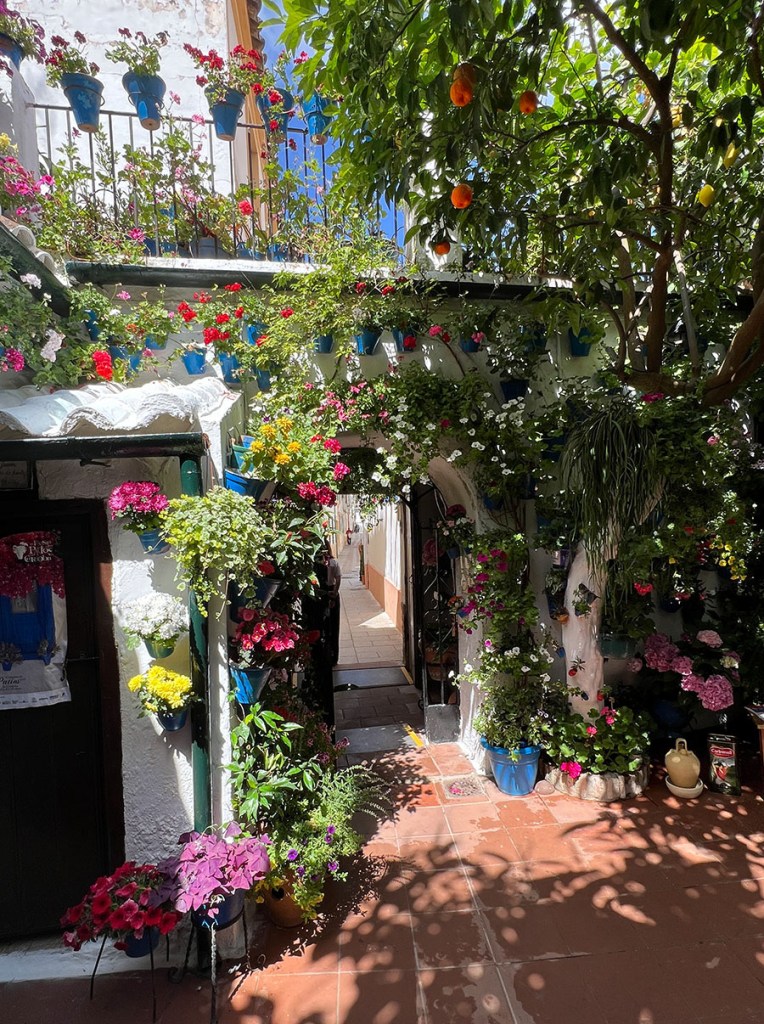
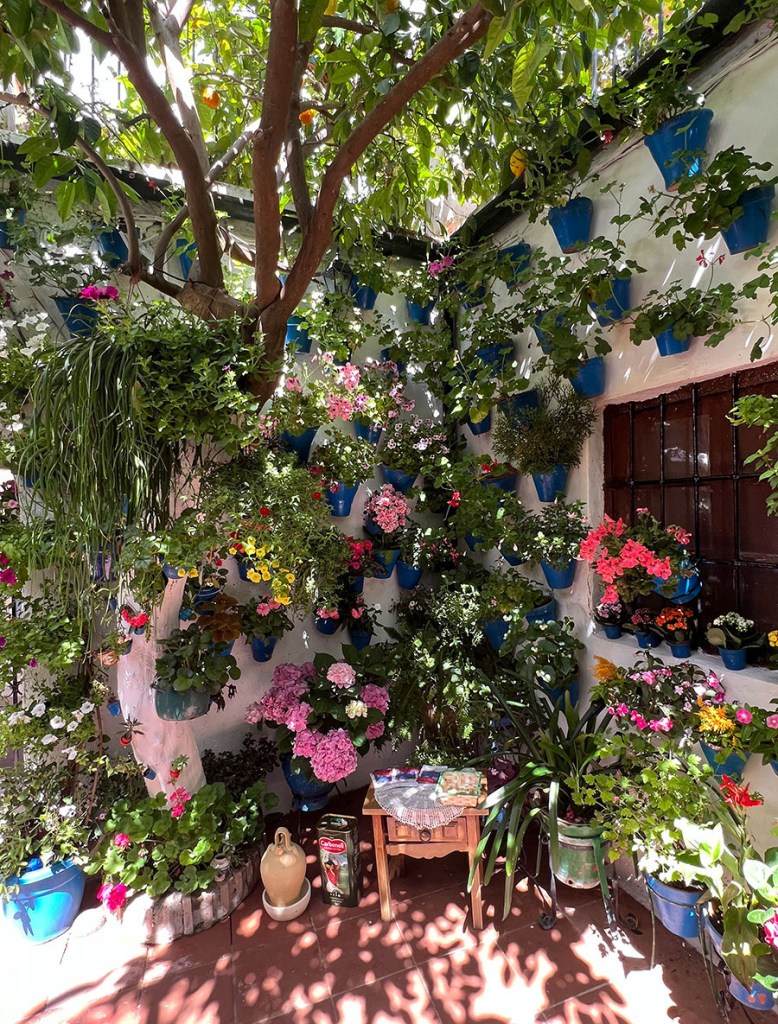
• El cítrico tiene siglos de antigüedad y da tanto naranjas como limones. Tras pasar un rato buscando un segundo árbol, descubrí que era el resultado de un injerto y que es mitad naranja y mitad limón.
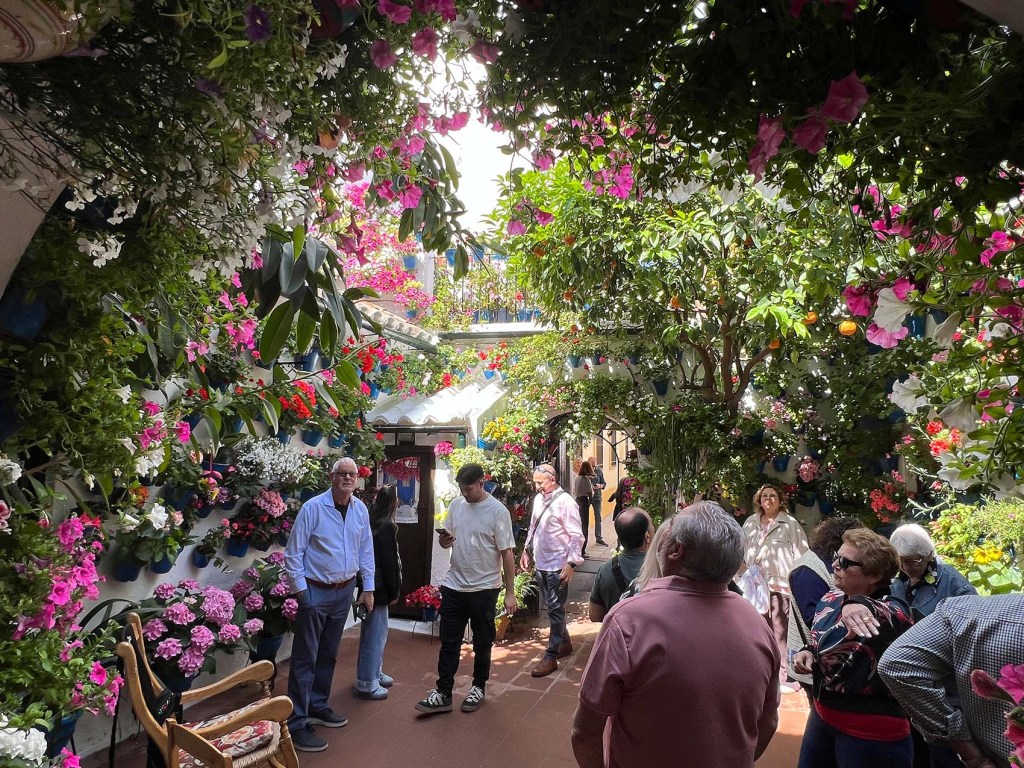

• Conocí a la pareja alta en la fila del siguiente patio que visité. Éramos los únicos allí en ese momento y me pidieron que les tomara una foto. Charlamos un rato y hubo mucha cordialidad. Cuando se fueron, él me deseó un buen día y me apretó el hombro. Los hombres de España.


Click the thumbnails to enlarge.
Haz clic en las miniaturas para ampliar.

Such gorgeous color and abundance everywhere. It’s like an explosion!
And then tall Spanish men? All the better!
Bob:
I’ve found there are many more tall locals here in Córdoba. It was more rare in Sevilla and Fuengirola. I wonder why that is. (I like tall, by the way. It makes me feel less awkward.)
How lovely to see the patios again.we visited the Feria twice 10 or 12 years ago what treat to go behind those doors and take a peek at the Miriam flowers and often have a chat with the owners.the second visit was very busy nessesitating an early start most morning .living yorkshire now with my little yorkshire patio Freddie h
Freddie:
Oh, I’m glad you’re enjoying this. A bit more to come. The crowds have picked up so I don’t know if I’ll brave San Basillo. But it’s so uplifting. I’m glad you got to experience it. A Yorkshire patio sounds charming.
Such beautiful colours accenting the white walls etc. Refreshing indeed. The citrus tree so old and still producing fruit, we saw a grafted apple tree in Vancouver with 5 different apples ~ I wonder how long and large that one became ~ saw it as the millennium 1999-2000 happened ~ Cheers you guys!
ron troke:
I’ve heard of grafting citrus but I’ve never seen one like that. And so old!
Uh oh, kicked out of church!
May seems like it would be a fabulous month to visit Córdoba 🙂
These flowers… in yesterday’s post, and today’s… are glorious… gracias 🙂
Judy C:
It’s amazing I’ve lived this long before getting kicked out of church. I used to expect a lightning bolt when I entered.
Blue pots hanging on walls is a serious thing there in Cordoba. It’s just overwhelming, the riot of color. Is the goal to cram as many flowers in a small space as possible? I’d prefer, I think, a little less. Not so extreme as a Japanese zen garden but some space between to give things a chance to shine on their own.
Oh and refreshing from an American culture to see men not afraid of physical contact with other men unless they are bashing each other in football.
ellen abbott:
Yes, very refreshing here. We’d meet someone and SG would often say, “Do you think he’s gay?” because of the ease and warmth and physicality. I very quickly learned, “No, he’s just Spanish.”
ellen abbott:
Blue pots on walls are a common sight in Andalusia. I love the patios.
It is so pretty there, we really should come back for a visit.
David:
So many beautiful places to see. You’re keeping busy.
Beautiful photos, Scoot. Brightened my mood. Thank you.
Deedles:
I’m glad. Always nice to have a mood brightener. Another one (I hope) is on its way today.
What a magical little place of beauty!
Debra:
And it’s wonderful to hear the audible reactions.
I am afraid that after one of those beautiful houses and gardens I might have to go home to recover from the vapors. It’s so much! It is indeed an explosion of color and texture and form. I love it but add in the people and the perfumes of the different flowers and I would be overcome. I know it. This is just how I am.
Oh, what a lovely nursery song…”Here comes the chopper to chop off your head.”
I’m sure there’s a backstory. Oh Lord.
Ms. It’s Too Much! Moon
Ms. Moon:
Yeah, it’s not as much fun with a lot of people around. It’s blissful when I’m nearly alone. The odd thing with the nursery rhyme is the original (from the 17th century I think) didn’t include the chopper. There are so many variations in later years, but no clue where the chopper came from.
Oh, wow! That is a beautiful patio. I spent quite a few hours in our garden today, trying to (further) knock it into shape for summer. Only time will tell if we get anything close to that amount of colour! Jx
Jon:
You do such an incredible job with your “extensive gardens.” I love seeing your photos.
Lovely flowers on this patio, though I found all the wall pots and hanging foliage rather claustrophobic. Some serious editing and variety of plants is in order.
I was really enjoying the “Oranges & Lemons” nursery rhyme til it got to the chopper. Why do medieval British nursery rhymes have to give little children the willies before going to sleep?
Tundra Bunny:
Oddly, the chopper lyrics didn’t exist in the earliest version of the nursery rhyme. They appeared in some versions centuries later and I don’t think anyone knows for certain why.
So much color!
Kelly:
I melt into it. Just amazing.
I love the high energy of the patios crammed with life and plants. We used to play oranges and lemons at kids parties. It’s a singing and dancing thing, where you come under an arch of two kids arms. Whoever is under the arch when the words chop off your head come, is trapped by the kids’ arms coming down to grip them. Scary! I’m glad your video didn’t omit that bit. Boud
Boud:
The only reason I knew that nursery rhyme was because my mother would sing it when she heard a clock chime. She never got to the part where they chopped off your head.
All those colors are so beautiful. I had no idea that grafting could produce a tree that would bear oranges and lemons. I’d like to have one of those.
Love,
Janie
janiejunebug:
You could try grafting a tree in your backyard. In a few centuries, it will be big and give you lots of mixed fruit.
And I’ll still be here, a handful of dust, in a few centuries.
That is downright GLORIOUS!!!!!!!!!!!!! I love that so much….makes me very happy seeing this!
Mistress Maddie:
You would be ecstatic and would probably hit all 60+ patios. Another one coming soon today.
Some wonderful sights there. Never heard the nursery song before. Those singers certainly gave it their all.
Kirk:
It’s not a bad version of the nursery song. I grew up hearing it. The head chopping is a much more contemporary addition.
When I was smaller and people were taller my English babysitter sang me this song. It was one of the first songs I ever heard and learned. The version you posted it a later version, the one most people know and sing. But Bessy sang a version that started with “Two sticks and an apple sing the bells at White Chapel’. Only much later in life did I learn she sang the oldest known version of the tune.
Urspo:
It’s amazing how many different versions there are. My mother used to sing “Two sticks and an apple.”