La versión en español está después de la versión en inglés.
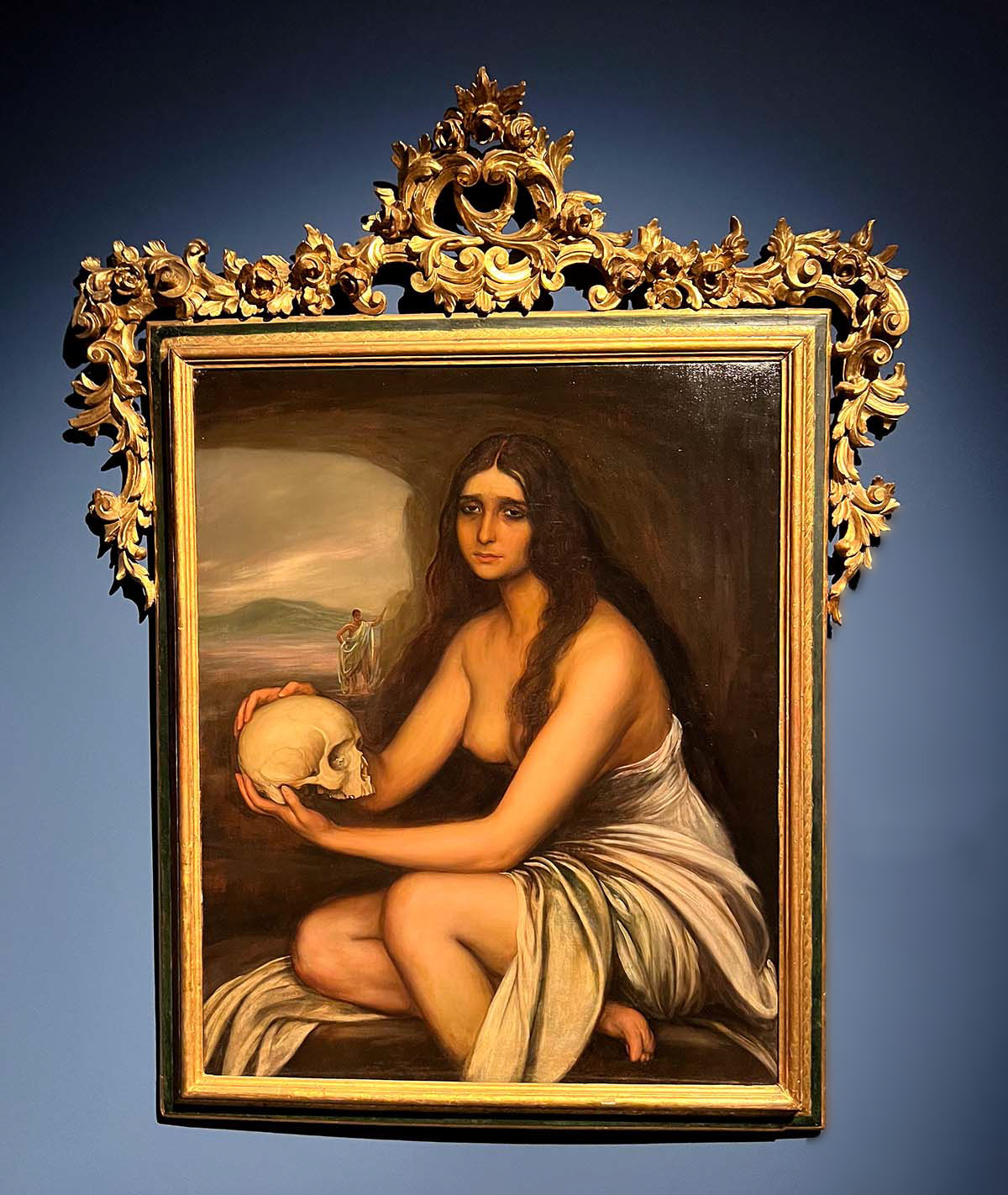
The image above, Saint Mary of Egypt, was painted in 1920 by Julio Romero de Torres and has nothing to do with Hamlet nor, alas, poor Yorick. But that’s all I can think when I see her holding the skull.
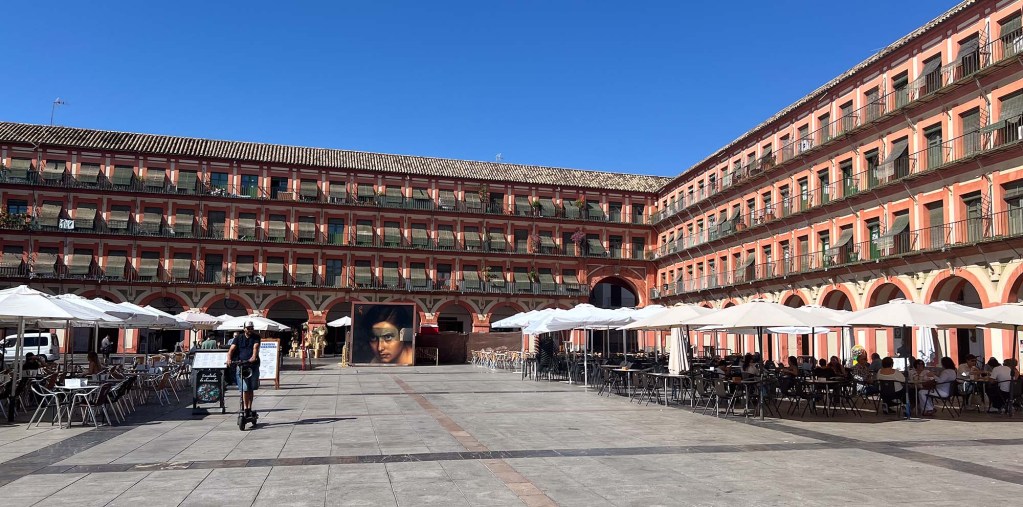
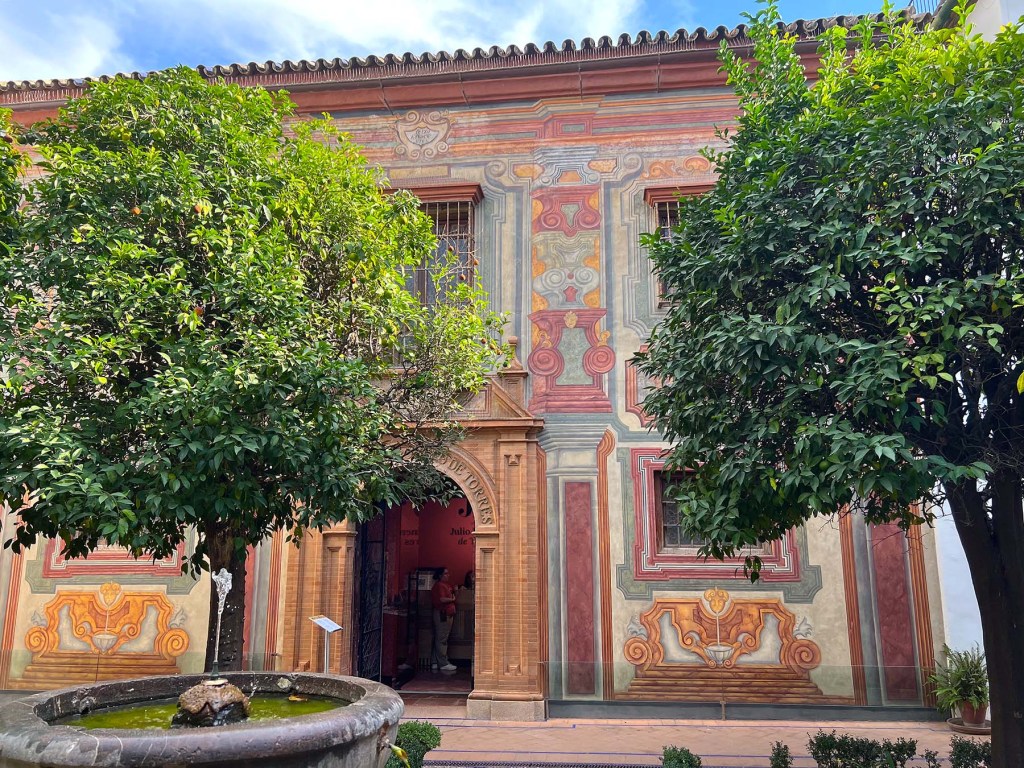
Last Friday with Tom and Jim, we had an early lunch on Plaza de la Corredera. As we were leaving, I pointed out the huge reproduction of a portrait by Julio Romero de Torres (you can see it at center in the first photo below). I told them about the artist, his home and museum in the city, as well as the Museum of Fine Arts that shares the same courtyard. They both immediately expressed interest in visiting which delighted me. So we walked the five minutes to the Plaza del Potro (with the statue of the colt) and the museums. Tom and Jim loved both museums as much as I do. Here today, are some highlights of the Julio Romero de Torres museum including posters from the Córdoba Fairs of 1913 and 1916. If you want to see more, click here for a post from my first visit in April.
La imagen de arriba, Santa María de Egipto, fue pintada en 1920 por Julio Romero de Torres y no tiene nada que ver con Hamlet ni, por desgracia, con el pobre Yorick. Pero eso es todo lo que puedo pensar cuando la veo sosteniendo el cráneo.
El viernes pasado, Tom y Jim almorzamos temprano en la Plaza de la Corredera. Al salir, les señalé la enorme reproducción de un retrato de Julio Romero de Torres (pueden verlo en el centro de la primera foto de abajo). Les hablé del artista, su casa y museo en la ciudad, así como del Museo de Bellas Artes que comparte el mismo patio. Ambos mostraron interés en visitarlo enseguida, lo cual me encantó. Así que caminamos los cinco minutos hasta la Plaza del Potro (con la estatua del potro) y los museos. A Tom y Jim les encantaron ambos museos tanto como a mí. Hoy les presento algunos de los lugares más destacados del museo Julio Romero de Torres, incluyendo carteles de las Ferias de Córdoba de 1913 y 1916. Si quieren ver más, haz clic aquí para leer un post de mi primera visita en abril.
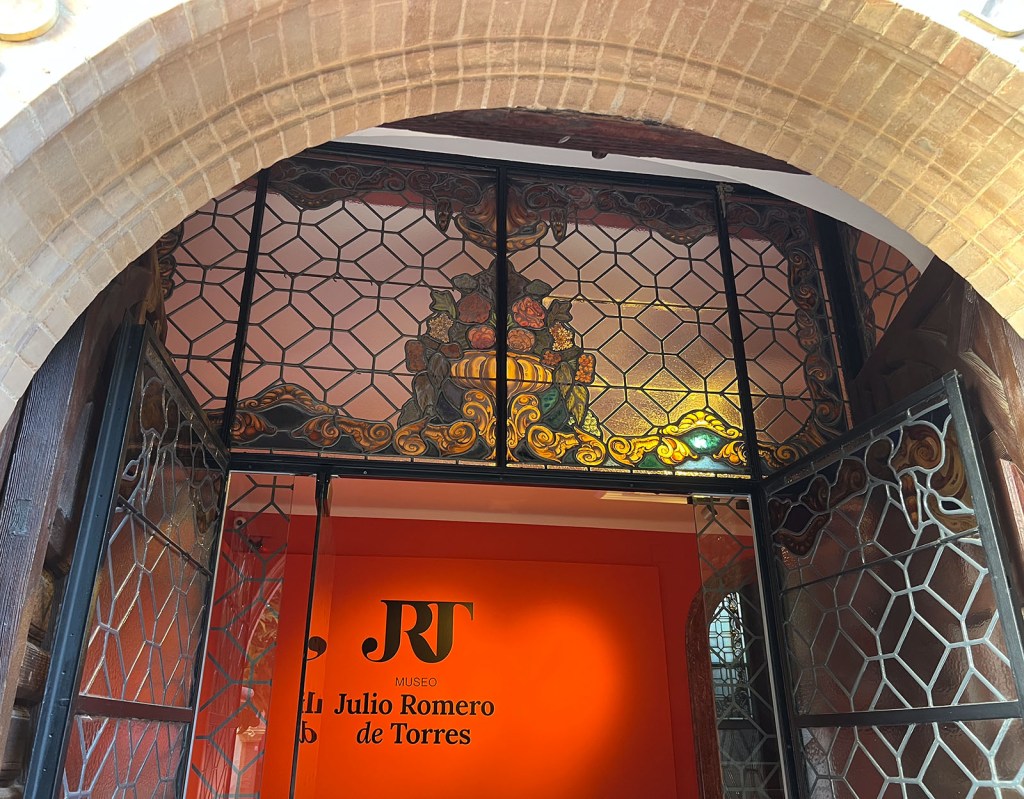
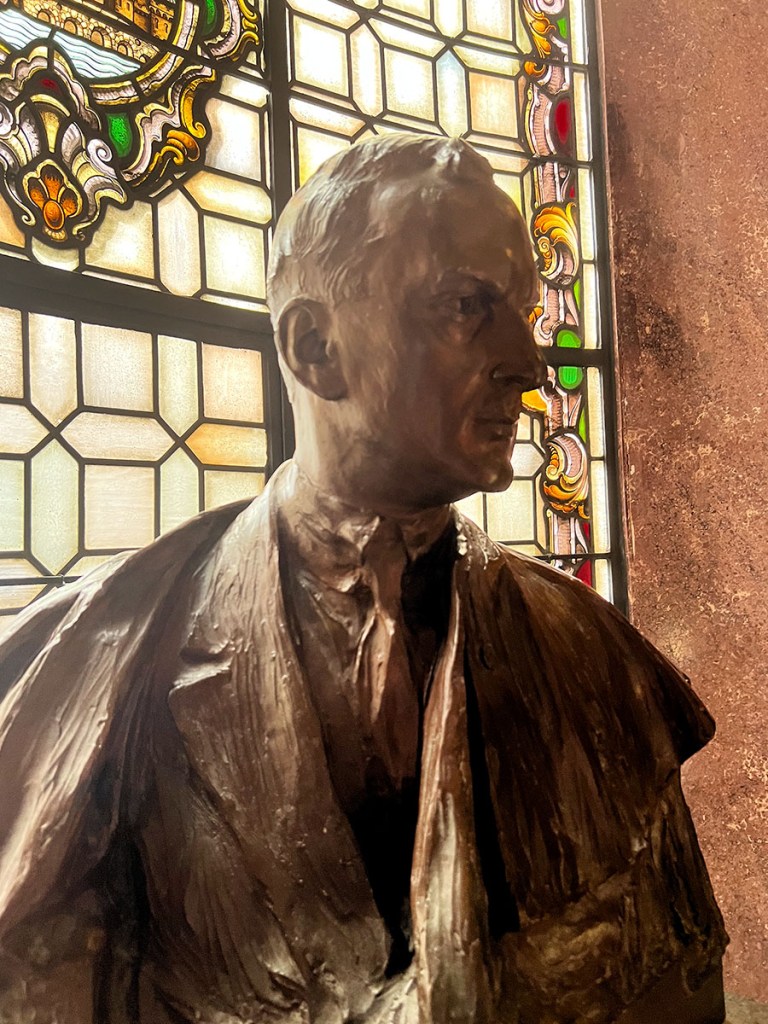
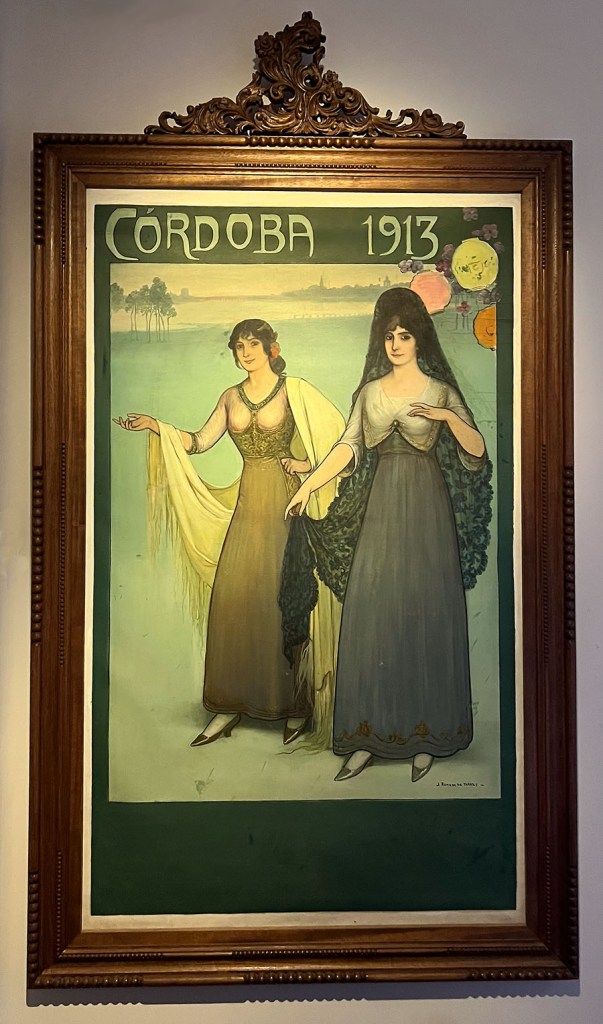
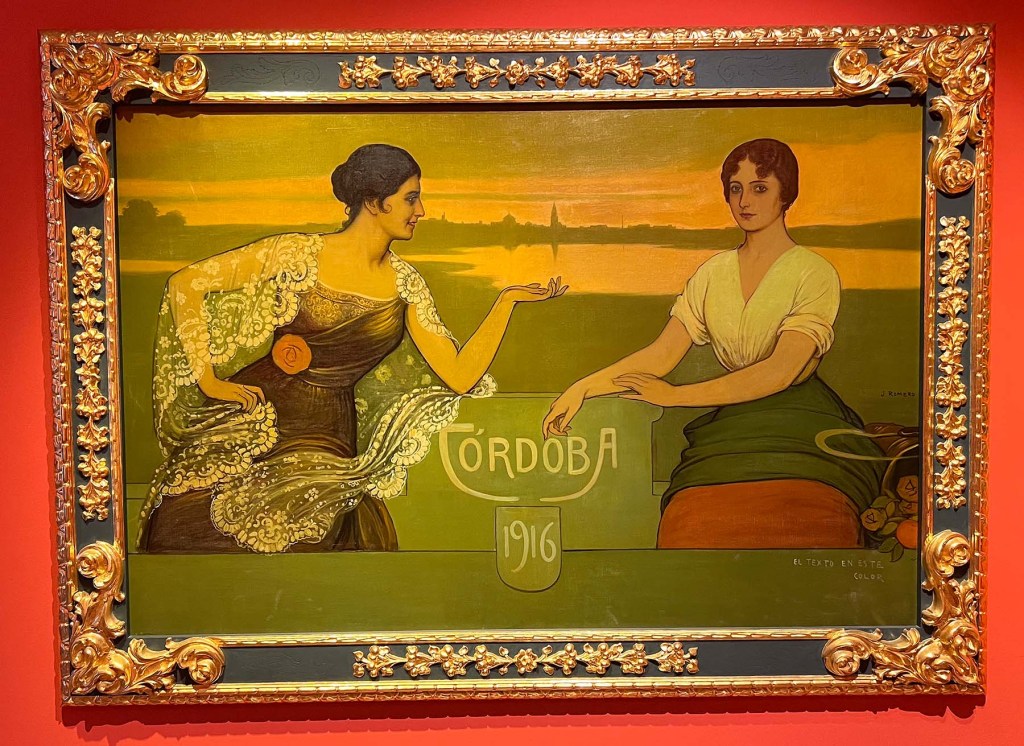
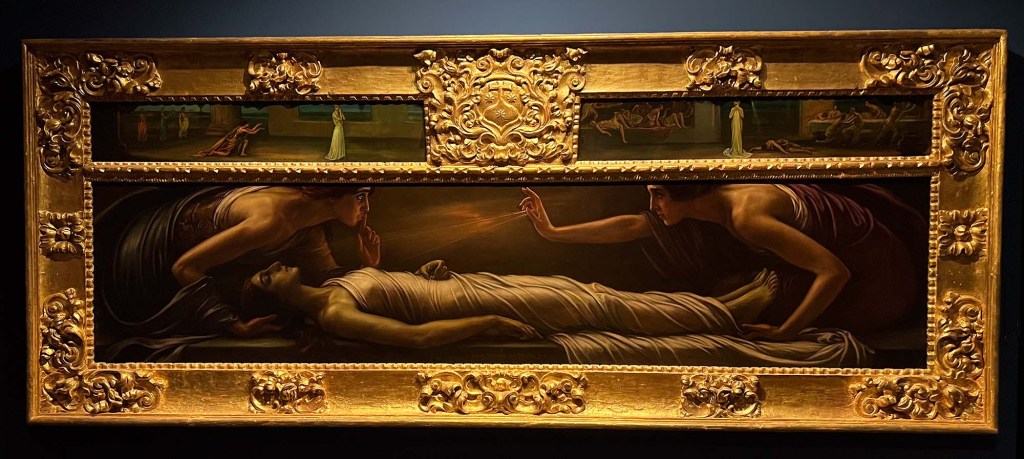
• Muerte de Santa Inés. 1920.
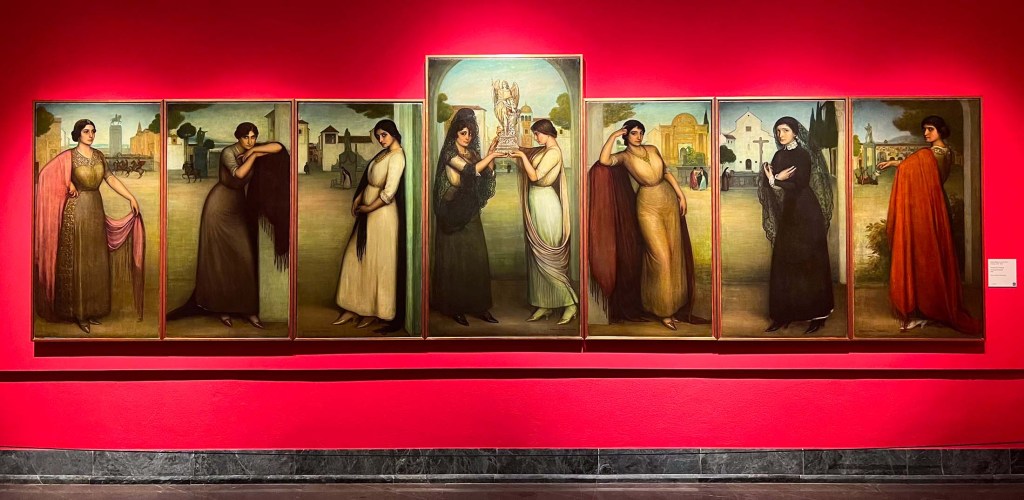
• Poema de Córdoba. 1913–1915. (Haz clic aquí para obtener los fascinantes detalles.)


Click the thumbnails to enlarge.
Haz clic en las miniaturas para ampliar.

I’m feeling especially childish today, but it looked to me like, in that top photo, she was preparing to nurse the skull.
I warned you about my childishness!
Too many female nipples at top for my taste, just one too many. 🙂
Raybeard:
You and San Geraldo!
Bob:
I’ll admit the first things I noticed were the skull and the nipple. I think it was too late.
The posters are great. But the more serious art? Nah, but thank you. Your friends were endlessly enthusiastic. Great guests. Boud.
Boud:
I like the posters, too. One of his portraits also appeared on the peseta.
Lovely to be inspired to explore!
Rade:
No lack of inspiration.
Oh, my goodness, that Poem of Córdoba is so interesting!
Judy C:
I found that interesting, too.
Love the facade in the second picture down. And I like his paintings too.
ellen abbott:
I love that faccade, too, and his work.
Interesting post — it was the lovely stained glass which caught my eye!
Debra:
Yes, beautiful.
The top photo also reminded me of Shakespeare. So much artistic talent over so many years.
David Godfrey:
Imagine a house filled with his work.
Mary of Egypt was a converted harlot, hence the sensuousness and partial nudity. She forsook her occupation and became a desert hermit nun; many of her bons mots are preserved in the Lives and the Sayings of the Desert Fathers. Her embrace of the skull represents her conversion, the penitent life aimed at the life of the next world. The hunky dude in the background reflects her abandonment of prostitution (the poor guy will be waiting there a LONG time now). Very much loved the Córdoba painting, brilliant creativity.
wickedhamster:
I looked her up, read all that, and thought of sharing it. Thank you for doing so for anyone who wants to know more. Of course, you probably know it all by heart!
Poor Mary of Egypt: her hopeless, depressed expression doesn’t scream willing penitent to me.
Tundra Bunny:
I know what you mean. If this is what she looked like after…
Thank you, wickedhamster, for the explanation about the top painting. I was wondering about the guy in the background.
Kelly:
Yes, thanks to wickedhamster. I had looked it up. He knows these things.
All his women look a bit shifty to me…
I do love a grand plaza! Jx
Jon:
Well, many of the models were local prostitutes.
Was st Mary of Egypt the patron saint of skulls and mammeries?
Adam
NEKORANDOM.COM
Adam:
Wickedhamster has the answer to that.
I love the way he paints his women’s eyes. They look as if they are defiantly facing the viewer or asking something of them. Pretty amazing, really.
Ms. Moon
Ms. Moon:
I agree. So does Jim. We talked a lot about that as we wandered around
That first photo IS very “Yorickian.” He’s an interesting painter — sort of bridging the time between Art Nouveau and Art Deco? His style is very clean and modern, but his subject matter very traditional.
Steve:
Yes, he’s an interesting mix.
I’ve enjoyed catching up on your recent posts: so much delicious looking food and beautiful architecture in your city, Scoot! I did wonder, though, how that colt statue got so dirty so quickly after being cleaned.
Your visit to NYC is coming up very soon, yes? I’m sure Chuck is looking forward to seeing you. Hope your airline uses an airport with Air Traffic Controllers on duty!
Tundra Bunny:
I, too, wondered about the colt. But it has been 11 years. I’m trying not to stress about my upcoming trip. Less than a week away now and it doesn’t look like things are going to get any better.
Dear me St. Mary must have a tale behind that skull.
Urspo,
And wickedhamster knows it.
Never heard of Julio Romero. Thanks for introducing me to him.
Kirk>
I had no idea who he was, but saw a painting of his at a museum in Málaga a few years ago and loved it. It’s been nice to learn so much more about him here.