La versión en español está después de la versión en inglés.
Today’s post is a slightly irreverent look at the preparations for a reverential event. While out yesterday randomly wandering on the Paseo of Córdoba, I spotted a church steeple in the near distance. The church sits on a hill and, although I’ve passed it from below dozens of times, I’ve never walked up the hill to get a closer look. My decision to check things out yesterday was fortuitous.
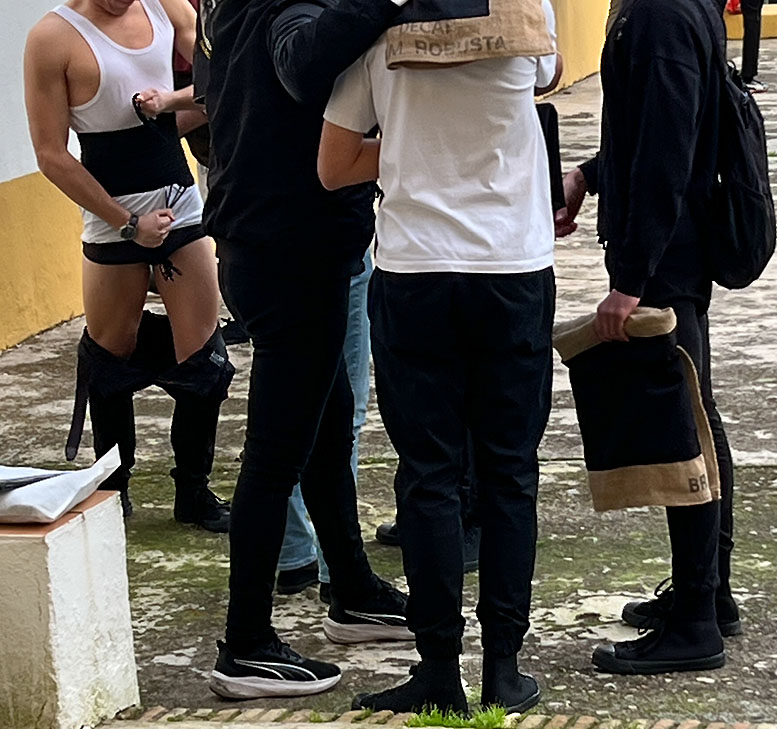
Costaleros are the men who carry the holy statues through the streets during Semana Santa and other special days, and I just happened to visit the church grounds when a very large group of costaleros were getting suited up to practice carrying their paso.
“Pasos” (religious floats) can weigh from 1 to over 5 tons. And they’re carried on the shoulders of large groups of men. The size of the paso determines the number of costaleros and there are always multiple groups to spell each other on the long processions through the city.
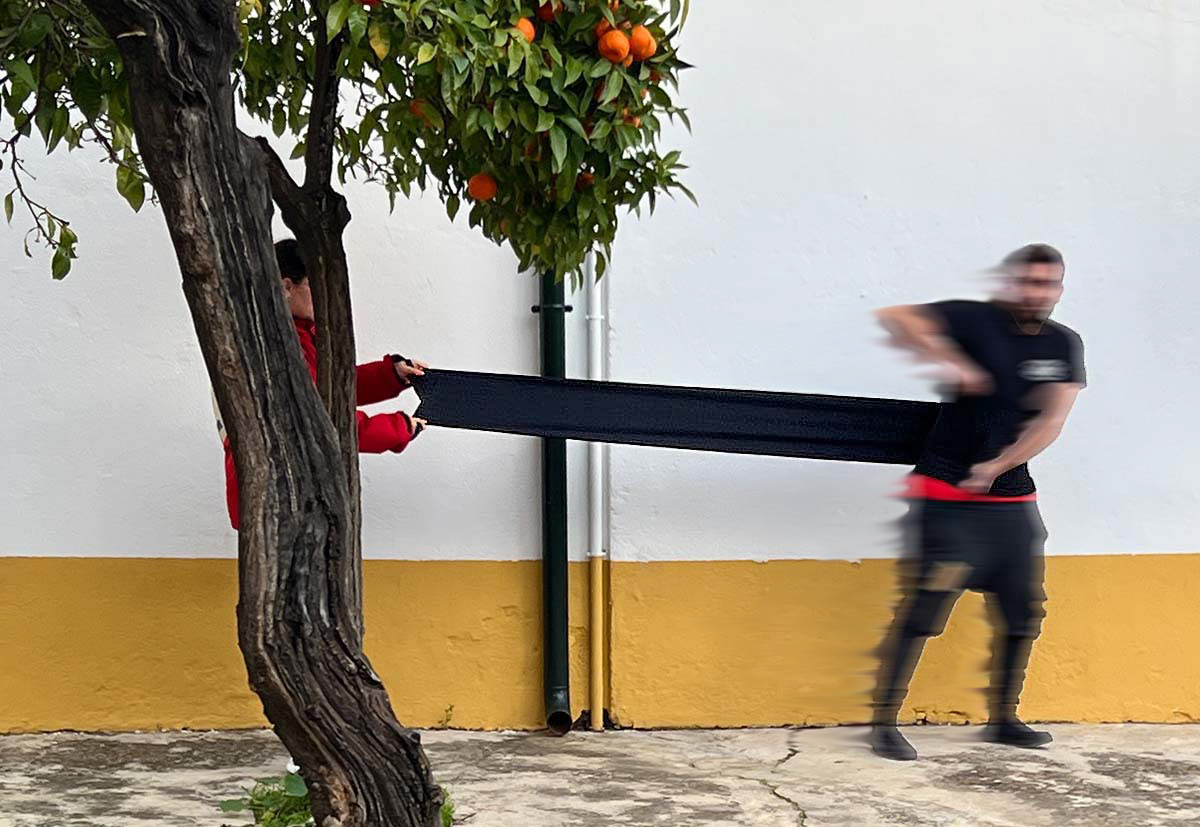
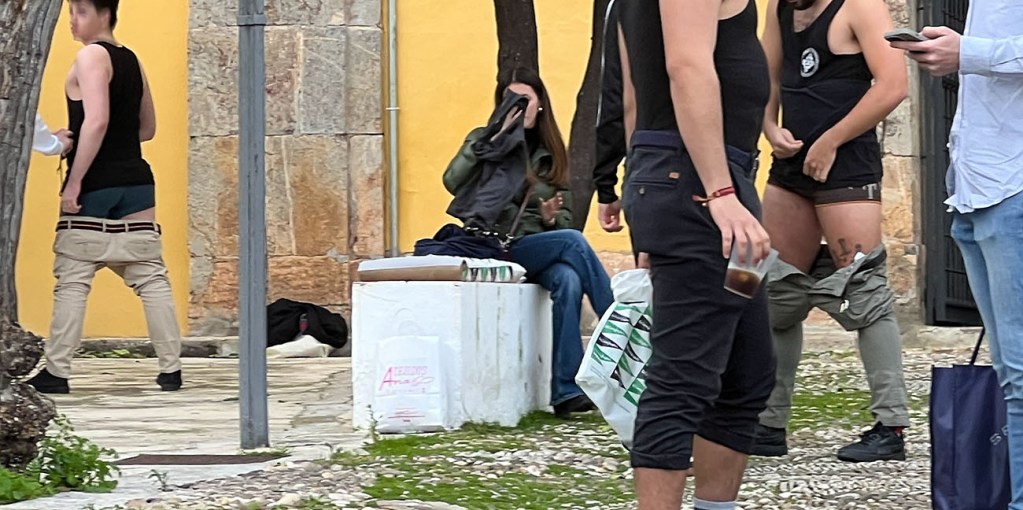
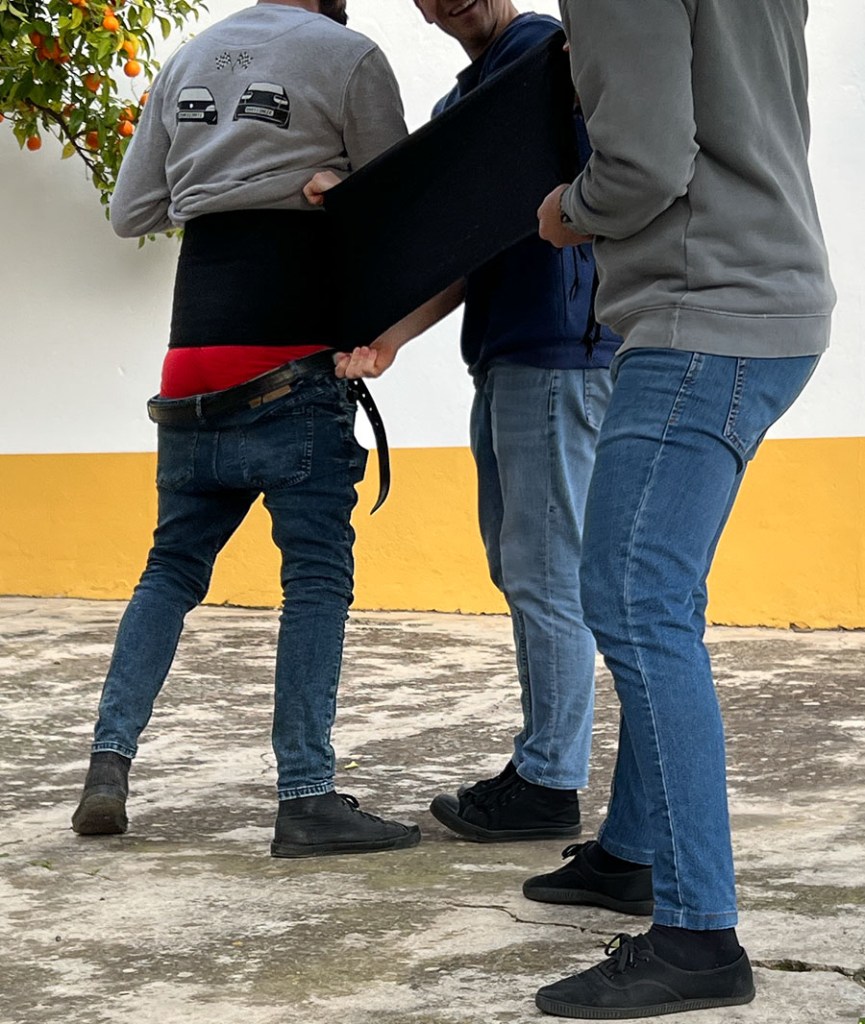
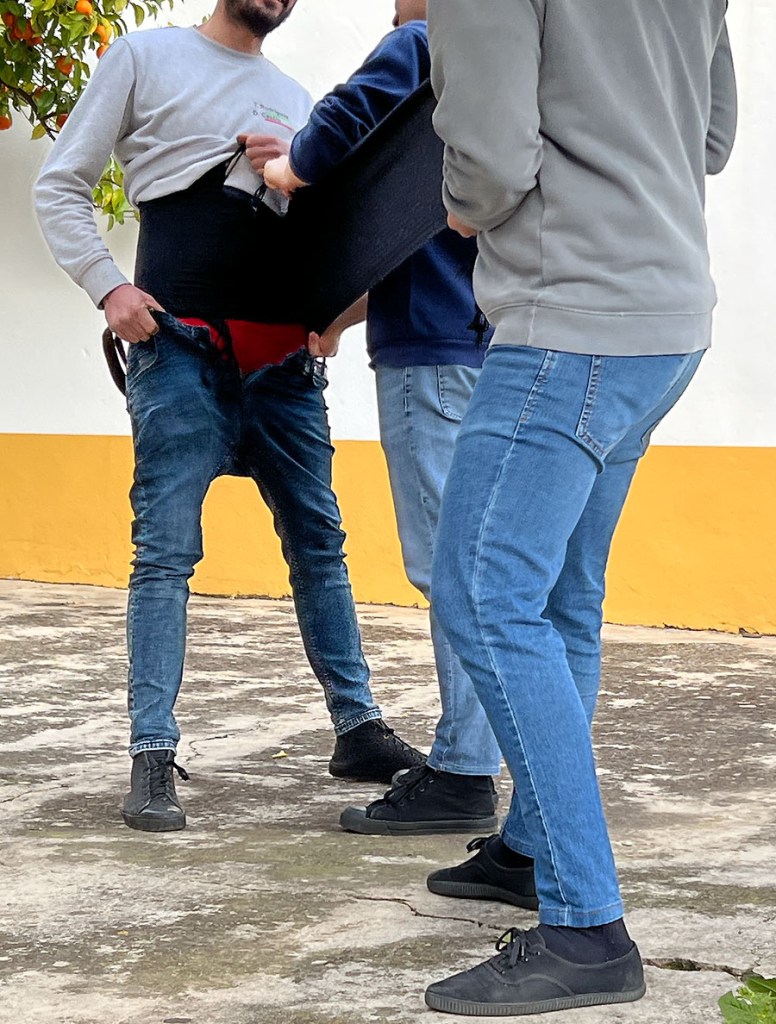
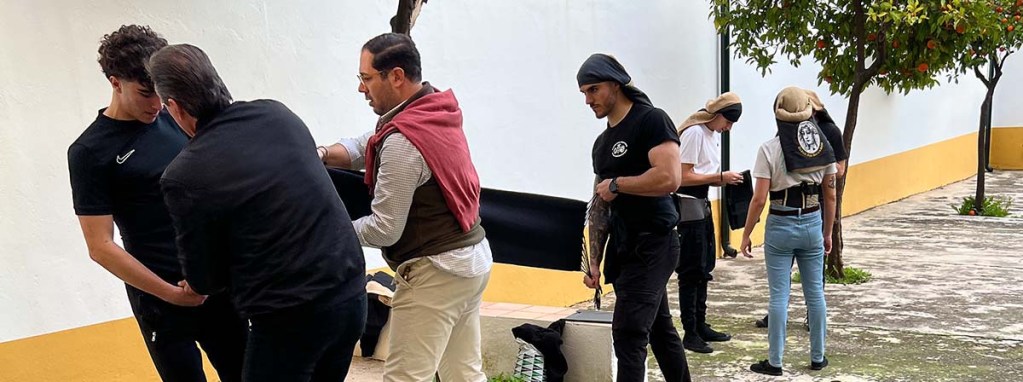
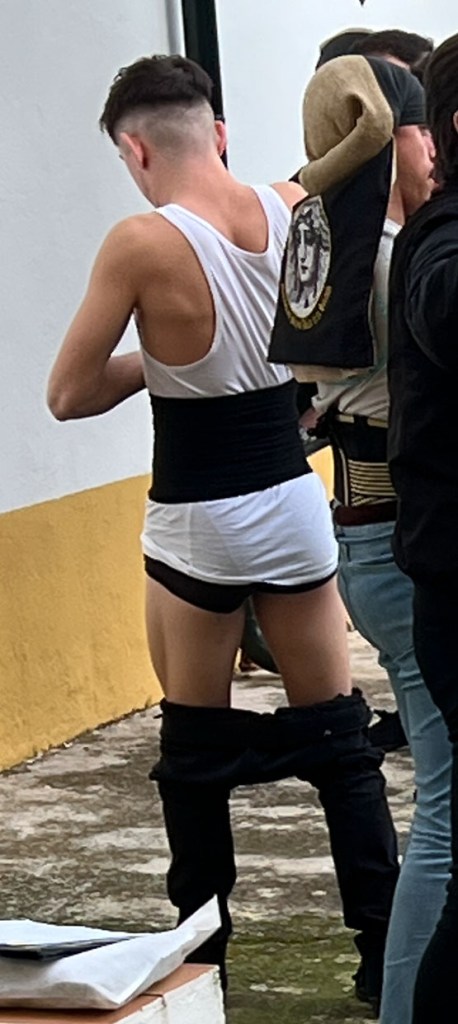
When I arrived at the top of the hill, having no idea what was going on, I found a number of guys with their pants down below their butts. They were getting tightly wrapped in “fajas,” sashes that are intended to protect the lumbar and provide back support. They would spin as someone held the cloth in a death grip.
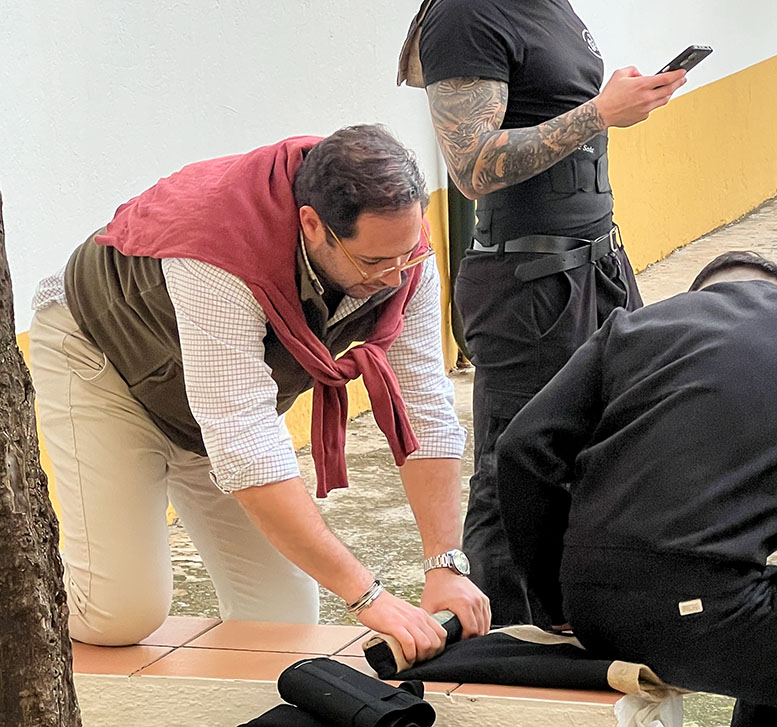
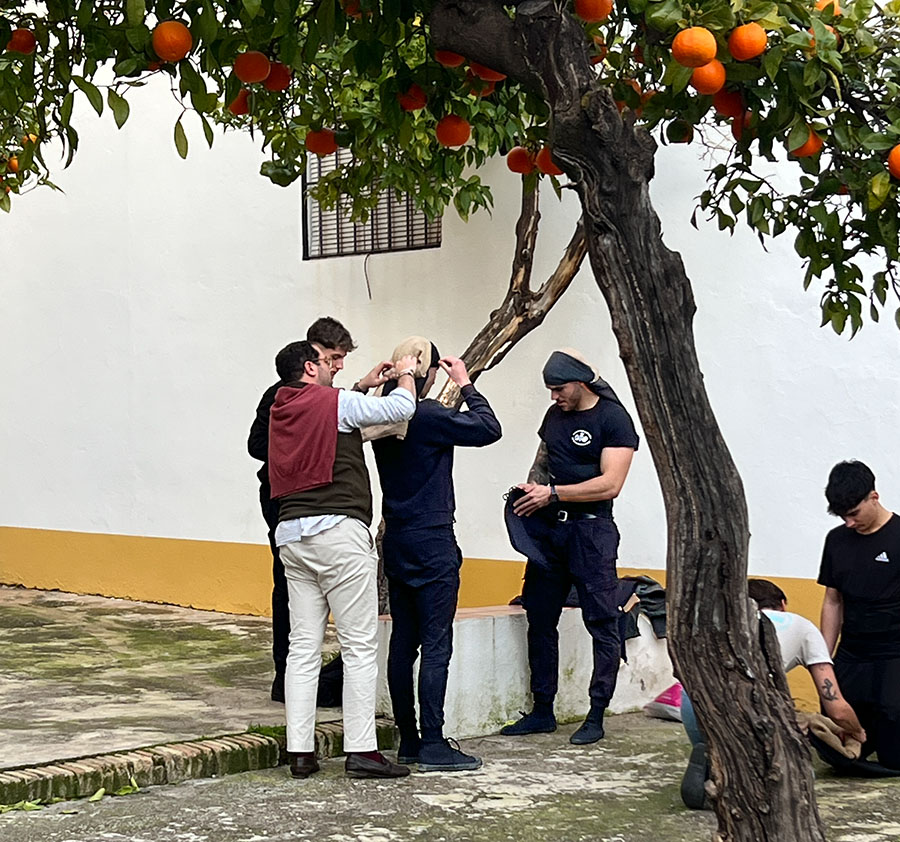
After they pulled their pants back up, they were fitted with costales worn around the head and neck to cushion the weight and protect the skin, and made from a combination of burlap coffee sacks and cotton. The costales are rolled tightly before being placed over the head. One person would sit on it while another would roll it. It was fascinating. All the tight wrapping was a team effort and some of the costaleros clearly had never done it before.
Finally, I watched the first group of 35 (for a comparatively small paso) crawl under the framework and practice. Although there were no adornments or statues in this practice, the paso was topped by concrete blocks to simulate the actual weight. I’ve got a video and plenty of more respectable photos. Today is a wrap.
El post de hoy es una mirada ligeramente irreverente a los preparativos para un evento reverencial. Ayer, mientras paseaba por el Paseo de Córdoba, vi el campanario de una iglesia a lo lejos. La iglesia se encuentra en una colina y, aunque la he visto desde abajo docenas de veces, nunca la había subido para verla más de cerca. Mi decisión de ir a echar un vistazo ayer fue fortuita.
Los costaleros son los hombres que llevan las imágenes sagradas por las calles durante Semana Santa y otros días especiales, y justo visité el recinto de la iglesia cuando un grupo muy grande de costaleros se preparaba para practicar el paso.
Los pasos pueden pesar entre 1 y más de 5 toneladas. Y son llevados a hombros por grandes grupos de hombres. El tamaño del paso determina el número de costaleros, y siempre hay varios grupos que se relevan en las largas procesiones por la ciudad.
Cuando llegué a la cima de la colina, sin tener ni idea de qué estaba pasando, me encontré con varios chicos con los pantalones bajados hasta el trasero. Los estaban envolviendo apretadamente en “fajas”, fajas diseñadas para proteger la zona lumbar y dar soporte a la espalda. Giraban mientras alguien sujetaba la tela con fuerza.
Después de subirse los pantalones, les colocaron costales alrededor de la cabeza y el cuello para amortiguar el peso y proteger la piel, hechos de una combinación de arpillera, sacos de café y algodón. Los costales se enrollan firmemente antes de colocarlos sobre la cabeza. Una persona se sentaba encima mientras otra los enrollaba. Fue fascinante. Todo ese vendaje apretado era un trabajo en equipo y algunos de los costaleros claramente nunca lo habían hecho antes.
Finalmente, vi al primer grupo de 35 (para un paso comparativamente pequeño) gatear bajo la estructura y practicar. Aunque no había adornos ni estatuas en esta práctica, el paso estaba coronado por bloques de concreto para simular el peso real. Tengo un video y muchas fotos más respetables.

I’ve never seen so many men with their pants down!
Margaret Butterworth:
Neither have I! Well, wait, let me think.
Spanish men with their pants down?
Now THAT’S a parade I can get behind!
Bob:
I was so happy about my timing.
Those are some, uh, fit men! Boud. Fanning self..
Boud:
Yes, some were. But most, not so much. Glad there was some eye candy to share.
Well, it was YOUR lucky day, wasn’t it!
Debra>
It sure was!
Yes. Incredibly fortuitous non-planning.
I just have to laugh though. Such torture to make their god happy. Okay. Enjoy your wrapping, fellas! It’s not all fun and games when it’s a holy rite!
Ms. Moon
Ms. Moon:
I had no idea how much work went into just dressing for the event. They always come out from underneath sweaty and disheveled and go right for a beer. That “corset” must hurt.
The whole get-up must be horribly uncomfortable. I am so glad women were shedding their most restrictive undergarments before I came of age.
Ms. Moon:
As I watched them get wrapped all I could think about was the fact that women were forced to do this simply for the sake of fashion.
You could volunteer to help with the wrapping. Become a part of local community activities. Make sure everything is where it should be.
David:
I like your idea!
The pic on the top is greaaaaaat! That one with the tattoos on the arm-puff, pant, puff, pant… I was truly left stunned and speechless. And the entertainment is free; what a great place to live!
wickedhamster:
Yeah, tattoo guy was very pleasant to look at.
Religion is weird. I find it sort of incredulous that grown people really believe this kind of thing pleases an imo imaginary big daddy in the sky or rather some supposedly all powerful being that sits outside, apart from, creation. I hope I’m not offensive. I have no idea how religious you are if at all. But you know, the spectacle is interesting.
ellen abbott:
I am NOT religious and do have a hard time with all this. I have a hard time processing that way of thinking, but enjoy seeing the traditions. Often, however, it disturbs me.
And decaf robusta
JSSW:
I saw that and laughed!
A horde of gift-wrapped Spanish totty? Yes please! Not sure whether I would “sit on it” or “roll it”..? Jx
Jon:
Well, a number of them did both. Imagine!
Fascinating! Thanks for the insight. I had wondered how the men could carry those statues. And in the US the corset that is used by some women to hold their stomachs in, say while losing the baby weight, is called a faja in the Latina community. Olivia
Olivia:
It’s got a lot of similar meanings in English: belt, sash, strip, girdle, cummerbund, corset, binder. It did NOT look comfortable. But women have been saying that about girdles and corsets forever.
Behind (no pun intended) the scenes is so fascinating… guess the costaleros don’t go commando for that job!
Tundra Bunny:
Isn’t it a shame. Those photos would have been fun.
What a process for these guys! They take this very seriously I see.
Couldn’t miss those oranges! Appears they are taken for granted?!
Jim:
The orange trees are everywhere in the city.
Well that’s an interesting (and fun!) thing to come across. I’ve never considered the fact they might need to wear back support. Watching them carry those “floats” is fascinating to me, especially the way some of them sway.
Kelly:
I had no idea the work they did before the work they do. And, yes, those tiny little steps do cause some funny swaying. One guy, not pictured, had a jiggly belly that was very entertaining (to me).
I hoped pants below butts would lead you to pictures of some nice butts. Oh, well.
Love,
Janie
janiejunebug:
I hoped so, too.
What a surprising and amazing thing to walk up upon!
Judy C:
Yes. What a lucky visit.
The one guy in the header on the right could be the comic book superhero the Flash.
Kirk:
I tried. It was a great sharp photo of a very handsome guy, but I didn’t ask his permission, so found a way to camouflage him.
With your photo taking you will get in trouble one of those days.
larrymuffin:
That’s what SG says. No faces shown except if I got a nod.
You could tell them that you are a famous Hollywood Paparazzi.