
La versión en español está después de la versión en inglés.
There’s a running joke (at least in my head) that you can always tell a Jewish neighborhood in the United States by how many Chinese restaurants there are (except of course if you’re in Chinatown).
My parents hosted my sister Dale’s Sweet 16 party at the Jade Pagoda, a small, excellent Chinese restaurant across the street from us in Brooklyn. For observant Jewish families in Brooklyn, there was even a place called Shang Chai (as opposed to Shanghai), a Kosher Chinese restaurant on Flatbush Avenue. Chai (don’t forget the gutteral CH) means “life.” It’s also the word for the number 18 in Hebrew.
When I was at university in northwestern New York State, I remember driving with my girlfriend to her house in the suburbs of Rochester. We went through one neighborhood and passed one Chinese restaurant after another. I asked “Is this a Jewish neighorhood?” “Yes, it is,” she replied, “How did you know?” The Chinese restaurants, of course.
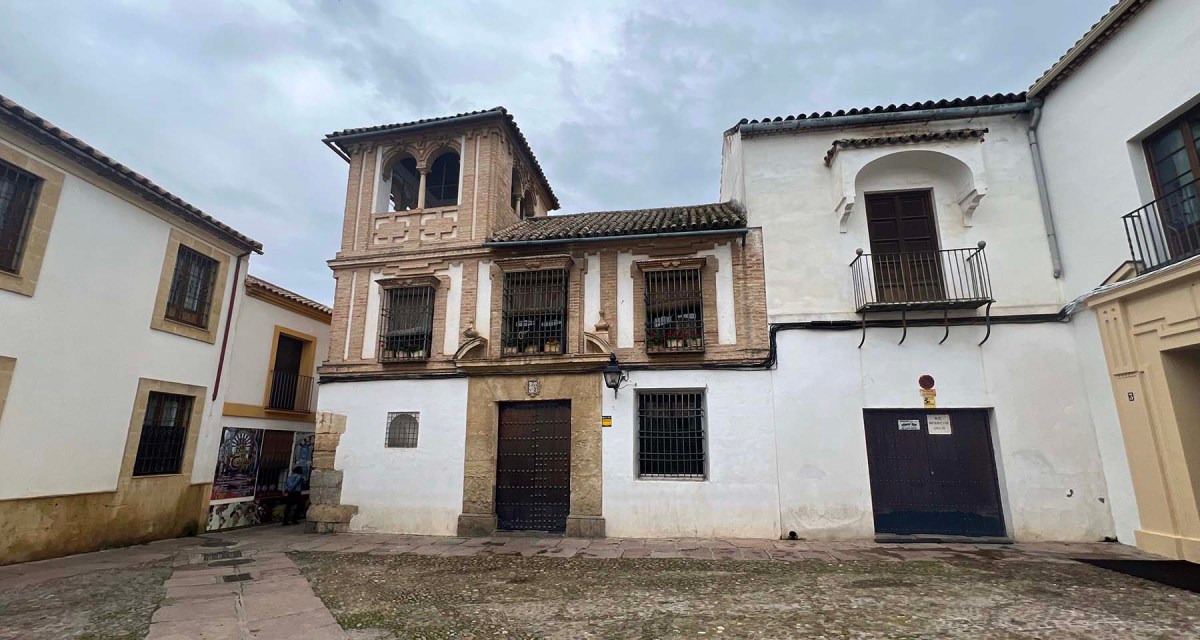
So, since I recently wandered around the Juderia (the old Jewish quarter of Córdoba) I thought maybe I’d find several Chinese restaurants (no, I didn’t really think so). I did, however, find so much history, along with art galleries, restaurants, museums, and souvenir shops.
The surprisingly small synagogue, the only surviving synagogue building in the city, was built in 1315 and was possibly the private synagogue of a wealthy resident or a tradesmen’s space before becoming a synagogue. After the Jews of Córdoba were expelled in 1492, the building was seized by the authorities and converted into the Hospital Santo Quiteria for people suffering from rabies. It had many other incarnations after that and is now open to the public as a historic attraction.
Tomorrow, we’ll return to San Diego.
Hay un chiste recurrente (al menos en mi cabeza) que dice que siempre se puede reconocer un barrio judío en Estados Unidos por la cantidad de restaurantes chinos que hay (excepto, claro, si estás en Chinatown).
Mis padres organizaron la fiesta de quince años de mi hermana Dale en la Pagoda de Jade, un pequeño y excelente restaurante chino enfrente, en Brooklyn. Para las familias judías practicantes de Brooklyn, incluso había un restaurante chino kosher llamado Shang Chai (en lugar de Shanghái) en Flatbush Avenue. Chai (no olviden la CH gutural) significa “la vida”. También es la palabra para el número 18 en hebreo.
Cuando estaba en la universidad en el noroeste del estado de Nueva York, recuerdo ir en coche con mi novia a su casa en las afueras de Rochester. Recorrimos un barrio y pasamos por un restaurante chino tras otro. Le pregunté: “¿Es este un barrio judío?”. “Sí, lo es”, respondió. “¿Cómo lo supiste?”. Los restaurantes chinos, claro.
Así que, como hace poco paseé por la Judería (el antiguo barrio judío de Córdoba), pensé que quizá encontraría varios restaurantes chinos (no, la verdad es que no lo creía). Sin embargo, encontré muchísima historia, además de galerías de arte, restaurantes, museos y tiendas de recuerdos.
La sinagoga sorprendentemente pequeña, el único edificio de sinagoga sobreviviente en la ciudad, fue construida en 1315 y posiblemente fue la sinagoga privada de un residente adinerado o un espacio de comerciantes antes de convertirse en una sinagoga. Después de que los judíos de Córdoba fueron expulsados en 1492, el edificio fue confiscado por las autoridades y convertido en el Hospital Santo Quiteria para personas que padecían rabia. Tuvo muchas otras encarnaciones después de eso y ahora está abierto al público como una atracción histórica.
Mañana regresaremos a San Diego.
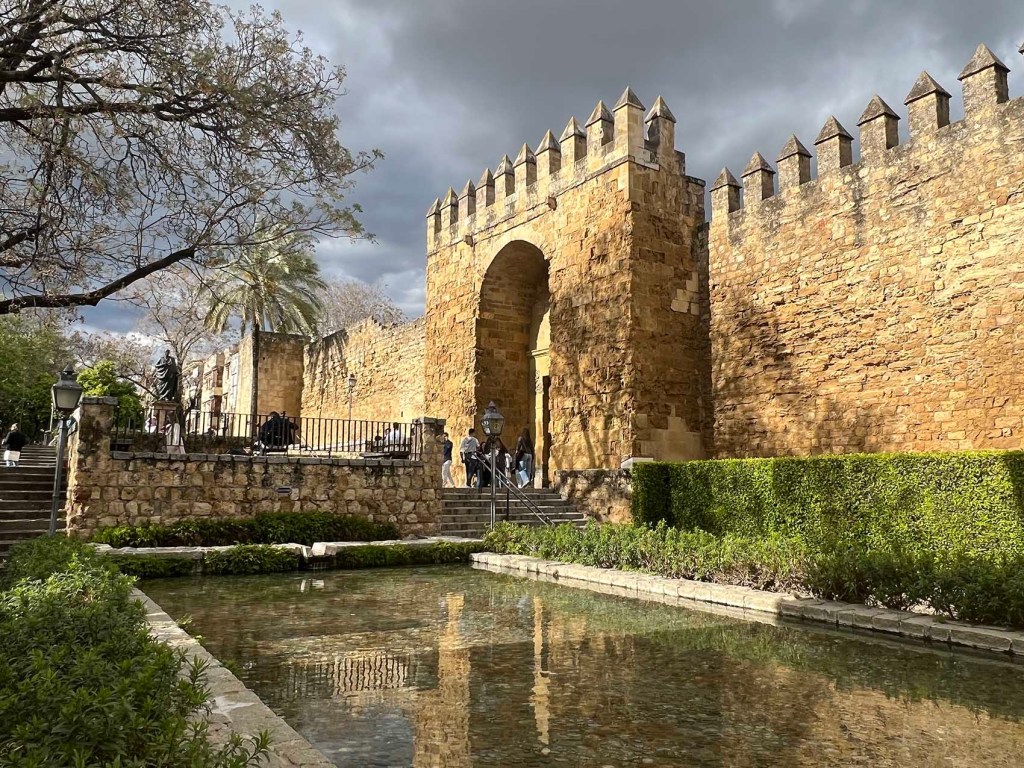
• Puerta de Almodóvar. No recibe su nombre del director Pedro Almodóvar, sino del pueblo con el que conectaba la carretera, a 23 km de distancia, Almodóvar del Río.

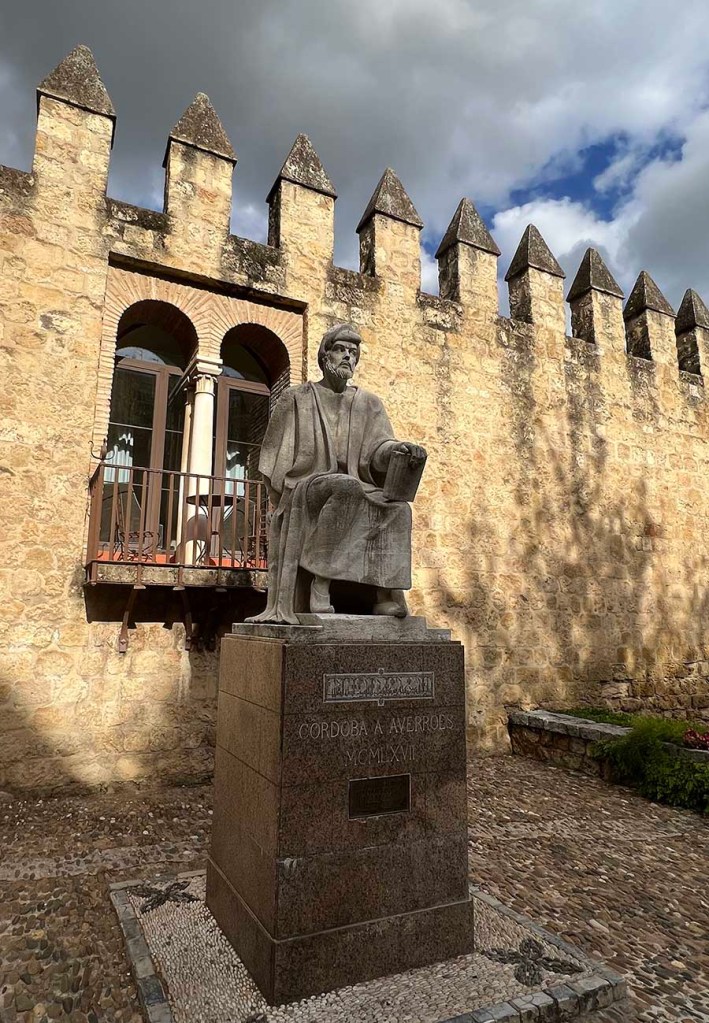
• Ibn Rushd (latinizado como Averroes), filósofo y erudito musulmán andaluz. (1126-1198).
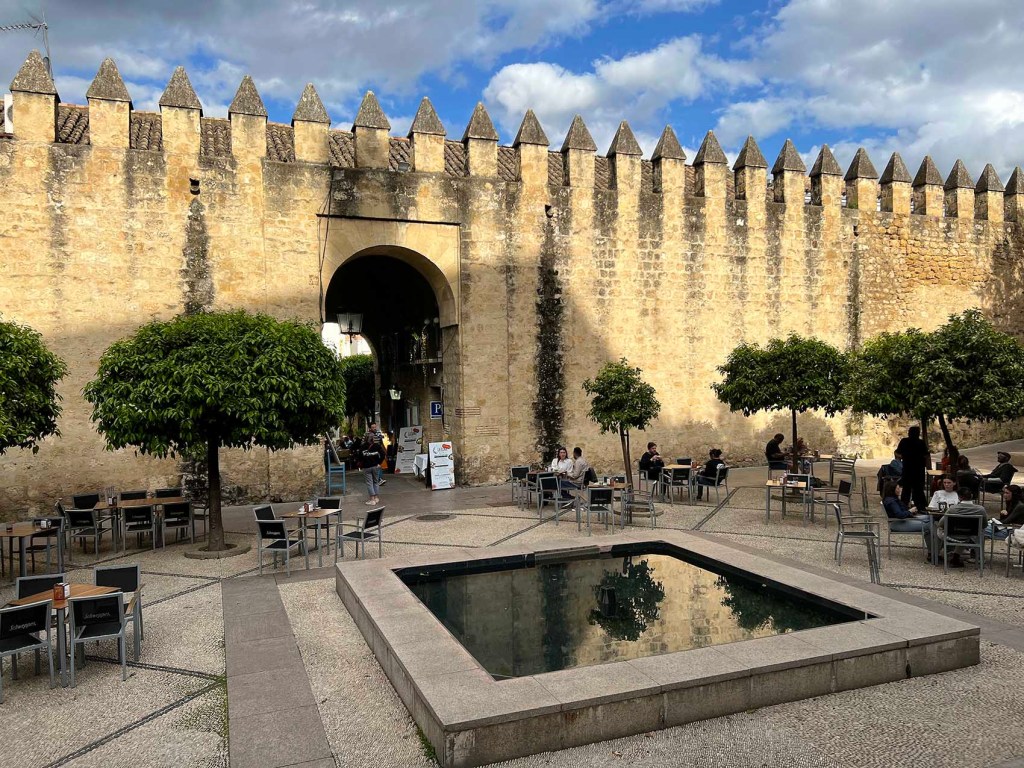
• Aún fuera de las murallas de la ciudad. Ese gran arco solo conduce a un restaurante.
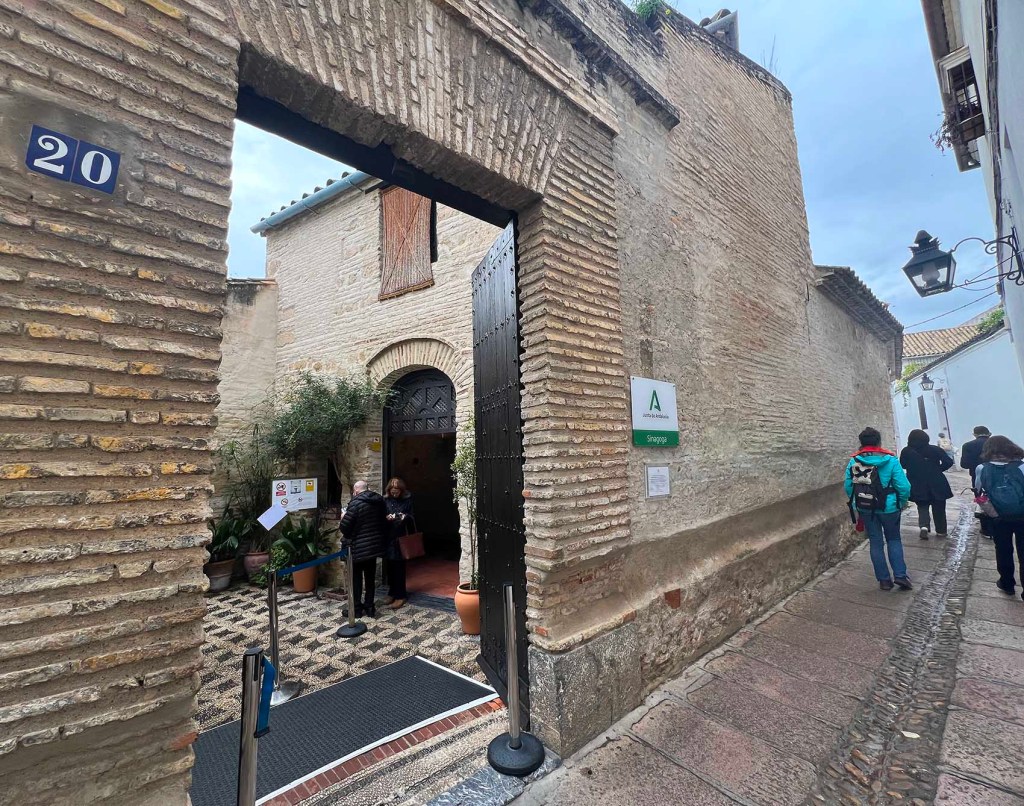
• Dentro de las murallas de la ciudad. Las puertas de la pequeña sinagoga.
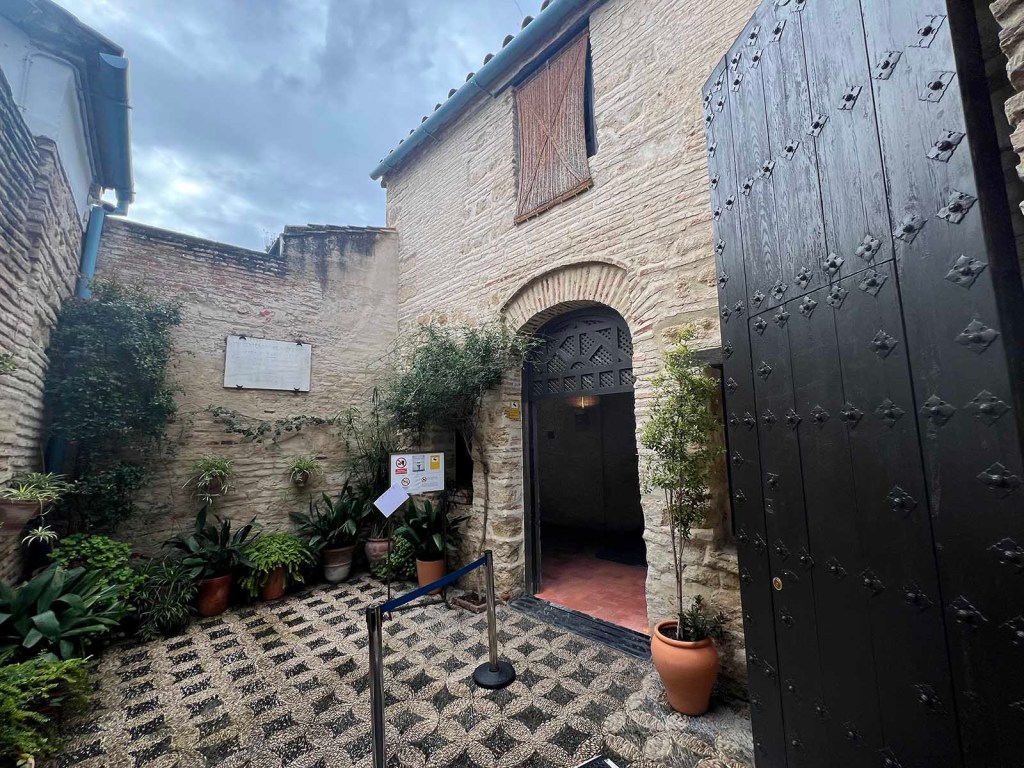
• El patio de entrada.
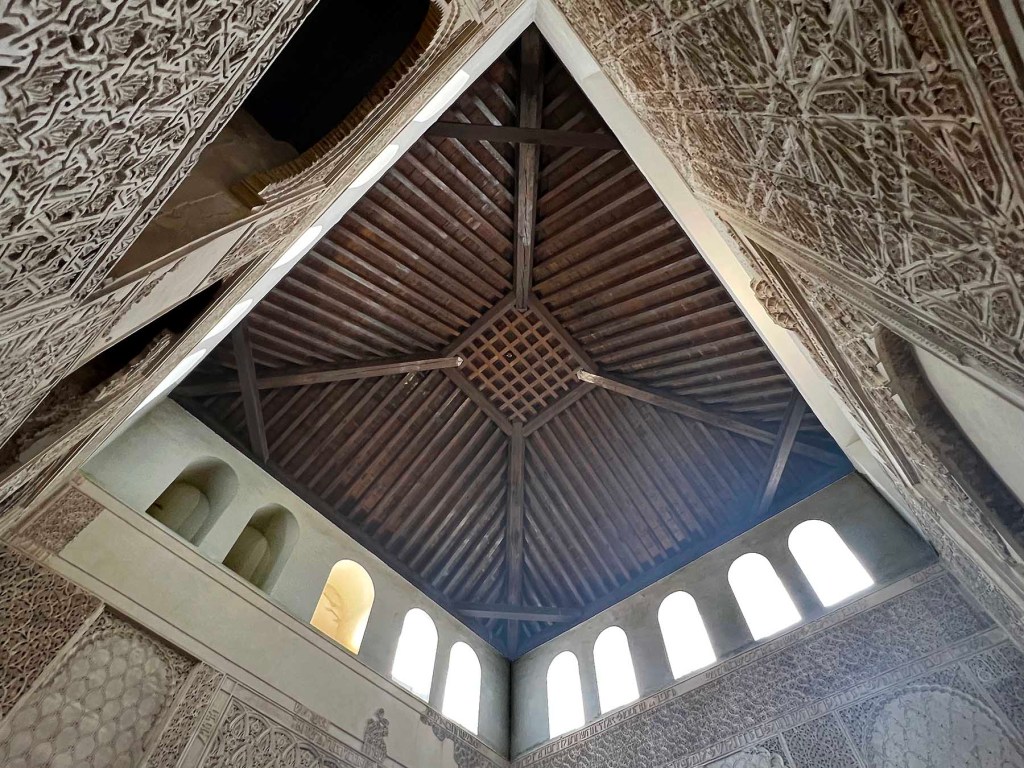
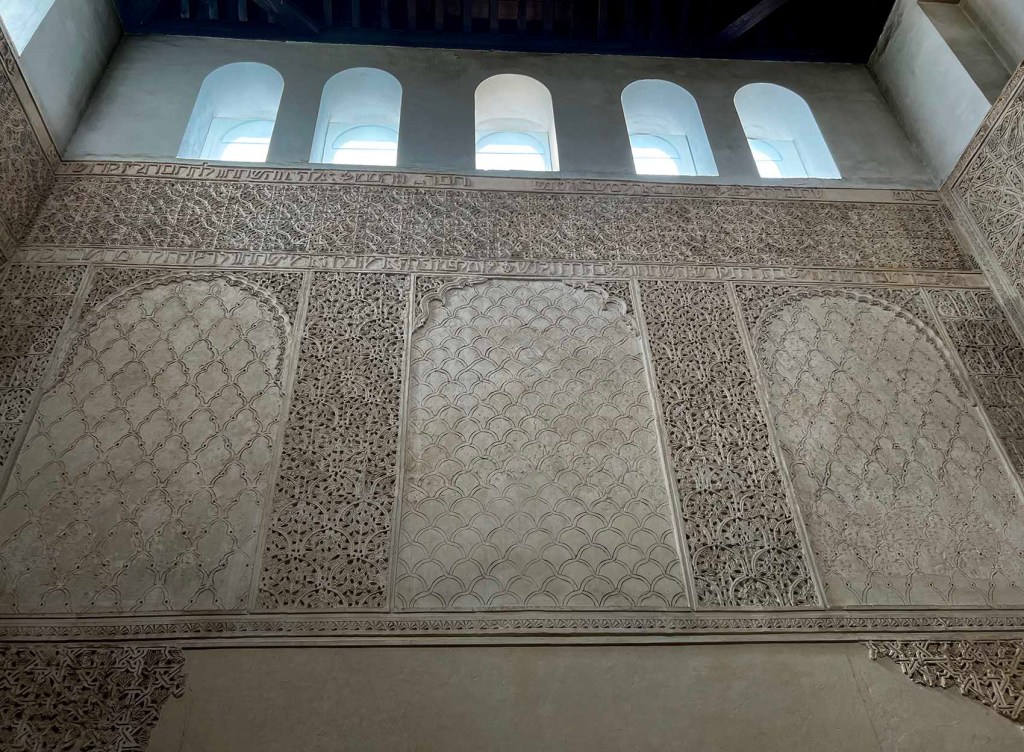
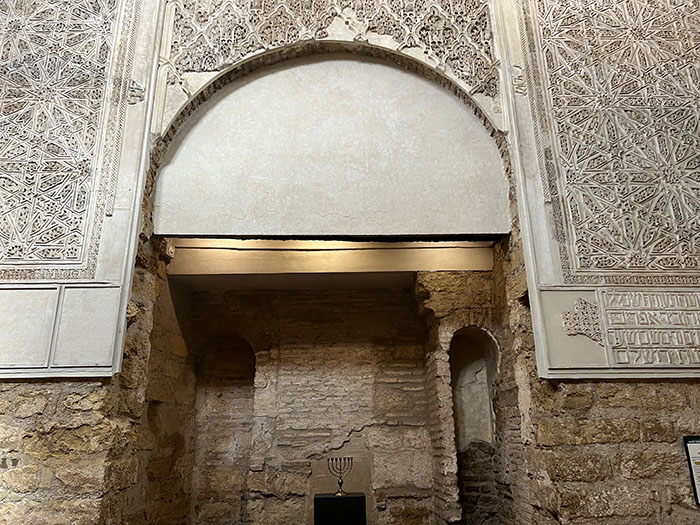
• El Muro Oriental con el nicho donde se guardaba la Torá.

• El balcón donde “se guardaban” a las mujeres, estando siempre separadas de los hombres.
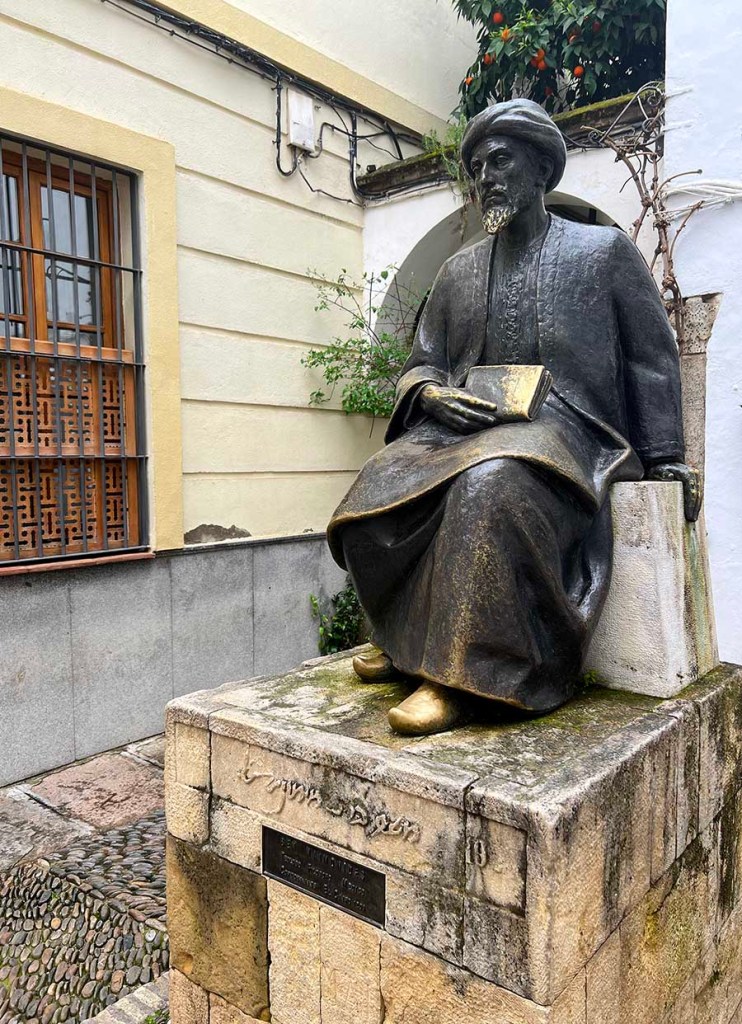
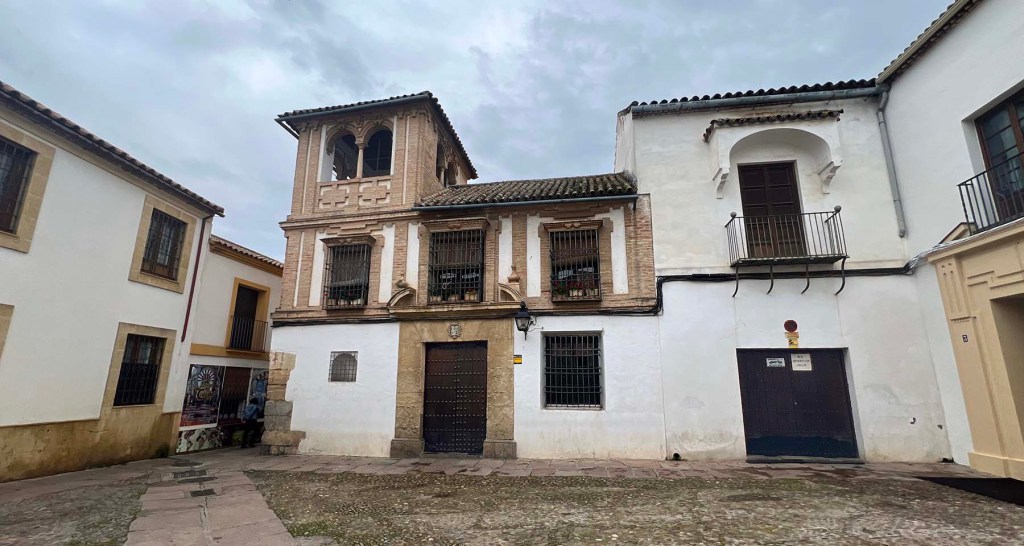

• De nuevo fuera de las murallas. Un pasarela que atraviesa las ruinas. Lleva el nombre de Hasdai ibn Shaprut, erudito judío, médico, diplomático y mecenas de la ciencia que vivió entre 905 y 965.


Click the thumbnails to enlarge.
Haz clic en las miniaturas para ampliar.

Not a bagel shop in sight? So much deep history to explore.
David:
A friend of mine once tried making bagels himself. They’d be mistaken for stone relics here.
I have never thought of Jewish restaurants in Chinese neighborhoods before. Where did you go to university in NY? Buffalo?
Michael:
I went to Brockport.
I wrote and lost a long appreciative comment! Anyway thank you for the great info, especially the footnote on Averroes, news to me. Boud
Boud:
Thanks for the appreciative comment!
The history of the enlightenment demonstrated by the Umayyads, Almoravids, Almohads and other caliphates towards Jews (and other non-Muslims), as well as their architecture, universities and inventions is utterly fascinating – and such a contrast to today’s world.
As for Jewish people and Chinese restaurants – the first I knew of it was from Gypsy, but it was really thoroughly explained in Larry Weinstein’s marvellous documentary film about how Jews basically invented the Christmas we know today (just about every “Xmas song” in existence was written by someone of Jewish origin), and why Chinese restaurants were their place to go when everyone else was feasting on turkey and the baby Jeebus. Jx
Jon:
I’m surprised this comment with long link made it past the Spam Police. It’s fascinating to learn the history of early Iberia.
Living in Miami we always knew about the Chinese restaurants in the Jewish neighborhoods!
Now, for the architecture porn. Wow; such a gorgeous building, and to be that old. The view up to the ceiling is stunning.
Bob:
I’m glad you like the photos. I was expecting something much more dramatic, so was a bit disappointed. But when I look at the photos now I do appreciate it.
Impressive!
Debra:
I have a lot more walking to do in the neighborhood.
Your photography, Mitch, enhances the history and architecture of this area in Cordoba.
Jim:
Thanks so much.
There is more history and buildings of historical and architectural significance in a few blocks of Cordoba than in entire cities here. I am constantly amazed.
Hard to imagine even a small hospital being entirely dedicated to the treatment of rabies. I wonder if any of the treatments were successful.
Moon Sigh
Moon Sigh:
From what I’ve read, rabies was considered demonic or something based in evil. So treatments must not have been very effective. It was all about relating to divine powers. They even cauterized the wounds with hot irons and then applied hair from the rabid dog. Wow!
Why do I feel that RFK, Jr. would approve of this treatment?
While I enjoyed immensely the architecture of Puerta de Almodóvar… it was the walkway through the ruins that I would really like and enjoy. And now that you mentioned that about the Chinese restaurants in Jewish neighborhoods, I don’t think I have ever noticed that.
Mistress Borghese:
The walkway was fun. I was walking by and noticed this depression cut into the walls. Very cool.
Even in my little rural southern town we all knew that Jewish folks ate at the Chinese restaurant on Christmas! (and yes, we’ve always had a handful of Jewish families here) In fact, I went to a neighboring town for Easter and had Panda Express for lunch!
Kelly:
I wonder how that Christmas tradition started.
Chinese restaurants being a mainstay of Jewish neighborhoods is new to me, though now that I think about it, it seems to have seeped into pop culture. For instance, one of the Jewish comedian Buddy Hackett’s early successes was a comedy record that has him trying to order Chinese takeout over the telephone. And the sitcom Seinfeld, the star and namesake of which was another Jewish comedian, had an entire episode that had the characters waiting to get seated in a Chinese restaurant.
Kirk:
I remember the Buddy Hacket song “Chinese Rock and Egg Roll” about a Chinese restaurant owner complaining about the customers. I had it on a 45. The flip side was “Ting Me a Tong.” My brother still has the record! Not a very nice depiction. I also remember that Seinfeld episode.
I read “Jews of Cordoba” and had a giggling fit. I pictured a Mel Brooks western with Jewish cowboys wearing yarmulkes riding through town looking for Chinese restaurants! What’s wrong with me? I don’t know, but it’s a lot.
Deedles:
I’d have a giggling fit, too. Here’s something on the subject that I hope you enjoy. https://www.youtube.com/watch?v=-cjAqvQBotM
I absolutely love Allan Sherman! I bought his greatest hits cd awhile back just for the Twelve Gifts of Christmas song. I ended up liking every single song on that thing. I’d sing Harvey and Sheila while cleaning the house and who can forget the cleverness of One Hippopotami? Thanks so much, Scoot.
Deedles:
I listened to Harvey and Sheila and don’t remember every hearing that before. I’m not at all familiar with the My Son the Celebrity album. My parents only had The Folksinger and then, of course, everyone knew Camp Grenada. I had the 45 with Ratt Fink on the flip side. I loved Shake Hands with your Uncle Max! We lived near Ocean Parkway (The Kid Brother lives on it), so every time I drove up that street, the song would pop into my head.
What a beautiful building!! I suppose when the Jews of Córdoba were expelled in 1492, the Chinese restaurants went with them?
Steve:
Yes! I think I remember Shang Chai opening in 1493!
You and SG are so lucky to live in such a stunning city!
Tundra Bunny:
I’m so glad we chose to live here. It’s incredible.
Fantastic photos, Mitchell! Merciiiii!
Judy C:
De nada. I’m glad you enjoy them!
We used to have a guy named Brett who worked with me at a grocery store called Publix
He kept calling people “Jew” like he was 12. Our area is pretty dominantly Protestant
I told him I hope he was being silly but he’ll say it to the Wrong person one day.
He did, got in trouble, couldn’t say it again
Someone asked me where the Matzo balls where and I didn’t know
I went to find someone and it was HIM
I asked him
And he said yes
And then walked away
Adam
NEKORANDOM.COM
Adam:
Brett sounds like a jerk. Did you ever find the matzo balls?
I wonder if all chinese restaurants serve the same things or it varies from country to country.
Urspo:
It definitely varies.