
La versión en español está después de la versión en inglés.
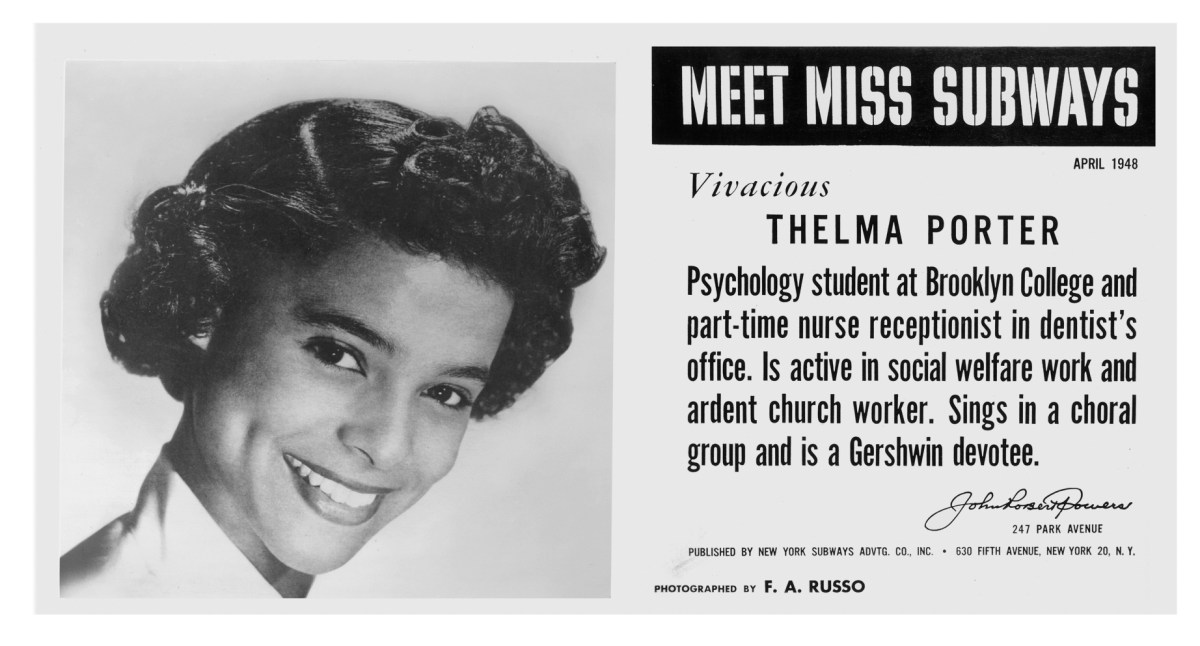
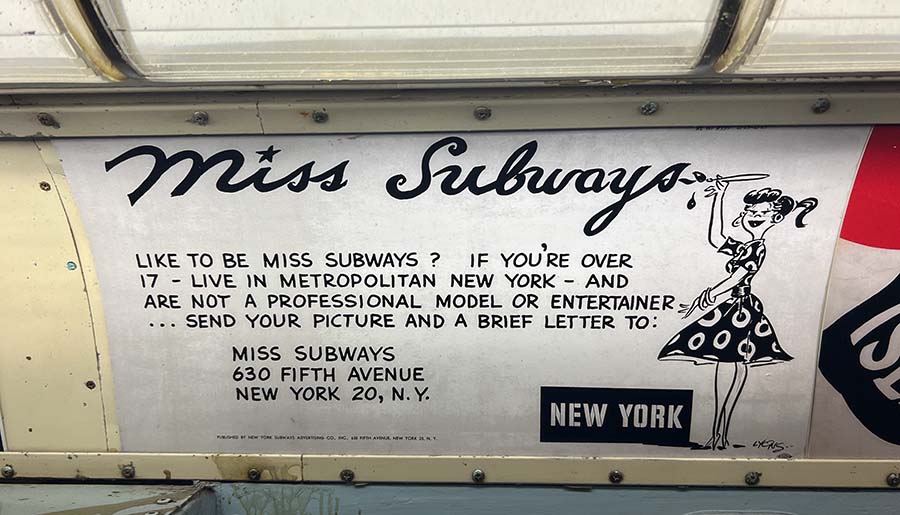
From 1941 through 1976 a beauty contest took place in New York City for the monthly title of Miss Subways. I remember the posters with the photo of the month’s winner. I must admit coming from the suburbs in 1964, I wondered why someone would want what I thought was such a dubious distinction. But, it was an honor, an opportunity, and one of the first integrated beauty contests in the USA.
Lightyears ahead of the Miss American pageant, the young women were of all backgrounds, religions, and races. In 1948, Thelma Porter (seen at top) was the first black Miss Subways, and in 1949 Helen Lee was the first Asian-American. Their academic successes and professional goals were always included in their bios. I do remember reading them and being surprised and impressed, although I now know that there were some fabrications.
The contest was the inspiration of John Robert Powers, head of the modeling agency and school of the same name that my sister Dale attended and “graduated” from. To compete, you had to be a resident of NYC and you had to regularly ride the subway. Miss Subways was used as the premise of the 1944 musical “On The Town” where she was called Miss Turnstiles.
The contest came and went a few times after 1976 and it’s now an annual pageant held at the Sideshows by the Seashore Theater in Coney Island. These memories and research are the results of my day with The Kid Brother at the New York Subway museum in November. We had a ball viewing the old ads on the subway cars. I read them to The Kid Brother. Some of them he understood. Some of them neither of us understood.
De 1941 a 1976 se celebró en la ciudad de Nueva York un concurso de belleza para el título mensual de Miss Subways. Recuerdo los carteles con la foto de la ganadora del mes. Debo admitir que, viniendo de los suburbios en 1964, me preguntaba por qué alguien querría lo que yo consideraba una distinción tan dudosa. Pero fue un honor, una oportunidad y uno de los primeros concursos de belleza integrados en Estados Unidos.
Mucho antes del concurso Miss América, las jóvenes provenían de todos los orígenes, religiones y razas. En 1948, Thelma Porter (arriba) fue la primera Miss Subway negra, y en 1949, Helen Lee, la primera asiático-americana. Sus éxitos académicos y metas profesionales siempre se incluían en sus biografías. Recuerdo haberlas leído y quedar sorprendida e impresionada, aunque ahora sé que contenían algunas invenciones.
El concurso fue la inspiración de John Robert Powers, director de la agencia de modelos y escuela del mismo nombre a la que asistió y se graduó mi hermana Dale. Para competir, había que ser residente de Nueva York y usar el metro con frecuencia. Miss Subway sirvió de premisa para el musical de 1944 “On The Town”, donde se le llamó Miss Turnstiles.
El concurso se ha repetido varias veces desde 1976 y ahora es un certamen anual que se celebra en el Sideshows del Teatro Seashore en Coney Island. Estos recuerdos e investigaciones son el resultado de mi día con el Hermanito en el museo del metro de Nueva York en noviembre. Nos lo pasamos genial viendo los viejos anuncios de los vagones del metro. Se los leí al Hermanito. Algunos los entendió. Otros, ninguno de los dos.
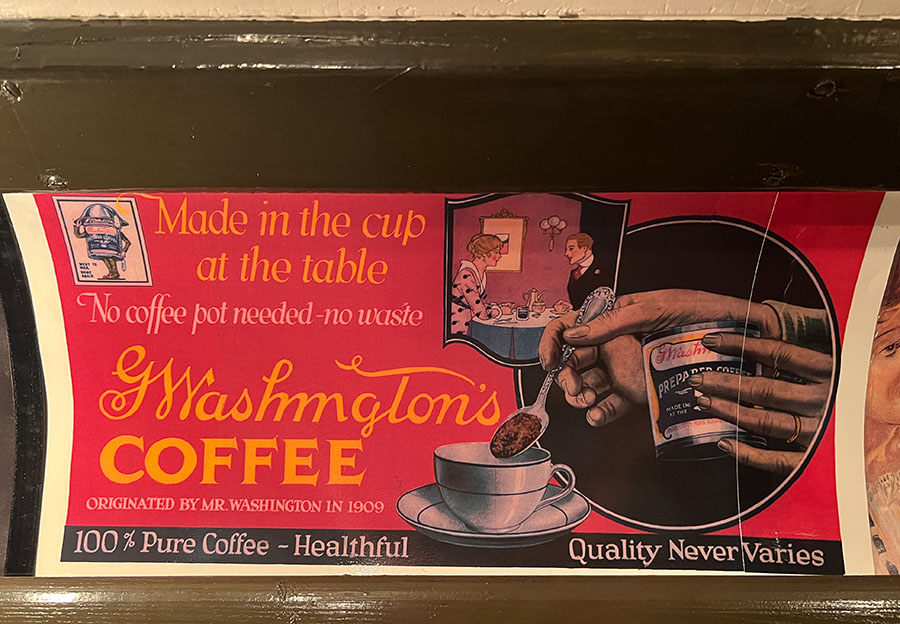
• Nadie había acuñado aún el término “café instantáneo” (como descafenado de sobre). Este café se preparaba en la taza, en la mesa, sin necesidad de cafetera, sin desperdicios. ¡Qué llamativo! Leí que George Constant Louis Washington fue el primero en producir y comercializar café instantáneo en masa en 1909. Al principio lo llamamos “Red E Coffee” (“ready” como en “listo”).
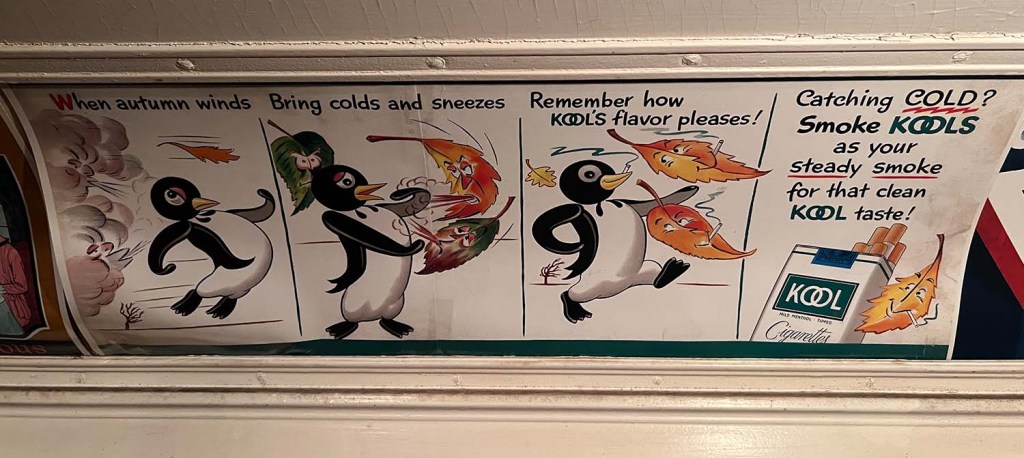
• ¿Te resfriaste? ¡Fúmate un cigarrillo!
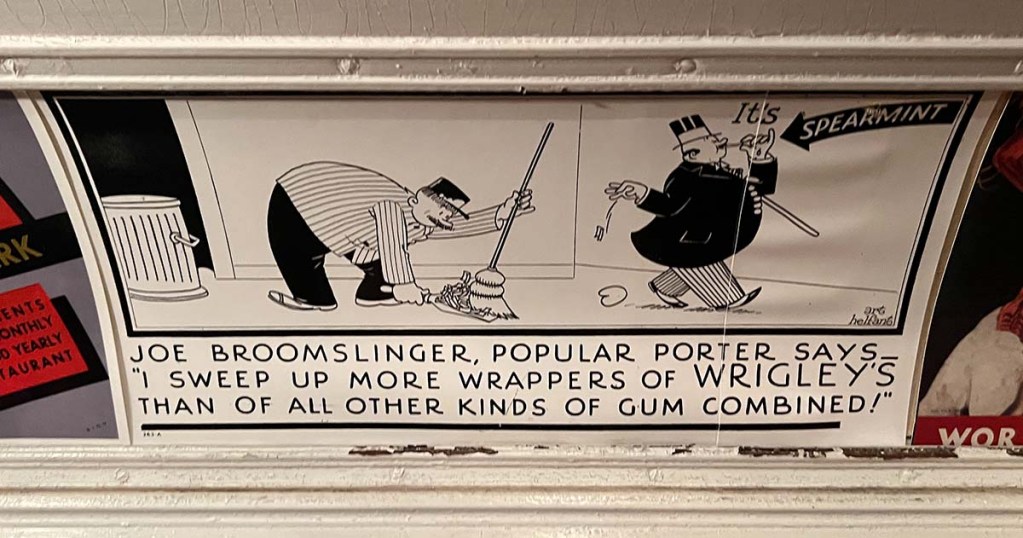
• “Joe Broomstick (Jose Palo-de-Escoba) portero popular, dice: Barro más envoltorios de chicles Wrigley que de todos los otros tipos de chicles juntos.” ¿Wrigley genera la mayor cantidad de basura? Cuando le leí esto a KB, él exclamó: “¡Oye, eso es terrible!”
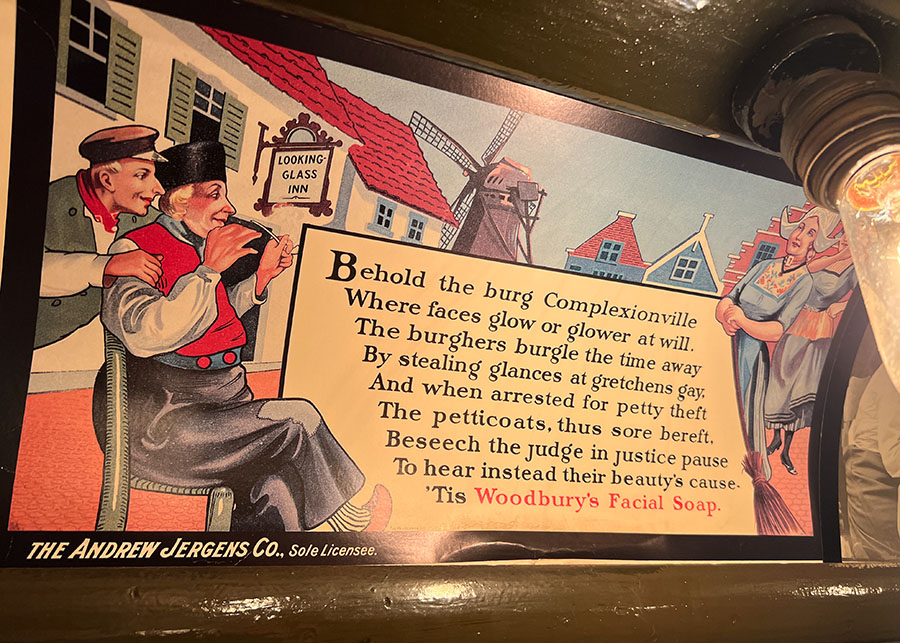
• “Contempla el burgo de Complexionville
Donde los rostros brillan o fruncen el ceño a voluntad.
Los burgueses roban el tiempo
Mirando de reojo a las alegres gretchens.
Y cuando son arrestados por hurto menor
Las enaguas, así despojadas y doloridas.
Suplica al juez que se detenga en justicia
Para escuchar en cambio la causa de su belleza
Es el jabón facial de Woodbury.”
¿Qué qué? Me pregunto qué tan efectivo fue este anuncio. Estaba aburrido y confundido.
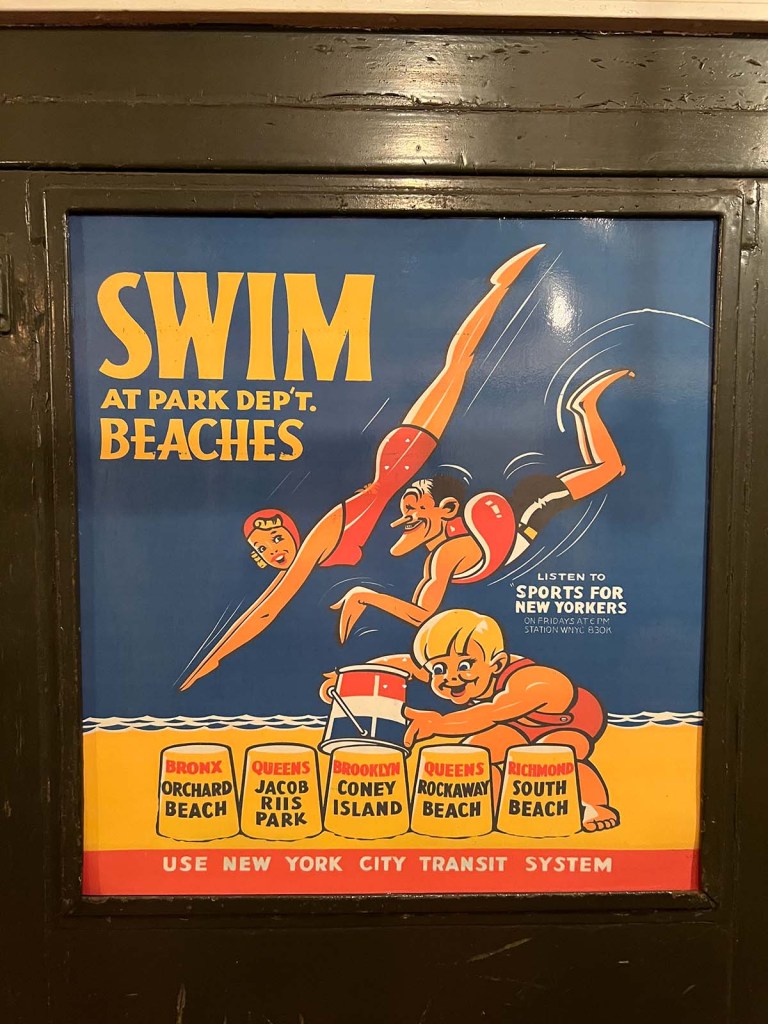
• South Beach en Richmond se refiere al condado de Richmond, que era el nombre oficial original de Staten Island. No se cambió legalmente hasta 1975. Otro dato interesante: la mayoría de los habitantes de Staten Island fueron leales a la Corona británica hasta el final de la Guerra de la Independencia.
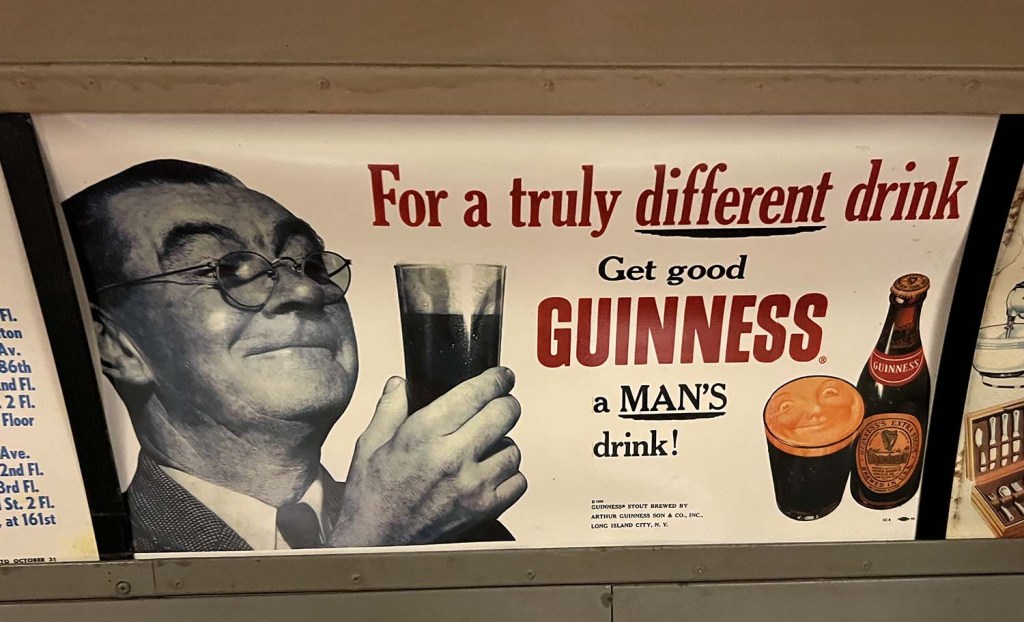
• ¡¿Una bebida de hombres?! ¡Vaya, se les fue la mano!

Miss Subways? Makes the poor girl sound like she’s representing that godawful fast-food chain. I bet Thelma would have had a Guinness, though, and thumb her nose at that sexist poster… Jx
Jon,
That would be singular Subway. Much less classy. (Yeah I thought Miss Subway sounded tacky, too.)
They should start a Mr. Turnstiles contest, we could help them find a few judges. My grandmother was advised by her doctor in the 1930’s to start smoking to exercise her lungs. She quit in the early 60’s. And lived to be about 90.
David,
I like that idea. It’s incredible what people were told about smoking in the past.
They used to encourage smoking to soothe sore throats, seems amazing now! That soap ad goes on and on like a confused dream. Thanks for the ads, very cool.
That were Boud, that were!
Oh, those ads! And “gretchens gay” — oh please, no self-respecting lesbo would be caught dead in those outfits!
Debra She Who Seeks:
Gretchen is a drag queen, not lesbian. Make sense now?
Oh, well then . . . .
I’m here for the Mr. Turnstiles contest, too, and volunteer as a judge.
I’d be very hands-on.
Bob:
I love the idea. But I’ll head up the selection committee. Auditions would help. A committee of one.
Holy cow, this is fascinating. I had no idea. And, what on earth IS “gretchens gay”, anyway? These are great signs 🙂
Judy C:
It seems to me they were using the name Gretchen as a replacement for lass or lady. Weird. But then I find the entire ad weird… and ineffective.
Great stuff! Love 100% coffee – Healthful. Indeed, my drinking coffee is good for the health of the people I encounter…
wickedhamster:
I love coffee. Sadly have to do decaf now, but we get great brewed decaf here. As for coffee “made right at the table,” I hate it.
… and that gown after the ironing board scene – hubba hubba!
wickedhamster:
Oh, yes, I loved that transition. I also loved how she “hung” the ironing.
I find that clip quite curious. At first all of the attributes of Ivy are very much in the realm of the feminine ideal of the time and then she’s being “athletic” for a much longer time, demonstrating her competing in all sorts of sports, sans any of the equipment the men have. And boy, is her little butt cute! I’m not sure what the message here is. That she can do everything? She represents everything a woman should be? Well, yes. But were women supposed to be athletic? Was this a tip of the hat to the gretchens gay? Am I trying to read too much into this?
I am so confused.
I am not confused about the fact that the Miss Subways beauty contest was way before its time.
Ms. Moon
Ms. Moon:
I, too, thought the long sequence on athletics was surprising. I wonder what prompted them to devote so much time to it.
I think it was to showcase their dancing, nevermind the narrative
Boud:
I’m sure you’re right. I got bored.
Those old fashioned ads are quite entertaining. Do you suppose Joe Broomslinger had to pick up the discarded chewed gum as well? And smoke to clear your lungs of the polluted air?
ellen abbott:
That was my immediate thought about Joe Broomslinger! Amazing how misled the public was about smoking. Well, I suppose not amazing at all. Par for the course.
LOVED this walk through vintage ads!!
Times have changed of course, but these ads represent a specific time in history which were the impetus for change.
Jim:
So fascinating to see how advertising changes over the years.
Vera-Ellen is one of my favorite dancers from that era. I watched “White Christmas” featuring her and Danny Kaye in some wonderful dances at least three times this year. Unfortunately, she suffered from anorexia. If you look at her in this clip from 1949 and then again in “White Christmas” from 1954 you can see how much thinner she became. She had an 18 inch waist! People were concerned about her health but she continued to diet throughout the remainder of her life. It’s amazing to me that she even had the energy to dance.
TexasTrailerParkTrash:
It’s always so good to see a comment from you! I, too, love that movie. I only recently read about Vera-Ellen’s eating disorder and now can’t miss it.
Yeah, I’d say that Woodbury’s ad is a stretch for sure. Maybe it’s just our modern-day short attention spans?
Those old cigarette ads where they try to convince us that smoking is healthful — ha!
Steve:
I can’t imagine that Woodbury’s ad being successful. It was hard to tell what they were even talking about. And, oh, those old cigarette ads. And I remember so many from my childhood. I remember being on a schoolbus trip in Junior High School when we were yelling out the windows for people to show us their Lark packs.
Curious as to what Thelma Porter did with the rest of her life, I went down the rabbit hole, learned she became an activist for other Black women, married a Marine that later in life was awarded the Congressional Gold Medal for being among the first Black U.S. Marines. She passed away in 2012 at around the age of 88/89 and, online, seems to get way more mention than her decorated husband as I was unable to determine when he passed away, before or after her. She left behind a son, Peter Parros, who became an actor. I recognize him from that old show Knight Rider and more current TV productions. (Shirley)
Shirley:
Thanks so much for exploring and sharing. I had looked her up, too, but thought I had already gone on too long. I really wanted people to know about her.
I love the ads!
OMG I want them all.
XOXO
Sixpence Nonethewiser:
Aren’t they great? My uncle was a bus dispatcher in the ’60s and would get me first run ads before they were put up on the buses. I wish I still had them. They were loved, pinned to walls, and simply wore out.
Thelma Porter was a lovely young woman. I appreciate the research the commenter above did on her life.
I agree with KB – that’s terrible about the littering!
Kelly:
Yes, I had researched Thelma Porter, too, and was glad Shirley shared it. The Wrigley’s ad was so strange.
I didn’t know about Miss Subways. I thought of Miss Turnstiles in the movie immediately. I love Vera Ellen — long gone. She retired in the late ’50s and died from ovarian cancer in 1981, age 60. She was so talented.
Love,
Janie
janiejunebug:
Vera-Ellen WAS so talented.
I’m guessing a lot of minorities used the subway, hence the beauty contest’s diversity. A lot of minorities went to movies, too. but were still outnumbered by whites, so we get a white subway beauty queen, though a movie that had Gene Kelly falling for, say, Dorothy Dandridge–well, I would have made a point of watching it.
Kirk:
I do wonder what the actual reason for the openness was. Maybe John Robert Powers was simply more enlightened than many people of the time.
I love old ads from newspapers, magazines, etc. One of my favourites was from a 1920’s newspaper advertising “Prophylactic Brand” toothbrushes. Fun post, Scoot!
Tundra Bunny:
I cracked up (and looked up) Pro-Phy-Lac-Tic brand! I wish I knew what they were thinking, or what they meant.
I’m a retired dental hygienist so here’s what they mean by the name of their toothbrush:
On a dental bill, prophylaxis (often shortened to “prophy”) means a routine, professional teeth cleaning to remove plaque, tartar, and stains, focusing on prevention of cavities and gum disease, not treating an existing problem like deep cleaning would. It’s a standard preventive care service, typically done twice yearly, involving scaling and polishing above the gumline to maintain oral health
I guess it was just a coincidence that condoms also used to be called prophylactics then, LOL!
Prophylactic = preventive or protective. Jx
Jon:
Yeah. My comment wasn’t very clear. I really meant that given the word also being used for condoms they might not have wanted to use the word in advertising for dental care. It just shows my level of baseness.
Tundra Bunny:
Imagine going to the pharmacy for a toothbrush and then trying to figure out where to put the toothpaste in your condom.
TexasTrailerParkTrash:
I guess I didn’t word my reply correctly. I did understand the meaning. I just thought they might have considered the use of the word to refer to condoms as not a great word to put in your mouth in advertising.