La versión en español está después de la versión en inglés.
The title contains my words of inspiration for the day. Or maybe they’re not very inspiring and simply lack empathy. Either way, they lead me into these photos of fountains I’ve seen in recent days. Some around the city are so powerful they mask the urban noise. Others are barely a trickle but are still calming. Many were placed centuries ago to provide water to the neighborhoods. I thought I’d simply share photos, but my curiosity got the better of me and this became a research project. I had the time.
San Geraldo walked over to the hardware store and suggested we meet in the neighborhood for coffee when he was done. I agreed and was on my way to meet him when I remembered that I had ordered a pair of dumbbells and they were supposed to be delivered today (Saturday). So I came back upstairs assuming I’d spend the entire day in the house waiting. I sat down to write this. The dumbbells arrived before lunch. The young guy who delivered them has clearly been lifting dumbbells regularly.
I’ll head out on the town this afternoon. It was a shame to miss the beautiful morning temperatures in the mid 20sC/70sF. Still the temps will not be too extreme this afternoon.
El título contiene mis palabras de inspiración para hoy. O tal vez no sean muy inspiradoras y simplemente les falte empatía. En cualquier caso, me llevaron a estas fotos de fuentes que he visto últimamente. Algunas en la ciudad son tan potentes que enmascaran el ruido urbano. Otras apenas tienen un chorrito de agua, pero aun así resultan relajantes. Muchas se colocaron hace siglos para abastecer de agua a los barrios. Pensé que simplemente compartiría las fotos, pero la curiosidad me pudo y esto se convirtió en un proyecto de investigación. Tenía tiempo.
San Geraldo fue a la ferretería y me propuso que nos viéramos en el barrio para tomar un café cuando terminara. Acepté y me dirigía a su encuentro cuando recordé que había pedido un par de mancuernas y que debían llegar hoy (sábado). Así que volví arriba, pensando que pasaría todo el día en casa esperando. Me senté a escribir esto. Las mancuernas llegaron antes del almuerzo. El tipo que las entregó claramente ha estado levantando pesas con regularidad.
Saldré a dar una vuelta por la ciudad esta tarde. Fue una pena perderme las agradables temperaturas de la mañana, alrededor de los 20°C/70°F. Aun así, las temperaturas no serán demasiado extremas esta tarde.
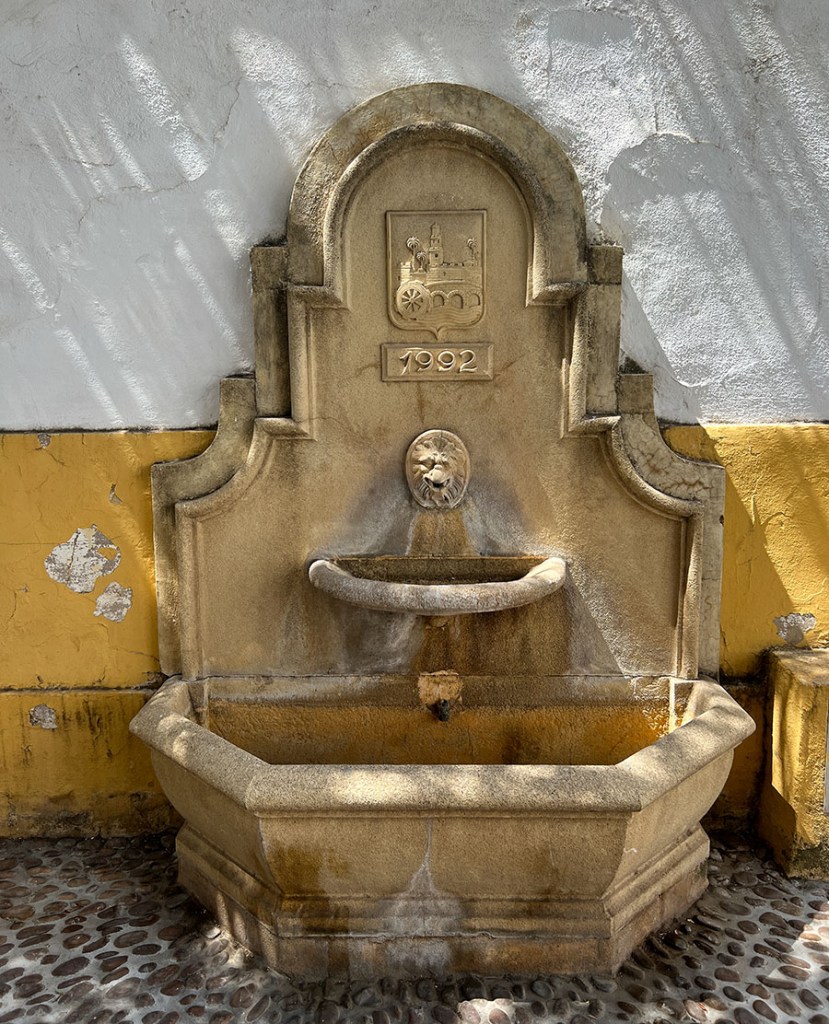
• No sé nada de esta fuente. Quizás fue restaurada en 1992.
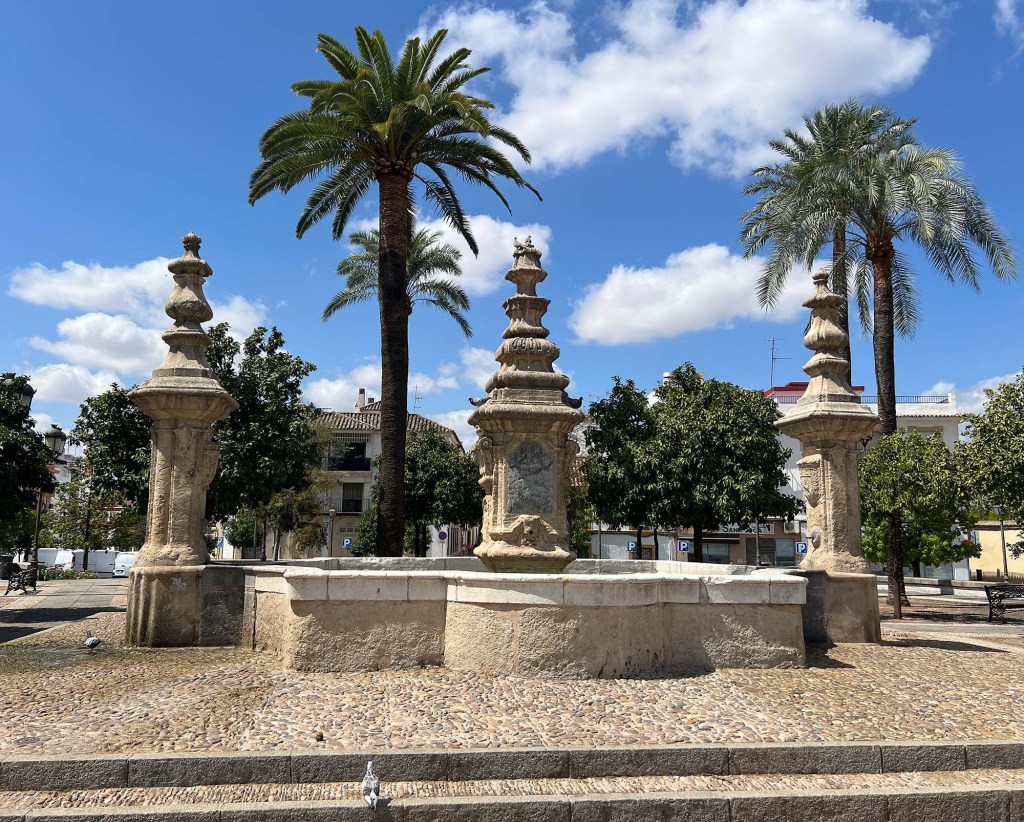
• Plaza del Cristo de Gracia. La fuente estuvo ubicada desde 1780 hasta 1950 no muy lejos de nuestra tienda de acuarios, hasta que fue trasladada a esta plaza, a 750 metros (aproximadamente media milla) de distancia.

• Desde atrás.
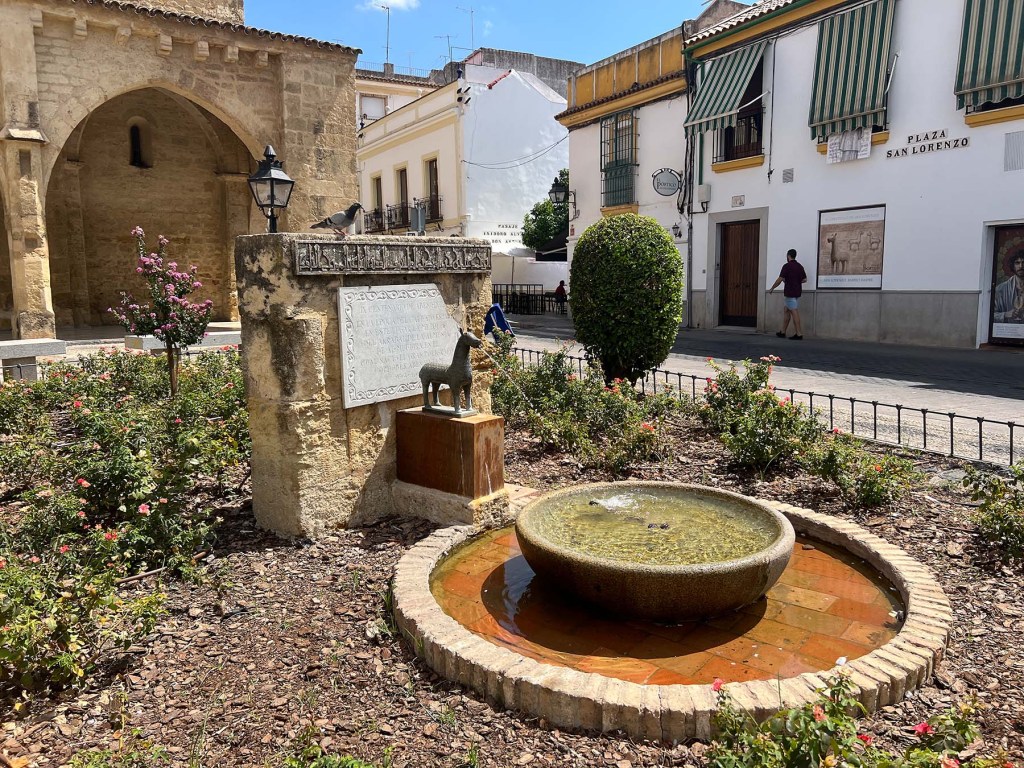
• El cervatillo es una réplica del que se encuentra en Medina Azahara, un palacio del siglo X situado al oeste de la ciudad. Estamos esperando a que haga más fresco para visitar las ruinas.

• Construida sobre una antigua mezquita que a su vez se construyó sobre una iglesia visigoda. (Los visigodos gobernaron Córdoba desde aproximadamente el año 584 d.C. hasta el 711 d.C.) El campanario se construyó a partir del minarete de la mezquita.

• En la Plaza San Rafael. Construida en 1809 y parte del sistema tradicional que traía agua de manantiales de montaña desde la época romana.
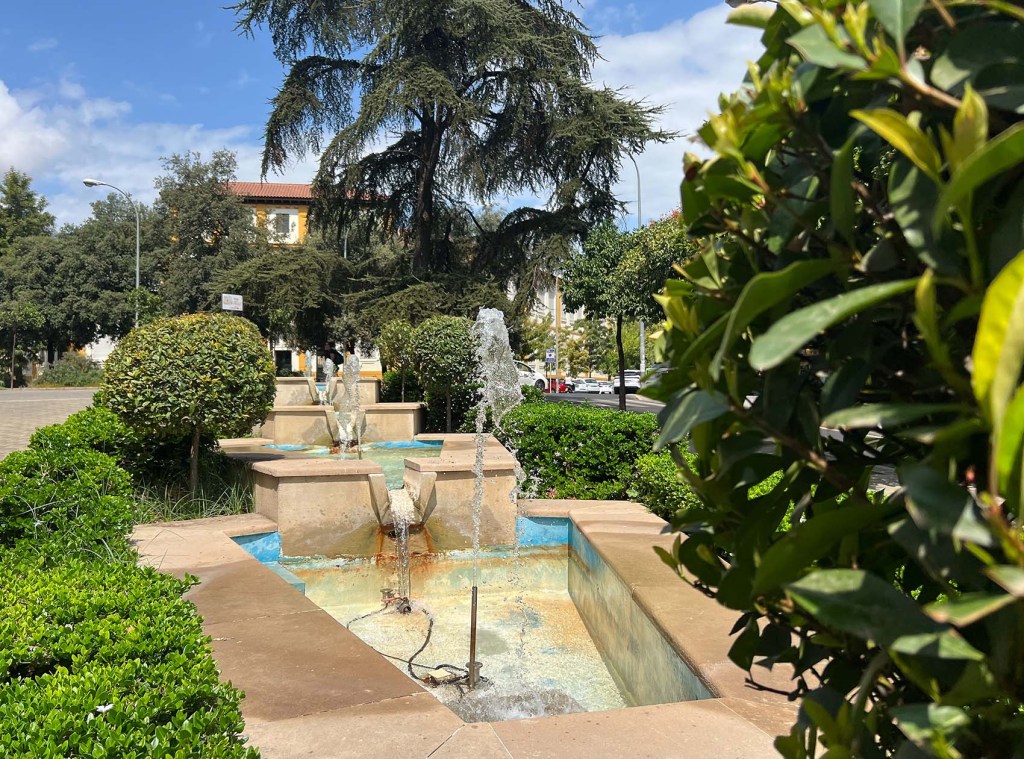
• En el extremo sureste de la Plaza de Colón.


Click the thumbnails to enlarge.
Haz clic en las miniaturas para ampliar.

There is something endlessly fascinating about fountains, isn’t there? The one in the Parque de Malaga made us smile because it’s so phallic! The most eccentric one we ever saw, however, was “The Naked Ladies” in the gardens of York House in Twickenham, London. OTT, to say the least…
I look forward to seeing more from your wanderings. Jx
Jon:
Thanks for linking me to those posts. I remember that fountain in Málaga and had the same thought. But then I have that thought often.
Yes! We have several fountains around out property and they serve well to drown out any neighborhood noises!
Rade:
We wanted a fountain on our terrace in Fuengirola — until a good friend laughed and said, “Yeah, if I lived right on the beach, I’d want a fountain on the terrace to drown out the noise of the sea.”
I like the fact that they temper the noise and also love the design of most.
I was deeply saddened to see no photos of Mr. Dumbbell Deliveryman.
Bob:
Oh, how to subtly snap that picture.
Every time I see a large fountain, I always think of a line from the movie “Analyze This” that starred Billy Crystal and Robert De Niro.
https://www.youtube.com/watch?v=XFK3DBq3clY
The line is in the first few seconds of the clip.
Mary Moon:
I didn’t get much further than that in that movie!
Heh-heh. Call the Vatican! See if something’s missing!
So much history, and beauty.
David:
I’m still amazed.
So many questions. Some of those fountains didn’t look like they were…fountaining. And how do you move a fountain, especially one that big? Wouldn’t it have been less work to just build a new one? And how did those ancient fountains circulate the water in fountains without electricity and pumps? And were these old fountains to bring water to neighborhoods supplied by wells I know you mentioned Roman aqueducts but where does the water go? Seems like the basins would just overflow and spil out.
ellen abbott:
Ooh, you have a lot of research to do! The ancient fountains were explained to me once in Granada.
Hmmm. I think my comment must have gone to your “Junk” folder… Jx
Jon:
Nope. Nothing in Spam (except Spam). (Someone who says they lack creative ideas…)
It seems to have posted as normal! You replied to it above. I just couldn’t see it, until now. Very odd. Jx
Jon:
Ha! I spoke too soon. It showed up after the screen was refreshed with my reply. Don’t know why the delay, but WordPress often Spams comments with long or more than one link included.
Mystery solved. Jx
An impressive variety of fountains! My favourite is the fountain in front of the Church of San Lorenzo, although it looks more like a spitting horse to me than a fawn, LOL!
Are some of these fountains dry due to water restrictions? CBC aired a report on water levels being so low in the Danube than sunken wrecks of Nazi ships were being exposed. Yikes!
Tundra Bunny:
I thought it was a horse, too. I don’t think we have water restrictions, but fountains are regularly turned off and cleaned. The images of low water levels have been astounding. The Danube must be shocking to be near.
I think that fawn has antlers, unless it’s just my poor old eyes playing tricks on me again. Anyway, it looks like the critter is practising for a spitting contest.
Debra She Who Seeks:
Did you know buck fawns can start to grow antlers (like little hair-covered buttons) before they’re a year old?
I suppose a spitting contest is better than a vomiting contest. My aunt once bought a ceramic cow creamer. The first time I used it I said, “Oh, you bought a vomiting cow!” She never used it again.
I love the fountains, and the church!
Judy C:
I think you would like it here.
Water fountains. Every civilized society should have one.
Kirk:
I love them. Still thinking of getting a small one for the terrace… now that we have no cats to make a mess with it.
What is the collective noun for fountains? A flush of fountains? A gush of fountains? A spurt of fountains?
Steve:
You just opened a can of worms! I like a flush of fountains. And then I started thinking…
A splash of fountains, a swash of fountains, a gush, a gurgle, a swoosh. Or a swish of fountains! I hope I can turn off the switch.
It breaks my heart when I see a lovely fountain of any kind not on or forgotten and in disrepair.
Mistress Maddie:
They’re only ever turned off temporarily here. Either for cleaning or for renovation. These are all usually going.
I am mad-jealous! You are a lucky one for that! I love the sound for running water. I have the pool water running so I can hear it tinkle.
Urspo:
We used to listen to the roar of the sea from our terrace. I miss that.
I just recently learned the word fuente for fountain in my Spanish app 🇪🇸
Adam
Nekorandom.com
Adam:
And it already served you!