
La versión en español está después de la versión en inglés.
I visited four Fernandine churches Friday. The one I had planned to see closed at 6 p.m. and I arrived at 5:50. So much for that. They all have different hours and since I’m so random when I walk out the door, I don’t bother checking specifics. There’s always someplace to go. Most reopen after siesta around 5 or 5:30.
So I returned to two I’d already visited to look at some details and then I explored inside two new ones. New for me, but 700 years old. I’ve shared photos in the past of San Lorenzo (click here), but I hadn’t been inside. I was surprised by how elegant and unusual it was. I’m learning to simply enjoy the art and architecture and not focus on how much better spent the money could have been. I used to stew about that every time I entered an old Catholic church. At least artisans, artists, and laborers were employed.
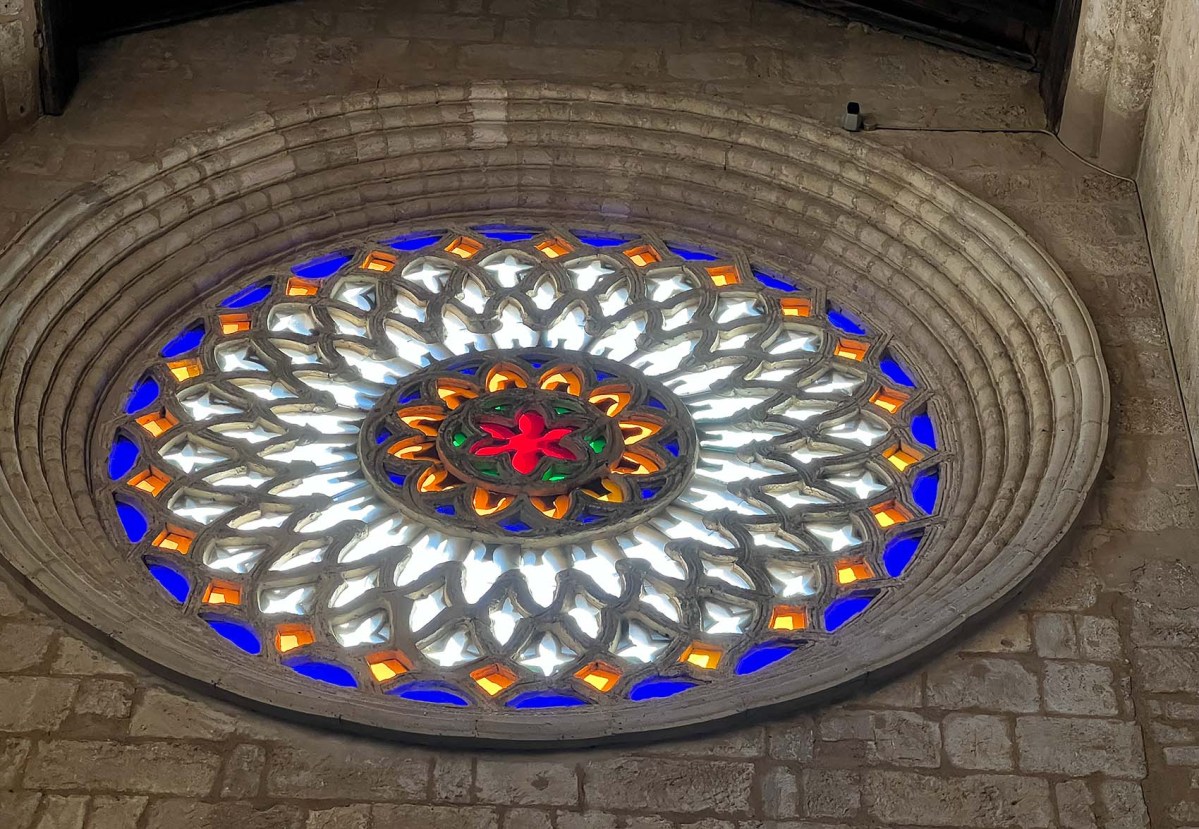
My focus today is on the stained glass. I was there at a perfect time of day to take it in. San Lorenzo is famous for its Gothic-Mudéjar rose window, so I’ve started with that above. The structure of the window is even more impressive from the outside (as you can see in the earlier post); I’d like to go back at night when the interior is lit up and see if the colors are visible outside. Maybe tonight.
Meanwhile I continue to work on my attitude. We’ve all, I’m sure, been damaged in some ways in our lives. And clinical depression, even when treated, can rear its ugly head. I’m trying to rise above it and appreciate the rich life I’ve had and continue to have.
El viernes visité cuatro iglesias fernandinas. La que tenía previsto ver cerraba a las 18:00 h, y llegué a las 17:50 h. Así que, nada que hacer. Todas tienen horarios diferentes y, como suelo salir de casa sin un plan fijo, no me molesto en comprobar los detalles. Siempre hay algún lugar al que ir. La mayoría vuelve a abrir después de la siesta, hacia las 17:00 o 17:30 h.
Por eso, regresé a dos que ya había visitado para fijarme en algunos detalles y, además, exploré el interior de otras dos. Nuevas para mí, aunque tienen 700 años de antigüedad. Ya he compartido fotos de San Lorenzo en otras ocasiones (haz clic aquí), pero nunca había estado dentro. Me sorprendió lo elegante e inusual que resulta. Estoy aprendiendo a disfrutar simplemente del arte y la arquitectura, sin pararme a pensar en cómo se podría haber invertido mejor ese dinero; antes, cada vez que entraba en una antigua iglesia católica, no podía evitar darle vueltas a ese asunto. Al menos, sirvió para dar trabajo a artesanos, artistas y obreros.
Hoy me he centrado en las vidrieras. Llegué en el momento perfecto del día para contemplarlas. San Lorenzo es famosa por su rosetón de estilo gótico-mudéjar, así que he empezado por él, como se puede ver arriba. La estructura del rosetón resulta aún más impresionante desde el exterior (como se aprecia en la publicación anterior); me gustaría volver de noche, cuando el interior está iluminado, para ver si los colores se pueden apreciar desde fuera. Quizás esta noche.
Mientras tanto, sigo trabajando en mi actitud. Estoy seguro de que todos hemos sufrido algún tipo de daño a lo largo de nuestras vidas. Y la depresión clínica, incluso cuando se trata, puede volver a asomar su rostro sombrío. Intento sobreponerme a ella y valorar la vida plena que he tenido y que sigo teniendo.
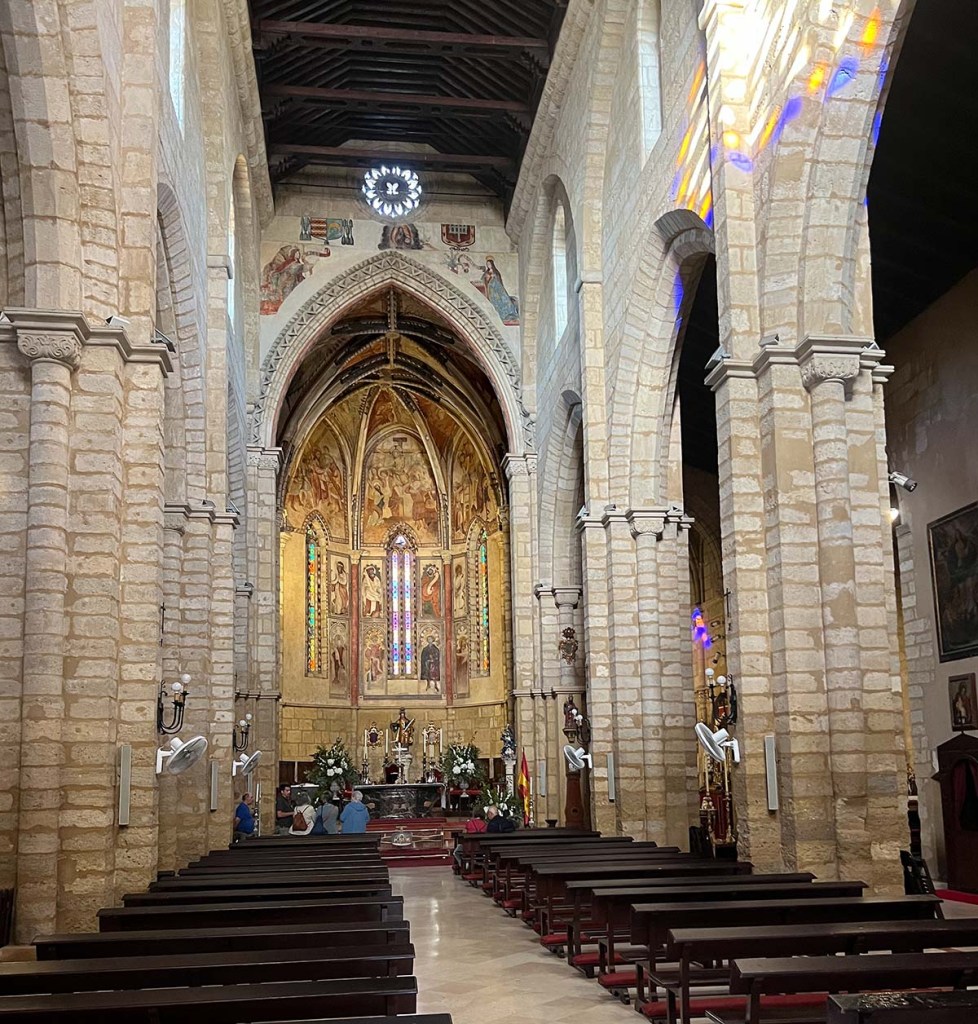
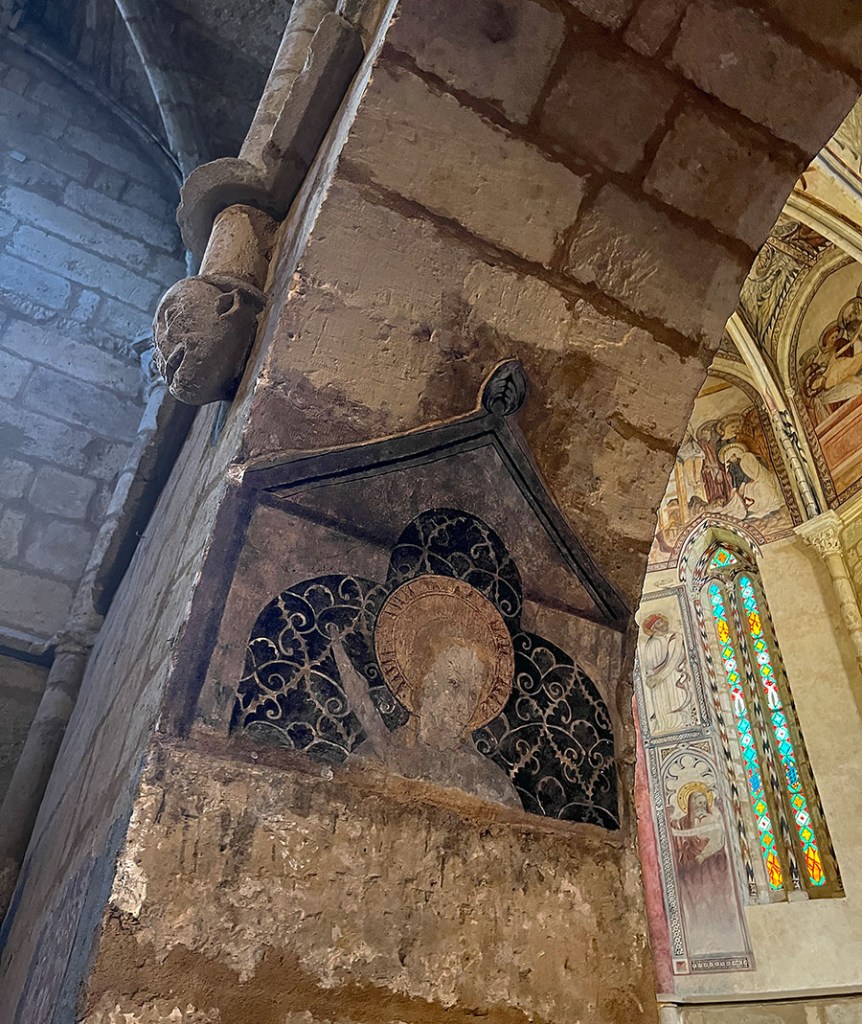
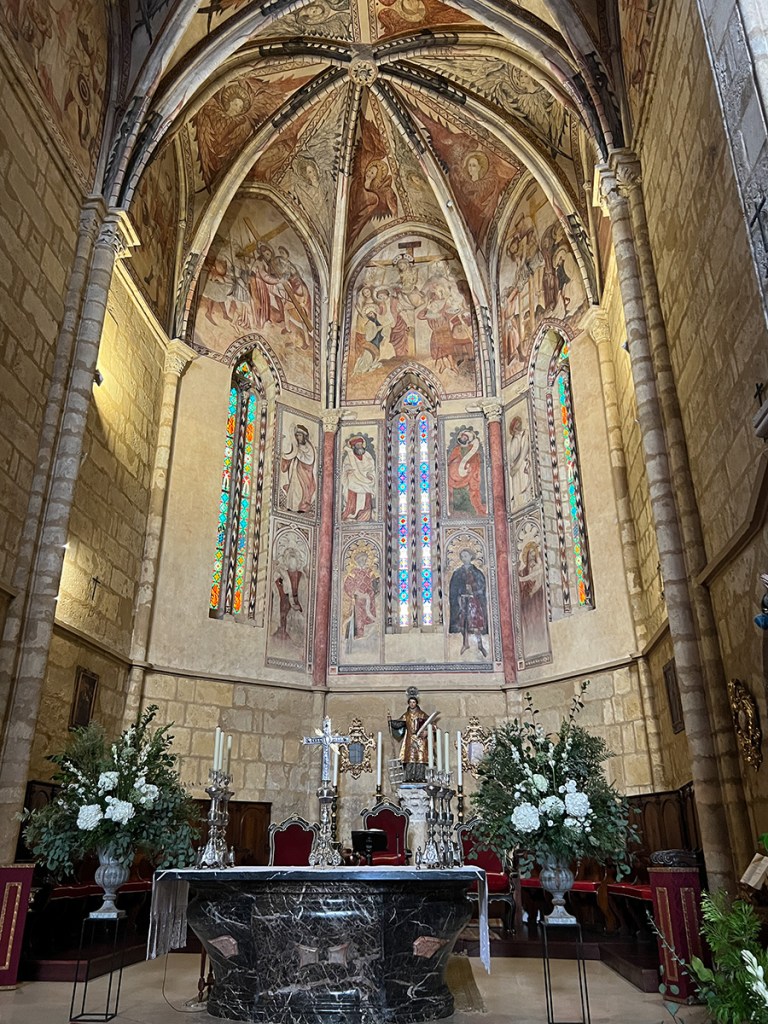
• Me sorprendió mucho saber que los murales de estilo gótico italiano del siglo XIV no fueron descubiertos hasta 1966, tras haber sido cubiertos con una capa de cal en el siglo XVII.
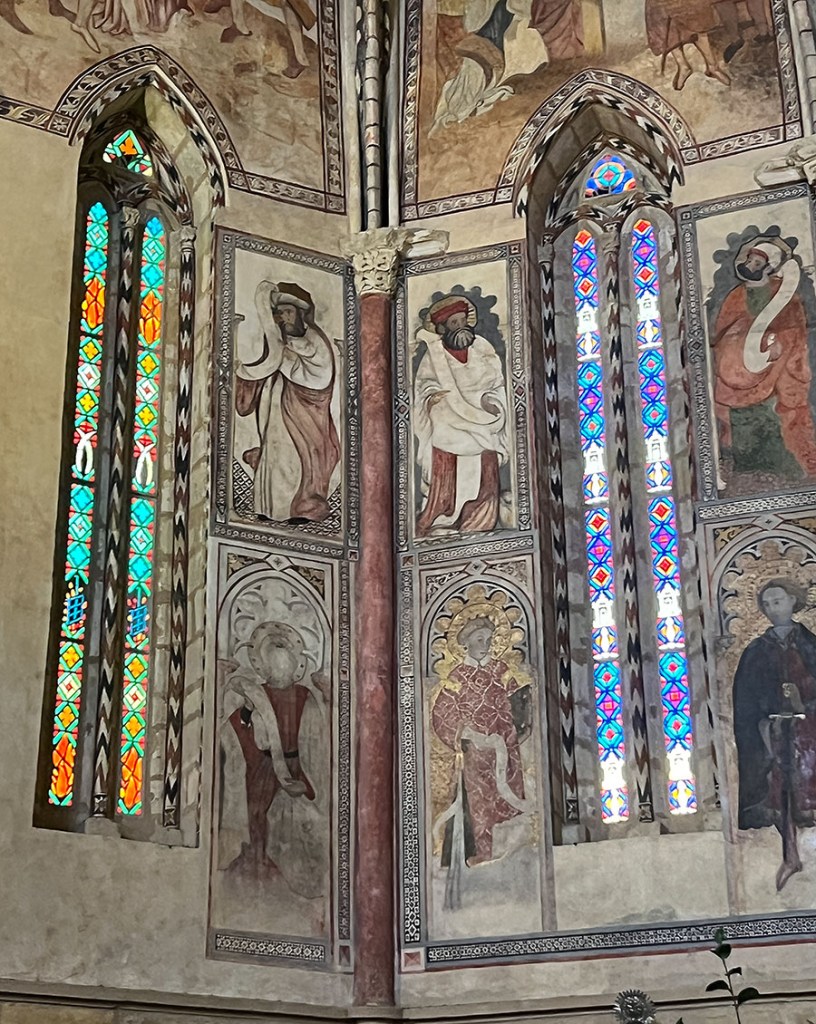
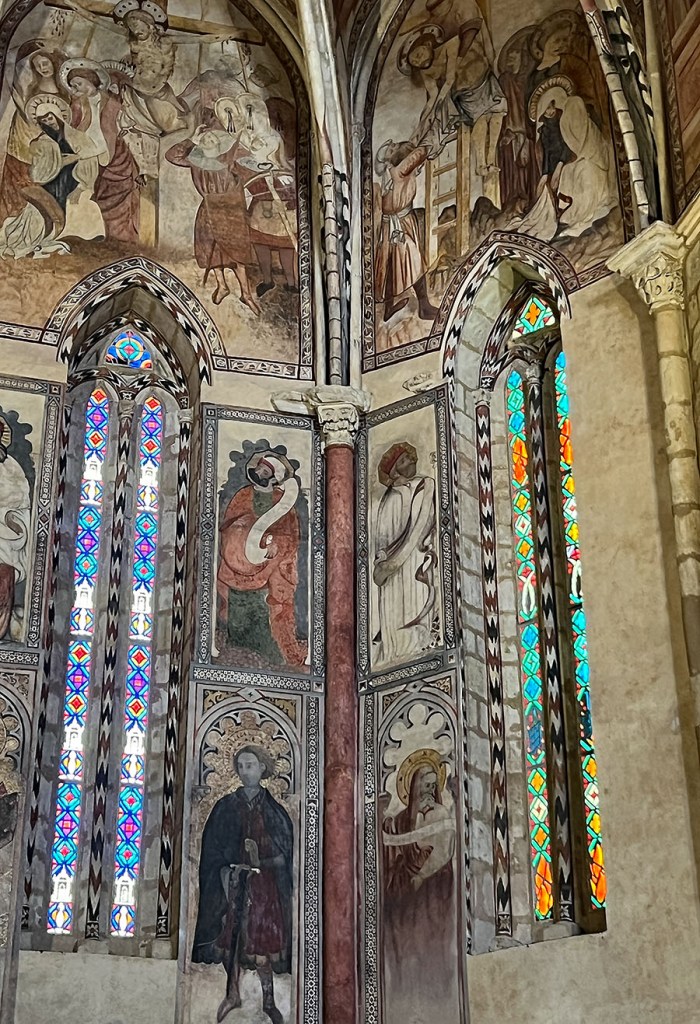


• Lo más destacado de mi visita: la proyección de luz desde el óculo.


Click the thumbnails to enlarge.
Haz clic en las miniaturas para ampliar.

Those are indeed beautiful and elegant stained glass windows!
Very pretty, and unusual, stained glass windows – the rose window seems to have that concave brickwork framing on both sides, and I have never seen such narrow gothic stained glass windows as the ones behind the altar. I wonder why anyone white-washed those murals?
It was commonplace over here – when Britain went from Catholic to Protestant under the Tudors, and later, Puritan under Cromwell – but Spain wasn’t affected by the Reformation… Jx
Hang in there. You are loved.