La versión en español está después de la versión en inglés.
Back in June, before we drove up to Segovia for Cristina and Alfonso’s wedding, San Geraldo was researching restaurants and asked, “Would you eat suckling pig?” I replied, “The idea doesn’t thrill me.” He said, “That’s what I figured.” Segovia is the historic home of cuchinillo asado, roast suckling pig, and a number of restaurants are known for it. Over the years, Spanish friends have shared photos of themselves preparing suckling pig and, hypocritical carnivore that I am, it always upsets me.
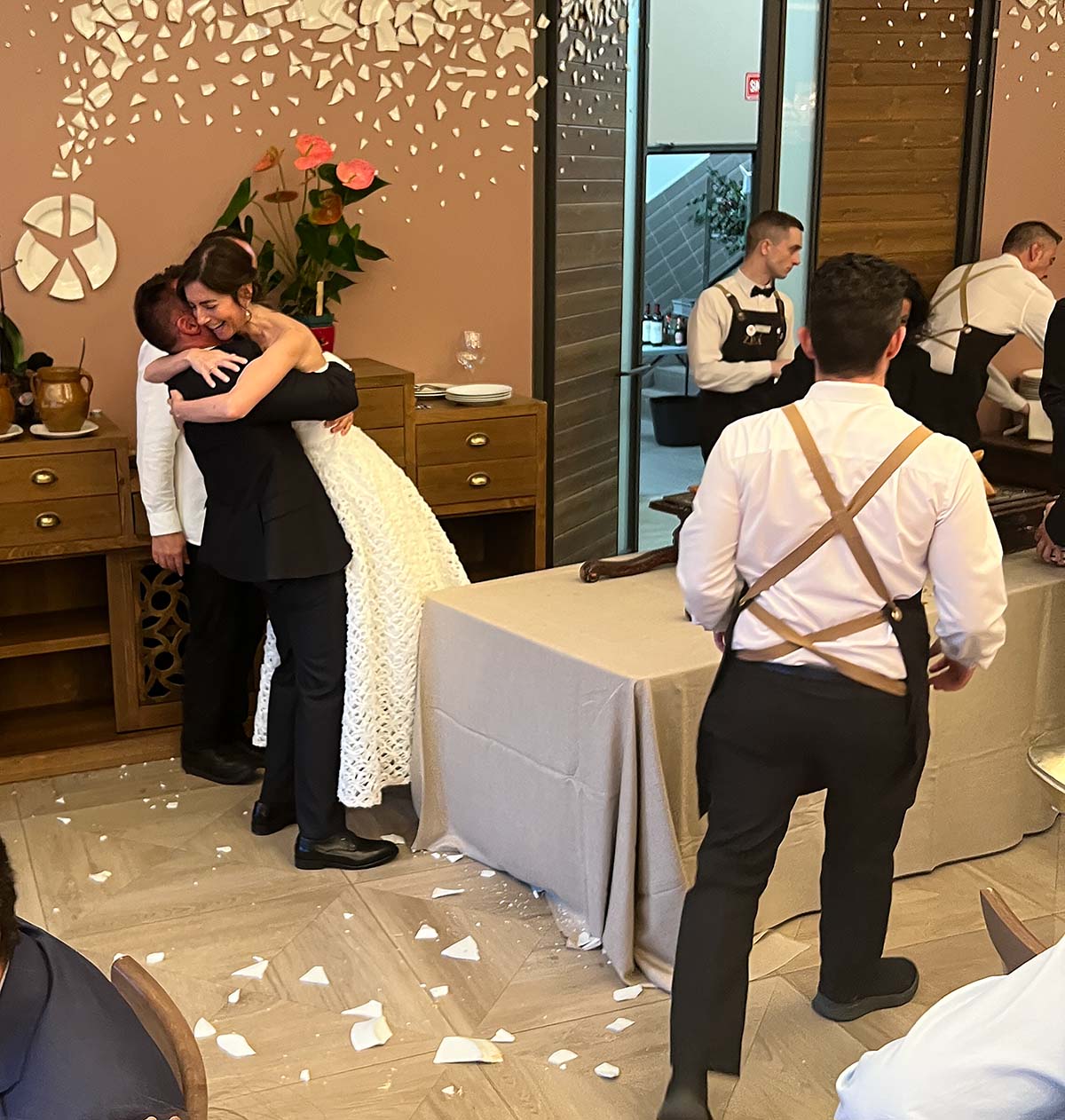
It should have come as no surprise that suckling pig would be a centerpiece of the Segovian wedding. With great fanfare, three flaming pigs were presented during the reception and then the emcee, Alfonso, and Cristina, each did the ceremonial carving by hitting the pigs with the edge of a plate. You can see most of it in today’s video. I clipped the video short here so the more sensitive wouldn’t have to see the plates come down on the pigs. When they were done, the plates, as is tradition, were thrown on the floor. It was then I realized the mural on the walls had been created from those plates. Of course, the meat was then served to all the guests. To be polite, I tried a bit. But just a bit. I looked around the table and discovered I wasn’t alone.
I didn’t have the same problem (nor did anyone else) with the traditional Segovian dessert.
En junio, antes de ir a Segovia para la boda de Cristina y Alfonso, San Geraldo estaba buscando restaurantes y me preguntó: “¿Comerías cochinillo asado?”. Le respondí: “La idea no me entusiasma”. Él dijo: “Eso me imaginaba”. Segovia es la cuna histórica del cochinillo asado, y muchos restaurantes son famosos por él. A lo largo de los años, amigos españoles me han compartido fotos de ellos mismos preparando cochinillo asado y, como carnívoro hipócrita que soy, siempre me molesta.
No debería haber sido ninguna sorpresa que el cochinillo fuera el elemento central de la boda segoviana. Con gran pompa, se presentaron tres cochinillos en llamas durante la recepción y luego el maestro de ceremonias, Alfonso, y Cristina, cada uno, realizaron el trinche ceremonial golpeando los cochinillos con el borde de un plato. Pueden ver la mayor parte en el video de hoy. Recorté el video aquí para que los más sensibles no tuvieran que ver los platos caer sobre los cochinillos. Cuando terminaron, los platos, como es tradición, fueron arrojados al suelo. Fue entonces cuando me di cuenta de que el mural en las paredes había sido creado con esos platos. Por supuesto, la carne fue servida a todos los invitados. Para ser educado, probé un poco. Pero solo un poco. Miré alrededor de la mesa y descubrí que no estaba solo.
Yo no tuve el mismo problema (ni nadie más) con el postre tradicional segoviano.

• Tras la sofocante ceremonia (altar, al fondo a la izquierda), ambos lucen radiantes. Todos recibieron flores para lanzarles al salir para el cóctel. Nada de arroz. Nada de alpiste.

• Ambos son oradores talentosos con estilos muy diferentes y rindieron hermosos homenajes a amigos y familiares. Los padres de Cristina estaban en su mesa de espaldas a nosotros. La madre de Alfonso estaba frente a ellos.
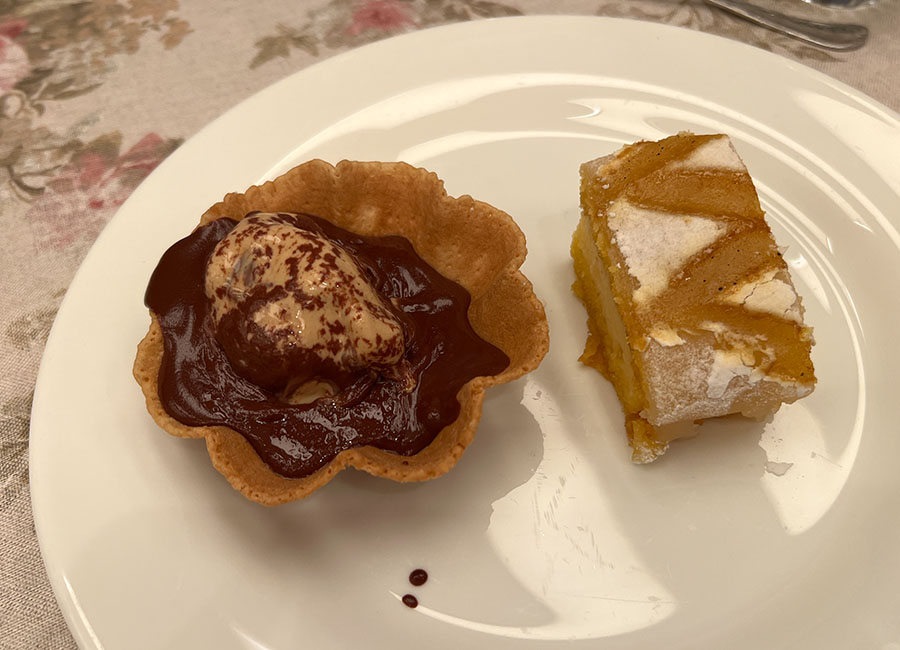
• Ponche segoviano a la derecha. Bizcocho empapado en almíbar, crema pastelera, y capa exterior de mazapán.
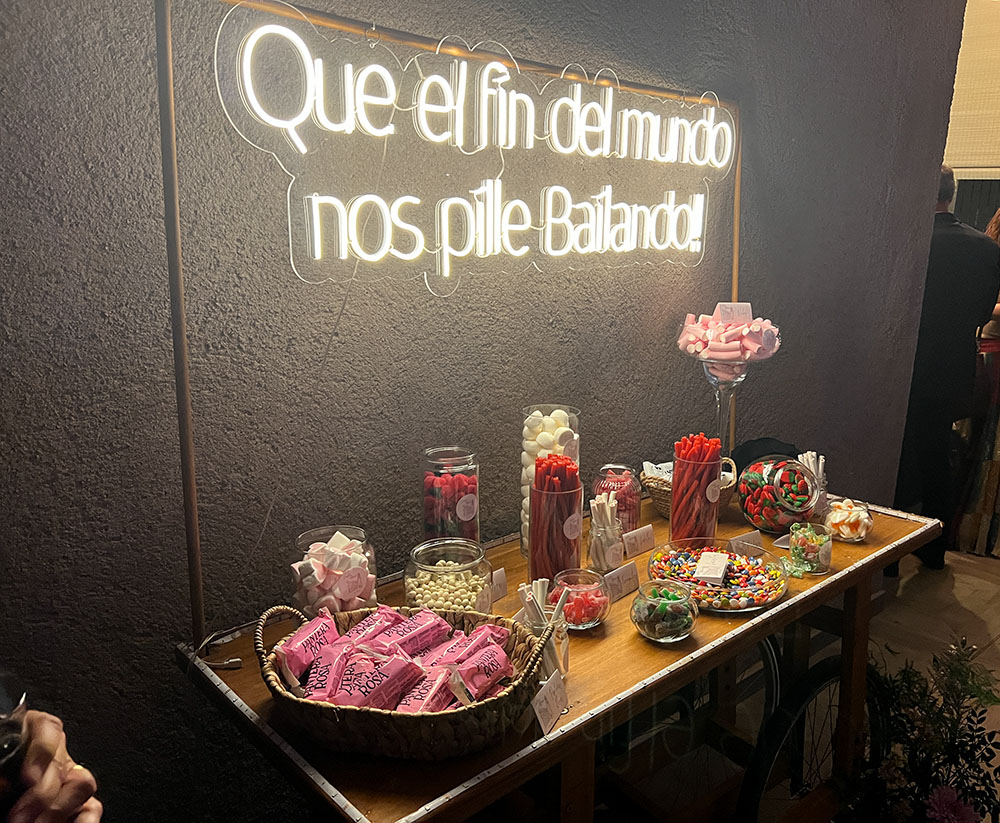
• Baile fuera de horas y un subidón de azúcar para mantener a todos en marcha.
• The only photo of me (except for official wedding photos which we’ll soon see). I was about to call a cab. The dancing was in full swing while others took some air.
• La única foto mía (aparte de las fotos oficiales de la boda que veremos pronto). Estaba a punto de llamar a un taxi. El baile estaba en pleno apogeo mientras algunos tomaban un poco de aire fresco.


• Afuera del club mientras esperaba el taxi.
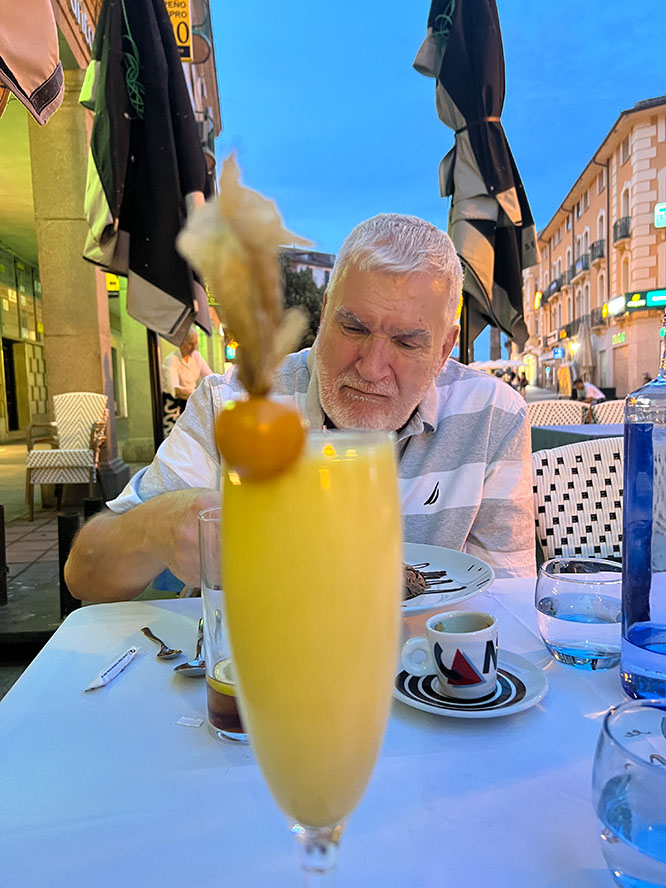
• No tengo fotos de San Geraldo en la boda. Aquí está la noche anterior tomando el postre en el Restaurante El Secreto de San Clemente. Una comida estupenda y un servicio excelente y amable. Tengo que recordar que cuando veo sorbete en el menú, no es lo que yo conocía como sorbete (que es como helado sin lácteo en los estados unidos).

That is so cool!!!!! With the broken pieces being used for texture and decor! Before you mentioned…I wondered if it was broken pieces on the wall.
Looks like a fun wedding…but why was I not told of Alfonso’s bachelor party????? He is very hot…I could have given him a proper send off.
Mistress Maddie:
Alfonso is a hunk and a half. I think you missed this old post of his dancing pecs. https://movingwithmitchell.com/2023/08/15/they-should-be-dancing-deberian-estar-bailando/
“And, next, we’ll have your little doggies, roasted, up here! Then, your kitties!” (I eat pork all the time, so I don’t know why this should bother me, but it feels so wrong looking at the little guys!)
I love what I can see of your tie! And, her dress is really nice. It’s fun seeing wedding dresses in different countries.
Judy C:
I’ll take a better photo of the tie. The colors are kind of dark plum and celery. I love it.
The pigs are so small! Is it messy when the plates hit, or do they just get stuck? Why a dull edged plate?? Anyway, you look quite dapper, and I imagine Jerry did as well. It can be fun to dress up. What a good looking crowd. Olivia
Olivia:
It was surprisingly neat when they hit them down the center three or four times with the plates. Although Alfonso, not being from around there, got carried away and had to be called off. I have no idea how that tradition began. Maybe they didn’t have silverware.
I love the art from the broken plates and get the idea of suckling pig but why the need to hit a dead pig with a plate???
Bob:
I had no clue. I just finally looked it up and read it demonstrates that the meat is so tender that a knife is not necessary.
I have no shame – I’ve eaten suckling pig and baby lamb. Both delicious. Jx
Jon:
Nothing shameful about it. Either you’re a carnivore or you’re not, I suppose.
I kept wanting to warn the pigs on what was about to happen. Of course, it wouldn’t have made a difference.
Kirk:
A bit late for a warning given they arrived on fire.
There’s an odd custom, hitting a pig with a plate! I wonder if there was a translation glitch centuries ago and here we are. Boud
Boud:
I just read that it’s to demonstrate how tender the meat is that a knife isn’t necessary. Hmmm.
Oh my. I don’t even know what to say. But one should not criticize traditions in other cultures we do not understand. Ours are insane enough.
Mitchell- you are so handsome. I wish you could see that, understand it, accept it.
May the end of the world find us dancing. This I understand. This I agree with. Jimmy Buffett wrote a song saying the same thing. It helped me get through a very, very difficult time. https://youtu.be/FPNk6dAToUQ?si=iNAe-dpdd95pDVNW
Mary Moon:
So right about traditions. I had never listened to Apocalypso. I must have been too busy admiring myself in the mirror (or, well, picking myself apart).
Cristina’s wedding dress beautiful — simple elegance! And I thought that breaking plates was a Greek custom, LOL!
It would be disconcerting to witness plates used to break the backbones of the roast suckling pigs. Unfortunately, we’re all so far removed from meat processing now, it’s easy to forget we’re eating baby animals when enjoying lamb, veal or suckling pig.
Tundra Bunny:
Maybe the plate-breaking is related to the Greeks. The truth is, although it made me uncomfortable, the whole suckling pig thing was a lot more honest.
The idea of using plates to cut the suckling pigs is to demonstrate that the flesh is so tender that it doesn’t require a knife.
Margarget:
Thanks! I just looked it up because everyone was wondering.
Awesome part!
That IS a celebration. Love the traditions!
And I love that kind of sponge cake. Yum.
XOXO
Sixpence:
The dessert was phenomenal. And I’m sure it’s every diabetic diet!
I would have been parked at the table! My heritage is all about that kind of stuff! Suckling pig, whole, roasted lamb, goat. Incredible food, incredible memories!
When my niece was christened in 1990, my Dad had a giant celebration at his house. He got a whole roasted lamb that was MAGNIFICENT!!!
Rade:
As I said, I’m a hypocrite. I love meat. I just don’t want to be able to tell where it came from.
How fun, and I imagine it was tasty. If the pork was served cut up on a platter, would you feel different. When I see piglets, I think “Bacon Seeds!”
David,
If I didn’t see the baby pigs, it would definitely make a difference. As it was, it was served in large sections so you could tell exactly how it began.
You look so dapper! The pics are most interesting. I imagine that if the meat isn’t tender, bashing it with 3 plates would fix that. I must write something an title it “Three Flaming Pigs”. 🐖🐖🐖
wickedhamster,
I look forward to Three Flaming Pigs.
That’s a sorbet?! Interesting.
I’ve never been faced with the suckling pig question IRL, but I usually avoid veal — so I imagine I’d try not to eat (or even look at) a suckling pig as well. In fact I might double down on my somewhat transient vegetarianism. 🙂
Steve:
Yep, that’s a sorbet here. And in 15 years, I still forget.
Looks like a wonderful time was had by all. Those desserts look delicious!
Jim:
Oh, the desserts were so good. There were two different plates, each with two things. I can’t remember what the others had (alternating seats), but I remember being envious and wanting both.
Suckling pig is my favourite dish.
larrymuffin,
Well then, you’d love Segovia.
What a beautiful bride!
I figured out immediately that hitting the pigs with plates would demonstrate the tenderness of the meat. I’m not sure how I knew that, I just did.
As for breaking the plates….that reminds me of the (Jewish?) custom of breaking a glass. Hmmm…I wonder why some wedding traditions from very different cultures include breaking dinnerware/glassware? Is it to ward off bad spirits?
Jennifer
Jennifer:
Interesting to think about. The reform rabbi who performed my sister’s wedding ceremony explained things along the way because her new husband wasn’t Jewish. He said breaking the glass symbolized the destruction of all unhappiness. To have sadness in life again would require them to find all those little pieces. I liked that story, although it sure didn’t pan out. I’ve read that it really symbolizes the destruction of the temple in Jerusalem which fits more with a joke I heard about the reason for any Jewish celebration: “Thy tried to kill us. We survived. Let’s eat.” As for breaking the plate used to carve suckling pig, there are several high-toned reasons, but an old story goes that an innkeeper didn’t have a knife but the suckling pig was so tender that he was able to carve it with the side of a plate. He then accidentally dropped the plate. Do you believe it?